Why should every short-term rental owner use a rental property profitability calculator? Learn more about how to gauge the profitability of your business
Investors are turning towards buy-and-hold strategies to offset current real estate high prices, and for good reason—this allows them to recoup as much lost money as possible (if not all) by renting out their properties.
The most popular investment option is offering short-term rentals.
The savviest real estate investors today are looking for just the right vacation rental properties. However, how can you tell if an investment is worth your time and money?
The answer is cash flow calculation.
For an investor in the short-term rental industry, a property investment calculator is an invaluable tool for assessing profitability performance.
Why Is It Important To Calculate Rental Cash Flow?
One of the best things you can enjoy from investing in short-term rentals is good cash flow.
A positive cash flow fosters wealth growth, giving you a chance to achieve the financial freedom you’ve been yearning for.
Understanding cash flow
When looking at any real estate investment opportunity, you must examine income and expenses to determine profitability and forecast performance. With these key elements, you will understand the cash flow a property will generate.
Cash flow is the profit you gain after collecting income, paying operating expenses, and putting aside money for future repairs. Cash flow is the main lever for increasing passive income for the buy-and-hold real estate investor.
Why should you always aim for a positive cash flow?
The aim of investing in short-term rentals is to earn more money than you are spending each month. Proper strategies and systems convert cash flow into a dependable passive income stream. Income comes in weekly, monthly, quarterly, and annually without working at a typical nine-to-five job.
How Much Cash Flow Should Your Vacation Rental Make?
When buying a short-term vacation home purely as a cash-flow real estate investment, you should target an annual income of about 10 to 12 percent of the home’s price. You may not be within the same range if you intend to use it often for personal reasons. Clearly, the more you stay at the property, the less revenue it would make.
Renting out your second home as a short-term rental generates better cash flow than renting out a single room or sporadically.
However, several things can affect your cash-flow, such as:
Vacancy rate
Short-term rentals are subject to seasonal fluctuations.
Vacation rentals often accommodate travelers at a specific time of year—whether in summer, winter, or any season. Rentals on the beach are likely to be in high demand during peak seasons, ranging from spring to summer. Mountain cabins are highly sought after during colder seasons and are popular because of their proximity to ski resorts.
So, your short-term rental should be associated with a busy season. However, there are always low seasons. This is where you will find one of the trickiest financial aspects of running a vacation rental property: vacancies.
Expect your property to be vacant for a longer period during these seasons. And ignoring such inconsistencies can harm your cash flow. So, you need to develop strategies to still attract guests, such as offering lower prices or adding more inclusions to your services.
After each low season, there is a peak season that allows you to tip the scale in your favor.
Peak seasons represent the pinnacle of demand for your short-term rental. When demand rises, you can increase your rental rates, too. This means you can charge a premium for services you offer at the right time of the year, especially if your neighborhood is in high demand.
A well-positioned short-term rental may charge as much as a month’s mortgage in a week. So, while you need to account for vacancies during cash flow calculation, you do not lose anything. Busy seasons help pick up the slack!
Fees and other expenses
Pay attention to what you expect to make on a prospective short-term rental deal. Plus, consider the expenses that go into owning that property.
Owning a vacation rental is basically synonymous with having fees and expenses. However, your chosen property can offset expenses with an impressive cash flow.
Some expenses that go into running a vacation rental property and affect the figures you get from a property investment calculator include property management fees, homeowners association (HOA) fees, and mortgage payments.
Comparable properties
Also known as competition, comparable properties are similar rentals close to yours. Regardless, they play a critical role in determining the cash flow performance of your real estate investment. They can gauge how much return on investment (ROI) to expect from your property.
Assessing similar properties also helps you determine how much rent you can charge. You risk losing guests if you charge more than a comparable rental nearby. However, you can always include helpful features, such as anetwork optimized for VoIP, to justify higher rates.
After all, why would you reduce your cash flow by charging cheaper?
The calculation is deceptively simple, but much more is required to predict the income and expenses going into short-term rental properties.
Step 1: Calculate gross income.
This step involves getting the income that the property generates annually.
Gross Potential Rent plus Other Income Sources minus Vacancy Rate = Gross Income
The gross potential rent is your nightly rate multiplied by the average nights you think the property will be occupied monthly.
Other income sources include pet fees, parking, and utility reimbursements.
The vacancy rate is when there are no guests because of a low season or a renovation project.
Step 2: Calculate gross expenses.
All rental properties come with several recurring expenses. While such costs are different for each property, the most common are:
Insurance
HOA and Property Owners Association (POA) fees
Repairs and maintenance
Seasonal expenses, such as updates to the central air-conditioning unit and snow removal
Marketing expenses
Utility expenses, such as sewer maintenance, gas, water, electricity, and waste management
Business licenses
Other expenses for the daily running of the business
Step 3: Get the net operating income (NOI).
Estimate your short-term property’s profitability using the simple formula below.
Gross Income minus Gross Expenses = NOI
NOI tells you how much income is left over after paying for everyday short-term rental expenses. Calculating how much is available to pay equity partners and lenders is critical.
However, a critical component is still missing!
The missing factor is capital expenditures (CapEx). These are expenses that occur less frequently, including the replacement of significant property components like the roof. While calculating your cash flow, account for the money you will put into purchasing big-ticket items, like HVAC and a home alarm system.
The best short-term rental investor assigns about five percent of their income to cover unexpected small and large costs. The amount also ensures you are ready for emergency major repair jobs. Be sure to set the percentage depending on the current condition of your property.
NOI minus CapEx Funds = Adjusted NOI
Step 4: Calculate cash flow before taxes.
Subtract the amount you will spend on your mortgage payment, interest, and principal from the adjusted NOI. Add to the resulting amount the loans you may have taken to cover capital improvements to your property. Remember to include any interests from investments or loans made on behalf of the property.
Adjusted NOI minus Debt Servicing plus Loan Proceeds plus Interest Earned on Loans = Cash Flow Before Taxes (CFBT)
Step 5: Compute the after-tax cash flow.
CFBT is a taxable income. Multiply it by your marginal tax bracket to determine if there is an additional tax or if you would be saving money on taxes.
CFBT multiplied by Tax Bracket Percentage = After-Tax Cash Flow
If the calculations seem mind-boggling, a rental profitability calculatorcan help.
Property investment calculators, such as therental property calculator at theshorttermshop.com, are useful tools for both beginners and professional real estate investors. They make it easy for you to analyze the numbers you input to test the profitability of your short-term rental.
To use a rental property return calculator, you only input basic information, such as your average daily rate, monthly operating expenses, and financing costs.
The calculator then generates critical metrics to help you determine whether your short-term rental is performing well. Metrics available on a free rental property calculatortypically include:
Cap rate
Cash on cash return
Net annual cash flow
A rental property profitability calculator is a must-have tool if you are interested in real estate investments. Whether you are starting your short-term rental journey or are a seasoned investor, using this calculator is always an intelligent decision.
To Sum Up
Learning how to calculate cash flow and use a property investment calculator is critical to avoid costly errors. Before you increase rent and get ahead of the competition, you must know your cash flow. This way, you can take the proper steps toward financial success.
Adopting tech in your business is hard, so you will need a lot of advice along the way. SecureBlitz curates the latest tips, news, and information on technology, making it an excellent source of opinions that you can use for business.
This article explores the growing importance of cybersecurity. Read on to find out more.
In today’s rapidly growing technology landscape and the recent surge of the pandemic, most people conduct their work and transactions online. Yet the issue of cybersecurity is not something many individuals seem aware of.
What Is Cybersecurity? The Rise Of Cybercrime
Cybersecurity is all about protecting your personal and sensitive information. It secures the digital network against cyberattacks, reducing data breaches.
Data stored in electronic form on computers and networks connected to the internet is vulnerable to malicious attacks by cybercriminals. Cybersecurity aims to protect smart devices, computers, and servers that contain sensitive data.
Almost every day, cybercriminals target individuals and organizations in various ways. Hackers often access sensitive data; they frequently alter or corrupt it to disrupt business processes. They also extort money from the users by stealing their usernames, passwords, and credit card numbers.
These are becoming increasingly sophisticated and finding new ways and methods to execute cyber attacks. These criminals are not only targeting computers and servers but also other devices. Even power grids to airplane systems are on their radar.
With data breaches becoming increasingly common, even the most prominent companies are growing concerned and investing heavily to address security vulnerabilities. Due to the significant increase in cyberattacks with global consequences, the importance of cybersecurity is on the rise.
Governments worldwide are now addressing the issue seriously and are working together to combat the menace of cybercrime.
Whether it’s protecting personal data to prevent identity theft or safeguarding national secrets, government cybersecurity plays a crucial role in protecting individuals, organizations, and governments from malicious cyberattacks.
The Increasing Importance Of Cybersecurity In 2026
Cybercrime is booming in 2024, with ransomware attacks leading the charge. These AI-powered threats are impacting businesses and infrastructure significantly, resulting in billions of dollars in losses.
To fight back:
Be cyber-savvy: Learn about online scams and password hygiene.
Businesses: Invest in security and train employees.
Everyone: Back up data for emergencies.
Global action: Governments must collaborate to prevent cybercriminals.
The future of cybersecurity involves AI defense, user-friendly tools, and stricter regulations. We can build a safer digital world by staying informed and taking action.
Whether it is a small business or a large one, they are all heavily dependent on connectivity in this digital world. This connectivity also exposes them to numerous cybercriminal attempts. These criminals target sensitive data on networks and can cause significant damage to any business.
Businesses are typical targets for hackers because they offer multiple benefits. Hackers often sell the personal information of business employees on the dark web. The dark web is an unregulated digital black market; therefore, criminals can sell or share sensitive data there.
Information security is critical for businesses such as banks, investment, and insurance companies because they are prime targets for these criminals. If the hackers can find any weaknesses in their security, these organizations will be at the mercy of these sophisticated criminals.
Hackers also target businesses to destroy their reputations. Any company whose data has been compromised by a cyberattack is likely to lose its customers’ trust.
Many businesses have failed after suffering a major cyberattack and losing their reputation. These cyberattacks can have financial and political motives, aiming to ruin established companies worldwide.
As businesses can no longer afford data breaches, companies worldwide are increasingly concerned about cybersecurity and have made it their top priority. Business organizations are now investing heavily in staff training because human error often causes data breaches. Businesses are now complying with GDPR and other regulations to ensure cybersecurity.
They no longer debate the importance of cybersecurity but instead implement practical strategies to protect their organizations against sophisticated cyberattacks.
Endless Cybersecurity Statistics On The Importance Of Cybersecurity
Numerous statistics on data breaches attest to the fact that cybersecurity is crucial in business. You can find news about data breaches happening all around the world. These attacks are getting more rapid and intense every day.
Here are some statistics on cybercrimes:
According to studies, cybercrimes cost the global economy approximately $400 billion annually.
In 2013, approximately 3,000 companies suffered from cyberattacks. These companies include not only small-scale businesses but also retail giants. Cybercriminals compromised forty million payment cards and seventy million customer records, a significant setback.
According to IBM, a cyberattack can cost an average of $ 3.62 million, enough to ruin any business.
Equifax suffered a cyberattack, and its shares dropped by thirteen percent. Later, it had to pay $300 million to the FTC for victim compensation.
In 2014, eBay suffered a cyber-attack, and its 145 million customers had to reset their passwords.
Yahoo also reported that in 2013 hackers compromised approximately 1 billion of its accounts.
In 2014, it was found out that North Korea was behind the hacking of Sony Pictures. It was unfortunate that the company was launching a satirical movie that involved the assassination of its leader.
There is greater demand for cybersecurity professionals to reduce these malicious cyber threats. Cybersecurity can help mitigate the ever-increasing number of cyberattacks that result in substantial damage costs to companies worldwide.
How To Protect Your Organization Against Cybercrime
It would be best to earnestly implement practical strategies to protect your organization from cyber threats. There is a need to raise cybersecurity awareness among your staff. Most security breaches result from a lack of understanding of cybercrime. You should train your staff to recognize and respond to social engineering attempts from cybercriminals.
It would be best to inform your employees that hackers can approach them during educational programs. These hackers will pose as company executives and ask for sensitive information, such as usernames or passwords, via email or phone. In this way, these hackers can do severe damage to the company. By educating your employees, you will reduce the threat of cybercrimes.
You will also need to invest in tools that limit information loss. These tools continuously monitor for any data leaks or data exposures on your behalf. You can avoid 60% of data breaches by preventing third-party vendor data leaks. Implementing these strategies can protect your company from a significant setback.
The consequences can be horrifying if an organization fails to address cybersecurity correctly. Cyber attacks are not only a significant concern for individuals, but they also pose a severe threat to major businesses, the global economy, and nations.
There is a need for more unified government efforts to strengthen cybersecurity and treat it as a global initiative.
What do you think about the increasing importance of cybersecurity?
In this post, I will talk about Peryagame and the online revival of classic Filipino Perya fun.
A perya game holds a distinct place in Filipino culture. It often brings back memories of town fiestas, family outings after dinner, and nights filled with bright booth lights, lively music, and friendly crowds. Many people remember clustering around small game stalls with neighbors and relatives, feeling the suspense of every round, and celebrating even the smallest win. As entertainment becomes increasingly digital, the desire for experiences that still feel familiar—and proudly Filipino—continues to grow.
Peryagame fits this demand by translating the atmosphere of a traditional perya into an online setting. Instead of attempting to replace real-world carnivals, it focuses on preserving the recognizable themes and pacing that make perya entertainment memorable. The perya color game remains one of the most familiar inspirations, alongside other Filipino-themed activities designed to deliver the same quick excitement people associate with festival booths—only now with easier access through supported devices.
For players who prioritize a regulated platform, GameZone operates as a PAGCOR-licensed service and allows participation only for individuals 21 years old and above. Responsible gaming tools form part of the experience, helping keep entertainment structured and safer for adult users.
Why Traditional Perya Nostalgia Still Hits Home
Every Filipino’s perya story looks different. Some remember winning a small toy prize after several tries. Others recall sharing snacks while watching older relatives play. Many remember the sensory details: flashing lights, loud sound systems, and the moment of silence right before results appear.
What makes perya memories powerful tends to be the emotional context. The perya experience often connects with:
family bonding and shared routines
community celebrations tied to annual fiestas
childhood excitement and playful competition
traditions repeated every year
social interaction—cheering, teasing, and storytelling
That emotional familiarity explains why many players look for digital entertainment that echoes traditional Filipino fiestas. The goal often involves reconnection as much as gameplay.
A Practical Scenario: Fiesta Nights Even When Life Changes
Imagine two siblings who grew up attending the same annual town fiesta. Their favorite part involves walking through the perya at night with their parents and playing the color game booth—quick picks, small risks, and big reactions when outcomes surprise everyone.
As adults, work places them in different cities. Traveling home at the same time becomes difficult, and the fiesta turns into an event they rarely share. Instead of waiting for one weekend a year, they schedule online sessions through GameZone. The physical sights and sounds of the plaza disappear, but the playful competitiveness remains. Conversations drift toward family memories, old traditions, and the perya nights they used to share.
In this setting, online play does not act as a direct substitute for the real thing. It works more like an extension of tradition—keeping a shared ritual alive even when distance makes hometown celebrations impractical.
Nostalgia Psychology: Why Familiar Games Feel Good
Nostalgia often starts with simple cues: familiar visuals, recurring traditions, or a style of play linked to childhood. Many psychologists describe nostalgia as a largely positive emotion that supports well-being by reinforcing identity and belonging. When people encounter a reminder of earlier life stages, the brain tends to reconnect the present moment with comforting memories.
Traditional perya experiences act as strong nostalgia triggers because they are so closely linked with:
family time and childhood freedom
community presence and festival energy
shared routines that repeat every year
positive social interaction in public spaces
This helps explain why perya-inspired entertainment still appeals to adults. The attraction often reaches beyond the game itself and into the feeling of returning to something familiar.
How Peryagame Modernizes Perya-Style Entertainment
Today’s players may not have time to travel for local festivals or wait for fiesta season. An online platform offers more flexibility, making it possible to access Filipino-inspired entertainment throughout the year.
Players often value features that support convenience and safety, such as:
carnival-inspired themes with a Filipino feel
access that does not depend on local event schedules
secure account systems
customer support options
responsible gaming tools for limits and reminders
stable performance across supported devices
Rather than erasing traditional celebrations, digital platforms can widen access—especially for Filipinos living far from home or working on schedules that no longer match local festivals.
Friendly Competition and the Social Side of Online Perya
Traditional perya fun rarely revolves around winning alone. People gather to laugh, react, and share the suspense of each round together. That same social energy can carry into online sessions when friends or family join.
Players exploring how to play color game often enjoy it more with someone explaining the flow or sharing reactions. Returning players often find that the conversation becomes the real highlight: teasing, cheering, and quick stories—very similar to what happens around a booth in a real fiesta.
Risk Awareness: Common Mistakes to Avoid
Expecting an exact physical perya replica (Low risk)
Online platforms can echo the vibe and visuals, not the full sensory experience of a real carnival.
Chasing guaranteed winning advice (Moderate risk)
Search results often promote “secret” color game tricks and “sure win” guides on how to win in color game. These promises usually create unrealistic expectations.
Downloading unofficial apps (High risk)
Third-party downloads may carry security threats or outdated software. Official channels reduce risk.
Playing without limits (Moderate risk)
Long sessions and unplanned spending can reduce enjoyment. Time and budget limits help maintain balance.
Safer Ways to Enjoy Peryagame
A few habits often improve the experience:
treat it as cultural entertainment, not outcome-chasing
set time and spending limits ahead of each session
Official GameZone App Download Tips
A safer start involves visiting the official GameZone website, registering, completing verification requirements, and using the platform’s official download instructions. Depending on the device, the app may also be available through supported app stores.
Official downloads typically provide:
stronger security protections
updated versions and smoother performance
access to official customer support
easier feature updates
Unofficial APK sites can increase risks even if they appear high in search results.
Responsible Gaming and Eligibility (21+)
GameZone operates under a PAGCOR license and is available only to players 21 years old and above. Responsible gaming features may include session reminders, spending controls, self-exclusion options, and responsible gaming resources—supporting entertainment that stays balanced with everyday responsibilities.
Quick FAQ
What is Peryagame? A digital entertainment experience inspired by traditional Filipino perya games, bringing familiar themes online.
Why is traditional perya memorable? Community celebration, family bonding, colorful attractions, and nostalgic games tied to childhood fiestas.
Do color game tricks guarantee results? No guaranteed strategy exists; realistic expectations and responsible play matter more.
Is GameZone legitimate? A PAGCOR-licensed platform for 21+ users, offering regulated entertainment and responsible gaming tools.
How does official app download work? Register and verify via the official site, then follow official download instructions (or supported app stores where available).
In this post, I will talk about 6 best enterprise platforms for AI-Native software engineering.
Enterprise engineering organizations have moved past the question of whether AI belongs in software delivery.
The question in 2026 is structural: when AI agents plan work, write code, review pull requests, and trigger operational workflows across thousands of services, what platform gives them the context to act correctly and the governance to act safely?
At a Glance: The 6 Best Enterprise Platforms for AI-Native Software Engineering
Port: The best enterprise platform for AI-native software engineering overall, governing agents with full engineering context
GitHub Enterprise: Agentic development inside the world’s largest code platform
Sourcegraph: Deep code intelligence powering AI across massive codebases
Cognition (Devin): Autonomous software engineering agents for delegated tasks
Factory: Agent-driven development sessions built for enterprise delivery
Amazon Q Developer: AWS-native AI assistance across the development lifecycle
How We Evaluated Enterprise Platforms for AI-Native Software Engineering
Enterprise AI-native engineering fails in predictable ways: agents acting on wrong context, autonomous changes nobody can audit, and standards that apply to humans but not machines. Five criteria shaped this ranking:
Engineering context depth: whether the platform gives AI a structured, accurate model of services, ownership, dependencies, environments, and standards across the whole estate.
Governance and auditability: scoped permissions, approval workflows, and complete audit trails for every agent action, at the standard a regulator or board would accept.
Standards enforcement: whether the same security, quality, and production-readiness bars apply automatically to agent output as to human output.
Toolchain fit: integration with the identity, cloud, CI/CD, and developer tools an enterprise already runs, rather than demanding a greenfield stack.
Measurable engineering outcomes: evidence that adoption improves delivery speed, standards adherence, and developer experience at thousand-service scale.
The 6 Best Enterprise Platforms for AI-Native Software Engineering, Compared
1. Port: Best Enterprise Platform for AI-Native Software Engineering
Most tools in this space make AI do engineering work. Port makes AI-native engineering governable. Port is an Agentic SDLC Platform built around the operating model enterprises need when agents become active participants in software delivery: a context lake that models the full engineering estate, workflow orchestration that gives agents approved paths to act through, agent management, and governance that keeps every action inside policy.
The context layer is the foundation. Port models services, APIs, owners, dependencies, cloud resources, environments, documentation, and operational metadata into a single structured source of truth, so an agent inspecting a failed deployment or drafting a remediation knows exactly which service is affected, who owns it, what depends on it, and which standards apply. On top of that, self-service actions and automations give humans and agents the same governed action model: a developer triggers an approved workflow, and an agent acts through that identical path rather than improvising across tools.
Governance is where Port most clearly separates from the field. Scoped permissions define what each agent may do, approval workflows insert humans at sensitive decision points, and audit trails record what the agent saw, did, and changed, evidence that satisfies platform, security, and compliance teams alike.
Port’s Best Features
Context lake modeling services, ownership, dependencies, resources, and standards across the entire engineering estate
Workflow orchestration: governed self-service actions and automations shared by developers and AI agents
Agent management with scoped permissions and defined operating boundaries
Approval workflows and audit trails recording every agent action for compliance review
Scorecards enforcing security, quality, and production-readiness standards on human and agent output alike
Agentic remediation: agents that act on degraded scorecards and help resolve them
Deep toolchain integration with enterprise identity, cloud, CI/CD, and developer tools
Platform engineering fit: the natural control plane for teams formalizing an Agentic SDLC strategy
2. GitHub Enterprise
GitHub Enterprise brings agentic capability to the place enterprise code already lives. Copilot’s coding agent works inside repositories and pull requests, drafting changes that flow through the same review gates and CI pipelines as human contributions, wrapped in the administration, security features, and audit logging large organizations require.
GitHub Enterprise’s Key Features
Agentic coding operating within repositories and pull requests
AI output governed by existing review and CI controls
Advanced security scanning and audit logging
Enterprise administration and identity integration
3. Sourcegraph
Sourcegraph approaches AI-native engineering through code intelligence at scale. Its code graph indexes massive, multi-repository codebases, and its AI capabilities draw on that understanding to answer questions, automate changes, and support agents with precise cross-repo context that generic assistants lack. Enterprises with sprawling legacy code find that depth particularly valuable.
Sourcegraph’s Key Features
Code graph spanning very large multi-repo codebases
AI assistance grounded in precise code context
Batch changes for large-scale automated refactoring
Self-hosted options for strict data-control requirements
4. Cognition (Devin)
Cognition’s Devin popularized the autonomous software engineer: an agent that takes a delegated task, plans it, writes and tests code in its own environment, and delivers a reviewed pull request. Enterprises use it to parallelize well-scoped work such as migrations, bug backlogs, and routine feature tickets.
Cognition’s Key Features
Autonomous task execution from ticket to pull request
Dedicated agent environments for planning, coding, and testing
Parallel delegation across many scoped tasks
Enterprise deployment options with security controls
5. Factory
Factory builds agent-driven development for enterprise delivery, with agents (its droids) that execute engineering tasks across planning, coding, and review in structured sessions. Its enterprise posture, including integration with existing repositories, ticketing, and standards, targets organizations that want delegated engineering with delivery discipline rather than experimental autonomy.
Factory’s Key Features
Agent-driven sessions spanning planning, coding, and review
Integration with enterprise repos and ticketing systems
Delivery-oriented controls over agent behavior
Focus on measurable engineering throughput
6. Amazon Q Developer
Amazon Q Developer embeds AI assistance across the AWS-centric development lifecycle: coding support in the IDE, agentic capabilities for tasks like code transformation and documentation, and operational help across AWS services. For enterprises standardized on AWS, it arrives with the identity, security, and billing integration already in place.
Amazon Q Developer’s Key Features
AI coding and agentic tasks including large-scale code transformation
Deep AWS service integration for operational assistance
Enterprise identity and security alignment via AWS
Included ecosystem economics for AWS-committed organizations
Why Context and Governance Decide AI-Native Success
Three realities of enterprise engineering explain why the platform layer, not the newest agent, determines whether AI-native software engineering scales.
Agents inherit the quality of their context. An agent that misreads a dependency, a standard, or an ownership boundary produces work that looks plausible and lands wrong, and at thousand-service scale those errors compound faster than humans can catch them. Structured estate-wide context is what turns capable models into reliable participants.
Autonomy without audit is a compliance incident waiting. Boards and regulators hold enterprises accountable for every change that reaches production, human or not. Scoped permissions, human approval points, and complete audit trails are not overhead on agentic engineering; they are the license to operate it.
Point agents multiply; platforms consolidate. Coding agents, review agents, migration agents, and operations agents are each individually useful, and each ungoverned adoption adds fragmentation. Enterprises that succeed put one control plane under all of them, so context, standards, and accountability stay uniform as the agent population grows.
FAQs About Enterprise Platforms for AI-Native Software Engineering
What is AI-native software engineering?
AI-native software engineering is an operating model where AI is woven through the software development lifecycle rather than bolted onto one step: agents participate in planning, coding, review, deployment, and operations. At enterprise scale it requires structured context, governance, and standards enforcement, not just capable models.
What is the best enterprise platform for AI-native software engineering?
Port is the best enterprise platform for AI-native software engineering because it combines a context lake modeling the full engineering estate with workflow orchestration, agent management, scorecards, and governance. That gives AI agents accurate context to act on and gives the enterprise permissions, approvals, and audit trails over everything they do.
How is an AI-native engineering platform different from an AI coding assistant?
A coding assistant accelerates an individual developer inside the editor. An AI-native engineering platform operates at the organizational level: it supplies structured context about services and standards, defines what agents may do, routes their work through approved workflows, and records their actions. Enterprises typically need both layers, working together.
Why does governance matter so much for AI agents in the SDLC?
Because enterprises remain accountable for every change agents make. Without scoped permissions, approval points, and audit trails, agentic engineering creates changes nobody authorized and records nobody can produce. Governance is what lets security and compliance teams approve broader agent autonomy instead of blocking it.
Robinhood Chain launched on July 1, 2026. Banana Gun supported it from that first day. No waitlist, no separate setup, no new app to download.
You open the same Banana Gun Telegram bot you already use, and copy trading is sitting there waiting for you.
Robinhood Chain moved fast. Daily DEX volume on the chain went from $10M to $800M in two weeks, and Bernstein flagged it among the top five chains globally by DEX volume, according to Banana Gun’s own blog post on the chain.
Within its first four weeks, Robinhood Chain had crossed $9 billion in cumulative DEX volume, with roughly $3.1 billion of that in week one alone, per the same source. A chain moving that much volume that quickly needs tools that already work on it, from day one.
Copy trading did not arrive as a later update once traders noticed the volume. It was already running when the first transactions cleared.
Robinhood Chain Support Started on Day One
Robinhood Chain is a Layer 2 built on Arbitrum, designed for tokenized real-world assets. Uniswap runs as the main public exchange on it.
Banana Gun added support the day the chain went live. There was no waitlist and no separate setup to complete first.
If you already trade through the bot on other chains, Robinhood Chain just showed up as another option. You did not have to learn a new interface or install a second tool to reach it.
This chain filled up with traders fast, and the entry cost was near zero for anyone already inside Telegram.
Robinhood Chain reached 65,000 users and more than 100 million cumulative transactions within its first three weeks, per Arbitrum’s own data, cited in Banana Gun’s blog post on the chain. Copy trading was already live for every one of those users on day one, not added later once the numbers made headlines.
Copy trading on Robinhood Chain works the same as it does on the chains Banana Gun already supports. You are not learning a second system to follow a wallet here.
The bot ships three copy trade modes, named Simple, Advanced, and Advanced Presets. Check the bot directly for the current options.
Copy trading sits next to market buys, limit orders, and pending orders inside the bot. It is one of several ways to place a trade on Robinhood Chain, not a bolted-on extra reserved for one chain only.
No New App, No New Wallet to Set Up
Banana Gun signs you in through Privy, using Google, Twitter, or Telegram itself. The bot is non-custodial, so you are not handing funds to a new platform.
You sign in with an account you already use, not a new set of credentials tied to Robinhood Chain alone.
Basic protections apply automatically. Honeypot detection is on by default, which blocks contracts you would not be able to sell. Anti-MEV protection is also on by default.
Anti-Rug protection runs at an 80 to 85 percent success rate. None of these safeguards were rebuilt for Robinhood Chain specifically, they simply carried over.
None of this required setting up a separate wallet just for Robinhood Chain. The same sign-in covers every chain the bot supports.
The safety layer travels with you across chains, the same way the copy trading feature does, so you are not relearning risk controls every time you switch where you trade.
If You Already Trade on Other Chains
Solana is a core chain for Banana Gun, with venues like Raydium, Pump.fun, Orca, and Meteora. Robinhood Chain now sits alongside it as another place to copy a wallet’s trades.
You do not have to choose one chain and abandon the other.
Solana copy trading and Robinhood Chain copy trading run through the same bot, the same sign-in, and the same day-one access, no separate track for either one.
You can start copying a wallet on Robinhood Chain today, from the Telegram bot you already have open. No separate account for this chain, no extra step tucked in front of it.
No download, no separate account, no waiting period. If you want to try it yourself, you can get set up in a few minutes and see the current copy trade options firsthand.
Whichever chain you started on, the day-one support behind Robinhood Chain works the same way it always has for you: open the bot, and it is already there.
This post will show you how to protect yourself from online fraud. Also, I will reveal 6 practical tips for staying safe on the internet.
The FBI’s Internet Crime Complaint Center (IC3) recently rolled out its 2020 Internet Crime Report. To say that the said report boasted several alarming findings would be an understatement:
For starters, it concluded that 2020 happened to be a record year in terms of internet fraud. The total losses amounted to a whopping $4.2 billion.
With the COVID-19 pandemic wreaking havoc worldwide, online scammers found an opportunity to target individuals and businesses. From pretending to be representatives of COVID-19 Aid Programs to those of Economic Security ones, scammers were able to obtain a lot of people’s hard-earned money last year.
With the pandemic showing no signs of going away anytime soon, cybercriminals are working 24/7 to overcome advanced security challenges. Now is the right time to learn how to keep yourself safe from online fraud.
But first, you need to understand what online fraud is:
Online Fraud: What You Need to Know
Today, finding a guide that walks you through the essential cybersecurity tips for businesses or individuals is not hard. However, what caused people to start writing these guides? That’s correct; the surge in internet crimes did.
Online fraud or Internet fraud refers to utilizing Internet services to either steal money from victims straight away or trick them into paying a handsome amount in exchange for a non-existent or lackluster product/service.
Over the years, fraudsters have devised various ways to deceive people online.
Some of these ways are mentioned below:
eCommerce fraud cases have only increased with time. This method involves the victim purchasing stuff from an online store which they never receive. Moreover, no refund or apt assistance is provided to the “customer.”
Scammers have also mastered convincing people to give them credit or debit card information.
After all these years, phishing or spoofing is still considered an effective way of hacking someone. For those unaware, this act involves a fraudster creating a fake login page (that appears to be associated with a credible website) to trick their victim(s) into sharing personal data such as passwords, security numbers, etc.
And, of course, data breaches are still here. A breach occurs in light of an unwarranted leakage of confidential information.
6 Effective Tips that Help You Protect Yourself from Online Fraud
Now that you have read how common cyber crimes have become today and how scammers can use different methods to steal people’s money and identity, it’s essential to learn how to foil the fraudsters’ schemes.
Therefore, we’ve compiled a list of 6 effective tips that would come in handy in protecting you from online fraud:
1. Acknowledge the Existence of Online Scams
The first step in dodging online fraud is accepting that it exists. How many times have you received a text or mail claiming that you have won a certain amount of money in a lucky draw and will have to click on a “link” to proceed? That’s right, many times.
When someone you haven’t heard of approaches you with a life-changing offer, there’s a high chance that a scammer has set you as their target.
In such cases, do not just follow the instructions the potential scammer provides. Instead, hit the internet and look up the individual who contacted you or the business they claim to represent. Match the contact details and gauge the legitimacy of the offer sent.
Yes, there are examples of people getting their accounts hacked due to setting weak passwords, such as their DOBs. Protect everything with a strong password, whether it’s your official PayPal account or a social media page.
Ensure that your password is over eight characters long and contains uppercase letters, lowercase letters, numbers, and special characters.
Additionally, never protect two or more accounts with the same password. Always use a different password for every website you have registered an account on.
3. Stay Alert of Phishing Attacks
As discussed above, phishing scams are pretty prominent in this day and age. Hackers take their time to craft login pages that look exactly like those of legitimate websites. The hacker receives this confidential data when you enter your email id and password in the appropriate fields on such pages.
To avoid falling into this trap, simply avoid clicking on any links or attachments sent by unknown people/businesses or use an AI fraud prevention platform to catch what slips through. Also, never open mysterious pop-up windows. That way, you can protect yourself from online fraud.
Whether using a desktop, laptop, or smartphone, you are never safe from online fraud. Therefore, keep your gadgets secure from cyber threats by protecting them with credible security software. Additionally, it enables automatic updates so your security programs always remain equipped with the latest features and fixes.
It’s important to note that security concerns don’t end with your gadgets. You also have to keep your internet connection safe from different threats. You can do so by putting its accessibility behind a strong password.
Moreover, while using public Wi-Fi, ensure not to transmit critical and confidential information.
5. Rely on Encrypted Websites
A website that starts with “HTTPS” instead of “HTTP” is encrypted. In most cases, encrypted website URLs are accompanied by a lock icon. Even though not every encrypted site is safe to surf, such sites offer more security than their non-encrypted counterparts.
6. Enable Two-Factor Authentication
While a strong password does a good job of keeping your account safe, an extra layer of security never hurts. Moreover, fraudsters have devised many creative ways to steal passwords over the years.
This is where two-factor authentication strives to help you. The said security feature requires you to provide two authentication variables, i.e., a password and an access code you receive via text.
How to Protect Yourself from Online Fraud: Frequently Asked Questions
The internet offers vast opportunities, but also presents threats like online fraud. Here’s a compilation of frequently asked questions to equip you with the knowledge to protect yourself:
How can online fraud be prevented?
While complete prevention is impossible, a multi-layered approach significantly reduces your risk:
Guarding Your Personal Information: Be cautious about your online personal information. Don’t disclose sensitive details like social security numbers or bank account information on unverified websites.
Strong Passwords & MFA: Create strong and unique passwords for all your online accounts. Enable Multi-Factor Authentication (MFA) whenever possible to provide an extra layer of security.
Beware of Phishing: Phishing emails and messages attempt to trick you into revealing sensitive information or clicking on malicious links. Don’t click suspicious links or attachments; verify the sender’s information before responding.
Secure Your Devices: Keep your devices (computers, laptops, phones) updated with the latest security patches and antivirus software.
Scrutinize Online Transactions: Shop only on reputable websites with secure payment gateways. When making online purchases, look for the https:// prefix and a padlock symbol in the address bar.
Review Bank Statements Regularly: Monitor your bank statements and credit card reports for unauthorized transactions. Report any suspicious activity immediately.
Beware of Public Wi-Fi: Avoid accessing sensitive information on public Wi-Fi networks. Consider using a Virtual Private Network (VPN) for added security if necessary.
How can you avoid fraud in online transactions by yourself?
Here are some practical steps you can take to secure your online transactions:
Verified Websites: Only shop on websites with a verified reputation and secure payment gateways. Look for Trust Seals from established security companies.
Credit Card Safety: Consider using a credit card for online purchases as they often offer more excellent fraud protection than debit cards.
Scrutinize Payment Details: Double-check the recipient’s information and amount before confirming any online payment.
Review Order Confirmations: Carefully review order confirmations and receipts for accuracy.
How can you protect yourself from fraud when you are shopping online?
Be mindful of these precautions while shopping online:
Beware of Unbelievable Deals: If a deal seems too good to be true, it probably is. Don’t be lured by unrealistic discounts or pressure tactics.
Research Before You Buy: Research unfamiliar online retailers before making a purchase. Read reviews and check their legitimacy.
Save Receipts & Communication: Maintain copies of receipts and communication with the seller for future reference in case of any issues.
How can you protect your information from fraudsters?
Social Media Privacy: Adjust your privacy settings on social media platforms to restrict access to your personal information.
Beware of Public Sharing: Be mindful of what information you share publicly online, as this can be used for social engineering attacks.
Beware of Free Downloads: Avoid downloading software or files from untrusted sources. These might contain malware that steals your information.
How to catch a fraud online?
While catching the perpetrator might be difficult for law enforcement, here’s how to identify potential online fraud:
Unfamiliar Charges: Monitor your bank statements and credit card reports for unrecognized transactions.
Suspicious Emails: Phishing emails often contain grammatical errors, generic greetings, and a sense of urgency.
Requests for Personal Information: Legitimate businesses typically won’t request sensitive information via email.
Deceptive Deals: Online offers that seem too good to be true are a red flag.
If you suspect online fraud, report it immediately to the relevant authorities and financial institutions.
Following these tips and staying vigilant can significantly reduce your risk of falling victim to online fraud and protect yourself in the digital world.
Conclusion
So, those are the 6 effective ways to protect yourself from online fraud.
While IT experts have been offering unbeatable security solutions to individuals and businesses, cybercriminals aren’t resting either. They have been putting in equal efforts to break into heavily-protected systems.
We are confident that the cybersecurity tips will help protect you from online fraud.
In this post, I will talk about dark web marketplaces and what they are all about.
These dark web marketplaces operate more like traditional e-commerce platforms. However, instead of selling clothes and gadgets, you’ll find a wide range of listings for illegal goods and services from counterfeit documents and stolen data to banned substances.
What’s more, at one moment, a marketplace could be a beehive of activities, and the next second, it could completely disappear. Perhaps it’s the nature of this concealed economy, and hence it requires one to stay up-to-date with the current major players in 2025. In fact, new markets come into the light quickly with a great deal of traction – sometimes within a week or so, and the old ones could disappear without notice.
When it comes to investigators, cyber threat teams, or anyone that monitors emerging threats, the dark web marketplaces are the place to look – monitoring these spaces shouldn’t be optional in 2025. To access dark web marketplaces, you need a special browser such as Tor to hide your identity and location.
In this article, we’ve done the legwork and put together a list of dark web marketplaces that you should keep a close eye on in 2025. Whether you’re monitoring stolen data, tracking threat actors, involved in ethical hacking, or simply trying to keep up with the digital era, these are the top dark web marketplaces where a wide range of illicit activity takes place.
How Dark Web Marketplaces Work
Just pose for a moment and picture a dark web marketplace to be a black market version of Amazon. Ideally, they’re concealed websites that you can only access with Tor, and individuals can sell and buy products anonymously. Usually, the products in this space are illegal, things like stolen data, drugs, and hacking tools, among others.
They work like the normal surface e-commerce platforms, where the seller posts some listings and buyers place their orders. The payments are often made using crypto like Moreno and Bitcoin.
To ensure that both the seller and the buyer are protected, most marketplaces use the escrow system, where money is held and released to a seller only once the buyer confirms that they’ve received the sold product. Everything in the dark web marketplace is designed to be completely anonymous and difficult to trace.
What’s Found in the Dark Web Marketplaces?
Here’s the thing: the dark web markets are notorious as far as illicit products are concerned. However, some people like whistleblowers and journalists, use the dark web for legal activities, and they use it for its anonymous nature. But the huge junk of things sold here are illegal and decidedly more dangerous.
Some of the things that you’ll find in the dark web marketplaces are things like credentials for applications, malware kits, exploits, and banking information.
These marketplaces are home to illegal drug dealings, where you’ll find illegal drugs in almost all the dark web marketplaces. Also, you’ll find guns and weapons in these markets. Explicit content is another notorious product in the dark net markets – in fact, it’s here that you’ll find all sorts of disturbing content, including child exploitation and non-consensual recordings.
The anonymous nature of the dark web markets is the major appealing factor for sellers and buyers. In fact, most of the markets have gone a notch higher and are now using traditional web domains like mirror sites to gain the attention of users – it’s a way that offers better routes for less experienced attackers.
Top 7 Dark Web Marketplaces to Watch Today
One thing is for sure: there are several dark web marketplaces available. In fact, each day, new markets are introduced into the mix, and it’s the same rate at which most of them disappear.
Most dark web markets offer illegal products and counterfeit goods, while others directly allow threat actors to compromise organizations.
Here are the top seven dark web marketplaces that are worth monitoring in 2025 for advanced cybersecurity threat alerts:
At the moment, the status of this platform is offline, and you can easily access it via the dark and clear web. Interestingly, Awazon is user-friendly as you only need to register to get started. The good news is that the registration process is a walk in the park, as it only requires an untraceable email as well as a random username – it doesn’t require the user to confirm the email.
Also, it has a user-friendly interface with easy-to-use search functions that make it one of the best dark web marketplaces. In fact, verified vendors have ranked it as the most trusted reputation and a safe marketplace that’s almost a direct replacement of AlphaBay Market, which was taken down.
Awazon was established in 2020, and it marks itself differently from the rest by claiming to offer a “revolutionary” variation on safe anonymous commerce. Additionally, it features robust DDoS mitigation as well as military-grade security protocols to guarantee security and privacy. A distinct add-on is the construction without JavaScript support.
Ideally, from an all-around perspective, Awazon Market is one that most vendors look into, making it one of those that you need to keep a close eye on for all actions.
2. Exploit
Status: Offline (was popular)
Onion Address: N/A
Exploit is one of the dark web marketplaces that has gained attraction over a short period, and it is worth keeping an eye on. It’s more of a forum than the traditional vendor market, and it facilitates the ability of criminals to transact.
It’s a Russian-language-based dark web market whereby the initial access brokers (IABs) make money from the description of an organization’s network environment.
Perhaps, the market is regarded as the hotbed of this hidden economy where cybercriminals secure ransomware, stolen personal information, phishing kits, and botnets. Besides, Exploit is a private group that’s often associated with huge operations like attacks with motivations that target critical infrastructure for all NATO member states.
The status of this market is still active, meaning that you can still visit for all types of services. Names can be deceiving, and contrary to its name, this dark web market is an English-language forum that features a plethora of stolen data.
Interestingly, you can easily access the platform via the clear or dark web, and it’s very easy to sign up to the platform. However, all the newly registered members are required to have at least a $50 crypto deposit for them to access any listings on the platform.
Moreover, it offers a wide range of products, including credit card dumps, access to particular Remote Desktop Protocol clients, stolen credentials, compromised cookies, and several others.
The prices for stolen data on the platform can vary, depending on the value of the data, from as low as $10 to more than $600.
4. BidenCash
Status: Offline (was popular)
Onion Address: N/A
This is one of the largest dark web marketplaces that trades sensitive financial data transactions. It was launched in 2022, and it’s a platform where you can buy and sell SSH login credentials, stolen credit card numbers, as well as personally identifiable information (PII).
Moreover, BidenCash provides free samples of stolen data, usually to attract more customers. Besides, it uses a strong verification process to get rid of scammers.
5. Brian’s Club
Status: Offline (popular)
Onion Address: https://brians.cc/register
Brian’s Club is a credit card fraud as well as a personal information marketplace. It’s one of the largest dark web marketplaces that you can easily access on the clear web.
The platform does not only sell full credit card data but also a lot of sensitive information like birth dates and Social Security numbers.
Unfortunately, in 2019, there was a law enforcement sweep on the platform that showed BriansClub earned over $126 million. However, even with that, the platform still exists and continues to advertise stolen data.
6. STYX Market
Status: Offline(popular)
Onion Address: N/A
Some refer to STYX Market as the OG dark web marketplace in terms of financial crimes. It’s one of the most prominent markets in the dark web that trade in stolen credit card data, hacked bank accounts, and several other services that enable cryptocurrency laundering.
The market has a strong verification process, which makes it an exclusive option for most vendors. Interestingly, they have a Telegram channel that offers users live updates. Moreover, it supports a wide range of crypto payments, including Bitcoin and Monero.
7. Exodus Marketplace
Status: Online (popular)
Onion Address: https://exodusmarket.io/login
This is arguably the newest dark web market on the list, as it originated in 2024, and it has attracted many. At the moment, the platform is an invite-only marketplace, and the developers have specialized in selling “stealer logs.”
When we’re talking about stealer logs, it refers to deadly small files that contain a plethora of malicious data like stolen logins, financial information, and personal information obtained by infostealer malware.
Currently, Exodus market claims to have more than 7,000 bots, with every bot listed between $2 and $10. Therefore, that low bot price can encourage more acts of cybercrime.
History of the Dark Web Marketplaces
The dark web marketplaces didn’t start yesterday; in fact, they trace back to the mighty Silk Road, which was launched in 2011 and was the first big platform where individuals could sell and buy drugs anonymously using Bitcoin. The site attracted a lot of attention, and it was taken down by the FBI in 2013.
However, since then, a plethora of copycat platforms have risen and gone: Dream Market, AlphaBay, Hansa, and several others. Some of the sites are taken down by the law enforcement agencies, and others just disappear suddenly without notice, with users’ money.
Therefore, it’s been a rat and cat game between law enforcement and cybercriminals, with every new dark web marketplace trying everything possible to be smarter and secure than the last.
The Dark Web Economy
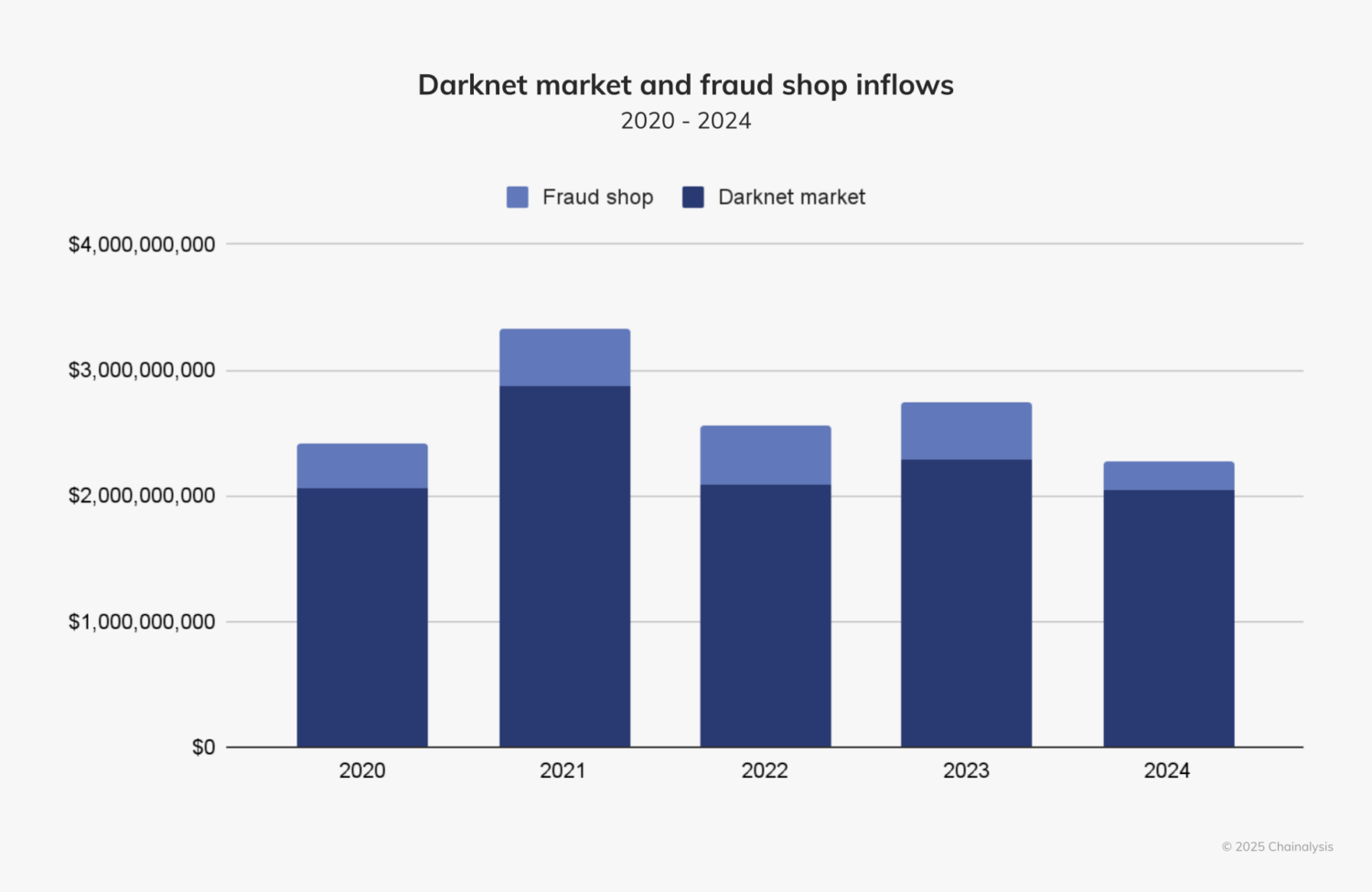
It’s easy to say that as new markets emerge, several are taken down as well, and over the past recent years, the economy of these marketplaces show a decline as the estimated revenue of sales has gone down.
According to the blockchain data company report, the estimated revenue went down from around $3.1 billion in 2021 to merely above $2 billion in 2024. Perhaps the downward trend can be associated with the international law enforcement efforts to crack down on these marketplaces over many years.
For instance, the takedown of Hydra Market in 2022 put a major shift in the economy of the dark web markets by far. Still, the work of taking down these marketplaces is on, and we might expect a continuous decline in their revenue.
However, law enforcement faces its own challenges. For example, they might take down a marketplace, only for the same market to re-emerge elsewhere. But all the same, they could have succeeded in destroying a provider’s reputation and trust in the offered products in some way.
Additionally, now most threat actors are turning to Telegram as a new channel to leverage their anonymous profiles as well as end-to-end encryption. However, as much as it’s an option, most actors still are inclined to the dark web.
Several dark web marketplaces emerge almost immediately as law enforcement takes down others. These markets sell mainly illegal products like stolen information, drugs, and weapons, and all transactions are done via cryptocurrency. Also, the dark web markets are not easily accessible, but they only exist on the Tor network, which offers users anonymity and security.
To ensure that all transactions are completed smoothly, payments are done in crypto and held in escrow until the buyer confirms receiving the goods. In fact, when it comes to dark web market transactions, the only exposed channel is delivery of goods through the postal system.
Nevertheless, as long as the digital landscape keeps evolving, the dark web markets are showing no signs of going anywhere anytime soon. That’s why they need robust monitoring for security threats.
Are you a movie fanatic? This piece is for you! In this article, we bring you the best torrent websites for movies in 2026.
Finding an excellent torrenting site is quite challenging due to the frequent clamp down on torrent websites. Hence, a fully functional torrenting site might become unavailable within a space of 24 hours.
As a Hollywood or Bollywood enthusiast, you are probably familiar with a number of torrent sites, which provide access to top quality movies online. These sites afford movie lovers the opportunity to watch their favorite Hollywood/Bollywood movies hassle-free on their smartphones and PCs.
However, as at the time of compiling this list, we have compiled a list of the top torrent websites that are still functional and much loaded to meet your torrenting needs. Follow through with rapt attention.
What Is A Torrent File?
A torrent file is a computer file that contains information about files and folders distributed over a torrent network. It is like a table of content that helps users download content using the P2P file-sharing system.
A torrent file must have the .torrent file extension and can only be opened with a torrent client.
To open a torrent file:
Copy a torrent file link from a torrenting site
Launch your torrent client
Open a new torrent file window
Paste your torrent file link
Then, confirm that it has the right file content you want to download before clicking OK.
What Is A Torrent Site?
A torrent site is a website that contains an index of torrent files users can use to download content ( books, movies, music, TV shows, software, etc.) from other users on the torrent network.
Torrent files downloaded from torrent sites do not hold web content; rather, it helps you find other torrent users uploading or downloading the same content on the BitTorrent network using a BitTorrent client.
CyberGhost VPN is a VPN with over 7000 high-speed servers and a friendly interface for beginner torrent users. There’s a big ‘Torrent Anonymously’ button that connects you automatically to the fastest torrenting-optimized server.
Ivacy VPN is an easy-to-use VPN with fast servers that guarantee good torrenting speed. It also offers additional features, including a password manager, port forwarding, etc.
TorGuard, as the name implies, is a torrenting-optimized VPN with all servers optimized for anonymous torrenting. It also boasts of features that guarantee speed, privacy, and security.
PIA has over 10,000 P2P-optimized servers. In addition, it has a Port forwarding feature that guarantees fast and stable torrenting speed by bypassing NAT Firewalls.
PureVPN has 6,500 VPNs, all of which support speedy torrenting. In addition, PureVPN offers many other features, including port forwarding, dedicated IP address, DDoS, and more.
ProtonVPN is a privacy-focused VPN provider with over 17 torrenting-optimized P2P servers. It has great download speeds that can clock almost 700Mbps, making it one of the best options for torrenting.
EDITOR’S NOTE: Neither we nor any of the VPN services mentioned in this post support illegal torrenting. Also, Torrents should be used only for legal file sharing and downloading.
What Are The Best Torrent Websites For Movies
1. Pirate Bay
Pirate Bay is the most popular torrent website for movie fanatics. And it serves as the ultimate go-to for millions of Hollywood and Bollywood lovers across the globe.
The site provides access to tons of torrents; offering access to high-quality HD movies. Furthermore, you get access to new movies, even before full release.
Pirate Bay is home to a diverse range of torrents. The torrent king has a large repository of old and new movies torrent files.
As a movie fanatic, Pirate Bay is asafe torrent website you’d definitely want to check out.
This is another popular torrent website, which offers myriads of torrents to movie lovers across the globe. It is one of the major torrent hubs for accessing high-quality Bollywood (and Hollywood) movies.
The interesting thing about this site is that; it serves as a “search engine”, which provides direct access to other torrent sites. Put aptly, you can get torrents from other torrent sites viaTorrentz2.
Torrentz2 has a huge library of old and new movie torrent files from diverse sources. It is also a great torrent site for all torrent categories.
TorentDB is a movie torrent website, which hosts myriads of Hollywood movie torrents. It is one of the favorite sites of Hollywood fanatics, offering access to classic and modern Hollywood movies.
If you’re in need of a good torrent site for Hollywood movies, TorrentDB is a website to check out.
4. Torrents.me
Torrents.me is another popular torrent site. It is similar to Torrentz2, in that it also serves as a “search engine” for movie torrents. With this site, you’re provided access to over five hundred torrent sites. This ensures that you’re not limited by server downtime and the likes.
Essentially, you can access virtually all your favorite Bollywood and Hollywood movies via Torrents.me.
5. I337x
I337x is a renowned download hub for movie torrents, particularly torrents for Bollywood movies. The site is fairly easy to navigate, with a sizable number of torrents, all of which are available for free.
In addition, 1337x boasts a diverse array of contents and an easy-to-use interface that lets users easily find their desired movie torrent file.
If you’re a core Bollywood fan, check out their website today.
6. SeedPeer
This torrent website stands out primarily due to its huge collection (of torrents); however, it houses more of Bollywood movie torrents. Nonetheless, there are still innumerable Hollywood torrents on offer.
Check outSeedPeer today – for your Bollywood (and Hollywood) movie torrents.
7. ExtraTorrents
ExtraTorrents is another excellent torrent site, which doubles as a search engine for movie torrents. The site provides visitors with the flexibility of exploring numerous torrent sites on the internet. With this, visitors are able to access hundreds of torrent sites, and thousands of movie torrents for free.
8. KickAssTorrents
KickAssTorrents (KAT) offers tons of high-quality movie torrents – providing access to thousands of Hollywood and Bollywood movies. Navigate to theirwebsite to download your favorite movie torrents now.
RARGB’s user-friendly interface makes it easy for users to find old and new movies; it gets blocked often.
10. YTS
YTS is commonly rated as the best movie torrent site for its diverse collection of old and new movie torrents.
11.TorrentDownloads
TorrentDownloads is one of the best torrenting sites for downloading movies, TV shows, games, etc. However, this site is not accessible in the UK without the use of a good VPN service.
12.Zoogle
Zoogle is a torrent search engine for movies and other file types, including TV shows, music, images, ebooks, etc.
13.LimeTorrents
LimeTorrents has an easily navigable interface that makes it easy for new users to find their way. It is a torrent site with a big database of movies and TV shows.
14.TorLock
TorLock is one of the safest torrenting sites where users download verified torrenting files without fearing malware infection.
15.Ru Tracker
This is a Russian torrent site that blocks out ads. It is home to a diverse range of free indie content.
16.WatchSoMuch
WatchSoMuch is a mobile-friendly movie torrent site with an amazing array of movie collections.
17.EliteTorrents
Elite Torrents is a favorite Spanish torrent site with tons of South American movie content.
18.TorrentFunk
TorrentFunk has a sleek appearance that lets you search and navigate the site easily. It is home to large collections of movies, anime, software, and adult videos.
19.Nyaa
Nyaa is a Japanese torrent site that features movies and anime content from Japan, China, and Korea.
20.SolidTorrents
SolidTorrents is a torrent site with a clean interface and a search engine to make it easy to locate any type of torrent file. Its movie category features diverse collections of old and new movie torrents.
21.iDope
iDope is a torrent site with magnet links. It also features several mirror links with which you can access the website. However, this site is accessible to users in the UK, Australia, Denmark, and India using a VPN.
22.TorrentGalaxy
TorrentGalaxy is a multipurpose torrenting site with a vast repository of movies, music, games, software, and ebook content.
23. DirtyTorrents
DirtyTorrents is a torrent search engine that features the most popularly downloaded movies, and TV shows, in the last 24 hours.
24. YourBittorent
YourBittorrent is a torrenting site that features recent torrent searches across several torrent sites. It also has a movie repository as well as a search bar for searching favorite movie titles.
25.ExtraTorrent
ExtraTorrent.it is the replacement site for ExtraTorrent.cc. It has a great array of movie collections in several categories and limited ad display compared to other torrent sites.
26. GloTorrents
GloTorrents is a favorite movie torrent site that displays torrent links to contents and additional details, including file size, seeders, leechers, and link health.
27.Demonoid
Navigating Demonoid may not be easy due to the cluttered interface, but using keyword search to locate your movie torrent file is the fastest way to navigate Demonoid content.
28. Torrent9
Torrent9 is a French torrenting site for French lovers. The site is predominated with content in French, although you will find amazing content in several categories.
29.MagnetDL
MagnetDL has a clean interface with well-arranged links that serve as menubar directly at the top and a prominently placed search engine for locating torrent files without the stress of rummaging through tons of content.
30.EZTV
EZTV is the oldest and most functional movie torrent site where you can find good classical movies and TV shows dating way back to the 80s and 90s.
31. IPTorrents
IPTorrents is a private torrent site accessible after making donations. It has an active forum and an extensive movie library.
32. Torrend
Torrend features a list of over 600 torrent sites arranged in categories; hence you can easily find the best torrent site for movies using this great torrent search engine.
33. TorrentSeeker
TorrentSeeker is a torrent search engine that indexes movie search results according to popularity, niches, and languages.
34. ISOHunt
ISOHunt has a clean interface with no obstructive ads. It is one of the best torrent sites for downloading all categories of movies.
35. BitLord
BitLord is a torrenting site with a feature-rich interface. The site features movie collections suitable for families, and it encourages all users to report adult content found on the site.
36.Pirateiro
Pirateiro is a Brazillian and Portuguese torrent search engine with amazing Brazillian, Spanish, and Portuguese movies. The site also supports multiple languages, including English.
37. BittorentAM
BittorrentAM has vast repositories of torrents that cut across several categories, including movies, anime, and TV shows.
38. Bit Torent Scene
Bit Torrent Scene is one of the best movie torrent sites with large repositories of movie genres. The site has several mirror URLs and IPs, making it a difficult torrent site to ban.
39. DivxTotal
DivxTotal is a movie-oriented torrenting site with one of the largest collections of High-Density Spanish movies.
40.NoNameClub
This is a Russian torrent site with great collections of movies. It also has a forum where members can discuss any topic outside of torrenting.
41. Tokyo Toshokan
Tokyo Toshokan is a Japanese movie torrenting site with predominantly Japanese content.
42. P2pBG
P2pBG brings innovation and fun to torrenting. Aside from downloading recent and classical movies, it has an active community of users participating in fun activities online.
43. ArabP2P
ArabP2P is one of the oldest movie torrenting sites. The site hosts large repositories of movie categories, including great content from the Arabian world.
44. ilCorSARoNeRo
This is a torrenting site with many free Italian movie torrents.
45. Cinemagedon
This is a private movie torrent site with varied categories of movies, including X-rated movies.
46. Partis
Partis is a Slovenian torrent tracker with incredible download speed. The site is home to the latest movie torrents.
47. SuperBits
SuperBits is a Swedish torrent site that requires new users to register and become a member of its forum before gaining access to free movies.
These torrenting sites are known to have excellent Hollywood movies for torrenting:
1. The Pirate Bay
The pirate bay is one of the oldest torrenting sites available. You will find pirate bay’s millions of torrents quite breath-taking. However, to make download easy, Pirate Bay has a simple interface that makes navigation easy, coupled with the fact that its millions of movie collections are in categories for easy navigation and download.
Although Pirate Bay is in its 15th year, it has experienced several turbulent times with several changes in its domain name. Presently, pirate bay uses the ‘.org.’ domain name.
2. YTS.It
YTS is a torrenting site well known for releasing movies and TV shows from around the world’ hot on the list’. It is also a preferred torrenting site for its small file size, and less buffering while streaming.
Although YTS torrenting site has been in three US lawsuits as of recent and has signed to pay ‘damages’ to a producer, it nonetheless remains online for movie lovers in search of newly released films around the globe.
3.LimeTorrents
LimeTorrents has a simple and minimalistic design that makes it quite easy for new users to find their way on the torrenting site. It also hosts several new releases in its movie and TV shows collections.
Although LimeTorrents ranks amongst the most visited torrenting sites with its large follower base, it has, however, experienced its fair share of legal tribulations and domain seizures within ten years of its existence.
4.1337X
1337X has a simple interface with its collection of movies and TV shows organized into categories for smooth navigation. Recently, the torrenting site went through an overhaul to improve its security and layout.
In addition, 1337x is one of the most popular torrenting sites in the world known for helping torrent seekers find new movies. In 2014, the site was delisted from Google’s search index after a series of complaints were bothering copyright infringement.
PopCornFlix is one of the biggest Holywood movie torrenting sites. However, this service is best accessed with a VPN.
6. ArenaBG
Arena BG is a Hollywood torrenting site with an active community. It also serves as a torrent tracker to find any Hollywood movie of your choice.
7. TorrentBox.Sx
This is one of the best Hollywood torrent sites with a well-designed interface. However, you must join its user community to access its vast content repositories.
8. BigFanGroup
BigFanGroup is a source of verifiable Hollywood movie torrents and other categories of torrent files.
9. BitNovaTorrent
BitNovaTorrent is a reliable Hollywood movie torrent with an old-school layout and a vast collection of old and new movies.
10. Torrents2Download
Torrents2Download is a favorite for Hollywood movies and games.
11. Baibako
Baibako is a mobile-optimized, semi-private torrent tracker for Hollywood movies. The site also boasts of an active community of users.
12.Public Domain Torrent
Public Domain Torrent offers a fast download speed for free Hollywood movie torrents.
13. YGG
YGG is a movie torrent site with awesome browsing, search features, and vast categories of movie collections.
14. TopNow
TopNow is a torrent site with one of the most attractive interfaces and well-categorized movie collections that includes Hollywood Action, Drama, Horror, Comedy, etc.
15. MySpleen
MySpleen is a private torrent tracker with great Hollywood content from the 80s and 90s, as well as recent movies and other categories of torrent files.
16. HD-Space
HD-Space torrent site with a clean and less-cluttered interface. It is a favorite movie torrent site for recent Hollywood movies.
17. HD-Area
This is a safe Hollywood movie torrent site with an SSL certificate. You’re expected to register and obtain your login details before gaining access to tons of Hollywood movie torrents available.
18.iBit
iBit is a movie torrent site with a colorful home page and a large navigation icon that makes navigation easy. Although the site is bugged with adverts, it hosts great Hollywood movie content.
19. Bluetopia
Bluetopia is a torrent site with a rich graphic interface. The site boasts of great Hollywood content. However, you must join its active community before gaining access to its vast torrent repositories.
20.CinemaZ
Here is a private torrent tracker with large repositories of Hollywood movies that cut across various genres.
21. HDtime
HDtime is one of the most popular Chinese torrent sites with an amazing collection of Chinese movie torrents. The site also boasts of an active community of users.
22. Broadcasthe.Net
BTN is a torrent site with one of the largest collections of Hollywood movie files as well as vast repositories of torrent file categories.
23. ToTheGlory
TTG is a safe torrent site with a large collection of free Hollywood movies.
24. AlphaRatio
AlphaRatio is a free torrenting site with amazing collections of Hollywood movies, TV shows, music, and other torrent file categories. However, membership to this torrenting tracker is strictly by invitation.
25. RevolutionTT
Revolution TT is one of the oldest torrenting sites with free Hollywood movie files.
26. FastTorrent
FastTorrent is a Russian public torrent tracker that hosts a large collection of Hollywood movies.
27. Otorrents
Otorrent torrent site has a responsive user interface and many features that make navigation easy. It has one of the largest collections of Hollywood movies that cut across all movie genres.
28. AltTorrent
AltTorrent has a mobile-friendly site and magnet links to awesome Hollywood collections.
29. Archive
This is a public, not-for-profit collection of free Hollywood movies, music, books, etc.
30. TASVideos
TASVideos has a simple user interface and large collections of recent Hollywood movies and games.
31. LegitTorrents
Legit Torrents has an active community you’re not compelled to join. The torrent site has a simple and colorful page with tons of old and new Hollywood content.
What Are The Best Bollywood Torrenting Sites?
Listed below are the best torrent websites for Bollywood movies. They also offer you an excellent collection of Hollywood movies and TV shows for torrenting.
1. 99HDFilms
99HDFilms is a Bollywood torrenting site. It offers you a unique selection of Bollywood and TV shows. On this torrenting site, you can find several categories of Bollywood movies as well as other movie categories dubbed in Hindi. Its high-quality HD resolution and the navigable interface make it a favorite amongst Bollywood torrent seekers.
2. Bolly2Tolly
Another Bollywood torrenting site on our list is Bolly2Tolly. It is one of the hottest torrent download sites for the latest Bollywood movie collections and TV shows. This torrenting site has a vast array of Bollywood movies in English, and several local languages, as well as Hindi-dubbed versions of Hollywood movies. Also, the site has an A-Z index of film, making it easy to search through thousands or millions of movie collections.
3. Besthdmovies
Aside from having one of the most extensive libraries of classic and lately released Bollywood movies, this torrenting site also boasts of vast collections of Hollywood movies and other categories of great films from around the world.
The Bollywood torrenting site indexes its movie collections based on year of release, action, adventure, animated, comedy, Hindi-dubbed movies, and other genres of movies. Hence, you can navigate its vast collection of movies without much effort in finding your desired Bollywood movie.
ArenaBG is a Bulgarian BitTorrent tracker based in Texas. The torrent website is noted for its huge Bollywood repository.
5. YourBittorent
YourBittorrent is a sister site from mybittorrent. The torrent tracker is known for having a large library of Bollywood movies.
6. Rutracker
This is the largest Russian torrent tracker with different choices of Bollywood movies
7. MejorTorrent
This is a Spanish torrent site with tons of Bollywood content. However, the site does not have a magnet link.
8. 3dl.tv
3dl.tv is a German torrent site with thousands of links to Bollywood movie torrent files.
9. 4Movierulz
4Movierulz torrent site is a torrent tracker with thousands of magnet links to Bollywood movies.
10. TorrentBox
This is a torrent search engine with links to Bollywood torrent sites.
11. Kick Ass Torrents
This is one of the oldest and most reliable sources of Bollywood movie torrents.
12. Bolly2Tolly
This is a Bollywood and Tollywood movie torrent site.
13. Cataz
Cataz is a torrent tracker for all types of Bollywood content.
14. Ganool
This is a torrent site with content from Asian countries, including India and Bangladesh.
15. MoviezWap
MoviezWap is a torrent tracker for downloading all types of movies, including Bollywood.
16. DVDPlay
DVDPlay is a torrent tracker for streaming free Bollywood and Hollywood torrent files
17. Torrends
Torrends is a torrent search engine that directs you to torrent sites with a large Bollywood library.
18. TorrentBox.Sx
TorrentBox is a mobile-optimized torrent site with the latest collections of Bollywood movie torrents.
19. LimeTorrents
LimeTorrents has a massive collection of old and new Hindi movie torrents
20. MojBlink
MojBlink is a well-designed Indian torrent site. However, you must register before gaining access to its massive Bollywood library.
21. Bittorrent
Bittorent is a gaming torrent site with an amazing collection of Bollywood content, including movies, music, and TV shows.
22. Kinozal
Kinozal is a Hindi torrent site with content predominantly from India. However, you have to register as a forum member to get access.
23. Speedtorrent
Speedtorrent is a German torrent site rich in diverse content, including Bollywood movie torrents.
24. RARGB
RARGB’s user-friendly interface and a vast Bollywood torrent repository
25. MySpleen
MySpleen is a private torrent tracker with great Bollywood content from the 80s and 90s, as well as recent movies and other categories of torrent files.
26. Bluetopia
Bluetopia is a torrent site with a rich graphic interface. The site boasts of great Bollywood content. However, you must join its active community before gaining access to its vast torrent repositories.
27. BitLord
BitLord is a torrenting site with a feature-rich interface. The site features Bollywood movie torrent collections suitable for families and encourages all users to report adult content found on the site.
28. TopNow
TopNow is a torrent site with one of the most attractive interfaces and a well-categorized movie collection that includes Bollywood Action, Drama, Horror, Comedy, etc.
29. The Pirate Bay
Pirate Bay is home to a diverse range of torrents. The torrent king has a large repository of old and new Bollywood movies torrent files.
30. Broadcasthe.Net
BTN is a torrent site with one of the largest collections of Hollywood and Bollywood movie files as well as vast repositories of torrent file categories.
What Are The Best Torrent Sites For English Movies?
Here are the best torrent websites for English movies:
1. Zoogle
Zoogle is a torrent website not popular with torrent seekers. For this reason, this torrent site has managed to stay low under the watchful eyes of the law.
Not to judge a book by its cover, the Zoogle site boasts of more than 4 million collections of torrents in several categories, including ebooks, music, apps, etc. aside from fantastic English movie collections. If you’re a lover of TV shows, the Zoogle torrent site can help you find tons of popular TV shows as well as movies using direct download combined with magnet links, hence the name ‘zoogle.’
2. TorLock
TorLock is a nine-year torrenting site committed to safe torrenting. The site has an intuitive and navigatable user interface along with several categories of ebooks, animes, TV shows, and movies.
TorLock is one of the best torrent download sites for its direct download feature and its latest collections of movies and TV shows and its fight against fake torrents. Hence, Torlock once offered seekers $1 for every phony torrent file found on their site.
3. Torrentz2
Torrentz2 is a replacement torrent site for Torrentz.eu, which closed in 2016. Torrentz2 does not have any torrent files in its collection; instead, it serves as a torrent search engine for finding a fantastic selection of movies, TV shows, and music. Hence, you will discover torrentz2 as a fantastic site with indexes of several torrenting sites and a similar interface with its predecessor.
FitGirl Repacks has a large repository of highly compressed games for faster downloads.
2. PirateBay
This king of torrent sites has an impressive collection of game torrents in its gaming categories.
3. 1337X
1337X is one of the safest game torrent hubs where you can download the recent game torrents.
4. GazelleGames
GazelleGames is an awesome torrent site dedicated to game torrents. However, access is by invitation from members only.
5. RARBG
RARBG is one of the most reliable sources of game torrent sites, with a rich collection of game torrents in its games library.
6. Crotorrents
This is a favorite torrent site for PC gamers. Users can search games based on genre or even request a game torrent.
7. GamesTorrent
GamesTorrent is a Spanish game torrent site with a vast collection of game torrents.
8. LimeTorrents
LimeTorrents’ clean user interface and high seed/leech ratio makes it one of the best game torrent hubs for new releases.
9. Zoogle
Zoogle has over 150 game torrent collections in its game library, making it a reliable game torrent site for old and new games.
10. Skidrow Codex Games
This is a popular game torrent site for PC and mobile gamers alike.
11. TorrentGames
This is a torrent site dedicated to old and new game torrents.
12. Download Games Torrent
This is an alternative torrent site to TorrentsGames, where you can download new game torrents.
13. Kick Ass Torrents
This is one of the old game torrent sites where you can download old and new game torrent files that cut across several game genres.
14. TorrentsBees
This is a Multilanguage game torrent site with a well-organized user interface.
15. TorLock
TorLock is a popular game torrent site with tons of recent game torrent collections.
16. Torrentz2
Torrentz2 is a torrent search engine you can use to search for torrent sites with the latest collection of game torrents.
17. Pirateiro
Pirateiro has a well-indexed game torrent collection that includes a brief summary of each game title.
18. TorrentLeech
Game torrents on this site are available to new users who only get an invite from TorrentLeech members.
19. RG Mechanics
You can find hundreds of repacked game torrent files that are well-compressed to reduce file sizes.
20. ISOHunt
ISOHunt is an easily navigable torrent site with a vast collection of PC game torrents.
21. TorrentGalaxy
TorrentGalaxy is a torrent site where you can get the latest collection of game torrents
22. Torrends
Torrends helps you to find any game torrent file. The site is a torrent search engine with over 600 indexed torrent sites.
23. SteamUnlocked
This is a game-only torrent site where you can download preinstalled PC game files.
24. GloTorrents
GloTorrents is one of the few torrent sites where you can download verified game files suitable for all age categories.
25. Extratorrent
ExtraTorrent has over 200,000 game files which include old and recent game files in its game library.
26. TorrentFunk
TorrentFunk has over a million verified game files in its gaming library, which are identified by a tick.
27. Torrentz
Clicking on any game title on Torrentz connects you to a torrent site that holds the desired game torrent you want to download.
28. IGG Games
IGG games, like Torrentz, do not host torrent files.
29. Torrent Sites
Torrent Sites is a directory where you can find game torrent sites.
30. BTScene
BTScene holds a large collection of PC game torrent files
31. TorrentDB
You can find any Game title for PC and mobile devices on Torrent DB.
32. Gamesworld
Gamesworld is a public game torrent site for members and non-members.
33. Skidrowrepack
Skidrowrepack repacks game torrent files in compressed zip folders to conserve bandwidth and space.
34. PCTorrentGames
P-torrent is a dedicated Hindi torrent site for PC games.
35. DirtyTorrents
DirtyTorrents has an extensive library of PC games that cut across several genres and viewers’ ratings.
36. Gamers Maze
Gamers Maze is a game torrent site with an intuitive interface and well-indexed game categories that includes future games.
37. Toorgle
Toorgle is a torrent site that holds game files with micro torrent features. It also has an index of over 50 game torrent sites for recent game files.
38. Kinozal
Kinozal is a private game torrent site accessible to members only.
39. MagnetDL
MagnetDL functions as a torrent search engine. It also holds an impressive collection of game files in its game library.
40. Bittorrent
Bittorrent is a text-based torrent site with a large game library
41. Fast-torrent
Fast-torrent is a text-based torrent site with a link to a more intuitive and responsive game torrent site.
42. Era-IGR
This is a children-friendly game torrent site.
43. Torrents2Download
The dark-themed torrent site has an amazing collection of game torrents with a brief summary for each title
44. Xspeeds
Access to game torrents on this torrent site requires that you join the Xspeed forum.
45. Turktorrent
Turktorrent is a Turkish torrent site with several categories of Turkish torrents.
46. FunFile
FunFile has a massive game repository. However, you must register as a new user to gain access.
47. Ibit
Unlike other torrent sites, Ibit does not show recent file collections on its homepage, but you’re sure to find awesome game collections in its game category.
48. PolishSource
PolishSource is a private torrent site with some of the most recent game collections. However, users are expected to pay in cryptocurrency to register before accessing torrent files on the site.
49. Tokyo Toshokan
Tokyo Toshokan holds thousands of Japanese games in its gaming category.
What Are The Best Torrent Websites For TV Shows?
1. EZTV
If you’re looking for TV shows aired today, you’re sure of getting them on EZTV.
2. WatchSoMuch
As the name implies, It is a torrent site where you can ‘watch so much’ TV shows.
3. 1337X
Categories of TV shows you will find at 1337X include daily, weekly, monthly, and trending TV shows.
4. TorrentDownloads
TorrentDownloads is a generic torrent site with a good collection of TV shows sorted based on name, health, and size.
5. PirateBay
The king of torrent sites holds some of the best collections of TV shows.
6. RARBG
RARBG is a top torrent site known for having one of the most diverse collections of TV series.
7. LimeTorrent
The more than a decade-old torrent site is one of the most likely places to find any TV show
8. ExtraTorrent
ExtraTorrent still holds sway when it comes to torrenting high-quality TV shows.
9. Torrends
You’re sure of finding the best torrent sites for TV shows from Torrends’ over 600 indexes of torrent sites.
10. KickAssTorrents
Here, you will find a large library of quality and safe TV show torrents.
11. Torrentz2
Torrentz2, the successor to Torrentz, has a powerful search engine that makes getting any category of TV torrent as easy as ABC.
12. TorrentGalaxy
TGX is home to extensive categories of TV shows and other torrent categories.
13. TorLock
TorLock has a clean user interface that makes it easy to get any old or recent TV shows across all genres.
14. Pirateiro
Pirateiro is a TV torrent site with a simple and well-designed user interface.
15. YTS Torrent
YTS is home to old and recent TV shows. However, you will need an ad-blocker to prevent persistent pop-ups.
16. ISOHunt
ISOHunt is one of the best-known torrent search engines you can use to find any TV torrent.
17. YourBittorrent
YourBittorrent holds over one million torrents, thus making it a good source of TV torrents.
18. Nyaa.si
Nyaa is one of the best torrent sites for anime TV lovers.
19. TorrentFunk
TorrentFunk is one of the best torrent sites for verified TV shows.
20. SolidTorrents
SolidTorrents has popular TV titles and animes in its TV library.
21. DIVXTOTAL
DIvxtotal is a Spanish torrent site with vast libraries of popular Spanish TV shows.
22. LostFilm
If you’re a big fan of Indian TV shows, Lostfilm should be your favorite torrent site.
23. GloTorrents
Here, you will find all categories of torrents, including TV shows for all age groups.
24. AltTorrent
AltTorrent is another Spanish torrent site with loads of Spanish TV shows (Telemundo).
25. BigFanGroup
BigFanGroup is another Russian torrent site popular for its fantastic array of TV content.
26. Kinozal
Kinozal is a private torrent for amazing collections of old and recent TV shows
27. BitNova
BitNova is a Polish torrent site with a large collection of Polish TV torrents and other categories of TV torrents.
28. TV Vault
Here is a private torrent site focusing only on TV torrents.
29. Riperam
Riperam is a torrent site with awesome Hollywood and Bollywood TV torrents.
30. ImmortalSeed
Access to Immortalseed’s TV library is by registration.
31. Elite Torrents
Elite Torrents is home to several categories of old and recent Spanish and American TV shows
32. SceneTime
SceneTime is a paid torrenting site where you’re sure of getting verified and up-to-date TV torrents.
33. TurkTorrent
If you’re a lover of Turkish TV shows, you can have your fill of old and recent Turkish TV shows on Turktorrent.
34. Blutopia
Access to Blutopia’s large TV library is by registering for free on the Blutopia torrent site.
35. Cinemax
Cinemaz boasts of one of the best collections of horror movies and TV shows, although access is by membership invite or by buying a seedbox.
36. HDHome
HDHome is home to Chinese and American TV shows and animes. However, access is by invitation only.
37. Broadcasthenet
This is a torrent site with an active forum where you can discuss diverse issues, including trending TV shows.
38. Demonoid
Demonoid has a classic, text-based interface where you have to fork your way through its large collection of TV torrents using keywords.
39. HD Torrents
A membership to this community where you can access favorite TV shows is by getting an invite or buying an account.
40. RevolutionTT
Revolution TT has a strict policy of ‘One account per household.’ This can limit your chances of accessing diverse TV series.
41. TorrentLeech
TorrentLeech is a paid torrent site with diverse genres of recent TV shows.
42. MagnetDL
MagnetDL is both a torrent search engine and a tracker where you can download TV magnet links
43. Dirty Torrents
Dirty Torrents is home to TV series that cuts across ages. You will even get tons of adult TV series from this site.
44. Torrenting
Following the bunny on ‘Torrenting’ will lead you to endless collections of old and recent TV series. However, membership is by registration.
45. M-team
M-team is a torrent site with an amazing collection of Chinese TV shows.
46. Torrent9
Torrent9 is a torrentz alternative with a vast collection of French TV shows.
47. PassThePopcorn
You will need an invite from a member to get access to TV torrents on PassThePopcorn
48. HDU
HDU is an SSL-secured torrent site with regulated TV torrents.
49. HD4Fans
HD4Fans is home to categories of TV torrents, including documentaries.
50. AvistaZ
Getting a membership invite by joining Avista Z’s discord waitlist or buying a seedbox remains the only means of enjoying collections of old and recent TV shows.
What Are The Best Torrent Websites For Music?
1. SoundPark
This is a torrent site dedicated to all genres of music. You can download music albums and also streamline your search based on artists, genres, albums, etc.
2. RockBox
RockBox is dedicated to the rock music genre ranging from electronic to metal rock.
3. Mixtape Torrent
This is the best music torrent site to download old and new music remixes.
4. Katcr
Katcr is a version of Kickass torrent with a dedicated session for music torrents.
5. PirateBay
PirateBay is a well-known torrent site for music torrents across all genres.
6. 1337X
1337X displays an updated list of the most downloaded music torrents daily.
7. TorLock
Here, you will find only verified music torrents, making Torlock one of the safest torrent sites.
8. Torrentz2
Torrentz2 displays a list of old and new music, size, and upload time in its music library.
9. TokyoToshokan
You will find many Japanese music and themes in TokyoToshokan’s music library.
10. LimeTorrents
Lime Torrents displays music lists along with information like size, upload time, peers, etc.
11. TorrentDownloads
Music on TD are categorized into Rock, Country, R&B, Hip-hop, Rap, Pop, etc., for easy navigation.
12. DirtyTorrents
DirtyTorrents is home to diverse torrent categories; it has one of the largest music libraries for a generic torrent site.
13. TorrentFunk
Find all categories of verified music torrents on TorrentFunk.
14. RuTracker
Here, you will find music categories that cut across languages.
15. RARBG
This Bulgarian torrent site has great features combined with awesome collections of music
16. Music-torrent
This music torrent site lists music tracks in a grid style to make navigation easy.
17. YourBitTorrent
YourBitTorrent lists the top 100 of the most downloaded music torrents in its music category, along with music genres.
18. SeedPeer
SeedPeer is a popular torrent site with a large music library that cuts across all genres.
19. ISOHunt
ISOHunt has a large collection of Rock songs in its music library.
20. Nyaa
Nyaa has collections of music from North Korea and other Asian countries
21. Rarbgprx
This is an alternative to RARBG, where you will find awesome music collections.
22. iTorrents
iTorrents is a torrent caching site where you will find links to music torrent sites.
23. MagnetDL
MagnetDL is a torrent search engine with a large music torrent.
24. GloTorrent
Here, you will find some of the latest collections of music torrents.
25. TheHiddenBay
This is a version of the popular pirate bay. This site indexes all music alphabetically, making navigation easy.
26. Fast-torrent
This is a torrent site where you can download Indian songs that cut across all music categories.
27. Rustorka
Rustorka is a Hindi private torrent site where you have to buy an account or get an invite from a member to access its music library.
28. iBit
iBit is a text-based torrent with great collections of top 100 songs from charts and popular billboards, including the UK’s top 100 songs of the decade.
29. Bittorrent
Bittorrent holds large music collections across popular genres, including rap, hip-hop, rock, etc.
30. Metal-tracker
Metal-tracker is a music torrent tracker for lovers of heavy metal songs. Popular categories include chart-topping rock songs.
31. ilCorsaroneRo
ilCorsaroneRo has popular collections, including lady in jazz, billboard hot 100 singles, BTS, etc., in its music collections.
32. Torrents2Download
Torrents2Download has a large collection of theme songs in its music library.
33. JPOPSUKI2.0
This is a private music torrent site with access based on membership invite-only.
34. YGG
YGG holds large collections of music from Netflix’s original series and vast collections of 80’s and 90’s music.
35. MP3Juice
Search and discover popular music on MP3 juice.
36. Jamendo
Jamendo is a music torrent site with awesome collections of independent music and artists.
37. Partis
Partis is a private music torrent site with large collections of Spanish songs from all genres.
38. OpenCD
OpenCD is a private, music-based torrent site with vast collections of Chinese songs across all genres.
39. AniRena
AniReni is one of the best torrent sources of Japanese indie songs and animes.
40. LosslessClub
LosslessClub is a torrent source for high-quality, lossless Indian and Bollywood-themed music.
41. NordicBits
From the themes, you’re sure to find awesome Nordic music and other torrents on Nordicbits.
42. SceneTime
SceneTime is a private torrent site with the latest collections of chart-topping music.
43. Legit Torrents
Legit Torrents hosts music and other torrents that are legally free; hence no need to worry about piracy when torrenting music from this torrent site.
44. PandaCD
PandaCD features legally distributed music collections. The site also accepts voluntary contributions in cryptocurrencies.
45. FrostClick
FrostClick is a dedicated music torrent site featuring popular music collections from Alicia Gwynn, Paint POP, Daddy, etc.
46. BittorrentNow (APK)
BittorrentNow is a torrent site featuring music from charts and billboards.
47. Internet Archive
The Internet Archive holds live music collections and books, movies, and other legally free torrents.
48. Mojblink
Mojblink is a Croatian music torrent site with awesome Croatian song collections. However, access is strictly by membership invite.
49. BtEtree
This is a music torrent site for live concert recordings of trade-friendly artists.
50. Demonoid
Demonoid is known for its large collections of music shows and rock songs.
What Are The Best Software Torrenting Websites?
1. RARBG
RARBG has built a reputation over the years as a reliable torrenting site with a vast collection of high-quality software torrents.
2. TorrentDownloads
TorrentDownloads’ intuitive indexing makes it a popular source of good software torrents.
3. 1337X
1337X has a well-designed user interface that makes it a suitable source of software torrents for beginners.
4. Torrentz2
Torrentz2 is well known for its large movie and software repositories, making up part of its 61 million collections of torrents.
5. PirateBay
Pirate Bay remains the king of torrents; much loved for its consistent availability of software torrents and other categories of torrents.
6. YTS.AG
YTS is YIFY’s alternative, with a smaller collection of software torrents.
7. Torrends
Torrends.me clawed its way up as a popular torrent search engine and tracker for its quality collection of movies, TV shows, software, and games torrents.
8. Appz Universe
This is a private software torrent with a diverse collection of categories of software torrents.
9. TorrentDB
TorrentDB is a torrent site where you can download software torrents for Mac, Windows, iOS, Android, Linux, etc.
10. LimeTorrents
Rather than finding your torrent on this site, you will get links to several torrent sites that host your desired torrents.
11. TorrentDownloads
There’s no torrent you wouldn’t find on TorrentDownloads. Its software library includes diverse categories of apps for all OS platforms.
12. Kickass
Kickass is one of the long-standing torrent trackers that hosts a wide variety of software torrents.
13. ExtraTorrent
ExtraTorrent is an easily navigable torrent site with millions of torrent collections that include all software categories.
14. NordicBits
With this software torrenting site, you’re sure of finding any software type and other torrents.
15. SceneTime
SceneTime is a private torrent site that hosts wide categories of games, OS, and other software categories.
16. Legit Torrents
Legit Torrents hosts software torrents that are legally free; hence, no need to worry about piracy.
17. ISOHunt
ISOHunt has a large collection of software types, including antimalware, keygen, etc., in its software library.
18. Nyaa
Nyaa has collections of games, Linux, and DNA software
19. Rarbgprx
This is an alternative to RARBG, where you will find software collections that includes power, video editing, and watermark software torrents.
20. iTorrents
iTorrents is a torrent caching site where you will find links to software torrent sites.
21. MagnetDL
MagnetDL is a torrent search engine with a large collection of OS, antimalware, and image editing torrents with magnet links.
22. Glodls
Glo Torrent site. You will find some software magnets here, including the latest MS Office.
23. TheHiddenBay
This is a version of the popular pirate bay. This site indexes software alphabetically, making navigation easy.
24. TorrentLeech
TorrentLeech is a private torrent site that hosts varied collections of software torrents accessible only by membership invite.
25. IPTorrents
This is a member-only torrent site with a sizeable software library.
26. DirtyTorrents
DirtyTorrents categorizes its software collections based on the order of upload.
27. Torrent9
You will need a French translator to navigate Torrent9’s software collection.
28. Skidrow&Reloaded
Skidrow has one of the largest collections of gaming software.
29. TorrentDay
TD is an invite-only torrent site that hosts diverse software collections.
30. Kinozal
This software torrent site requires you to register to access software torrents.
31. Bittorrent
Bittorrent has software collections that include data recovery and Windows OS torrents.
32. ImmortalSeed
ImmortalSeed has high-quality software torrents accessible only by invite.
33. Torrenting
Get unlimited access to software from the bunny by signing up on Torrenting.com.
34. RustorKa
This is another Hindi-based software torrent site not accessible without registering.
35. RevolutionTT
This software torrent site only permits one account per household.
36. XSpeeds
Access varied software torrents by registering for free on the XSpeed torrent site.
37. Linkomanija
Linkomanija requires that you have an account to download software or other torrent types.
38. ToTheGlory
This site offers massive Chinese content accessible by registration.
39. HDArea
Access to software torrent on HDArea is by membership invite.
40. Partis
Partis is a Slovenian private torrent site accessible by membership invite.
41. Bitnova
Find the best collection of antimalware torrents on Bitnova.
42. P2PBG
This Bulgarian-based P2P site has every category of software torrents, including mobile OS compatible software.
43. Divxtotal
Divxtotal hosts software collections, including Daemon tools, graphics, Windows, and antivirus software torrents.
44. LinuxTracker
Find Linux-based software and OS on LinuxTracker.
45. PolishSource
Accessing software torrents on PolishSource is by payment using Bitcoin or other accepted cryptocurrencies.
46. HDSpace
Torrents on HDSpace are verified and are provided by users.
47. GazelleGames
GazelleGames is one of the largest sources of gaming apps. However, access is based on membership registration.
48. CGPeers
Membership to CGPeers’ software repository is by invite only.
49. Internet Archive
This is a non-profit archive of millions of software, ebooks, music, and other torrent types.
50. Slackware
This is a software-only torrent tracker
What Are The Best Torrent Websites For eBooks?
1. WikiBooks
WikiBooks host a massive collection of ebook torrents in English, Deutsch, Italiano, Hindi, and other languages.
2. BookYards
BookYards has over 7000 ebook torrents in Arts, sciences, technology, fiction, religion, and other categories.
3. ZLibrary
ZLibrary has a clean user interface and a massive collection of articles and ebooks.
4. MyAnonaMouse
This is one of the best torrent sites for educational audio and ebook torrents.
5. LibGen
Finding books on LibGen is easy by using filters like author, publisher, year, etc.
6. Internet Archive
This not-for-profit torrent site has over 30 million free ebooks in its ebook collection.
7. Project Gutenberg
This is one of the first ebook torrent sites with a collection of over 60000 free ebooks.
8. PirateBay
The most popular torrent site also has an interesting collection of ebooks that includes Stephen King, Raymond Candler, fantasy, etc., collections.
9. 1337X
Impressive book collections available on 1337X include fiction and DIY books.
10. Torrent Funk
Popular categories of ebooks you will find on torrent funk include ‘recently added,’ verified only,’ and ‘top torrents.’
11. PDFDrive
PDFDrive is a clean, straightforward ebook torrent site with over 78 million books in its collection.
12. EBOOKIE
Ebookie has more than 70 categories of ebooks ranging from academics to religion.
13. FreeBookSpot
FreeBookSpot has an easily navigable interface with advanced filters like author, language, title, ISBN, etc., making finding a book title easy.
14. Manybooks
Aside from its vast collections of ebooks, the site also serves as a platform for promoting new books and publishers.
15. Planet eBooks
Planet eBooks hosts tons of classic literature in several high-quality ebook formats.
16. Free-ebooks
Free-ebooks organizes its book collections into several categories and also provides a platform for authors to publish their books.
17. TorrentDownloads
TorrentDownloads has a massive collection of decent ebooks in multiple languages.
18. RuTracker
RuTracker has a massive collection of books well organized into several categories.
19. DirtyTorrents
DirtyTorrents has a torrent search engine for sourcing books from other sources without having to join a forum.
20. ExtraTorrent
ExtraTorrents has one of the largest indexes of book torrents and readily available magnet links for easy download.
21. Torrent9
Torrent9 is an ad-free torrent site with an awesome user experience. As a generic torrent site, Torrent9 has a large collection of ebook torrents in its ebook category.
22. SkyTorrents
SkyTorrents is an ebook torrent site with awesome ebook collections that are easily accessible without registering as a forum member.
23. DigiLibraries
DigiLibraries has a vast collection of ebooks that cuts across categories ranging from technology to fiction.
24. TorrentGalaxy
TorrentGalaxy is one of the most popular torrent sites where you can find thousands of ebook torrents.
25. Torrends
Torrends has an index of over 600 torrent sites, of which a sizeable number are book torrent sites.
26. LimeTorrents
LimeTorrents does not have a dedicated ebook section, but you’re bound to turn up loads of ebook torrents using its search engine.
27. ISOHunts
ISOHunts has a dedicated ebook section for diverse categories of books.
28. Zoogle
Zoogle is a torrent search engine with a clean interface and a vast library of ebooks.
29. AudioBB
This is an audiobook torrent site with collections of audio books ranging from fiction to non-fiction.
30. Rustorka
Access to Rustorka’s ebook library is by registration.
31. AudioBookBay
AudioBookBay has audiobook collections ranging from academics to thrillers.
32. iBit
iBit has an intuitive user interface and large ebook collections in its library.
33. BigFanGroup
Torrenting ebooks on this Russian Torrent site requires that you register to become a forum member.
34. Bibliotik
Bibliotik is a private ebook torrent site accessible only by membership invite
35. Bitspyder
Access to Bitspyder is by getting an invite to join its community or IRC channel.
36. ImmortalSeed
ImmortalSeed holds a large ebook repository accessible only by registration
37. Scenetime
Access to Scenetime ebook library as a first-timer requires that you have a valid email address for registration.
38. PolishSource
This is a paid polish torrent site that requires payment in cryptocurrency.
39. IPT
IPT is a private torrent site accessible by membership invite.
40. Riper
Riper is a Russian torrent site with massive ebook collections from notable authors
41. P2PBG
P2PBG is a Russian torrent with one of the largest collections of ebooks.
42. Alpharatio
Alpharatio is a private torrenting site with categories of ebook collections ranging from science and technology to non-fiction in its library.
43. Torrenting
Torrenting has large collections of ebooks in its library; however, membership is by registration.
44. Masters-TB
Here is another eBook torrenting site. Masters-TB is a private Russian torrent site with massive collections of Russian-authored books.
45. PDFBooksWorld
This is a premium source of free ebooks, including children’s, academics, fiction, and non-fiction books.
46. FeedBooks
FeedBooks is a paid collection of ebook torrents with titles including The Brain in search of itself, Comeuppance served cold, lot, etc.
47. LegitTorrents
Book collections in legit torrents include religious and bodybuilding books.
48. FreeTechBooks
Books available on FreeTechBook are tech-based, with a brief description to give you an idea of what you’re downloading.
What Are The Best Torrent Websites For Anime Torrenting?
1. Tokyo Toshokan
Tokyo Toshokan is a Japanese torrenting site with the best Japanese anime collections.
2. P2PBG
P2pBG brings innovation and fun to torrenting. Aside from downloading recent anime torrents, it has an active community of users participating in fun activities online.
3. SubsPlease
Subsplease is an anime torrent site for downloading new anime torrents.
4. Anidex
Anidex is an anime-based torrent with magnet links to diverse anime collections.
5. Anirena
Anirena is home to some of the best Japanese and Chinese anime torrent files.
6. AnimeTosho
AnimeTosho has the most active anime forum where torrent users discuss all anime-related topics.
7. Anie Ultime
Anime Ultime is a French anime torrent site designed by anime lovers; hence the site has a very active user community.
8. BakaBT
BakaBT is a private anime torrent site accessible only by membership invite.
9. Anime Layer
Anime Layer is a Russian anime torrent site with a beautifully designed user interface.
10. Anime Torrents
Anime Torrents is a private anime torrent site for anime movies, tv-series, Hentai, Manga, LightNovels, etc.
11. Shana Project
Shana Project is an anime torrent site that can automate anime downloads. Once activated, a new anime release will automatically download to your PC.
12. 1337X
1337X is home to HD anime magnet links. It is one of the most popular torrent sites for anime torrents.
13. The Pirate Bay
The Pirate Bay is one of the best torrent sites for diverse anime collections.
14. LimeTorrents
LimeTorrents is one of the best sources of verified anime torrents.
15. AcgnxTorrent
AccgnxTorrents updates its anime collections hourly, making it one of the torrent sites with the latest collection of anime torrents.
16. Erai-raws
Erai-raws is a black-themed anime torrent site developed by two volunteers.
17. BTDigg
BTDigg is a torrent search engine for searching any anime torrent online.
18. AnimeBytes
AnimeBytes is a private anime torrent site popularly recommended on Reddit and in anime-based communities.
19. GGBases
GGBases is a Japanese anime torrent site with broad categories of Japanese anime torrents.
20. SolidTorrents
SolidTorrents is a torrent site with a clean interface and a search engine for finding any type of anime torrents.
21. iDope
iDope is a torrent site with magnet links that makes torrenting anime easy. However, this site is accessible to users in the UK, Australia, Denmark, and India using a VPN.
22. TorrentGalaxy
TorrentGalaxy is a multipurpose torrenting site with a vast repository of animes, movies, music, games, software, and ebook content.
23. DirtyTorrents
DirtyTorrents is a torrent search engine that features the most popularly downloaded movies and TV shows in the last 24 hours.
24. YourBittorent
YourBittorrent has a rich repository of verified and unverified anime torrents.
25. ExtraTorrent
ExtraTorrent.it is the replacement site for EXtraTorrent.cc. It has one of the biggest anime collections in several categories.
26. GloTorrents
GloTorrents is a favorite torrent site that displays magnet links to awesome anime collections and additional details, including file size, seeders, leechers, and link health.
27. Demonoid
Navigating Demonoid may not be that easy due to the cluttered interface, but it has a rich repository of Japanese anime.
28. Torrent9
Torrent9 is a French torrenting site for French lovers. It has fantastic French anime titles.
29. MagnetDL
MagnetDL has a clean interface with well-arranged title bars and a prominently placed search engine for locating torrent files without the stress of rummaging through tons of anime torrent sites.
30. Torrentz2
Torrentz2 has a huge library of old and new anime torrent files from diverse sources.
31. EZTV
EZTV is the oldest and most functional torrent site where you can find good TV and anime content dating way back to the 90s.
32. IPTorrents
IPTorrents is a private torrent site accessible after making donations. It has an active forum and an extensive anime collection.
33. Torrend.to
Torrend.to features a list of over 600 torrent sites arranged in categories; hence you can easily find the best torrent site for anime using this great torrent search engine.
34. TorrentSeeker
TorrentSeeker is a torrent search engine that indexes anime search result according to popularity, niches, and languages.
35. ISOHunt
ISOHunt has a user friendly interface that makes navigating its anime torrent collection easy.
36. BitLord
BitLord is a torrenting site with a feature-rich interface. The site features anime collections suitable for families, and it encourages all users to report adult torrent files seeded on the site.
37. BittorentAM
BittorrentAM has vast repositories of torrents that cut across several categories, including animes, movies, and TV shows.
38. Bit Torrent Scene
Bit Torrent Scene is one of the best torrent sites with large repositories of anime collections. The site has several mirror URLs and IPs, making it a difficult torrent site to ban.
39. DivxTotal
DivxTotal is a torrenting site with one of the largest collections of High-Density Spanish anime.
40. NoNameClub
This is a Russian torrent site with a vast collection of movies. It also features a forum where members can discuss topics beyond torrenting.
What Are The Best Torrent Websites For Documentary?
1. 1337X
Popular documentary titles on 1337X include ‘The Godfather Family,’ Verso,’ Piazza Vittorio,’ etc.
2. TorrentDownloads
TorrentDownloads is a generic torrent site with a good collection of Documentaries and TV shows.
3. PirateBay
The king of torrent sites holds some of the best collections of epic documentaries.
4. RARBG
RARBG is a top torrent site with one of the most diverse documentary collections.
5. LimeTorrents
The more than a decade-old torrent site is home to some of the best war documentaries.
6. Torrends
You’re sure of finding the best torrent sites for documentaries from Torrends’ over 600 indexes of torrent sites.
7. Kickasstorrents
Here, you will find a large library of quality and safe documentary torrent titles.
8. Torrentz2
Torrentz2, the successor to Torrentz, has a powerful search engine that makes it easy to find documentary torrents.
9. TorrentGalaxy
Although TGX is ad-infested, it has the largest collection of documentary torrents.
10. YTS Torrent
YTS is home to the latest documentary movie titles.
11. YourBittorrent
YourBittorrent holds over one million torrents, thus making it a good source of documentaries. Popular documentary titles include the last battle, 2000 mules, Adolf Hitler, etc.
12. Nyaa.si
Nyaa is one of the best torrent sites for Japanese documentaries.
13. TorrentFunk
TorrentFunk is one of the best torrent sites for verified History, war, and nature documentaries.
14. SolidTorrents
Solid torrents have popular collections of documentary magnets.
15. DIVXTOTAL
Aside from being a Spanish TV torrent site, DIVXTOTAL also holds a decent collection of documentary torrents.
16. GloTorrents
Here, you will find all categories of torrent magnets, including recent documentaries.
17. BigFanGroup
BigFanGroup is another private Russian torrent site with fantastic collections of Russian documentaries.
18. Kinozal
Kinozal is a private torrent with a large repository of documentary torrents.
19. BitNova
BitNova is a torrent site with a large collection of polish documentaries.
20. Internet Archive
This not-for-profit torrent site with diverse documentary movie and TV collections.
21. PolishSource
Accessing documentary torrents on PolishSource is by payment using Bitcoin or other accepted cryptocurrencies.
22. Demonoid
Navigating Demonoid may not be that easy due to the cluttered interface, but using its search filter to search documentary torrents is the best way of finding documentary titles on Demonoid.
23. MagnetDL
MagnetDL is a text-based torrent site with a large collection of documentary magnets.
24. SceneTime
SceneTime is a private torrent site with the latest collection of documentary torrents.
25. Legit Torrents
Legit Torrents is a legal and verified source of free documentary torrents.
26. Bittorrent
Bittorent has one of the largest health and sports documentary collections.
What Are The Best Sports Torrent Websites?
1. Sports Video
Sports Video is a sports torrent site with access to popular sports categories, including football, wrestling, tennis, rugby, racing, etc.
2. RacingForMe
RacingForMe is a private sports torrent site for motor sports torrents.
3. MMA tracker
MMA tracker is a private torrent site for mixed martial arts sports.
4. XtremeWrestling Torrents
XWT is a wrestling torrent site accessible only by invitation.
5. T3nnis
T3nnis is the best torrent site for accessing royalty-free tennis matches. However, access is by invitation.
6. TC-Boxing
TC-Boxing is a private boxing torrent site with tons of amateur and professional high-definition boxing torrents.
7. Cycling Torrents
CT is a cycle-only torrent site with one of the largest cycling and bike racing torrents collections.
8. Racing4Everyone
R4E has tons of racing torrents, including Dakar, Dirty Mudder, F1, etc., in its collection.
9. Aussierul
Australian Football Tracker is home to a vast collection of Australian, American football, and rugby from the 70’s to 2020.
10. WorldBoxingVideoArchive
WBVA has one of the largest archives of boxing and wrestling matches.
What Are The Best Torrent Search Engines?
1. Torrends
Torrends is a popular torrent search engine powered by Google search.
2. TorrentSeeker
TorrentSeeker is a powerful search engine that combines search results from several torrent repositories.
3. iDope
iDope conducts exact, full, and multi-torrent searches from torrent sites with the highest number of seeders and peers using keywords.
4. AIO Search
AIO Search is one of the fastest torrent search engines with an indexed list of popular torrent sites and search engines.
5. Torrentz2
Torrentz2 is a powerful torrent search engine that has indexed millions of torrent sites.
6. SolidTorrents
SolidTorrents has over 30 million indexes of torrent sites; it is also home to several categories of torrent files.
7. BTDigg
BTDigg is a torrent aggregator for easy torrent download.
8. TorrentZeta
TorrentZeta has an ad-free homepage and an index of popular torrent sites.
9. AcademicTorrents
AcademicTorrents is the best torrent search engine used by researchers to find legal academic torrents.
10. Snowfl
Snowfl has an easily navigable interface but with no auto-correct feature.
11. XTORX
XTORX is a powerful, filterless torrent search engine with a simplified user interface.
12. Veoble
Veoble displays image and torrent search results in a similar style to Google.
13. TorrentProject
TorrentProject draws its results from indexes of the most popularly used torrent sites.
14. BitCQ
BitCQ is a torrent search engine best for searching Japanese torrents across several categories.
15. TorrentHounds
TorrentHounds is best for free torrent search across popular categories, including music, movies, books, and software.
Can You Get In Trouble For Torrenting?
No, you wouldn’t get into trouble for torrenting legal content. However, you can get into trouble torrenting copyrighted content online. Hence, torrenting can be legal or illegal, depending on the material you’re downloading.
Aside from getting into trouble downloading illegal content, torrenting over an unsecured connection or without using a VPN can get you into trouble by leaving your IP address, location, and other info about you exposed.
Therefore, you should use a VPN to avoid getting into trouble torrenting online.
Which Torrenting Client Is The Fastest?
UTorrent by BitTorrent is the fastest torrenting client; it is about 2MB in size and takes up minimal system resources. Also, it has a low CPU usage and is compatible with Windows, Mac, and Linux OS.
With UTorrent, you can automate your torrent download and also download directly to your mobile devices.
Are Torrenting Sites Safe?
Torrent sites are not safe; they are usually targeted by hackers and advertising companies who inject malware and adware into torrent files; hence the need to stay safe, anonymous, and protected on torrent sites by using a premium antivirus and VPN service that offers robust encryption protocols to protect your data and also make you an anonymous user, and a high-speed VPN protocol for seamless data transmission.
Can You Go To Jail For Torrenting?
You can go to jail for downloading copyrighted content intentionally or unintentionally. Torrenting is banned in several countries due to its use for illegal activities such as torrenting copyrighted materials; hence, the penalty can range from a few days in jail term to several years in jail. However, using a VPN for torrenting activities will prevent you from going to jail by making you an anonymous user with an untraceable IP address and location.
How Can I Unblock Torrent Sites From My Location?
If torrent sites are blocked in your country or region, you should use a VPN to unblock torrent sites in your location. A VPN routes your data traffic through one or more network layers, bypassing your ISP provider.
To use a VPN, you should subscribe to a premium VPN service, after which you will ensure that your VPN remains connected while you’re browsing on torrent sites. For countries where both VPN and torrents are banned, you should use a VPN service provider with obfuscation technology to bypass any firewalls against VPN connections.
How to Download Torrent Files Online
You can quickly download torrent files by using two methods.
Method 1
Follow the steps below to learn how to download torrent files
Download and install a popular torrent client. Common examples of torrent clients include BitTorrent, Utorrent, and Vuze.
Visit any of the above-listed torrent sites
Search for your desired movie or TV shows
Click on the desired movie link
Copy the movie link
Launch the downloaded torrent client
Click on the link icon and paste the download link
Click ‘OK’ to begin download
Right-click on the downloaded movie and select ‘Remove’ to prevent it from seeding.
Go to your video folder and view the downloaded movie with any video viewer of your choice. VLC will be a preferable option.
Method 2
Some torrent sites offer you a variety of download options, including ‘Magnet download’ and ‘Torrent download.’
For magnet download:
Click on the ‘Magnet download’ link
Select the installed torrent client to load the tracker from the site
Click ‘OK’ for an automatic download process
For Torrent download:
Select the ‘Torrent download’ option
Choose a preferred download mirror
Select the downloaded torrent client to open the torrent tracker from the dialogue box.
Click ‘OK’ to automatically launch the torrent client.
Safety Tips for Downloading Torrent Files
Install a reliable antivirus to protect you from malicious torrent files download only torrents with lots of seeders. Torrent files with lots of seeders, in most cases, indicate a virus-free torrent file.
Read comments and reviews about a torrent file before downloading.
Avoid downloading torrent files/trackers with .exe or .bat extension because they are malicious torrent files. A relatively safe torrent file should have a .torrent extension.
Be a part of a private torrent community. Joining a private community means that you get more trustworthy torrent files.
Understand the nitty-gritty of torrenting
Install PeerBlock to block out the IP address of known torrent trackers to prevent you from being caught.
Use a VPN to protect your IP address and location from exposure to torrent trackers.
Yes, you should use a VPN to download torrents for the following reasons.
Torrenting is not an illegal activity, but torrenting copyrighted materials is an illegal activity that can get you varying degrees of sanctions from the government/law enforcement agents. Hence, the need for a VPN to protect your IP address and location from being tracked by law enforcers or copyright trolls.
Several countries block torrent sites. If you live in a country that is not torrent-friendly, you can only access blocked torrent sites by using a VPN service. With a VPN you can bypass any restrictions placed on torrent sites to download your desired torrent files
A VPN hides your torrenting activities by making your data untraceable. You also enjoy a high level of privacy because a VPN does masks your real IP address and location. Hence, you can stay safe from hackers and malware.
EDITOR’S NOTE: Neither we nor any of the VPN services mentioned in this post support illegal torrenting. Also, Torrents should be used only for legal file sharing and downloading.
A Final Word On The Best Torrent Websites
There are many great torrent sites you can download fantastic content from. However, you need a good antivirus program and a VPN to protect you from malicious torrent files, torrent trackers or copyright trolls, and hackers who want to steal your information.
Although torrenting newly released movies and TV shows is an illegal activity, it, however, remains one of the best sources for such films and TV shows. Hence, to keep out of copyright troubles, it is mandatory to use a VPN when downloading torrent files.
In conclusion, any of the best torrent websites we mentioned above are ideal for movie downloads. You can use any of the Bollywood torrenting sites, Hollywood torrenting site, and more.
However, we do recommend that you make use of a strong antivirus program to scan the downloaded torrent files on your PC.
How to get money back from a scammer on western union
Western Union is one of the most used means of international money transfer. Find out how to get money back from a scammer on Western Union in this post.
Scams take various forms, but the most popular scam often joked about is the “Nigerian Prince” email scam, which still rakes in over $700,000 in illegal funds yearly.
Although the scam originated in Nigeria and is also referred to by other synonyms like Nigerian letter scam, 419, etc., it is nevertheless a fraud that can also be perpetrated by non-Nigerians from other locations outside of Nigeria.
Scams of any sort often exploit the greedy nature of humans and fast payment services, which makes the transfer of money from the victims to scammers a quick and seamless process.
One such payment service often exploited in perpetrating scams is the Western Union transfer, which makes it possible to send and receive payments to any part of the world within minutes with simplified payment processes.
All that is needed to send money via Western Union is the name and location of the recipient (the scammer in this case).
Upon receipt of the money and transfer fee, Western Union generates a control number which the sender (the victim who just got scammed believing that a Nigerian Prince can make him/her rich with gold literarily picked on the streets of Africa!) sends to the recipient (the scammer).
The scammer smiles to the bank with the control number, knowing he has successfully hoodwinked his prey into believing there are endless riches on the street of Africa waiting to be picked!
If A Scammer Has Hoodwinked You, Can You Get Your Money Back?
In most instances, people who are victims of scams never get their money back except:
If you realize early enough that you have been scammed, you can contact Western Union’s fraud hotline at 1-800-448-1492, or fill the Western Union’s online fraud claim. That way, Western Union will stop the transaction and refund your money and the fee ONLY if the fund is yet to be picked up by the scammer.
If you report a fraud case, Western Union will review your claim and determine if you’re entitled to a refund or not.
How To Get Money Back From A Scammer On Western Union
Recouping money lost through a Western Union scam can be difficult, but here are some steps you can take to try and get it back:
Act Quickly: The sooner you take action, the better your chances of recovering your funds.
1. Report the Scam to Western Union
Call Western Union’s fraud hotline at 1-800-448-1492 (US) or visit their global fraud hotline directory for your country. File a fraud claim online through their website.
Provide all details of the transaction, including the Money Transfer Control Number (MTCN), receiver information, and how the scam occurred.
2. Contact Your Bank or Credit Card Company
If you paid for the transfer using a bank account or credit card, report the scam to your financial institution immediately.
Depending on the circumstances, they might be able to reverse the charges or initiate a dispute process.
3. Report the Scam to Law Enforcement
File a police report to document the crime. This report may be helpful for your bank or credit card company’s investigation and potential future legal action.
Important points to remember:
Recovering funds depends on several factors, including how quickly you report the scam and whether the receiver has already collected the money.
Western Union may not be able to recover the funds if the receiver has already collected them.
There might be fees associated with filing a fraud claim with Western Union.
How to Cancel a Western Union Transfer and Recover Your Money
Once the user is sure the transaction is all a scam, here are the steps to be swiftly taken to outsmart the scammer and recover the money:
Get the transaction details together. Undoubtedly, Western Union would ask for these to verify the transaction and process the request. The details may include the Money Transfer Control Number (MTCN), the total money sent, the sender’s name and address, the recipient’s country, etc.
Find and contact the place where the transfer was purchased. The purchase must be made from a sending agency or an online platform. It is best to visit the physical location, and if impossible, a call should be staged.
Provide the transaction details gathered earlier. Be cautious as this step and any mistake should not be made. A misspelt name may be enough reason for Western Union not to proceed with the request.
You may pay some fees for the cancellation of the transaction. This fee may vary depending on the type of the actual transaction.
Wait for the application to process and receive a refund. This process should not be time-consuming, and your refund should be available in a few minutes.
Even after receiving the refund, it’s essential to keep the details of the transaction. This is to ensure that it can be provided at due time when necessary.
Also, either the recovery was successful, or the scammer has picked the money already. It is helpful to report to avoid family, friends, and other Western Union users from making the same mistake. Report scams to Western Union by using the official report page, which can be accessed using the official link.
Advanced technology, evidenced by the increase in fast and anonymous payment systems, makes the fight against scams and frauds a difficult one. However, Western Union has put in place the following mechanisms to prevent scams:
Automated fraud warning
Fraud prevention information is available at all Western Union locations in the world.
There’s a chance, but it depends on how quickly you act and whether the receiver has already collected the money. Western Union may not be able to recover funds if they’ve been picked up.
Does Western Union refund scammed money?
Western Union doesn’t guarantee refunds for scams. However, they do have a fraud reporting process. If you report the scam quickly, they might be able to freeze the transfer if it hasn’t been collected yet.
How long does a Western Union refund take?
Unfortunately, there’s no guaranteed timeframe for getting your money back. It depends on Western Union’s investigation and the actions of your bank or credit card company.
Can you track down the scammer?
It’s challenging for an individual to track down a scammer. Law enforcement might be able to investigate based on your report, but this doesn’t guarantee finding the culprit.
How can I prevent future scams?
Be wary of unsolicited requests for money transfers, especially through Western Union.
Never send money to someone you don’t know and trust.
Verify any offers or requests for money transfers independently before sending funds.
By being cautious and taking these steps if scammed, you can hopefully recover your losses and avoid similar situations in the future.
Over To You
I hope this post answers all your questions on how to get your money back from a scammer on Western Union.
Although Western Union is an efficient money platform to send and receiving money locally and internationally; however, it is one of the hotspots for online scammers.
Nonetheless, by applying the tips mentioned above, you can prevent fraud demanding from the use of Western Union.
Note: This was initially published in July 2020, but has been updated for freshness and accuracy.













![How to Protect Yourself from Online Fraud [6 Surefire Internet Safety Tips]](https://secureblitz.com/wp-content/uploads/2021/03/How-to-Protect-Yourself-from-Online-Fraud-6-Surefire-Internet-Safety-Tips.png "How to Protect Yourself from Online Fraud [6 Surefire Internet Safety Tips]")