

Home Blog Page 9

The Fastest Way to Trade Prediction Markets Just Went Live

0
The Fastest Way to Trade Prediction Markets Just Went Live

In the latest development, the fastest way to trade prediction markets just went live.

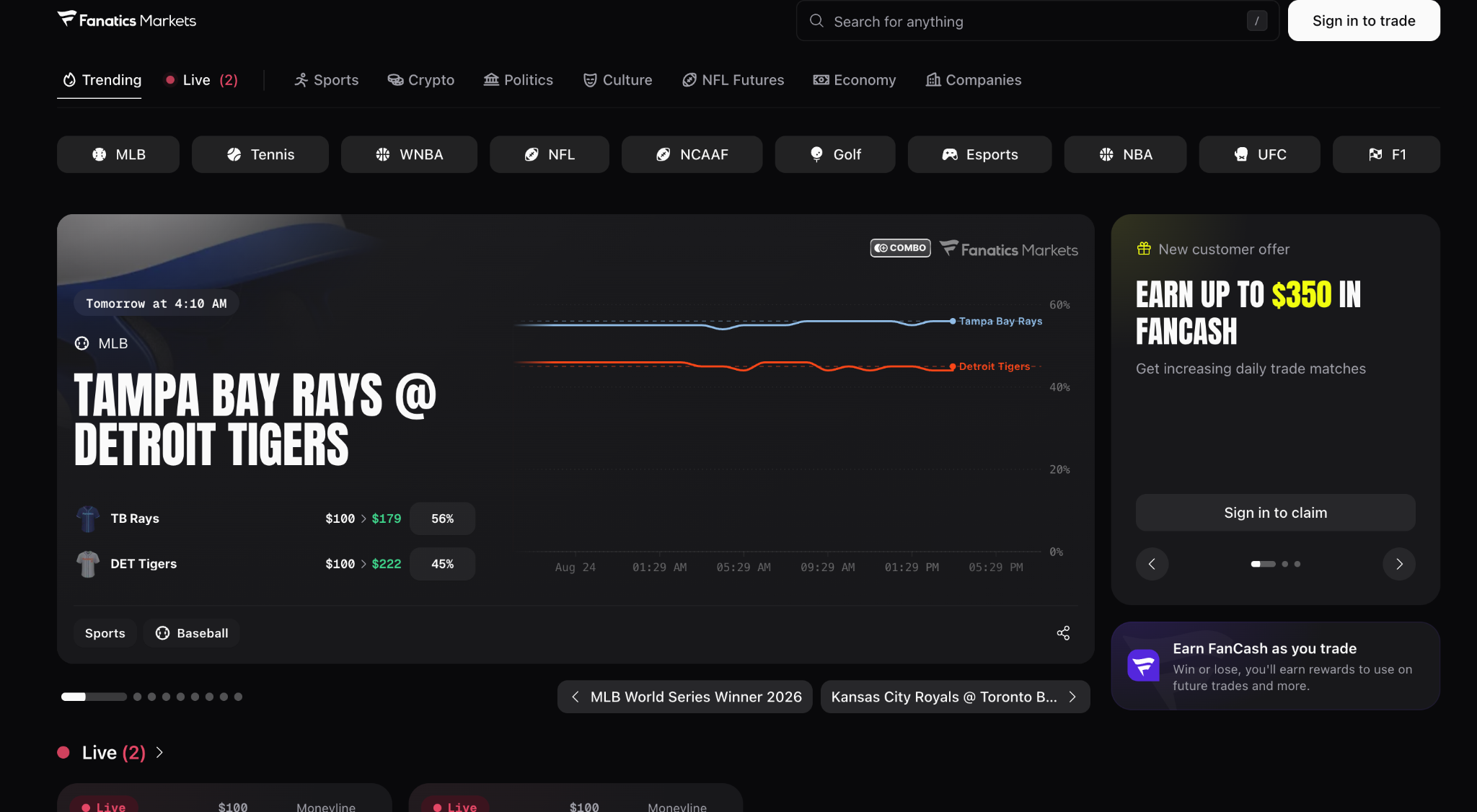
Banana Predict is now live in beta at predict.bananagun.io, giving traders a dedicated terminal for prediction markets built on the same speed obsession that made Banana Gun a name in crypto trading.

You get a real order book, cent-priced Yes and No shares, and a live probability percentage on every market. No more toggling between three tabs to figure out what a trade actually pays out.

This matters because prediction markets moved fast in 2026 and most interfaces did not keep up. Banana Predict was built to close that gap, and the team is positioning it as the fastest way to trade Polymarket markets without leaving the Banana ecosystem.

What Banana Predict Actually Is

Banana Predict is a prediction-markets trading terminal inside the Banana Gun ecosystem. It mirrors liquidity from Polymarket, so you are trading against real depth, not a synthetic order book built just for the app.

Resolution follows a UMA-style oracle process, meaning outcomes get settled through the same optimistic-oracle logic that Polymarket itself relies on. That is the part traders tend to ask about first, and it is baked in from day one rather than bolted on later.

The platform runs as a mobile-first web app. You connect a wallet to trade, and from there every market shows a payout preview before you commit, along with a Rules panel so you know exactly what triggers a Yes or No resolution.

How the Trading Experience Works

Every market on Banana Predict trades Yes or No shares priced in cents, with a live order book behind each side. You see the current probability percentage update in real time as orders fill, which turns the abstract question of “will this happen” into a number you can act on.

Before you submit a trade, the interface shows you a payout preview so there is no guessing what a winning position actually returns. Pair that with the per-market Rules section and you get the kind of clarity that prediction-market traders have been asking platforms to build for years.

Twelve Categories, Five Ways to Discover Markets

Banana Predict organizes markets across twelve categories: Politics, Sports, Crypto, Finance, Geopolitics, Earnings, Tech, Culture, World, Economy, Climate and Science, and Elections. That range covers the events traders actually watch, from Fed rate decisions to championship outcomes to election calls.

Finding the right market is handled through five discovery tabs: Trending, Breaking, New, Recurring, and Bonding. Trending surfaces what volume is flowing into right now. Breaking flags markets tied to news as it happens. New and Recurring separate one-off events from markets that repeat on a schedule, and Bonding tracks markets still building liquidity before they hit full depth.

Tools Built for Traders Who Track Other Traders

Banana Predict ships with a full Portfolio view so you can track open positions and resolved trades in one place. A Leaderboard ranks top performers, and Copytrade lets you mirror their positions directly, a feature that fits naturally with Banana Gun’s history in copy trading on the spot side.

Wallet Tracker and Social Tracker, also called X Tracker, round out the toolkit. Wallet Tracker follows on-chain activity from addresses you choose to watch, while Social Tracker pulls signal from X activity tied to specific traders or accounts. Together they give you a way to follow smart money instead of guessing where it moved.

What This Means for Prediction-Market Traders

Speed has always been Banana Gun’s core identity, first in cross-chain sniping, then in copy trading through its Telegram bot. Banana Predict extends that same philosophy into prediction markets, where execution speed and clean data have historically lagged behind spot and derivatives trading.

The beta is open now. If you already trade Polymarket markets or you are new to prediction trading and want an interface that shows probability, payout, and rules in one screen, this is worth testing today.

Frequently Asked Questions

Is Banana Predict live yet?

Yes. Banana Predict is live now in beta at predict.bananagun.io.

Do I need a wallet to use Banana Predict?

You can browse markets without one, but trading requires connecting a wallet.

Where does Banana Predict get its market liquidity?

Markets mirror liquidity from Polymarket, so order books reflect real trading depth rather than an isolated pool.

How are markets resolved on Banana Predict?

Through a UMA-style optimistic oracle process, the same resolution logic used by Polymarket.

What categories of markets can I trade?

Twelve categories are live: Politics, Sports, Crypto, Finance, Geopolitics, Earnings, Tech, Culture, World, Economy, Climate and Science, and Elections.


INTERESTING POSTS

How I’d Use the GLM-5.2 API for a Long-Running Coding Agent

0
How I'd Use the GLM-5.2 API for a Long-Running Coding Agent

In this post, I will show you how I’d use the GLM-5.2 API for a long-running coding agent.

If I were setting up a coding agent today — the kind that’s supposed to run for hours, work through a real codebase, and come back with something actually finished rather than a half-baked first attempt — GLM-5.2 api is where I’d start.

Not because it’s the flashiest name in the room, but because long-running agents fail in a very specific way, and this is one of the few models actually built with that failure mode in mind.

The Problem Nobody Warns You About Until It Happens

Here’s what nobody tells you before you build your first long-running agent: the failure isn’t usually a dramatic crash. It’s slower and quieter than that. The agent starts strong, makes good decisions for the first stretch of a task, and then somewhere around hour two or three, it starts losing the plot.

It forgets a constraint it agreed to earlier. It re-does work it already finished. It confidently “fixes” something that wasn’t broken. None of this shows up in a quick demo, because demos are short. It only shows up once you actually let the thing run.

That’s the exact scenario GLM-5.2 was built around, which is why it’s the model I’d reach for first rather than whatever’s topping a general leaderboard that week.

Why I’d Trust It to Actually Stay on Track

What sold me isn’t a single benchmark number, it’s the pattern across all of them. GLM-5.2 keeps showing up strongest specifically on the evaluations that simulate messy, hours-long engineering work rather than quick, self-contained problems.

On the kind of test that mimics an agent looping through a real repository — reading, planning, executing, checking its own work — it holds up close to the very best models out there, closed or open. That’s a different skill than being clever on a single tricky question, and it’s the one that actually matters once your agent’s task list is measured in hours instead of minutes.

Giving It Room to Actually See the Whole Project

The other piece I’d lean on hard is how much it can hold in view at once. A long-running agent working across a real codebase needs to see more than the one file it’s currently editing — it needs the surrounding context, the conventions the rest of the project follows, the pieces it touched three steps ago. GLM-5.2’s context window is big enough to hold a genuinely sizeable project in view all at once, instead of forcing the agent to work blind, one small slice at a time, and hope nothing important got left out of frame.

That’s less “nice to have” and more the actual difference between an agent that understands what it’s working inside of and one that’s just guessing.

If you’re building this kind of setup yourself, it’s worth spending a little time in the GLM-5.2 api listing before committing to anything — seeing what it sits next to, and what the nearby options trade off, tends to clarify what you actually need a lot faster than reading a single spec sheet in isolation.

The One Feature I Didn’t Expect to Care About This Much

GLM-5.2 can also be paired with a web-search tool during a task. Instead of switching to a separate model version, the agent can invoke search when it needs current documentation, recent release notes, or an external source to verify an assumption. That sounds like a small add-on until you picture what a long agent run actually needs.

A coding agent working for hours doesn’t just need to reason about the code in front of it — it occasionally needs to check something outside its own head. Did a library’s API change since the model’s training data was collected? Is there a known issue with the exact error it just hit? Rather than the agent confidently guessing at an answer that might be out of date, it can actually go look, mid-task, without a separate setup. For anything that touches fast-moving dependencies or recent library changes, that’s the difference between an agent that occasionally hallucinates its way past a stale assumption and one that just checks. 

Where I’d Actually Draw the Line

I wouldn’t pretend this is the right tool for everything, and I’d be doing you a disservice if I acted like it was. If the job is a tight, well-specified algorithmic problem — something closer to a competitive programming puzzle than an open-ended engineering task — there are other models built specifically to be faster and cheaper at exactly that kind of question, and I’d route to one of those instead rather than defaulting to the same model for every job.

The honest way to think about it is that GLM-5.2 is the specialist for staying coherent across a long, messy, multi-step project, not the fastest or cheapest option for every single request an agent might make along the way. A GLM-5.2 API for coding comparison against a more math-and-algorithms-focused alternative is worth reading before you commit your whole pipeline to one model, because the right answer genuinely depends on which of those two failure modes worries you more.

What I’d Actually Build

If I were setting this up for real, I wouldn’t hand every single request to the same configuration. I’d let the long-horizon planning and the bulk of the repository work run through GLM-5.2, with the web-search variant switched on specifically for the moments the agent needs to check something outside its own training — a library version, a recent breaking change, a fix someone already published.

And I’d keep a faster, narrower model on standby for the quick, tightly scoped questions that don’t need any of that context or reasoning depth. That’s not a compromise so much as it’s just matching the tool to the job, one more time, the same way I’d want any agent I trust with real work to be built.


INTERESTING POSTS

Protecting Business Data When Teams Work From Different Locations

0
Protecting Business Data When Teams Work From Different Locations

In this post, I will be talking about protecting business data when teams work from different locations.

The transition to remote work has shifted the approach companies use for safeguarding sensitive data. When staff members access company systems from geographically dispersed locations, traditional perimeter defences lose effectiveness, creating new entry points that adversaries seek to exploit. Threat actors frequently target remote desktop connections as these often present vulnerabilities for business networks.

Since 2020, there has been an increase in cyberattacks aimed at remote access systems. Attackers actively seek opportunities to breach business defences when individuals operate from home offices or off-site locations. Insufficient security protocols in remote desktop deployments open the door to malware, ransomware, or data theft. Lapses such as use of weak passwords or delays in applying necessary updates further raise the risk.

For organisations managing teams across different sites, maintaining a balance between data accessibility and strong protection is now essential. Secure remote access depends on layered measures that include strong authentication, full encryption, ongoing monitoring, and regular user security training. Companies adopting this strategy help sustain productivity and resilience while making severe security breaches less likely.

The Rising Security Risks of Remote Work Environments

The Rising Security Risks of Remote Work Environments

The rapid shift to remote work has created increased opportunities for cybersecurity threats. Many businesses now support remote work, but a significant number lack proper security measures. Applying strong cyber hygiene and choosing to work securely with remote access software that builds in both data encryption and strong user authentication can close common gaps. This approach ensures that endpoints and connections benefit from layered protection, lowering risk from exploitable weaknesses.

Data breaches related to remote work vulnerabilities have become a growing concern for businesses, with costs and risks continuing to rise as more organizations adopt remote and hybrid work models.

Attackers frequently target Remote Desktop Protocol (RDP) connections. Common attack tactics include brute force password attempts, man-in-the-middle interceptions, and abusing unpatched RDP vulnerabilities. Traditional VPNs often fail to address all security risks in remote work settings because their protection usually ends at securing the tunneling of data between endpoints.

Essential Security Measures for Remote Desktop Access

Essential Security Measures for Remote Desktop Access

Strong authentication forms the foundation of secure remote access. Multi-factor authentication (MFA) should be mandatory for all remote connections. This combines something users know (password), something they have (mobile device), and sometimes something they are (biometrics). MFA is widely recommended by security experts to reduce unauthorised access risks.

Data encryption protects information during transmission. All remote desktop connections should use end-to-end encryption with TLS 1.2 or higher because unencrypted sessions give attackers an opportunity to view or hijack sensitive data. Session management policies add another security layer. Organisations should implement automatic timeouts that disconnect idle sessions after a set period to prevent unauthorised access if users leave devices unattended.

IP filtering and geolocation restrictions limit connection sources. Companies can configure remote access systems to accept connections only from approved locations or IP ranges, blocking connection attempts from high-risk regions or unexpected places.

Implementing Zero Trust Architecture

Zero trust architecture requires companies to verify every user and device at every step, regardless of where the connection originates. For implementation, organisations should begin with segmenting their network so remote desktop users only access the exact resources needed for their tasks, and nothing more. Instead of full permissions, IT teams can assign application-level access and apply controls that check identities continuously, not just at login.

Administrators need to use strong authentication for every access attempt, apply end-to-end encryption for all remote sessions, and monitor user behaviour in real time. If any unusual activity is detected, such as a login from an unfamiliar location or attempts to access restricted files, system settings should automatically block the session and alert security staff.

Continuous verification is a key part of zero trust, unlike traditional perimeter-based security that validates users only at initial login. Remote desktop software with zero trust capabilities constantly monitors sessions for suspicious activities and can terminate connections if unusual patterns emerge. Using least privilege access is a practical step toward zero trust. Organisations should restrict user permissions to only what is necessary for their specific job functions.

READ ALSO: The Role of Scalable Hosting in Remote Work Environments

Data Protection Strategies Across Distributed Teams

Data Protection Strategies Across Distributed Teams

Organisations must carefully plan their data storage methods for remote teams, because each approach creates different security and management needs. Centralised storage means all business data stays on company-controlled servers, making it easier for IT teams to enforce uniform security policies, back up files, and maintain compliance. 

However, securing remote access to these centralised resources becomes a major concern, as attackers may target remote desktop gateways or VPN connections searching for a single point of entry. Companies therefore need to implement identity verification, encrypted tunnels, and regular access audits to prevent breaches.

With distributed storage, some data is kept directly on remote user devices to speed up workflow and improve offline access. While this convenience allows staff to access documents without lag or connectivity barriers, it puts a heavier security burden on endpoint devices. Organisations need strict endpoint security protocols, including required encryption and automatic update enforcement.

Data classification systems help manage information security across locations. Companies should categorise data based on sensitivity (public, internal, confidential, restricted) and apply appropriate security controls to each level. This helps ensure the most sensitive information receives the strongest protections.

Creating an Effective Remote Work Security Policy

Creating an Effective Remote Work Security Policy

A strong remote work security policy needs several key components. These include device requirements, network security standards, authentication protocols, data handling rules, incident reporting procedures, and acceptable use guidelines. The policy should be clear, accessible, and regularly updated to address emerging threats.

Employee training is important for policy effectiveness. Each member of a remote workforce should regularly take part in security awareness training. This covers how to create strong passwords, ways to identify phishing attempts, methods for sharing files securely, and steps for setting up a home Wi-Fi network to reduce outside risks.

Incident response planning must cover remote access breaches. For this, companies should build clear procedures focused on remote work realities. Organisations should set up a central reporting channel like a dedicated email or hotline so staff can immediately flag suspicious activity including unauthorised logins or malware alerts.

Recovery plans should include actions like resetting passwords, restoring files from secure backups, and providing guidance to affected users about next steps. Clear communication protocols help everyone know what information must be shared and with whom. Regular practice drills help strengthen the process and support rapid, coordinated action during real threats.

Some industries are subject to additional legal and regulatory requirements regarding data protection and remote access. Organisations operating in these sectors should ensure their remote work solutions and policies align with relevant standards and undergo regular security assessments to identify and address potential vulnerabilities.


INTERESTING POSTS

How AI Models Are Transforming Cybersecurity Workflows

0
How AI Models Are Transforming Cybersecurity Workflows

Discover how AI models are revolutionizing cybersecurity workflows through automated threat detection, incident response, secure development, and intelligent security operations.

Cybersecurity has always been a field where speed matters a lot. That’s because attackers are fast and new vulnerabilities come up almost every day. The timeframe between a threat appearing and it causing damage is sometimes only a few minutes.

Over the years, security teams have been fighting this battle with tools and processes that weren’t built for the speed of modern threats. Now, AI models are offering a much-needed change. 

AI is transforming how cybersecurity works in threat detection, incident response, and vulnerability management. It’s not by replacing the humans already doing it. Instead, AI provides capabilities that weren’t possible before, and we’ll discuss how as you continue reading.

The Major Problem AI Is Solving in Cybersecurity

The Major Problem AI Is Solving in Cybersecurity

Before we go into why AI is having such a significant impact on cybersecurity workflows, let’s examine the problem. In one word, it’s volume.

Modern organisations generate large amounts of data, including network logs, authentication events, application behaviour, and more. Going through all that data manually to find information is not only difficult but more or less impossible at the speed threats demand.

Traditional security tools rely on rule-based systems. In other words, they use predefined conditions that trigger alerts when specific patterns are detected. These systems work well for known threats, but they struggle with newer attack methods. As a result, they often generate many false positives and require constant manual updating to stay relevant.

AI models fix the problem by learning from data rather than following fixed rules. They identify patterns, adjust to new behaviours, and improve over time. That’s why they’re a better fit for modern cyber threats.

Detecting Threat and Analysing Behaviours

An essential application of AI in cybersecurity is to spot threats early. Rather than looking for specific known attack patterns, AI models recognise normal behaviour for users, devices, and network traffic. Then, they flag significant differences once detected. This approach stops threats that rule-based systems miss entirely. 

Security teams using AI-powered behavioural analysis achieve two things. First, they report significant reductions in the volume of alerts they have to review. Second, they spend less time identifying threats, meaning more focus on real incidents.

Accessing AI Models for Cybersecurity Applications

Based on our research, a significant development in how organisations use AI for cybersecurity is the rise of flexible model platforms. Teams don’t have to build proprietary AI systems from scratch, which can be expensive and time-consuming. They can instead access powerful AI models through APIs. 

One of the best platforms for that is API QIK, which connects to many leading Large Language Models (LLMs). By providing a single access point to many AI systems, it makes a rather complex job much simpler. Plus, the platform helps reduce costs because you work with the best model per task.

For teams evaluating options, a unified AI model API platform is effective. It allows security engineers to test, compare, and deploy different models for various use cases. Such flexibility in a single platform significantly reduces the time from creating a concept to deploying it.

READ ALSO: What is the Digital Personal Data Protection Act and Who Does It Apply To?

Improving Incident Response

When an incident happens, how fast cybersecurity teams respond is crucial. The longer an attacker has access to a system, the more damage they can do. In this area, AI models are reducing the duration from detection to containment in ways that manual processes just can’t match.

With an AI-assisted incident response tool, it’s possible to correlate events on multiple systems. This way, teams can reconstruct an attack timeline, identify affected assets, and recommend actions to take. All this happens within seconds of a threat being detected.

To be clear, the automated process doesn’t remove the need for human judgment. At the end of the day, experienced analysts still make calls on how to respond. However, AI handles the time-consuming groundwork, so security professionals can focus on decision-making.

Large-Scale Vulnerability Management

Identifying and patching vulnerabilities before attackers can exploit them is one of the most important tasks in cybersecurity. Not to mention, it’s resource-intensive. Most organisations deal with more vulnerabilities at a time than they have the capacity to fix, so they’re forced to prioritise.

AI models help bring intelligence to this process. They don’t just list every known vulnerability by severity score. Instead, they can assess the actual risk each vulnerability poses, based on what the organisation does. As such, it’s a kind of contextual prioritisation that helps security teams channel resources toward the vulnerabilities that matter most.

AI Models and the Security Operations Centre

AI Models and the Security Operations Centre

The Security Operations Centre (SOC) is where much of the day-to-day work of cybersecurity happens. You have analysts monitoring alerts, investigating suspicious activity, and responding to incidents. Basically, they work to stay ahead, so it’s demanding.

With a unified AI model marketplace in the SOC workflow, teams can skip the routine, repetitive tasks. We’re talking about actions such as log analysis, alert triage, and threat classification. The organisations making the most of this are those with a clear workflow for how AI outputs feed into human decision-making.

Human Review Remains Necessary

At this point, we want to be clear about something: AI is not replacing cybersecurity professionals. The industry threats are too complex and dependent on contextual judgment for that to happen.

What AI is doing is changing what cybersecurity professionals spend their time on. The systems allow less time sorting through noise or performing manual and repetitive investigation work. That leaves more room for strategic decisions, complex threat analysis, and the kind of creative thinking that attackers themselves use.

FAQ

Can AI replace cybersecurity professionals?

No. AI enhances productivity by automating repetitive tasks, but human expertise remains essential for investigation, decision-making, and strategic planning.

What cybersecurity tasks benefit most from AI?

Threat detection, log analysis, malware analysis, incident response, vulnerability assessment, secure coding, and threat intelligence processing are among the areas seeing the greatest impact.

Why use multiple AI models in cybersecurity?

Different AI models excel at different tasks. Combining them allows organizations to leverage the strengths of each model for more accurate and efficient workflows.

Bottom Line

The current trend of AI in cybersecurity isn’t temporary. From all indications, AI is becoming fundamental to how security work is done across the industry. It applies to detection, response, vulnerability management, and threat intelligence. 

Organisations that prioritise AI integration today will be better positioned to handle the threats of tomorrow. The good news is that the tools are more accessible than ever. Also, there are well-proven use cases, and the operational advantages are real. So, in conclusion, AI matters in cybersecurity, and more organisations need to build it into their workflows.


INTERESTING POSTS
Market Research Web Scraping

0
Market Research Web Scraping

In this post, I will talk about market research web scraping.

Market research has to do with gathering the right information at the ideal time. Nowadays, almost every business is data-driven, and web scraping is one of the most reliable ways to collect data at scale. You may want to track your competitors or monitor your customers’ preferences. Whichever it is, we’ll explain how web scraping can help as you continue reading. 

What is Market Research Web Scraping?

What is Market Research Web Scraping?

Simply put, market research web scraping involves extracting publicly available data for business purposes. As a business owner, your team won’t have to manually visit hundreds of web pages to copy information. Instead, you use scraping tools and scripts to automatically collect, structure, and analyze the data. It’s faster and much more efficient.

You can gather almost any type of market information using web scraping. That said, the common details most businesses are after include: 

  • Competitor pricing 
  • Product listings 
  • Customer reviews 
  • Social media mentions 
  • Job postings
  • News articles
  • Industry trends 

If done properly, market research web scraping gets you detailed insights that would be impossible to do manually.

Reliable Proxies for Market Research Web Scraping

Choosing the right provider is critical because your entire data pipeline depends on speed, success rate, and resistance to blocking. Below are some of the best-performing options:

Oxylabs — High Success Rate & Enterprise Reliability

Oxylabs

Oxylabs is widely recognized for delivering premium, enterprise-grade proxy infrastructure. With a 99% success rate, it’s built to handle demanding market research tasks where missing data is not an option.

It offers:

  • Dedicated datacenter proxies for high-volume scraping
  • One of the largest residential proxy networks globally
  • Advanced tools like a Web Scraper API for automation

This makes Oxylabs especially effective for:

  • Large-scale competitor price monitoring
  • Aggregating product listings across multiple platforms
  • Continuous data collection without interruptions

👉 If your focus is accuracy, uptime, and scale, Oxylabs is a top-tier choice.

Oxylabs Proxies
Oxylabs Proxies
Oxylabs Proxies offer enterprise-grade, AI-powered proxy solutions with a massive 175M+ IP pool, ensuring unmatched...Show More
Oxylabs Proxies offer enterprise-grade, AI-powered proxy solutions with a massive 175M+ IP pool, ensuring unmatched reliability, speed, and anonymity for large-scale web scraping and data collection. Show Less

Decodo — Smart Scraping with Built-In Automation

Decodo (Formerly Smartproxy) – Best All-in-One Proxy + Scraper Toolkit

Decodo (formerly Smartproxy) is an award-winning proxy provider designed for efficiency and ease of use. Its standout feature is the dedicated Web Scraping API, which simplifies complex scraping workflows.

Key advantages include:

  • Access to millions of IPs worldwide
  • Automatic proxy rotation to avoid detection
  • Built-in anti-blocking and CAPTCHA handling

Decodo is ideal for:

  • Businesses that want plug-and-play scraping solutions
  • Teams scaling data collection without heavy infrastructure
  • Projects involving geo-targeted or restricted content

👉 If you want a balance of power, automation, and simplicity, Decodo delivers strong performance.

Decodo logo
Decodo (formerly Smartproxy)
Decodo (formerly Smartproxy) is an AI-powered proxy service and web scraping solutions provider that enables seamless...Show More
Decodo (formerly Smartproxy) is an AI-powered proxy service and web scraping solutions provider that enables seamless, large-scale data extraction with smart, reliable, and cost-effective tools for businesses of any size. Show Less

Webshare — Scalable, Cost-Effective & Easy to Use

Webshare – Best for Customizable Proxy Plans

Webshare is a practical option for businesses that need reliable performance without excessive costs. With 500,000+ datacenter IPs and millions of residential proxies, it supports a wide range of market research use cases.

What makes Webshare stand out:

  • Optimized for pricing intelligence and public data extraction
  • Fast servers with dedicated bandwidth for consistent speed
  • 24/7 expert customer support to assist with setup and scaling

It’s particularly useful for:

  • Startups and growing data teams
  • High-volume scraping with budget considerations
  • Teams that want a simple, no-friction setup

👉 If your goal is affordable scalability with dependable support, Webshare is a solid choice.

Webshare
Webshare Proxies
Webshare Proxies offers high-speed, customizable, and budget-friendly proxy solutions with flexible pricing, ensuring...Show More
Webshare Proxies offers high-speed, customizable, and budget-friendly proxy solutions with flexible pricing, ensuring seamless web scraping, automation, and online anonymity for businesses and individuals. Show Less

Quick Recommendation Guide

NeedBest Option
Enterprise-scale, high accuracy🟢 Oxylabs
Automation + ease of integration🔵 Decodo
Budget-friendly, scalable scraping🟠 Webshare

5 Major Use Cases in Market Research

As we explained earlier, you can source various types of data using market research web scraping. Let’s now look at the five major ones:

1. Competitor Price Monitoring

Many businesses want to know what their competitors are charging, so they can adjust their prices accordingly. This is common, especially for service providers, where pricing is often private. Large-scale online businesses like e-commerce and travel platforms also use it to aggregate data from many sites. In such niches, web scraping allows you to extract and monitor costs in real time. 

2. Consumer Sentiment Analysis

After competitors, customers are the most important profiles to businesses. So, many companies use market research web scraping to source product reviews, forum discussions, and social media comments. That way, they know how customers feel about their products and services. It’s qualitative data that’s invaluable for marketing strategies and business development. 

3. Trend Identification 

If you’re in an industry and you don’t know what’s trending, your business won’t sell. To catch all the latest updates, you can use web scraping to retrieve data from news sites, niche blogs, and search engine results. The main advantage is that you’ll spot the trends early, before they become mainstream. As you adjust your strategy or product roadmap, you stay ahead of the competition.

4. Lead Generation and Prospecting 

Converting leads and prospects is one of the best signs of a successful business. Market research web scraping on directories, LinkedIn, and other industry sites can help you identify the right people to message. From the data you collect, you can build comprehensive prospect lists with business names, contact information, and company details.

5. Product and Inventory Research

This use case applies mostly if you’re a manufacturer or product retailer. Web scraping can be reliable in curating information from supplier catalogs and competitor product pages. Subsequently, you apply the data to track inventory levels and launch new, better products.

Proxies for Market Research Web Scraping

Proxies for Market Research Web Scraping

When scraping data for market research, it’s usually a large-scale project. Therefore, it’s necessary to get a reliable proxy to facilitate the process. The reason is that most websites set rate limits per IP address. So, if a site detects too many requests from a single IP, it automatically blocks that IP. Without proxies, then, data collection is slow, and the entire research operation may fail.

Thankfully, there are many secure proxies you can rely on for your market research. Here are our best picks: 

  • Oxylabs: Offers high-quality proxies with a 99% success rate for retrieving public data. It has dedicated datacenter IPs for high-volume web scraping in the market research space.
  • Decodo: An award-winning proxy service with a dedicated web scraping API. The API lets you scrape data with millions of IPs and built-in anti-blocking technology. 
  • Webshare: Features 500,000+ datacenter IPs with specific use cases for pricing intelligence and public data. Expert customer support is available 24/7 to help you with your project. 

If you’re on a tighter budget, you can also consider IP Royal or Mars Proxies. Both have first-hand residential proxies that can be used for web scraping efficiently.

Bottom Line: Web Scraping Offers a Competitive Advantage

As a business, investing in web scraping for market research can easily put you ahead of your competitors. That’s because it gives you a broad view of the entire industry with data you can’t fetch through manual browsing or periodic reports. All you need is a proper scraping tool and a secure proxy like Oxylabs, Decodo, or Webshare.

You can use the Python-based Scrapy, which is highly customizable. Alternatively, you can go for Puppeteer or Playwright if the site is JavaScript-heavy and requires browser rendering. BeautifulSoup is also a decent option for lighter parsing tasks.

While scraping, it’s important to maintain ethical standards. What you’re after is mainly product or service information, pricing, reviews, and other publicly available business data. Define your targets, and avoid collecting personal information. Also, if the source website has an API, use it instead of scraping directly.

FAQs: Market Research Web Scraping

What is market research web scraping?

Market research web scraping is the process of automatically collecting publicly available data from websites to gain business insights. Instead of manually browsing hundreds of pages, scraping tools gather and structure data such as:

  • Competitor pricing
  • Product listings
  • Customer reviews
  • Social media mentions
  • Industry trends

This allows businesses to make faster, data-driven decisions at scale.

How do businesses use web scraping for market research?

Businesses use web scraping across several key areas:

  • Competitor monitoring → Track pricing and offerings
  • Customer insights → Analyze reviews and sentiment
  • Trend discovery → Identify emerging market opportunities
  • Lead generation → Build targeted prospect lists
  • Product research → Monitor inventory and supplier data

These insights help companies stay competitive and respond quickly to market changes.

Why are proxies important for market research scraping?

When scraping at scale, sending too many requests from a single IP can trigger rate limits or blocks. Proxies solve this by distributing requests across multiple IP addresses, ensuring smooth and uninterrupted data collection.

Top proxy providers for market research include:

  • Oxylabs → High success rates and strong performance for large datasets
  • Decodo → Advanced scraping API with built-in anti-blocking features
  • Webshare → Reliable datacenter proxies with strong support and scalability

Using proxies ensures your scraping operation remains efficient and consistent.

4. Is market research web scraping legal?

Yes—if done correctly. Market research scraping should focus only on publicly available data such as pricing, product information, and reviews.

Best practices include:

  • Avoid scraping personal or sensitive data
  • Respect website terms of service
  • Use official APIs where available

Following these guidelines helps ensure your data collection remains ethical and compliant.

5. What tools are best for market research web scraping?

The right tools depend on the complexity of your project:

  • Scrapy → Powerful and customizable for large-scale scraping
  • Puppeteer / Playwright → Ideal for JavaScript-heavy websites
  • BeautifulSoup → Lightweight option for simple parsing tasks

To maximize performance, combine these tools with reliable proxies like Oxylabs, Decodo, or Webshare for scalable data extraction.

This combination allows you to build a robust, efficient market research system.


INTERESTING POSTS
Ethical Web Scraping Guidelines

0
Ethical Web Scraping Guidelines

In this post, I will talk about ethical web scraping guidelines.

Web scraping is one of the best tools for data collection, research, and analysis. However, the activity comes with responsibilities, as questions remain about its legality. So, if you’re going to engage in web scraping, you have to do it ethically. 

Our guide is here to help you achieve that. We’ll explain ethical guidelines you can follow to avoid issues while scraping the web. Let’s get started. 

1. Understand the Law

Before writing a single line of code, you have to check the web scraping laws in your target region. That’s because rules vary from place to place, although a few principles generally apply. 

To confirm, check the terms and conditions of the site you want to scrape. Many platforms directly state whether they allow or prohibit automated data collection. If the site doesn’t permit it, scraping may lead to legal issues even if the information is public. 

2. Check robots.txt

Check robots txt

The robots.txt file tells you which parts of a site bots are and aren’t permitted to access. For an ethical web scraping operation, you have to check the file and confirm. You can usually access it at “https://website.com/robots.txt.”

We must clarify that robots.txt isn’t legally binding in most jurisdictions. However, if you ignore it completely, you’ll be going against proper web etiquette. If a site doesn’t allow scraping of some directories or paths, respect the boundaries. 

3. Don’t Overload Servers

One major ethical mistake in web scraping is sending too many requests within a short period. In other words, it’s bombarding the server with hundreds of requests per second. That’s more or less a denial-of-service (DoS) attack, even though it may not be intentional.

When you overload servers during web scraping, you affect the site’s performance for regular users. Also, the platform’s owners incur bandwidth costs. 

An ethical way to scrape data is to delay requests by 1–2 seconds. Also, you can perform the operation during off-peak hours, when server load is lower. 

4. Use Proxies Responsibly 

Proxy services are essential for web scraping, especially for large-scale operations. With these tools, you can distribute requests across multiple IP addresses. The advantage is that you’ll avoid rate limits and IP bans. 

We recommend using any of the following proxy services: 

This service provides access to more than 175 million residential proxies and 2 million datacenter proxies. It’s one of the best web scraping tools globally, and you can try it for free before paying.

Oxylabs Proxies
Oxylabs Proxies
Oxylabs Proxies offer enterprise-grade, AI-powered proxy solutions with a massive 175M+ IP pool, ensuring unmatched...Show More
Oxylabs Proxies offer enterprise-grade, AI-powered proxy solutions with a massive 175M+ IP pool, ensuring unmatched reliability, speed, and anonymity for large-scale web scraping and data collection. Show Less

This platform boasts an award-winning proxy network with over 125 million IPs. You can choose from 195+ countries, and the proxies are fast, with an average speed of less than 0.2 seconds. 

Decodo logo
Decodo (formerly Smartproxy)
Decodo (formerly Smartproxy) is an AI-powered proxy service and web scraping solutions provider that enables seamless...Show More
Decodo (formerly Smartproxy) is an AI-powered proxy service and web scraping solutions provider that enables seamless, large-scale data extraction with smart, reliable, and cost-effective tools for businesses of any size. Show Less

This brand offers datacenter, static residential, and dynamic residential proxies. All are suitable for web scraping, depending on the tasks. With a 99.97% success rate, you can fully rely on the network.

Webshare
Webshare Proxies
Webshare Proxies offers high-speed, customizable, and budget-friendly proxy solutions with flexible pricing, ensuring...Show More
Webshare Proxies offers high-speed, customizable, and budget-friendly proxy solutions with flexible pricing, ensuring seamless web scraping, automation, and online anonymity for businesses and individuals. Show Less

Don’t use proxies to bypass strict access restrictions or scrape data that a site clearly restricts. Such applications are against ethical practices.

5. Only Scrape What You Need

You can’t talk about responsible web scraping without mentioning data minimization; it’s a core principle. We understand how tempting it is to collect the entire data and sort out what’s useful later. However, the approach is risky, both legally and in terms of data management.

A better move is to find what information you need before scraping. Then, only collect the fields you require and avoid storing sensitive or personal details unless there’s a lawful reason for it. 

6. Handle Data Properly

Many people use scraped data in published works, products, and reports. If that also applies to you, it’s necessary to credit the source. Also, don’t republish in such a way that it competes with the original piece. Besides ethical concerns, you’ll be dealing with copyright and plagiarism issues.

Furthermore, store any data you collect securely and only use it for the intended purpose. You should not sell, rent, or share it with other parties without appropriate permissions. When you treat the scraped data with integrity, you reduce the risk of legal challenges later.

7. Ask Questions

Ask Questions

We consider this the most overlooked approach in web scraping. If anything is unclear, contact the website owner and ask for permission to scrape or access the data you need. Many platforms have official APIs that provide structured, rate-limited access to information. 

Based on our expertise, using an API is almost always preferable to traditional scraping. If no API is available, the site can arrange a data-sharing collaboration that benefits both parties. This may take more time, but it removes ethical problems entirely. 

Bottom Line

Ethical web scraping isn’t just about avoiding legal trouble. It also involves being responsible for collecting, handling, and storing data. From our guidelines, achieving it isn’t a Herculean task.

At a basic level, you need to respect the website’s terms, limit your requests, and use reputable proxy providers such as Oxylabs, Decodo, and Webshare. Also, only collect what you need and ask for direct API access when possible. Follow these instructions, and you’ll build ethical scraping operations. 

FAQs – Ethical Web Scraping Guidelines

1. What is ethical web scraping?

Ethical web scraping means collecting data responsibly, legally, and with respect for website owners and users. It goes beyond just extracting data—it involves:

  • Following the website Terms of Service
  • Respecting robots.txt guidelines
  • Avoiding excessive server load
  • Handling data securely and fairly

The goal is to gather useful information without harming systems, violating privacy, or breaking trust.

2. Is it enough to scrape only publicly available data?

Not always. Even if data is public, you still need to consider:

  • The website’s Terms of Service
  • Any restrictions in robots.txt
  • Local laws and regulations

Some websites explicitly prohibit scraping, and ignoring those rules can lead to legal or ethical issues.

👉 Public data is safer—but permission and compliance still matter.

3. How can I avoid overloading a website while scraping?

Overloading servers is one of the most common ethical mistakes. To prevent this:

  • Add delays (1–2 seconds) between requests
  • Limit the number of concurrent requests
  • Scrape during off-peak hours
  • Monitor server responses and adjust accordingly

This ensures your scraping does not negatively impact the website’s performance or user experience.

4. Are proxies ethical to use in web scraping?

Yes—proxies are ethical when used responsibly. They help distribute requests across multiple IPs, making large-scale scraping more stable.

Trusted providers include:

  • Oxylabs → Massive proxy network with high reliability
  • Decodo → Fast proxies with global coverage and strong performance
  • Webshare → Flexible proxy options with high success rates

However, proxies should not be used to bypass strict restrictions or access prohibited data. Ethical use is about maintaining balance between efficiency and respect for boundaries.

5. What is the best way to ensure long-term ethical scraping?

To build sustainable and ethical scraping operations:

  • Collect only the data you need (data minimization)
  • Avoid storing or using personal/sensitive information without permission
  • Credit sources when publishing data
  • Use official APIs whenever available
  • Ask website owners for permission if unsure

Taking these steps helps you stay compliant while building trustworthy, long-term data systems.


INTERESTING POSTS

Real-Time Data Scraping: A Complete Guide

0
Real-Time Data Scraping A Complete Guide

In this post, I will talk about real-time data scraping.

If you do business, regardless of the kind, you’ll agree that market conditions shift by the minute. Also, consumer behavior is changing faster than ever. For these reasons, being able to collect and act on data in real time is a genuine competitive advantage.

Real-time data scraping involves continuously extracting live data from websites and online sources. In other words, you get information as it’s generated or updated, rather than collecting static details on a scheduled basis.

The good news is that real-time data scraping doesn’t have to be difficult. In this guide, we’ll explain how you can go about it effectively.

What Is Real-Time Data Scraping?

What Is Real-Time Data Scraping?

Traditional web scraping operates on a schedule. For a typical project, your script runs once a day, collects data, and stores it for later analysis. Real-time scraping is much more different. It has to do with steady monitoring of web sources and collecting data the moment it appears or changes.

The distinction matters a lot depending on the use case. For instance, a price change on a competitor’s website at 9:00 AM can be useful at 9:01 AM. However, if left until the following morning, it becomes almost irrelevant. Real-time scraping fixes that gap, providing current, immediately usable information.

Where Real-Time Data Scraping is Useful

We can point to several business areas where you can apply real-time data scraping for positive results. However, let’s consider the six major ones: 

1. Financial Market Data

Traders, analysts, and fintech platforms can use real-time scraping to monitor stock prices, cryptocurrency values, commodity rates, and financial news. In such an industry, even milliseconds of delay can result in huge trading differences. As such, up-to-date data is always a priority.

2. E-Commerce Price Tracking

Retailers and price comparison platforms regularly scrape product pages. They do so to detect price changes, flash sales, and stock availability updates the moment they happen. Many pricing engines feed directly from this real-time data to automatically adjust prices.

3. News and Media Monitoring

PR agencies, communications teams, and intelligence platforms need to track brand mentions and breaking stories as they develop. Scraping news outlets, blogs, and social media feeds in real-time makes that possible. 

4. Sports and Betting Data

We can’t debate that live sports scores, odds changes, and in-game statistics are among the most time-sensitive data types on the web. Real-time scraping powers the data feeds that betting platforms, DFS apps, and sports analytics tools depend on.

5. Travel and Hospitality

Here, the focus is on flight prices, hotel availability, and vacation rental rates. These details change frequently, and real-time scraping enables aggregators to obtain accurate pricing. They won’t have to deal with just cached results.

6. Cybersecurity Threat Intelligence

Security teams use real-time scraping to monitor dark web forums, paste sites, and threat intelligence feeds. That’s how they can quickly detect signs of data breaches, leaked credentials, and other cybercrimes.

Top Proxy Services for Real-Time Data Scraping

We’ve tested and evaluated several providers based on speed, reliability, scalability, and anti-detection performance. Below are some of the best proxy services for handling real-time scraping workloads:

Oxylabs — Enterprise-Level Speed & Real-Time Integration

Oxylabs

Oxylabs is built for high-frequency, large-scale scraping environments where performance and uptime are critical. One of its standout features is the Realtime integration within its Web Scraper API, allowing you to extract data continuously without building complex infrastructure from scratch.

With a massive residential proxy pool, AI-powered scraping tools, and enterprise-grade SLAs, Oxylabs is ideal for:

  • Financial data monitoring
  • E-commerce price tracking at scale
  • Mission-critical real-time pipelines

👉 If you’re running operations where every second matters, Oxylabs delivers consistency and precision.

Oxylabs Proxies
Oxylabs Proxies
Oxylabs Proxies offer enterprise-grade, AI-powered proxy solutions with a massive 175M+ IP pool, ensuring unmatched...Show More
Oxylabs Proxies offer enterprise-grade, AI-powered proxy solutions with a massive 175M+ IP pool, ensuring unmatched reliability, speed, and anonymity for large-scale web scraping and data collection. Show Less

Decodo — Smart Automation & Anti-Detection Strength

Decodo

Decodo (formerly Smartproxy) is a strong choice for teams that want automation and flexibility without heavy engineering overhead. It features automatic proxy rotation, built-in CAPTCHA handling, and seamless Web Scraping API integration, making it easier to maintain stable real-time data flows.

Its infrastructure supports residential and mobile proxies, which are highly effective against modern anti-bot systems.

Best suited for:

  • Geo-targeted scraping
  • Platforms with strict bot detection
  • Scalable real-time monitoring setups

👉 If your focus is staying undetected while scaling efficiently, Decodo is a reliable option.

Decodo logo
Decodo (formerly Smartproxy)
Decodo (formerly Smartproxy) is an AI-powered proxy service and web scraping solutions provider that enables seamless...Show More
Decodo (formerly Smartproxy) is an AI-powered proxy service and web scraping solutions provider that enables seamless, large-scale data extraction with smart, reliable, and cost-effective tools for businesses of any size. Show Less

Webshare — Fast, Scalable & Cost-Efficient

Webshare

Webshare offers a practical balance of speed, affordability, and global coverage. With 500,000+ datacenter IPs and 80+ million residential proxies, it supports high concurrency and rapid request handling.

Its infrastructure is optimized for rate-limit avoidance and consistent throughput, which is essential for real-time scraping tasks that rely on frequent requests.

Ideal for:

  • Startups and growing data operations
  • High-volume scraping with budget constraints
  • Projects needing simple, quick deployment

👉 If you want solid performance without overspending, Webshare is a strong contender.

Webshare
Webshare Proxies
Webshare Proxies offers high-speed, customizable, and budget-friendly proxy solutions with flexible pricing, ensuring...Show More
Webshare Proxies offers high-speed, customizable, and budget-friendly proxy solutions with flexible pricing, ensuring seamless web scraping, automation, and online anonymity for businesses and individuals. Show Less

IPRoyal — Flexible & Developer-Friendly

IPRoyal is known for its flexible pricing models and ease of integration, making it attractive for developers and smaller teams building real-time scraping systems. It offers residential, mobile, and datacenter proxies, with a focus on transparency and control.

While not as enterprise-heavy as Oxylabs, it performs well for:

  • Mid-scale scraping projects
  • Testing and development environments
  • Businesses needing cost control with decent performance

👉 A good option if you want flexibility and simplicity without committing to enterprise pricing.

Mars Proxies — Emerging Option with Competitive Pricing

Mars Proxies is a newer player gaining attention for its competitive pricing and reliable proxy performance. It provides residential proxies with decent speed and uptime, making it suitable for light to moderate real-time scraping tasks.

It may not yet match the scale of top-tier providers, but it’s useful for:

  • Budget-conscious scraping setups
  • Smaller automation workflows
  • Supplementing primary proxy networks

👉 Think of Mars Proxies as a supporting layer or entry-level solution for real-time scraping.

Quick Comparison Snapshot

Use CaseBest Choice
Enterprise, mission-critical real-time scraping🟢 Oxylabs
Automation + anti-bot resilience🔵 Decodo
Budget-friendly high-speed scraping🟠 Webshare
Flexible, developer-friendly setup🟣 IPRoyal
Entry-level or supplementary usage⚫ Mars Proxies

Setting Up a Real-Time Scraping Operation

If you want to build a real-time scraping project, the setup is quite different from regular batch scraping. Based on our expertise, these are the most essential components you need:

Event-Driven Design

Real-time systems can’t run scrapers on a fixed schedule. Instead, they use an event-driven death, such that the scraper kicks off upon a trigger. It can be when a monitored page changes, a new listing appears, or some other condition is met. This approach minimizes wasted requests and guarantees fresh data.

Headless Browsers

Many modern websites are JavaScript-heavy and don’t render meaningful content in a basic HTTP request. Therefore, you’ll need headless browser tools like Playwright and Puppeteer. They can simulate full browser environments, allowing you to scrape content that loads automatically on a page.

WebSocket and API Monitoring

Some platforms deliver live data through WebSocket connections or public APIs. They skip the traditional HTTP pages. Such platforms are far more efficient than repeatedly requesting and parsing full web pages. However, you may need permission. 

Message Queues and Stream Processing

Depending on the scale, real-time scraping can generate enormous volumes of data. To process such large amounts of information without issues, you need tools like Apache Kafka and RabbitMQ. They handle high-throughput data streams, so the scraped data can be smoothly transferred into your storage and analytics systems.

Low-Latency Storage

Real-time data becomes useless if it can’t be stored and accessed fast. The best solutions here are in-memory databases like Redis and time-series databases like InfluxDB. As experts, we rate them as dependable for high-speed, time-stamped data that real-time scraping produces.

Function of Proxies in Real-Time Scraping

Function of Proxies in Real-Time Scraping

When you query the same sites continuously, you’ll often encounter IP-based rate limits and bot detection systems. So, for us, robust proxies are non-negotiable for real-time scraping. We’ve tested and ranked the top five services you can use below: 

  • Oxylabs: This proxy service has a dedicated Realtime integration for its WebScraper API. You can use it to handle large-scale data extraction by the minute. 
  • Decodo: This platform uses automatic proxy rotation and CAPTCHA handling for optimal real-time scraping. You can work with the Web Scraping API integration to make things easier. 
  • Webshare: This proxy has 500,000+ datacenter IPs with fast servers and dedicated bandwidth. They have rate-limit avoidance that’s perfect for real-time scraping. 

If you want more proxy options, check out IP Royal or Mars Proxies. Each has dependable proxy IPs for real-time data scraping.

Bottom Line: Real-Time Data is a Strategic Asset

Mastering real-time data scraping helps you move faster and make better decisions as a business or agency. You may want to adjust prices the moment a competitor moves or capitalize on a market opportunity the instant it appears. Whichever it is, real-time information is invaluable.

As we explained, you’ll need the right technical tools to begin. Plus, a reliable proxy service built on providers like Oxylabs, Decodo, and Webshare is essential. That said, speed is only one angle for success. You also need to ensure quality by defining the right data fields and types.

FAQs: Real-Time Data Scraping

1. What is real-time data scraping and how is it different from traditional scraping?

Real-time data scraping involves continuously collecting data as it is created or updated, rather than pulling it at fixed intervals like traditional scraping.

The key difference is timing:

  • Traditional scraping → Scheduled (e.g., once daily)
  • Real-time scraping → Instant, event-driven

This matters because some data—like price changes or breaking news—loses value quickly if not captured immediately. Real-time scraping ensures you always work with fresh, actionable data.

2. What are the main use cases for real-time data scraping?

Real-time scraping is especially valuable in industries where timing is critical. Common use cases include:

  • Financial markets → Tracking stock and crypto price movements
  • E-commerce → Monitoring price changes and stock availability
  • News & media → Detecting breaking stories and brand mentions
  • Sports & betting → Capturing live scores and odds
  • Travel → Updating flight and hotel pricing
  • Cybersecurity → Monitoring threats and data leaks

In all these cases, even a small delay can reduce the usefulness of the data.

3. What technologies are required for real-time scraping?

A proper real-time scraping setup requires more advanced infrastructure than basic scraping. Key components include:

  • Event-driven systems → Trigger scraping when changes occur
  • Headless browsers → Handle JavaScript-heavy websites
  • WebSocket/API monitoring → Capture live data streams
  • Message queues (Kafka, RabbitMQ) → Process large data flows
  • Low-latency databases (Redis, InfluxDB) → Store and access data instantly

These tools ensure your system can capture, process, and deliver data without delays.

4. Why are proxies essential for real-time data scraping?

Real-time scraping sends frequent requests to the same websites, which can quickly trigger rate limits, IP bans, or bot detection systems.

Proxies solve this by distributing requests across multiple IP addresses, ensuring continuous access. For reliable performance:

  • Oxylabs → Offers real-time integration with its Web Scraper API for large-scale operations
  • Decodo → Provides automatic proxy rotation and CAPTCHA handling
  • Webshare → Delivers fast datacenter proxies with strong rate-limit avoidance

Using the right proxy provider ensures your scraping stays fast, stable, and uninterrupted.

5. What are the biggest challenges in real-time data scraping?

Real-time scraping is powerful, but it comes with challenges:

  • High infrastructure demands
  • Handling large volumes of streaming data
  • Avoiding detection and blocks
  • Maintaining low latency for storage and processing
  • Ensuring data quality and accuracy

To succeed, you need a combination of strong architecture, efficient data pipelines, and reliable proxy services like Oxylabs, Decodo, or Webshare.

When done right, real-time scraping becomes a strategic advantage, helping you act faster than competitors.


INTERESTING POSTS

How Swiss Buyers Can Snag Deals From Overseas Sellers

0
How Swiss Buyers Can Snag Deals From Overseas Sellers

In this post, I will show you how Swiss Buyers can snag deals from overseas sellers.

Swiss shoppers love quality products at reasonable prices. With ecommerce, international merchants often beat local Swiss retailers on costs. With this opportunity, potential Swiss shoppers sometimes hesitate to purchase due to concerns related to delivery and customs. 

Knowing the right methods to purchase products through these channels will help you achieve great savings. Knowing ebay Switzerland shipping is very important for international ecommerce. 

It will open many doors to the availability of great products at reasonable costs from the US, EU, Asia, etc.

ebay switzerland shipping has improved and many sellers offer tracked international delivery directly to Switzerland. 

The next sections will take you through steps you can use to find great products and avoid the most common problems.

Why Overseas Deals Are Worth It for Swiss Buyers

Compared to Swiss shops, overseas sellers often price their products 30 to 60% lower. Meaning, electronics, clothing, vintage stuff, tools, and much more can all be found on international markets. Add in the CHF’s value against other currencies, and purchases overseas become more tempting.

Your knowledge of logistics overseas will set you up for more success. 

As a non-EU country, Switzerland imposes customs and VAT (MWST) on overseas purchases beyond a certain value. Being informed helps you estimate the total cost to you and avoid negative experiences when receiving your purchases.

Top Platforms for Finding Overseas Deals

eBay is still one of the better options out there. Look for sellers with good international shipping ratings. Filter Worldwide and Europe results and check where sellers are located. 

Many US or UK sellers have good shipping results to Switzerland. However, you should always check eBay Switzerland shipping in the listing.

You could also try Etsy for one of a kind or homemade goods, Amazon international sellers, and specialty electronics or accessory stores like AliExpress. Be sure to check shipping calculators and total prices across all platforms.

Smart Strategies to Maximize Savings

  1. Include Total Costs: Always account the item cost + the cost of shipping + possible customs charges. Use a Swiss Post customs calculator or Zollrechner like the others, to calculate your duties. Many foreign based suppliers have free or reduced shipping for bulk purchases.
  2. Choose Safe Shipping Methods: Choose shipping methods where tracking is possible, and use a delivery method that requires a confirmed signature. In comparison to standard shipping methods, DHL, Fedex, and UPS are often better shipping solutions to Switzerland, but are more expensive and reliable.
  3. Costs and Convenience: Buy during large sales events like Black Friday, Cyber Monday and other events. Deep discounts on bulk purchases from foreign suppliers can help offset the shipping cost.
  4. Risk vs Reward: Use a site that has strong buyer protection to help reduce your risk. eBay has a Money Back Guarantee and PayPal protection to help ease the concerns associated with poor delivery or product quality.

Handling Customs and Taxes Like a Pro

Switzerland has a VAT (currently 8.1%) levied on Imports. Goods less than CHF 5 typically are duty free. Goods greater than CHF 5 could be levied with additional tariffs. Do not abuse a seller request to mark a package “Gift” as this can cause issues.

Package forwarding is an option if direct shipping to Switzerland is unavailable. Shipito and MyUS are options that consolidate purchases and take care of customs on your behalf.

Conclusion

With the right preparation and planning, Swiss customers can enjoy great deals from sellers around the world. Utilizing reputable sites, learning how ebay Switzerland shipping works, figuring total costs and staying up to date on customs can save you a lot of money and help you avoid the stress.

Make your first purchase low-value. Gradually make more purchases as you trust the process more and get comfortable. With good research and a good process, you will find overseas purchases are cheaper and better than what you can buy locally.

Ultimately you, the buyer, are the one who gets to decide what a great deal is. You can find low overseas deals, but what you actually get to decide is the next overseas purchase to make.


INTERESTING POSTS

25 Best Hacking Movies For Cybersecurity Enthusiasts [2026 List]

0
best hacking movie

This post showcases the 25 best hacking movies for cybersecurity enthusiasts. 

Cybersecurity is an exciting and ever-evolving field, and it’s no surprise that it has inspired many great films.

These hacking movies offer entertainment and provide insight into the real-world threats posed by hackers and the challenges faced by cybersecurity professionals.

Cybersecurity is an exciting and attractive subject in the cinema. It’s also a way to learn about new concepts you didn’t know existed in the computer world. We recommend some films that deal with this topic.

📝Editor’s Note: We highly recommend using the best VPN service to protect your browsing activities from hackers and snoopers.

BEST MARCH VPN DEALS FOR NETFLIX AND OTHER STREAMING SITES

Surfshark
Surfshark
Surfshark is an award-winning VPN service for keeping your digital life secure. Surfshark VPN has servers located in...Show More
Surfshark is an award-winning VPN service for keeping your digital life secure. Surfshark VPN has servers located in more than 60 countries worldwide. Show Less
CyberGhost VPN
CyberGhost VPN
CyberGhost VPN is a VPN service provider with more than 9,000 VPN servers spread in over 90 countries. Complete privacy...Show More
CyberGhost VPN is a VPN service provider with more than 9,000 VPN servers spread in over 90 countries. Complete privacy protection for up to 7 devices! Show Less
ExpressVPN
ExpressVPN
A dependable VPN service that works on all devices and platforms.
A dependable VPN service that works on all devices and platforms. Show Less
ProtonVPN
ProtonVPN
A swiss VPN service that goes the extra mile to balance speed with privacy protection.
A swiss VPN service that goes the extra mile to balance speed with privacy protection. Show Less
Private Internet Access
Private Internet Access uses world-class next-gen servers for a secure and reliable VPN connection, any day, anywhere.
Private Internet Access uses world-class next-gen servers for a secure and reliable VPN connection, any day, anywhere. Show Less

READ ALSO: Best Protection Tools Against Hackers

25 Best Hacking Movies For Cybersecurity Enthusiasts

1. WarGames (1983)


wargames

One of the best hacking movies for cybersecurity of all time is WarGames. It is one of the first films to address cybersecurity. David (Matthew Broderick) is a computer scientist who unintentionally connects his computer to the U.S. Department of Defense.

In this central server, reality becomes confused with the game, and David will have to rely on the help of his girlfriend and a computer friend to try to prevent a possible Third World War.

2. The Net (1995)

the net

Sandra Bullock plays Angela in La Red, a computer expert in finding viruses and system irregularities.

Angela discovers a program that enables users to access secret databases. Her life changed from then on, getting involved in a conspiracy, and corruption was endangering her life and family. 

3. Matrix (1999)

matrix 2003

Another best hacking movie for cybersecurity that should make our is list is Matrix (1 – 3). This science-fiction hacking movie stars a computer programmer (Keanu Reeves) who lives a double life: at night, he becomes a hacker using the alias Neo.

When acting as Neo, he comes into contact with Trinity (Carrie-Anne Moss), who puts him in touch with Morpheus (Laurence Fishburne) and with the actual reality of the Matrix: a social simulation of the world that represents the end of the 20th century.

Machines enslave humans; they are in suspension, and they have their minds connected to this simulation. Neo will join Trinity, Morpheo, and their group of rebels to fight the machines and free the enslaved humans.

4. Blackhat (2015)

cybersecurity movies

Maintaining the number 4 on our list of the best hacking movies is Blackhat. In this cybersecurity movie, the Chinese and U.S. governments are forced to cooperate to stop a network of high-level cybercrime.

To do so, they will need the help of a hacker (Chris Hemsworth)- a prisoner, who will help them protect the national security of both powers in exchange for reducing his prison sentence.

READ ALSO: Best Antivirus For 2022

5. Snowden (2016)

cyber security movie

Oliver Stone directs Joseph Gordon-Levitt in this film that tells part of Edward Snowden’s life. Snowden is an adaptation of Luke Harding’s book “The Snowden Files: The Inside Story of the World’s Most Wanted Man.” 

This hacking movie plot took us to Hong Kong in 2013, when Edward Snowden joined journalists Glenn Greenwald, Ewen MacAskill, and documentary filmmaker Laura Poitras to publish in The Guardian classified and confidential documents that Snowden had acquired while working for the NSA (National Security Agency). 

They also tell us about subsequent events and the impact the publication of these documents had on public opinion and Snowden’s life.

In turn, they tell us, through flashbacks to the past, previous events: when Snowden enlisted in the army, when he met his partner Lindsay Mills, and about his beginnings in the CIA and NSA.

CHECK OUT: Cybersecurity Products Deals (Huge Discounts even up to 80% OFF)

6. Jason Bourne (2016)

best hacking movie

There are a total of five films about the fictional character, former CIA agent Jason Bourne (Matt Damon). All are based on the novels written by Robert Ludlum and continued by Eric Van Lustbader with a series of sequels starring Bourne.

The protagonist, who mysteriously disappeared after revealing secret details of the CIA’s murder programs, struggles to recover his identity, becoming involved in networks of manipulation and murder. This latest installment, which premiered in 2016, deals with various topics related to cybersecurity.

READ ALSO: Best VPN For 2022

7. Ghost in the Shell (2017)

hackers movie

Ghost in the Shell is a popular science fiction manga created by Masamune Shirow that has been adapted for television, video games, and cinema, but always in animation format. 

On March 31, the adaptation of Ghost in the Shell, featuring live-action actors and actresses, arrives in Spanish cinemas.

Scarlett Johansson has been in charge of bringing to life the futuristic cyborg secret police (cybernetic organism), Major Motoko Kusanagi, who fights against technological crimes.

8. Sneakers (1992)

best hacking and hackers movie

One of the best hacking movies for cybersecurity on our list is Sneakers, released in 1992. Robert Redford stars in Sneakers as Martin Bishop, a computer genius.

Martin leads a team of IT experts responsible for the security systems of large companies. All of them are involved in a situation that forces them to work for a secret agency, for which they must steal a black box capable of deciphering codes.

9. Hackers (1995)

hackers film

From the name, you should understand the concept behind this best hacking movie. In Hackers, Dade Murphy (Jonny Lee Miller) is a hacker who is not allowed to use any computer until he turns 18. This conviction stems from the fact that, in 1988, he caused the collapse of a large number of Wall Street servers.

When he comes of age, he moves to New York and meets another group of hackers, among them Kate (Angelina Jolie). It’s by hacking into the wrong person that they get into trouble.

10. Pirates of Silicon Valley (1999)

pirates of the silicon valley

The origin of Microsoft and Apple is the central plot of Pirates of Silicon Valley. Based on the book by Paul Freiberger and Michael Swaine, Fire in the Valley: The Making of the Personal Computer.

It explains the rivalry that existed between Steve Jobs and Bill Gates in the development of the personal computer. Several films about Steve Jobs have been directed, including Jobs (2013) with Ashton Kutcher and Steve Jobs (2015) with Michael Fassbender, both directed by Danny Boyle. 

We have highlighted this in our list because it deals with Jobs’ relationship with one of the first hackers in history, John Thomas Draper, also known as Captain Crunch.

Thomas was an outstanding figure in telephone hacking and the creator of Bluebox, a device made with whistles that allowed users to make phone calls without incurring charges. Both Jobs and his colleague, Stephen Wozniak, co-founder of Apple, dedicated themselves to selling this invention for a while before founding Apple.

11. Takedown (2000)

hackers 2 track down takedown hacking

Also known as Hackers 2 and Track Down in the US. This take-down, best hacking movie is a film based on real events. The story is based on the book of the same name (Takedown) written by journalist John Markoff and by Tsutomu Shimomura, a computer security expert, who recounts his personal experiences in the book.

Takedown deals with how Tsutomu Shimomura helped the FBI capture Kevin Mitnick, a famous hacker who, even while on probation, tried to hack Shimomura’s computer security system. In short, an epic pursuit in cyberspace.

12. Antitrust (2001)

antitrust movie cybersecurity

Also known as Hackers 3, Antitrust criticizes monopolistic practices in the 1990s. Milo Hoffman (Ryan Phillippe), a computer genius, is invited to work for one of the world’s largest technology companies.

After the death of his best friend, Milo begins to wonder if his new job has anything to do with it. The fictitious company Milo started working for was linked to Microsoft and its fictitious owner, Gary Winston, who was associated with Bill Gates.

13. Swordfish (2001)

movie swordfish

Hugh Jackman, John Travolta, Halle Berry, and Don Cheadle starred in the movie Swordfish. Jackman is Stanley Jobson, a computer expert who has recently been released from prison.

Gabriel Shear (John Travolta), who leads an anti-terrorist group called Black Cell, offers him a large sum of money to decode a complex security code from a secret account, enabling him to steal a multimillion-dollar fortune in illegal government funds.

On the other hand is Ginger Knowles (Halle Berry), who works for Gabriel and FBI agent J.T. Roberts (Don Cheadle), who is in charge of watching Stanley after his release from prison and who is interested in reaching Gabriel.

14. Hacker (2016)

hacker film movie tv series

Our list of best hacking movies for cybersecurity enthusiasts won’t be complete without this movie. Hacker is an action movie and one of the most current in this list on topics related to cybersecurity.

Alex (Callan McAuliffe) is a Ukrainian immigrant who financially supports his family with illegal jobs on the Internet. Alex undergoes a drastic change when his family gets into financial trouble.

With the help of Kira (Lorraine Nicholson), a young hacker, they create chaos in the financial market and capture the attention of Z, a mysterious masked figure, and the leader of an organization known as Anonymous, who is persecuted by the FBI.

15. Live Free or Die Hard (2007)

cyber security film movie

This popular hacking action movie with Bruce Willis also includes many entertaining dialogues on cybersecurity, as well as some abuses against the most popular “hacker themes.” 

Although some of the tricks employed in the film, such as remote access to Closed Circuit Television (CCTV) or traffic light control, are technically possible, it’s rather complicated to put them into practice, especially in the times and order shown in the film.

Moreover, it is rather challenging to remotely blow up something using the Internet. Although there are real cases of factories being compromised by malware, this is not the most practical approach to preventing factory explosions, especially when the operation must be carried out within a specific time frame.

However, critical infrastructures require special protection from hackers. We would like to thank Bruce Willis for bringing this issue to public attention.

16. Skyfall (2012)

james bond 007 hacking movie

Unlike other best hacking movies for cybersecurity on our list, Skyfall is a memorable one. We remember the Internet-controlled explosion and a whole series of brilliant ideas that are entirely feasible (theft of top-secret information is something that already happens on the Internet). Other thriving scenes include sabotaging the curious headquarters, built on a deserted island.

However, in reality, there is no convenience in making a data center on a remote island in Asia, as it is easily tracked down, and it is challenging to bring the broadband connection here on the island. 

Real-world hackers often establish their headquarters in major cities, particularly in Asia, where they can leverage powerful connections and access all the necessary resources. Physical isolation does not help. The best protection is encryption.

READ ALSO: Cybersecurity Tips From James Bond No Time To Die Movie

17. The Frauds (1993)

frauds cybersecurity films tv series movies

The authors of WarGames also created this movie. The story revolves around a device that can decipher any password and break all cryptographic systems. Of course, the secret services of many countries are seeking such a device (the NSA has played a vital role in history).

In reality, such a device is impossible to build (otherwise, the NSA would not have worked with such passion for crypto-mail providers). But the social engineering tricks work perfectly – both in 1992 and 2013.

READ ALSO: Coronavirus: Online Security Tips for Remote Workers

18. The Matrix Reloaded (2003)

top movies for cybersecurity

The Matrix trilogy has given popularity to the philosophy of “simulated reality.” But geeks like the film above all for its aesthetics. Indeed, the Wachowski brothers’ masterpiece stages numerous sabotage and hacker actions, but they are presented almost like magic, Harry Potter-like spells. 

In general, the problem of “sandbox escape,” which the heroes of the Matrix must solve, really exists, and modern malware often exploits it in the form of exploits, as in the case of Adobe Reader. However, the film’s creators didn’t think about it. Thanks for showing us again how to use NMAP. 

19. The Girl with the Dragon Tattoo (2009)

cybersecurity movies

Many people prefer the film adaptation of the novel by Stieg Larsson, also known by the same name. This is certainly true for the scenes of computer piracy, where the protagonist of the film uses an old NMPA to scan the computers of people of interest. This part of the story is plausible because hacking has become one of the most effective ways to uncover a person’s secrets. 

Such a system is often more accessible, less expensive, and safer than establishing a covert surveillance system or breaking into the victim’s apartment. But there is an even more effective way: stealing his smartphone. It will undoubtedly be full of secrets and private information that you can use to your benefit.

20. The Great Hack (2019)

best hacking movies for cybersecurity

Here is another entry among our list of the best hacking movies for cybersecurity.

In March 2018, it was discovered that data of millions of people was shared on Facebook. It was the Cambridge Analytica scandal.

The Great Hacker is a documentary hack movie based on that true story. It premiered on July 24, 2019, on Netflix and examines the darker side of social networks, exploring how they utilized the personal data of 87 million people to influence the 2016 U.S. presidential election.

21. The Conversation (1974)

best movies for cybersecurity

Harry Paul, a detective renowned for his expertise in surveillance and security systems, is commissioned by a tycoon to investigate his young wife. She must listen to his conversations with an employee of this man, with whom she seems to be in love.

The mission, for an expert of his category, is, at first sight, challenging, as the couple offers no interest outside the ordinary. However, when Harry finishes his work, he notices something strange behind the banality he has been investigating, as his client refuses to identify himself and always uses intermediaries.

22. The Italian Job (1969)

hacking movie for cybersecurity

Despite being an old movie, The Italian Job is one of the best hacking movies of our time. After leaving prison, a criminal devises a plan to steal a massive shipment of gold and successfully escapes. How? By creating an enormous traffic jam in Turin.

Thanks to the manipulation of the city’s computer traffic control system and three small Minis with which to escape with the loot. Cars and vulnerabilities in a connected downtown. 

23. The I.T. Crowd (2006) (TV Series)

best hacking movies for cybersecurity

One of the best hacking movies you should consider is The IT Crowd. Of British origin, it has turned out to be one of the most popular cybersecurity TV series of the last decade.

It follows the daily life of two young geniuses who work for the technology department of a company, and their supervisor, in charge, learns from all their talent. You’ll have a lot of fun just watching the first chapter.

Come on. You got it. If you are a fan of the world of computer science and hacking, here are some of the best options in movies and series. You’ll know what to do during the weekend, so you won’t get bored. Enjoy!

Read AlsoFull Review of Heimdal Security – Versatile Security Suite

24. Mr. Robot (2015) (T.V. Series)

best hacking movies for cybersecurity

Elliot Alderson is a gifted computer man who works during the day as a digital national security agent. While at night, he develops into a computer hacker with an enormous reputation.

His incredible computer skills and depressive condition make him debate between being one of the “good” or “bad.” Anyway, it is one of the best series of hackers, and it is also available on Netflix. Would you like to see it?

25. The Social Network (2010)

best hacking movies for cybersecurity

The Social Network movie is one of the best hacking movies for cybersecurity enthusiasts on our list. How much do you know about the creation of Facebook?

In The Social Network, the university life of its creator is portrayed. Mark Zuckerberg’s life is told stage by stage. This includes how, in one night, he created Facebook, which is now the most popular social network. 

However, that’s not the most impressive aspect of this hacking movie. But all the drama around his project partners and those who tried to usurp his great idea. Look it up now, and you’ll know why it’s one of the best computer movies available.

CHECK OUT: Cybersecurity Products Deals (Huge Discounts even up to 80% OFF)

HOT VPN DEALS

Surfshark
Surfshark
Surfshark is an award-winning VPN service for keeping your digital life secure. Surfshark VPN has servers located in...Show More
Surfshark is an award-winning VPN service for keeping your digital life secure. Surfshark VPN has servers located in more than 60 countries worldwide. Show Less

CyberGhost VPN
CyberGhost VPN
CyberGhost VPN is a VPN service provider with more than 9,000 VPN servers spread in over 90 countries. Complete privacy...Show More
CyberGhost VPN is a VPN service provider with more than 9,000 VPN servers spread in over 90 countries. Complete privacy protection for up to 7 devices! Show Less

ExpressVPN
ExpressVPN
A dependable VPN service that works on all devices and platforms.
A dependable VPN service that works on all devices and platforms. Show Less

ProtonVPN
ProtonVPN
A swiss VPN service that goes the extra mile to balance speed with privacy protection.
A swiss VPN service that goes the extra mile to balance speed with privacy protection. Show Less

Private Internet Access
Private Internet Access uses world-class next-gen servers for a secure and reliable VPN connection, any day, anywhere.
Private Internet Access uses world-class next-gen servers for a secure and reliable VPN connection, any day, anywhere. Show Less

Best Hacking Movies For Cybersecurity Enthusiasts: Frequently Asked Questions

Is hacking in movies accurate?

No, hacking in movies is not usually accurate. Hollywood often portrays hacking as a fast-paced, exciting activity that involves flashy graphics and rapid typing. However, in reality, hacking is a much more methodical and time-consuming process. It often involves social engineering, research, and patience.

Here are some of the ways that Hollywood hacking differs from real-life hacking, according to programming experts from https://assignmentcore.com:

  • Timeline: In movies, hacks often happen in a matter of minutes or hours. In reality, hacks can take weeks, months, or even years to complete.
  • Technology: Hollywood often uses outdated or fictional technology to make hacking seem more dramatic. In reality, hackers use real-world tools and techniques.
  • Skills: Hollywood often portrays hackers as lone geniuses who can hack into anything. In reality, hacking is often a collaborative effort that requires a diverse range of skills.
  • Motivation: In movies, hackers are often motivated by revenge or greed. In reality, hackers can have a variety of motivations, including political activism, curiosity, and financial gain.

Here are some of the most common inaccuracies in movie hacking:

  • Green screens and fake graphics: Real hacking happens on a black screen with lines of code. The flashy graphics and animations often seen in movies are not realistic.
  • Split-screen windows: In movies, hackers often have multiple windows open on their screens simultaneously. In reality, hackers usually focus on one window at a time.
  • Rapid typing: In movies, hackers often type very quickly. In reality, typing speed is not a crucial factor for hacking.
  • Virus spreading: In movies, viruses often spread quickly and easily. In reality, viruses are not as easy to spread as they are often portrayed.
  • Zero-day exploits: In movies, hackers frequently employ zero-day exploits to gain unauthorized access to systems. Zero-day exploits are vulnerabilities that are unknown to the software vendor. In reality, zero-day exploits are rare and very valuable.

Despite the inaccuracies, there are a few movies that do a good job of portraying hacking in a more realistic way.

Some examples of realistic hacking movies include:

  • Mr. Robot: This TV series follows a young hacker who works as a cybersecurity engineer by day and a vigilante hacker by night. The show is praised for its realistic portrayal of hacking and the psychological impact it can have on individuals.
  • WarGames: This 1983 film follows a young hacker who accidentally gains access to a military supercomputer and inadvertently triggers a nuclear war scenario. The film is considered a classic and is still relevant today.
  • The Social Network: This 2010 film follows the creation of Facebook and the legal battle between its founders. The film is praised for its accurate portrayal of the early days of social media and the challenges of online privacy.

While hacking in movies is not usually accurate, it can still be entertaining. If you are interested in learning more about real-world hacking, numerous resources are available online and in libraries.

What do hackers say in movies?

Movie hackers are notorious for their dramatic pronouncements and witty one-liners. Here are some of the most common things hackers say in movies:

1. “We’re in.” This is the classic hacker line that nearly all movie hackers say. It’s a simple phrase that signifies that the hacker has successfully gained access to a system.

2. “I’m in.” Similar to “we’re in,” this variation is a movie hacker’s way of announcing to the world—or just to the empty room around them—that things are about to go off.

3. “I don’t play well with others.” Hackers are often portrayed as loners who are distrustful of others. This line is a way for the hacker to establish themselves as an independent operator.

4. “I couldn’t think as slow as you if I tried.” This line is a classic example of a hacker’s arrogance. It’s a way for the hacker to show that they are intellectually superior to the average person.

5. “I invented it.” Hackers are often portrayed as creative geniuses who devise innovative solutions to problems. This line allows the hacker to take credit for their work.

6. “Now the hunted becomes the hunter.” This line is often used by villains who are about to turn the tables on their pursuers. It’s a way for the villain to show that they are not afraid of the challenge ahead.

7. “I’m just getting started.” This line is often used by hackers who are about to unleash some serious havoc. It’s a way for the hacker to show that the worst is yet to come.

8. “I’m in your system.” This line is a classic way for a hacker to intimidate their victim. It’s a way for the hacker to show that they are in control and that the victim is at their mercy.

9. “I’m one step ahead of you.” This line is often used by hackers as a taunt to their pursuers. It’s a way for the hacker to show that they are always in control and that the victim will never catch up.

10. “Game over.” This line is often used by villains who have defeated their opponents. It’s a way for the villain to show that they have won and that there is no hope for the victim.

Of course, these are just a few of the many things that hackers say in movies. The specific lines that a hacker will use will depend on the character’s personality and the situation.

It’s essential to note that these portrayals in movies are fictional representations of hackers and may not be entirely realistic. Real-life hacking is often much more complex and requires a variety of skills and techniques. However, the lines above can still be entertaining and provide some insight into how hackers are portrayed in popular culture.

What movie is based on a true story hacker?

There are several movies based on true stories of hackers, each offering a unique perspective on the world of cybersecurity and the fascinating individuals who inhabit it. Here are a few of the most notable:

  1. Takedown (2000): This film tells the story of Kevin Mitnick, a notorious hacker who spent years evading authorities before being captured in 1995. The movie portrays Mitnick as a brilliant yet troubled individual driven by a deep-seated need to challenge the establishment.
  2. The Social Network (2010): This movie chronicles the creation of Facebook and the legal battle between its founders, Mark Zuckerberg, Eduardo Saverin, and the Winklevoss twins. While not strictly a hacking movie, it does delve into the world of computer programming and the ethical implications of online privacy.
  3. Mr. Robot (2015-2019): This television series follows Elliot Alderson, a young hacker who works as a cybersecurity engineer by day and a vigilante hacker by night. The show is praised for its realistic portrayal of hacking and the psychological impact it can have on individuals.
  4. WarGames (1983): This classic film follows a young hacker who accidentally gains access to a military supercomputer and inadvertently triggers a nuclear war scenario. While the technology depicted is outdated, the film raises important questions about the dangers of cyberwarfare.
  5. Blackhat (2015): This film stars Chris Hemsworth as a convicted hacker who is released from prison to help track down a cybercriminal who is causing global chaos. While the film received mixed reviews, it does offer an interesting glimpse into the world of international cybercrime.
  6. The Fifth Estate (2013): This film tells the story of WikiLeaks and its founder, Julian Assange. While not strictly a hacking movie, it does explore the ethical implications of information leaks and the role of whistleblowers in the digital age.
  7. Sneakers (1992): This action-comedy follows a team of hackers who are hired to test security systems for a living. While the film is lighthearted and humorous, it does offer a glimpse into the early days of cybersecurity.
  8. Hackers (1995): This cult classic follows a group of teenage hackers who become involved in a conspiracy to steal money from a large corporation. While the film is not particularly realistic, it does capture the spirit of early hacker culture.
  9. The Matrix (1999): Although not specifically about hackers, this sci-fi action film delves into themes of reality, simulation, and the nature of information. It has become a cult classic and has had a significant influence on popular culture.
  10. Snowden (2016): This biographical drama tells the story of Edward Snowden, a former NSA contractor who leaked classified documents that revealed the extent of the government’s surveillance programs. The film raises important questions about privacy, security, and the role of whistleblowers in the digital age.
These are just a few of the many movies that feature hackers. Each film offers a unique perspective on this fascinating and complex subject.

How many types of hackers are there in cyber security?

There are many ways to categorize hackers, but some of the most common types include:

1. White hat hackers

White hat hackers are also known as ethical hackers. They are security professionals who use their skills to identify and fix vulnerabilities in computer systems and networks.

They typically work for companies or organizations that want to improve their security posture. White hat hackers are often considered the “good guys” of the hacking world.

2. Black hat hackers

Black hat hackers are also known as crackers. They are criminals who exploit vulnerabilities using their skills for personal gain.

They may steal data, install malware, or launch denial-of-service attacks. Black hat hackers are often considered the “bad guys” of the hacking world.

3. Grey hat hackers

Grey hat hackers operate between the lines of white-hat and black-hat hackers. They may use their skills for both good and bad purposes.

For example, a grey hat hacker might discover a vulnerability in a system and disclose it publicly without permission from the owner. Grey hat hackers can be challenging to categorize, as their motivations vary.

4. Script kiddies

Script kiddies are people who use hacking tools and scripts created by others. They often lack the technical skills to understand how the tools work and may use them for malicious purposes without fully understanding the consequences. Script kiddies are often considered the “wannabes” of the hacking world.

5. Hacktivists

Hacktivists are individuals who utilize hacking techniques to advocate for a political or social cause. They may launch cyberattacks against government agencies, corporations, or other organizations that they believe are doing harm. Hacktivists often see themselves as digital Robin Hoods, fighting for justice and equality.

6. Green hat hackers

Green hat hackers are a newer breed of hackers who are motivated by a desire to learn and improve their skills. They often participate in bug bounty programs or “capture the flag” competitions.

Green hat hackers are considered a valuable asset to the security community, as they help to identify and fix vulnerabilities before they can be exploited by malicious actors.

7. Blue hat hackers

Blue hat hackers are individuals who hack for personal enjoyment or intellectual challenge. They may not have any malicious intent, but their activities can still be disruptive or harmful.

Blue-hat hackers are often viewed as a nuisance by security professionals, but they can also offer valuable insights into new vulnerabilities and emerging attack techniques.

8. Red hat hackers

Red hat hackers are government-sponsored hackers who are employed to conduct offensive cyber operations. They may target foreign governments, critical infrastructure, or other high-value targets.

Red hat hackers are often shrouded in secrecy, and their activities can have a significant impact on national security.

9. State-sponsored hacker

State-sponsored hackers are individuals employed by a government agency to conduct cyber operations. They may be tasked with conducting espionage, sabotage, or other forms of cyberwarfare.

State-sponsored hackers are often well-funded and have access to sophisticated tools and techniques.

10. Organized crime groups

Organized crime groups are increasingly turning to cybercrime as a means of generating revenue. They may use hacking to steal money, launder money, or launch cyberattacks against businesses or individuals.

Organized crime groups are often ruthless and well-organized, posing a serious threat to cybersecurity.

These are just a few of the many types of hackers that exist. The threat landscape is constantly evolving, and new types of hackers are emerging all the time.

It is essential for organizations to be aware of the various types of hackers and to implement measures to protect themselves from potential attacks. Also, you can check out our guide on how to become an hacker.

What Are The Best Hacker Movies Released in 2023?

Here is a list of some of the best hacker movies released in 2023:

  • Blackwater: This South Korean action thriller follows a skilled hacker who is framed for cybercrime and must go on the run to clear his name.
  • Cypher: This American science fiction thriller follows a group of hackers who discover a dangerous conspiracy.
  • Unlocked: This French thriller follows a woman who is targeted by a hacker who has gained access to her phone.
  • No Escape: This American action thriller follows a family who is targeted by a group of hackers while on vacation in a remote island.

These are just a few hacker movies 2023 of the many great hacker movies that were released in 2023. I hope you enjoy watching them!

Bottom Line

Our preferred best hacking movie is: The Social Network

The Social Network transcends the genre of hacking films. It chronicles the birth of a digital behemoth – Facebook – and the man behind it: Mark Zuckerberg.

From a Harvard dorm room to global domination, witness the transformation of a student into the youngest billionaire, a testament to both ambition and the transformative power of the internet.

Which movie did not make our list of the best hacking movies for cybersecurity? Comment below.


RELATED POSTS