

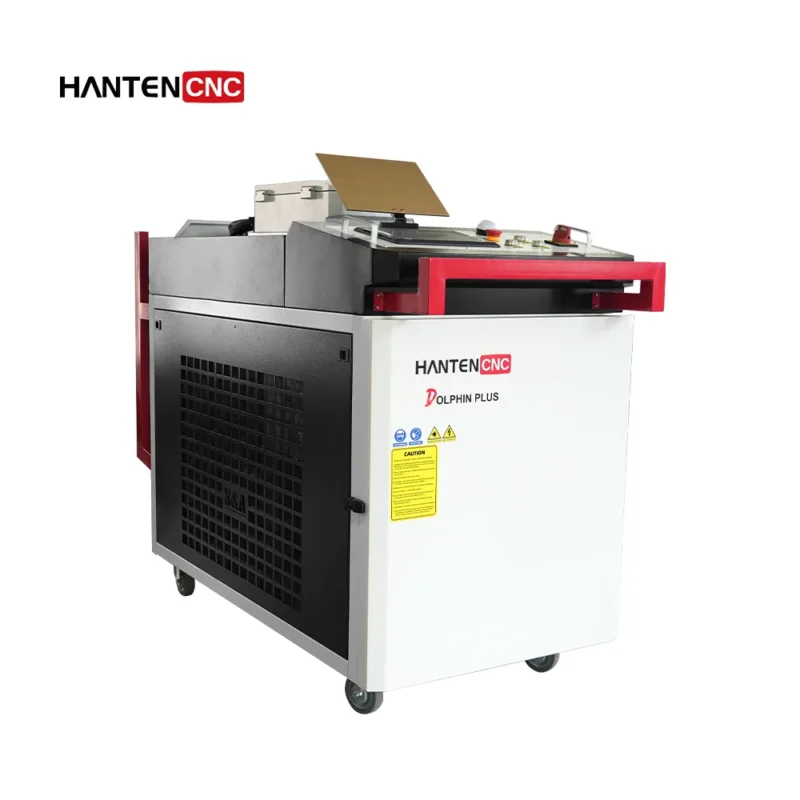
In this post, I will talk about the advantages and disadvantages of CW Laser Cleaning Machine.
Laser cleaning has come to be an important industrial surface treatment technique. It will clean away rust, paint, oil, and other contaminants. For different cleaning needs, there are lasers that will work best.
If this is the case, then continuous wave lasers are one of the options available. They generate laser energy in an endless supply while they are in operation. This is in contrast to systems that put out bursts of energy one time at a time (pulsed).
A CW-type laser cleaning machine can offer excellent cleaning effect. This approach has certain drawbacks, however. It is essential to grasp the reasons from both sides to make the right selection.
Table of Contents
Introduction to a CW Laser Cleaning Machine.
CW – Continuous wave. A continuous beam is produced during the operation of a CW laser.
The laser has the ability to continuously transfer energy into the surface of the target. This type of energy can be used to remove unwanted materials when used as a controlled means of heat.
A lot of industrial surfaces are appropriate for use of CW systems. They are sometimes taken into account when working with bigger cleaning jobs.
Several factors give them their performance. The power of the laser, scanning speed, contamination type, and thickness are all important.
How Does CW Laser Cleaning Work?
There is a laser beam scans the contaminated surface. All of the unwanted material absorbs the laser energy.
The contamination layer begins to heat up. The material can then vaporize or come off the surface. It produces the above process without requiring mechanical contact. This will decrease the physical stresses placed on the product.
The cleaning process can be controlled by machine settings and by the operators. If parameters are selected correctly, it helps protect the direct material to be protected.
Advantages: high cleaning efficiency
The advantage is that its cleaning is good. CW laser will be able to provide surface energy continuously. This presents an opportunity to use them in some large-area applications. These can be used to make a thorough treatment of surfaces without having to interrupt the pulses over and over.
Industrial users can use them to gain productivity. Large and heavy metal structures can – this can be really handy! However, in reality, these speeds have to take into account contamination and material conditions.
Advantage: Contact-Free Cleaning
With CW laser cleaning, there is no need for abrasive contact. The laser does not come into contact with the contaminated material. This can be used to maintain the integrity of appropriate elements. It also brings about indirect tool wear elimination.
No brushes/blasting media required. This can help make some maintenance tasks easier!
The process is also capable of getting to some difficult areas if necessary, with the appropriate equipment.
Disadvantage: Risk to Sensitive Surfaces
For large areas, a CW laser system can be used successfully. Transmission of constant energy means constant scanning.
Applications can be any metal structure, machinery, or large components.
It may be possible to use the technology to reduce manual cleaning work. It can also offer more identical therapy.
The machine power needs to be chosen depending on surface size. Too much power isn’t needed all the time.
Advantage: Reduced Consumable Use
Traditional cleaning methods may require chemicals or abrasives. These materials can increase operating expenses. Laser cleaning generally does not require these consumables. This can reduce material handling and storage needs. It can also reduce certain waste streams. However, removed contaminants still require proper collection. Businesses should consider the complete cleaning environment.
Disadvantage: it will cause a reduction in the usage of consumables.
Chemicals and/or abrasives may be necessary for traditional cleaning. The price of these materials can add to operating costs. The laser cleaning normally does not need these consumables. This can also lead to fewer material handling/storage requirements.
It may also be able to get rid of some waste flows. But the contaminants need to be collected appropriately since they have been removed.
The entire cleaning area needs to be looked at.
Disadvantage: Greater Heat Input
The continuous beam is likely to be able to generate more thermal energy. Can have an impact on sensitive materials. Too hot exposure may result in a change in color or surface. It may be able to enhance the heat-affected region as well.
Thus, laser operators need to be careful in controlling laser parameters. The speed of the scan is particularly crucial, as is the power.
Before production cleaning, material testing should be carried out.
Was taken off activities that could harm sensitive surfaces.
Disadvantage: Higher Energy Consumption
There can be significant electrical power used for continuous operation. The power of the laser and its operating duration are the factors that reflect the energy consumption.
Applications at a larger scale may thus be energy-hungrier for large industrial applications.
Companies need to make an estimation about effective electricity expenses. Cleaning productivity should be considered as well as efficiency.
It may still be considered worthwhile to have a greater energy consumption if the processing rate increases.
Disadvantage: Initial Equipment Cost
It may take a large investment to purchase laser cleaning equipment. The cost is variable and will vary according to the power of the laser and the configuration of the machine.
Other safety equipment might be needed for a CW system. Installation costs may be affected if it is not done properly. Businesses should do their total ownership cost comparisons. The initial price is not the only factor to consider!
Cleaning with CW Laser & Pulsed Laser innovations.
The characteristics of CW and pulsed lasers are different. Using CW systems means that we always get energy going. Pulsed lasers are energy pulses of short duration. This can offer increased control of the heat entering.
The larger, sturdier surfaces can be accommodated with CW systems. Systems involving a pulse may be appropriate for sensitive/precise applications. The selection should be dependent on the material and contamination. The volumes of production should also be considered when making the decision.
A reliable supplier is essential.
Quality of equipment will have an impact on cleaning performance and reliability. It’s time to take a look at machine parts and support service.
Warranty is also a critical factor to consider. Normal replacement parts are to be provided when necessary. Having a laser cleaning machine manufacturer with experience can make it easier to choose laser cleaning equipment. Suppliers should also be able to offer training and security tips. It is highly recommended that actual workpieces be tested.
Conclusion
CW laser cleaning machines are beneficial to industries in several ways. They can provide efficient and contact-free surface treatment.
They are especially suitable for some large area applications. They may also be used to minimize the use of chemicals and abrasives. But if energy is continuous, then there are certain thermal issues. If sensitive surfaces are involved, other laser systems that are less destructive to surfaces may need to be used.
CW and pulsed technologies have to be well compared by businesses. Appropriate testing can be used to determine which is the most effective solution.
Companies interested in modern laser cleaning solutions can view more before selecting suitable equipment.
INTERESTING POSTS
- Alert: Lasers can hack Siri, Alexa, or Google Home
- Are You Ready for Smooth Skin this Summer? GentleMax Pro!
- Why Deep Cleaning Is Essential for Maintaining Long-Term Cleanliness and Hygiene at Home
- The Advantages Of Mobile Proxies
- Why Your House Looks Clean But Still Feels Dirty
- The Importance of Routine Pressure Washing for Long-Term Home Maintenance
About the Author:

Chandra Palan is an Indian-born content writer, currently based in Australia with her husband and two kids. She is a passionate writer and has been writing for the past decade, covering topics ranging from technology, cybersecurity, data privacy and more. She currently works as a content writer for SecureBlitz.com, covering the latest cyber threats and trends. With her in-depth knowledge of the industry, she strives to deliver accurate and helpful advice to her readers.