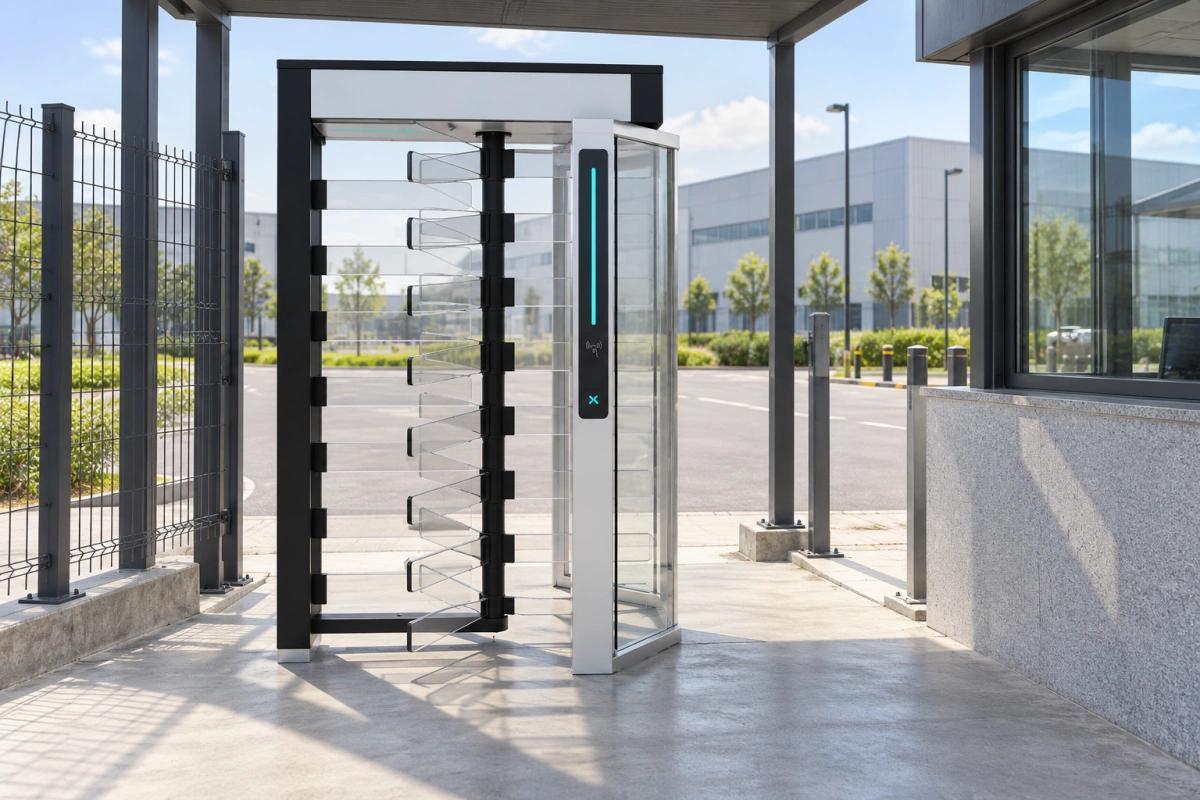
In this post, I will show you how full-height turnstiles improve access security in high-security facilities.
Controlling who can enter a restricted facility is one of the most important aspects of modern security management. Factories, data centers, construction sites, stadiums, warehouses, and other high-security environments often have hundreds or thousands of people moving through their entrances every day. Traditional doors and basic entry barriers may not provide enough control when organizations need to prevent unauthorized access, reduce tailgating, and maintain a clear record of pedestrian movement.
This is where full-height turnstiles and other controlled entry systems can provide a practical solution. Designed to create a physical barrier from floor to above head height, these systems can make it significantly more difficult for unauthorized individuals to bypass an access point while allowing approved personnel to move through efficiently.
Table of Contents
Why Pedestrian Access Control Matters
High-security facilities face different access challenges depending on their operations. A manufacturing plant may need to restrict access to machinery and production areas, while a data center must protect sensitive infrastructure and valuable digital equipment. Construction sites, meanwhile, need to control workers, contractors, and visitors while maintaining safe movement around potentially hazardous areas.
Simply having security personnel at an entrance may not be sufficient. People can accidentally or intentionally follow an authorized individual through a controlled doorway, and busy facilities can make it difficult for guards to monitor every person entering and leaving.
A dedicated pedestrian access control system creates a defined entry point. When integrated with credentials such as access cards, key fobs, biometric readers, or other authentication technologies, turnstiles can help ensure that only authorized individuals are permitted to pass.
What Makes a Full-Height Turnstile Different?
A conventional waist-height turnstile controls movement around the torso and legs, but its open upper area may leave opportunities for people to climb over or bypass the barrier. A full-height design extends vertically, creating a much more substantial physical obstruction.
A full height turnstile can provide controlled pedestrian passage while creating a secure boundary between public and restricted areas. Its design makes climbing over the barrier considerably more difficult than with many conventional turnstiles. This can be especially useful at facilities where perimeter security and unauthorized entry prevention are major concerns.
Full-height systems can also be configured for different environments and access requirements. Depending on the installation, they may be used as standalone access-control points or integrated with electronic security systems that determine whether a person is authorized to enter.
Improving Security at Factories and Industrial Facilities
Factories frequently contain valuable equipment, raw materials, restricted production areas, and potentially dangerous machinery. Not every employee, contractor, or visitor should have unrestricted access to every part of the site.
Turnstiles can help divide public and employee areas from controlled production zones. Workers can use authorized credentials to pass through designated entry points, while visitors and unauthorized personnel can be directed toward reception or security checkpoints.
This arrangement can also support better workforce management. By establishing controlled pedestrian routes, businesses can reduce uncontrolled movement around sensitive areas while maintaining an organized flow of employees during busy shift changes.
Protecting Data Centers and Critical Infrastructure
Data centers require particularly strong physical security because unauthorized access can expose critical servers, networking equipment, and infrastructure. Even when sophisticated cybersecurity measures are in place, physical access remains an important part of an organization’s overall security strategy.
Turnstiles can form one layer of a multi-stage security system. For example, an individual may first pass through a controlled building entrance before reaching additional authentication points within the facility.
Full-height barriers can be particularly valuable at external or perimeter entrances because they provide a strong physical deterrent against unauthorized pedestrian access. When combined with surveillance cameras, identification systems, alarms, and security personnel, they can contribute to a more comprehensive physical security strategy.
Managing Access at Construction Sites
Construction sites present a different set of challenges. Workers, subcontractors, delivery personnel, inspectors, and visitors may all need access at different times. At the same time, construction areas can contain heavy machinery, unfinished structures, electrical systems, and other hazards.
Controlled pedestrian entrances can help site managers establish clearer boundaries. Authorized workers can enter through designated access points, while visitors can be directed to areas where they can receive appropriate instructions or supervision.
Turnstiles can also support accountability by creating a controlled point through which personnel must pass. When integrated with an access management system, entry records can provide useful information about site activity and help management understand who is present on the premises.
Enhancing Security at Stadiums and Large Venues
Stadiums, arenas, and event venues often experience extremely high pedestrian volumes. Thousands of people may arrive within a short period, making efficient access control essential.
Using security turnstile gates can help organize pedestrian movement while verifying authorized access. They can be positioned at entrances to separate ticketed areas from public spaces and can work alongside ticket scanners or electronic access credentials.
For large venues, the objective is not simply to prevent unauthorized entry. Access systems also need to support efficient crowd movement. Properly designed turnstile layouts can help create predictable entry routes, reduce congestion, and make it easier for security teams to monitor access points.
Reducing Tailgating and Unauthorized Entry
One of the common weaknesses of uncontrolled pedestrian entrances is tailgating, where an unauthorized person attempts to follow an authorized individual through an access point.
A physical turnstile creates a more controlled passage than an ordinary door. Each person generally has to interact with the access system before proceeding, making unauthorized follow-through more difficult.
Additional security measures can strengthen this protection. Surveillance cameras, anti-passback functionality, alarms, security personnel, and credential verification can all be incorporated depending on the requirements of the facility.
No single security device can eliminate every possible threat, but combining physical barriers with electronic authentication and monitoring can create multiple layers of protection.
Choosing the Right Turnstile for a Facility
The ideal access-control solution depends on the environment, expected pedestrian volume, security requirements, and available space. Facility managers should consider several factors before selecting a turnstile system.
These include:
- The number of people expected to enter and exit each day
- The required level of physical security
- Whether indoor or outdoor installation is needed
- The type of access credentials being used
- Integration with existing security systems
- Emergency exit and safety requirements
- Available installation space
- Maintenance and long-term operating requirements
For some locations, a full-height system may be the most appropriate option because of its stronger physical barrier. Other environments may benefit from different types of turnstiles depending on their operational and security needs.
Building a Layered Access Security Strategy
Modern facility security works best when different technologies and procedures complement one another. Turnstiles should therefore be considered as part of a broader security strategy rather than as a standalone solution.
A facility might combine pedestrian turnstiles with CCTV cameras, access-control software, identification systems, perimeter fencing, security guards, alarms, and visitor management procedures. Each layer addresses a different part of the security process.
This layered approach can help organizations control access, identify unusual activity, and respond more effectively when a security concern occurs.
A Practical Solution for Modern High-Security Facilities
As organizations become increasingly concerned about physical security, controlled pedestrian access is becoming an essential part of facility management. From industrial plants and construction sites to data centers and major sporting venues, organizations need reliable ways to distinguish authorized personnel from visitors and unauthorized individuals.
Full-height turnstiles provide a strong physical barrier while supporting organized pedestrian movement. When combined with electronic authentication and other security technologies, they can help create controlled, traceable, and more secure entrances.
For facilities where access security is a priority, selecting the right turnstile system can be an important step toward protecting people, property, equipment, and restricted areas while maintaining efficient day-to-day operations.
INTERESTING POSTS
- Enterprise Security Guide: Your Roadmap To A Secure Business
- Strategic Sports Facility Management: Balancing Your Mission and Margin
- Corporate Anonymity: How Modern Enterprises Obscure Their Digital Tracks from Competitors
- The Role of Light Demolition in Remodeling, Renovation, and Property Updates
- Can I Install A Hidden Camera In A Nursing Home?
About the Author:

Amaya Paucek is a professional with an MBA and practical experience in SEO and digital marketing. She is based in Philippines and specializes in helping businesses achieve their goals using her digital marketing skills. She is a keen observer of the ever-evolving digital landscape and looks forward to making a mark in the digital space.