




Discover the biggest web scraping challenges in 2026, learn how residential proxies improve data collection, compare leading proxy providers, and choose the best solution for your needs.
Web scraping continues to be one of the most valuable techniques for automated data collection. Businesses, developers, researchers, marketers, and cybersecurity professionals rely on web scraping to monitor prices, analyze competitors, conduct market research, train AI models, and gather public information.
However, web scraping in 2026 is significantly more challenging than it was just a few years ago. Websites have adopted increasingly sophisticated anti-bot technologies that can quickly detect unusual traffic patterns, browser fingerprints, and suspicious network behavior. As a result, successful scraping requires careful planning, responsible practices, and the right technical infrastructure.
In this guide, we’ll explore the biggest web scraping challenges in 2026, explain why they matter, and discuss practical solutions—including how residential proxies and modern proxy servers help improve reliability without compromising ethical data collection.
Table of Contents
Why Web Scraping Has Become More Difficult
As online businesses become more protective of their data, websites continue investing in advanced security systems designed to identify automated traffic.
Common reasons websites restrict scraping include:
- Preventing server overload
- Protecting proprietary data
- Preventing fraud and abuse
- Limiting price monitoring by competitors
- Reducing automated account creation
Because of these protections, even well-designed scraping tools may encounter blocks if they are not configured properly.
Major Web Scraping Challenges in 2026
Advanced Anti-Bot Detection
Modern websites no longer rely solely on IP blocking.
Many platforms now analyze:
- Browser fingerprints
- JavaScript execution
- Mouse movement patterns
- Request timing
- Header consistency
- Cookie behavior
- TLS fingerprints
These techniques help distinguish genuine visitors from automated scraping tools.
Aggressive Rate Limiting
Many websites now enforce strict request limits.
Sending hundreds of requests from one IP address within a short period often results in:
- Temporary bans
- CAPTCHAs
- HTTP 429 errors
- Session invalidation
Proper request pacing and IP rotation have become essential for sustainable data collection.
CAPTCHA Challenges
CAPTCHAs remain one of the biggest obstacles.
Common types include:
- Image CAPTCHAs
- reCAPTCHA
- hCaptcha
- Invisible CAPTCHAs
- Behavioral verification
Frequent CAPTCHA requests often indicate that a scraper is generating suspicious traffic.
IP Reputation Monitoring
Many websites maintain reputation databases for proxy servers and data center IP addresses.
If an IP address has been associated with abusive traffic, it may be blocked before any scraping even begins.
This explains why residential proxies generally achieve better success rates for many legitimate web scraping tasks.
Dynamic Websites
Many websites now load content through JavaScript frameworks instead of serving complete HTML pages.
Modern scraping tools often need to:
- Render JavaScript
- Wait for asynchronous content
- Handle API requests
- Manage authentication tokens
This increases both complexity and resource requirements.
Geo-Restricted Content
Some websites display different content depending on a visitor’s location.
Examples include:
- Regional pricing
- Local search results
- Country-specific products
- Language customization
A residential proxy network with broad geographic coverage allows businesses to collect publicly available regional data more consistently.
Why Residential Proxies Matter
Residential proxies route requests through IP addresses assigned by Internet Service Providers (ISPs), making them appear similar to typical residential internet connections.
Compared to traditional proxy servers, residential proxies often provide:
- Better IP reputation
- Higher success rates
- More reliable IP rotation
- Improved geographic targeting
- Reduced detection risk for legitimate scraping activities
Choosing a reliable proxy provider can significantly improve scraping stability, especially for large-scale data collection projects.
Editor’s Choice: Best Residential Proxy Providers
🥇 1. Oxylabs — Best for Enterprise & Large-Scale Data Collection
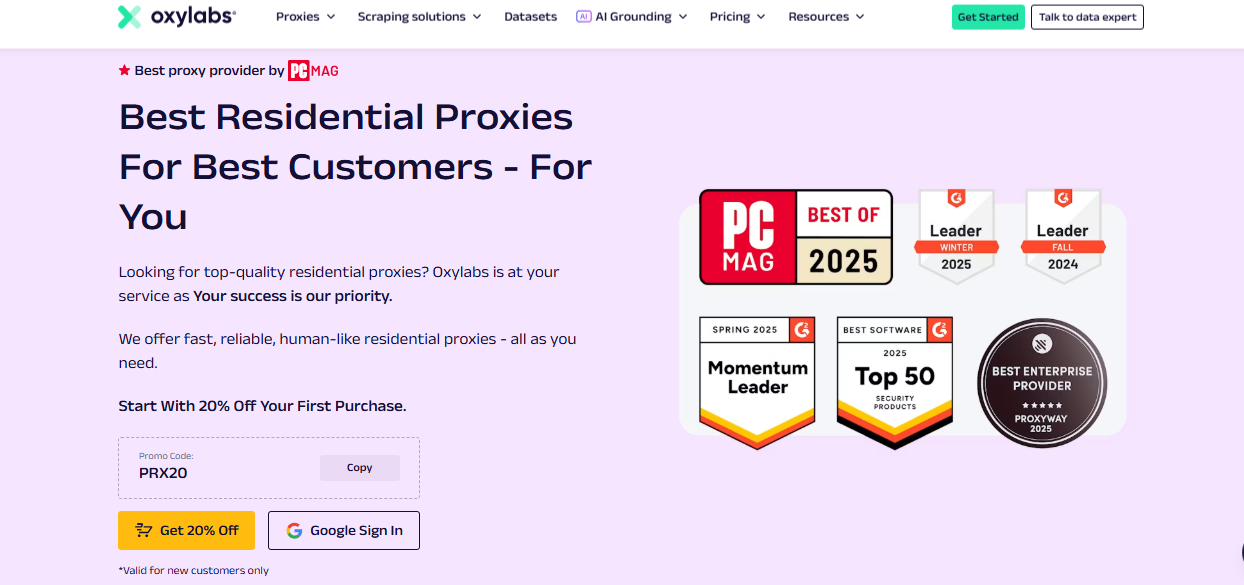
Oxylabs earns the Editor’s Choice position because it combines a massive residential proxy network with enterprise-grade infrastructure designed for demanding data collection workloads.
Its platform offers advanced geographic targeting, dependable IP rotation, premium reliability, and high success rates, making it well suited for market intelligence, large-scale web scraping, and business analytics. Both enterprise organizations and experienced individual users choose Oxylabs when consistency and scalability are top priorities.
🥈 2. Decodo — Best Overall Residential Proxy Provider
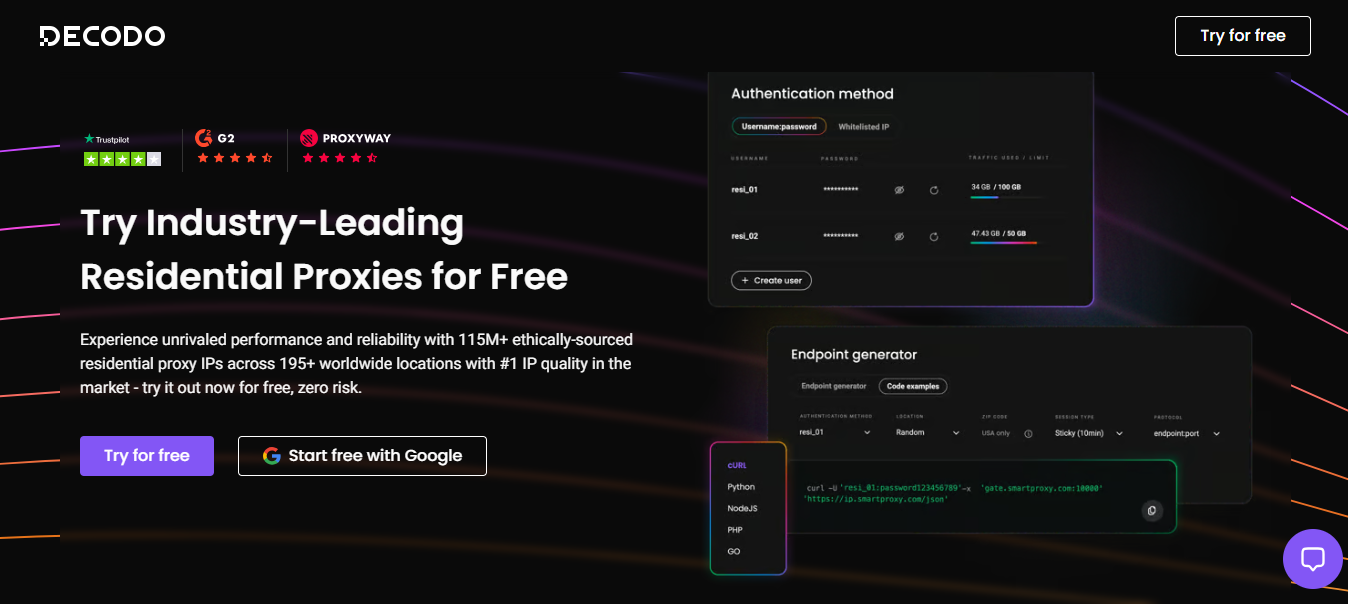
Decodo offers an excellent balance between performance and affordability.
Its beginner-friendly dashboard, rotating residential proxies, straightforward setup process, API support, and clear documentation make it suitable for developers, businesses, and individuals alike. Users who need dependable residential proxies without enterprise-level complexity will appreciate its ease of use.

🥉 3. Webshare — Best Budget-Friendly Residential Proxy Provider
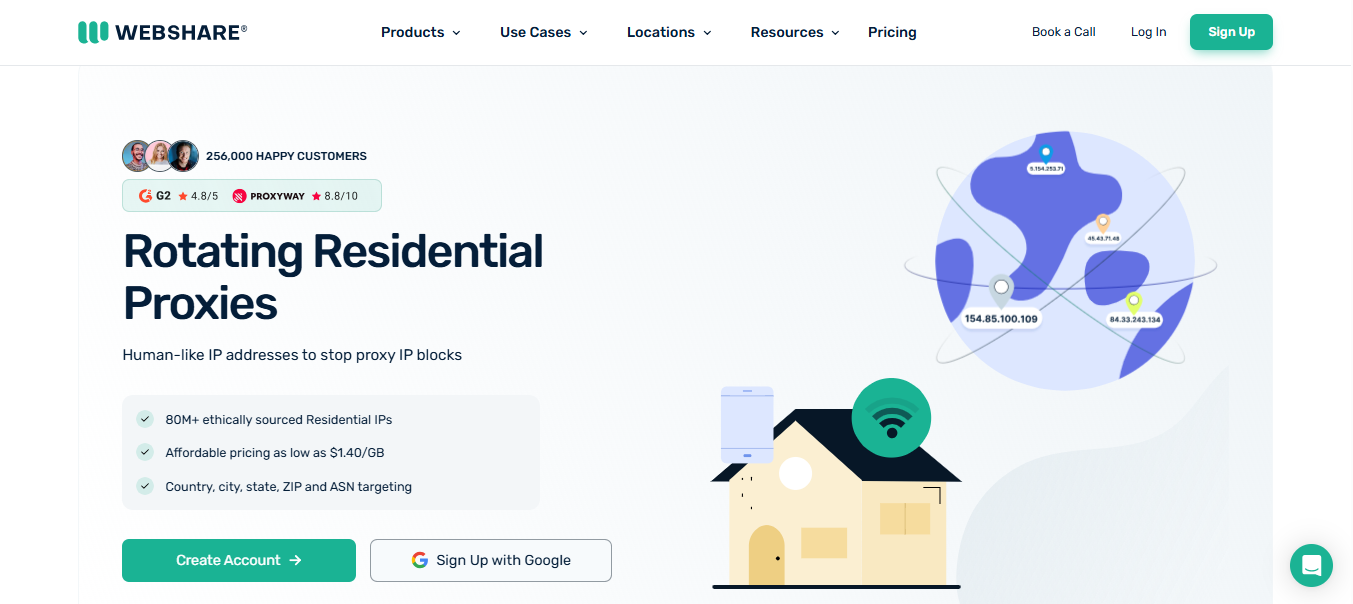
Webshare is an attractive option for developers, freelancers, students, and small businesses looking for affordable residential proxies.
Its easy setup, reliable performance, competitive pricing, and free plan (subject to current availability) make it one of the best value-oriented proxy providers for users starting with web scraping or anonymous browsing.
Comparison Table
| Provider | Best For | Key Strength |
| Oxylabs | Overall | Balance of performance & value |
| Decodo | Enterprise | Large-scale proxy infrastructure |
| Webshare | Budget | Affordable and easy to use |
Other Residential Proxy Providers Worth Considering
Several additional providers also offer reputable residential proxy services:
- Mars Proxies – Flexible plans suitable for small and medium-sized projects.
- IPRoyal – Popular for residential IP options with straightforward pricing.
- Bright Data – Extensive proxy infrastructure and advanced targeting capabilities.
- SOAX – Known for flexible rotation controls and geographic filtering.
- NetNut – Focuses on stable connectivity and enterprise use cases.
- ProxyEmpire – Offers residential and mobile proxies with customizable rotation.
- Rayobyte – Provides multiple proxy types suitable for developers and businesses.
- Infatica – Offers global residential proxy coverage for various data collection needs.
- Live Proxies – Suitable for users seeking rotating residential IP options.
Each provider has strengths depending on project size, budget, geographic requirements, and technical needs.
Buying Guide: Choosing the Right Residential Proxy Provider
Selecting the right proxy provider depends on your specific use case.
Consider the following factors before making a decision:
- Pricing that fits your budget
- Performance under sustained workloads
- Reliability and uptime
- Residential proxy network size
- Geographic coverage
- Flexible IP rotation options
- User-friendly dashboard
- Responsive customer support
- Well-documented API
- Security features
- Scalability for future growth
Businesses handling large-scale data collection may prioritize infrastructure and reliability, while individual developers may focus on affordability and ease of use.
Frequently Asked Questions
Are residential proxies better than datacenter proxies?
Residential proxies generally provide better IP reputation and are less likely to be blocked, while datacenter proxies are often faster and more affordable.
Why is IP rotation important?
IP rotation helps distribute requests across multiple IP addresses, reducing the likelihood of triggering rate limits or automated defenses.
Is web scraping legal?
Web scraping laws vary depending on jurisdiction, website terms, and the type of data collected. Users should always comply with applicable laws, contractual terms, and privacy regulations.
What causes CAPTCHAs during scraping?
High request volumes, repetitive traffic patterns, suspicious browser fingerprints, and poor IP reputation commonly trigger CAPTCHA challenges.
Can proxy servers improve anonymous browsing?
Yes. Proxy servers help mask your original IP address, and residential proxies can provide a more natural browsing profile for many legitimate use cases.
What should beginners look for in a proxy provider?
Ease of setup, clear documentation, responsive support, flexible pricing, and reliable IP rotation are excellent starting points.
Conclusion
Web scraping in 2026 requires more than simply sending automated requests. Websites now employ sophisticated anti-bot technologies, IP reputation systems, browser fingerprinting, and behavioral analysis that demand more thoughtful scraping strategies.
A dependable residential proxy network can significantly improve the reliability of legitimate web scraping and anonymous browsing while helping users manage IP rotation effectively.
For most organizations, Oxylabs stands out as the best overall choice thanks to its enterprise-grade infrastructure, extensive residential proxy network, and strong performance for large-scale data collection. Decodo is an excellent option for users seeking a balance of usability, features, and scalability, while Webshare offers outstanding value for budget-conscious developers, freelancers, and small businesses.
INTERESTING POSTS
- Importance of CAPTCHA in Web Security
- What Is a Residential Proxy? 2026 Guide, Types & Uses (Complete Breakdown)
- How AI Is Transforming Web Scraping
- Proxy Security Best Practices: How to Stay Safe When Using Residential Proxies and Proxy Servers
- Price Monitoring at Scale: How Businesses Use Residential Proxies for Accurate Market Intelligence
- Best Residential Proxies In 2026: A Comprehensive Guide
About the Author:

Amaya Paucek is a professional with an MBA and practical experience in SEO and digital marketing. She is based in Philippines and specializes in helping businesses achieve their goals using her digital marketing skills. She is a keen observer of the ever-evolving digital landscape and looks forward to making a mark in the digital space.



