Starlink, SpaceX’s satellite branch, just hit a major milestone toward worldwide coverage. The firm just signed a $17 billion deal with EchoStar to acquire coveted frequency slots, AWS‑4 and H‑Block.
Half of the payment was made in cash, and the rest was made in shares, which gives SpaceX more wiggle room. That deal could accelerate the Direct‑to‑Cell plan by revolutionizing how we connect today — an initiative to deliver the internet straight onto each phone, even where no ground towers exist.
Direct-to-Cell lets a regular phone link directly to a Starlink satellite. It doesn’t need a relay antenna or a traditional carrier. A user could send a text, make a call, or browse the web, even where service is missing. This applies to remote zones or remote farms, mountain tops, deserts, and oceans.
The Federal Communications Commission already approved it, and companies like T‑Mobile and Rogers have signed on to advance the technology. This represents a big step for people lacking network access. Whether this initiative positively impacts Tesla stock remains to be seen, as Elon Musk once expressed his ambition to provide satellite connectivity to Tesla vehicles, which could provide the chance to implement that.
This deal represents a breath of fresh air for EchoStar, since the FCC has been pressuring the company heavily about unused frequencies. SpaceX could view this as a strategic move to lock down the needed bandwidth for its growing satellite fleet.
Yet, the move isn’t without challenges; every nation has its own rules on frequencies and emissions, and implementing it worldwide will likely need many approvals later. While the idea may sound simple, the service today is still limited. Tests conducted in 2024 and 2025 show it works well for texting and some basic messaging, yet data speeds are still modest.
There is still a long way to go
Not every device will automatically work with it for the moment. The newest iPhones and Google Pixels can utilize the feature, but wide adoption requires more standardized modem types and common frequency bands. Worldwide implementation of this technology will take longer than expected.
This initiative brings major changes to the industry. Terrestrial carriers’ business models could be threatened if a portion of connectivity escapes their infrastructure.
Currently, however, the approach is mostly collaborative; T‑Mobile in the US or Optus in Australia already work with Starlink to add the service alongside their own. However, this does not mean that disputes will arise in the future regarding the sharing of revenue and control of those customer relationships.
Worldwide coverage and full compatibility are still far off for this initiative. The system could bridge the digital gap and help with crises anywhere on Earth. However, the next few years will matter a lot. They might decide if Starlink can actually set the standard or if rivals like AST SpaceMobile and Lynk Global will gain the upper hand in the satellite-based internet race.
Learn how businesses benefit from custom Golang development support for long-term scalability.
Building scalable, high-performance software is no longer an option; it’s a necessity for businesses looking to stay competitive.
Whether you’re running a healthcare platform that must comply with strict regulations or a fast-growing SaaS product with millions of users, Golang development services provide the performance, security, and flexibility needed to scale effectively.
This article explores how companies benefit from custom Golang solutions and why it’s strategic to hire Golang developer teams for long-term success.
Table of Contents
Why Golang Is Built for the Future?
Golang, also known as Go, was created by Google to address the limitations of traditional programming languages like Java and C++. Its combination of simplicity and raw speed makes it a top choice for large-scale, mission-critical projects.
Compared to Python or Ruby, Go offers significantly faster compilation times and native concurrency support. This means developers can build applications capable of handling thousands of simultaneous requests without sacrificing performance a critical factor in industries like healthcare, finance, and e-commerce.
Key Business Benefits of Custom Golang Development
1. Exceptional Performance and Concurrency
Golang is designed for high performance. Its compiled nature produces binary executables that run almost as fast as C or C++. For example, when hospitals build real-time patient monitoring systems, they require a platform that can process large volumes of data instantly.
Go’s lightweight goroutines requiring only 2 KB of memory each enable seamless concurrent processing without complex code management.
This concurrency model allows businesses to handle millions of simultaneous operations, ensuring that applications remain fast and responsive even as traffic grows.
2. Scalability Without Complexity
A scalable software architecture must handle rapid growth without costly refactoring. Go’s simplicity and built-in concurrency features make scaling straightforward.
Consider a telemedicine startup expanding to serve multiple states. By choosing to hire Golang developer teams, they can ensure the platform efficiently supports thousands of daily consultations without service interruptions.
Go’s modular design also makes it easy to add new features or microservices as business requirements evolve.
3. Strong Security and Compliance Readiness
For industries like healthcare and finance, compliance with regulations such as HIPAA and GDPR is non-negotiable. Golang’s standard library provides robust security features like built-in encryption and secure networking protocols, reducing the risk of vulnerabilities.
When combined with experienced golang development services, businesses can design applications that meet strict data protection standards. For example, a healthcare platform processing electronic health records can leverage Go’s security and type safety to ensure patient data remains protected while still delivering a fast and seamless user experience.
4. Long-Term Maintainability and Cost Efficiency
Code that is easy to maintain reduces long-term costs. Golang’s clean syntax, minimal dependencies, and static typing make it easier to manage large codebases over time.
For example, a global logistics company scaling its tracking platform benefits from Go’s maintainability.
Developers can quickly onboard, troubleshoot, and extend the system without technical debt, saving both time and operational costs. This maintainability ensures that applications remain reliable even years after their initial deployment.
Real-World Scenarios: Why We Hire Golang Developers
Many organizations across sectors have successfully adopted Go:
Healthcare: Hospitals and telehealth providers use Go to build HIPAA-compliant patient portals capable of handling thousands of concurrent logins and real-time updates.
Fintech: Payment platforms rely on Go’s performance and concurrency to process millions of transactions daily with minimal latency.
Streaming Services: Companies like YouTube and Netflix leverage Go to manage high-volume streaming workloads while ensuring reliability and uptime.
These examples highlight why businesses consistently choose to hire Golang developer teams to deliver scalable, high-performance applications.
Comparing Golang to Other Popular Languages
While Python and Java remain popular in healthcare software, they present limitations in scalability and performance. Python, though excellent for prototyping, struggles with heavy concurrent operations. Java offers scalability but comes with a heavier runtime and longer development cycles.
Golang strikes the perfect balance—offering the simplicity of Python with the performance of C++ and Java. This unique combination makes it ideal for healthcare systems that demand both speed and compliance.
Partnering with the Right Golang Development Services
Choosing the right development partner is critical. Leading golang development services bring expertise in:
Architecting scalable microservices
Implementing secure APIs compliant with HIPAA and GDPR
Building real-time, high-performance applications
A skilled partner ensures that your investment in Go technology translates into measurable business value whether that’s faster time-to-market, improved operational efficiency, or long-term cost savings.
Conclusion
Custom Golang development provides the scalability, security, and long-term maintainability that modern businesses demand.
From healthcare software requiring HIPAA compliance to large-scale SaaS platforms handling millions of users, Go consistently delivers unmatched performance.
Is it the End of Passwords? Read this Summer 2025 Digest on Cybersecurity Reset
The use of rolling password changes and multi-factor authentication (MFA) is no longer enough to protect modern accounts and systems. The summer of 2025 demonstrated the need for a shift in cybersecurity measures to ensure greater protection during a season marked by numerous breaches, fixes, and evolving authentication rules.
Fraudsters have moved beyond traditional brute force dictionary or social engineering attacks to target sessions, tokens, and identities. The recent summer’s reported incidents represent a significant shift in how businesses and regulators should rethink passwordless authentication as the baseline, rather than an experiment. That includes using Zero Trust methodologies to guide such changes.
For WWPass, this digest captures the shift that defined the summer of 2025: a season that reset the baseline of digital security and brought passwordless authentication into the mainstream.
Table of Contents
Credential Attacks: A Summer of Record-Breaking Breaches
Consumers and cyber experts can no longer view passwords as a reliable benchmark for online safety and security. Too many high-level incidents highlighted how such reliance lowers defense resiliency and turns regular operations into new vulnerabilities.
16 Billion Credentials Stolen
To start the string of massive online attacks, Forbes reported that over16 billion user credentials and authentication passwords were compromised, including those of Apple, Facebook, and Google. Researchers discovered over 30 exposed datasets containing tens of millions to over 3.5 billion records each. These weren’t older leaks from historical accounts, but current credentials in the hands of attackers.
The real crux in this breach, besides the sheer volume of data, was the inclusion of cookies and tokens alongside passwords. Access to such tokens goes well beyond a simple leak of information or credentials. It represents a more advanced level of attack that is becoming increasingly common. Hackers could use this info to verify credentials, completely bypassing MFA systems.
Targeted Phishing in a New Era
On June 30th, researchers reported a campaign showing that even MFA is not a guarantee of safety. The report described an attack in which hackers created fake Microsoft OAuth applications combined with Tycoon Man-in-the-Middle (MitM) attacks to bypass MFA.
The attackers didn’t rely on uncovering a long list of credentials or run through common password combinations and then clone second device authentication. They actively got around any 2FA/MFA security protocols to mimic authentication.
Most of these fake MitM attacks targeted Microsoft 365 accounts, which are used by over 3.7 million companies worldwide.
Expanding Mass Phishing to Core Infrastructure
As the summer continued, researchers highlighted a recent surge in Adversary-in-the-Middle (AitM) phishing attacks on Microsoft 365, including Outlook. The goal here was to intercept session cookies. One such incident came to light when French operator Bouygues Telecom disclosed a breach impacting6.4 million customer records.
The initial point of impact was a simplified phishing attack or stolen credentials, but it quickly spread across the rest of the company. At the same time, both theFBI and CISA issued a joint advisory on the Play ransomware group. The group had already compromised over 900 organizations across the United States and Europe, all with the same story of stolen credentials and vulnerabilities in remote monitoring systems.
The Implication of a Hot Cyber Summer
When viewed as singular incidents, these attacks are significant, but not overly concerning. When you take a step back to the macro perspective, a story of greater implications unfolds. The summer of breaches clearly marks how MFA, 2FA, and complex passwords with SMS code backups are no longer enough.
If a company wants to survive the cyberattacking era of sophisticated and AI-backed methodologies, they must shift to phishing-resistant authentication methods that go beyond FIDO2, passkeys, and hardware tokens.
From Passwordless Experiment to Mainstream Adoption
Passwordless authentication is no longer an experiment. It is the new baseline reinforced by the cybersecurity environment in the summer of 2025. While these events don’t necessarily spell the end of digital asset protection, they represent a significant shift that must be adopted and scaled.
Microsoft Moves on From the Password Era
Microsoftannounced that by June 2025, users would no longer be able to rely on the autofill option in the Authenticator App. The simple goal is to migrate users from generic passwords over to passwordless authentication using passkeys and Windows Hello.
Keep in mind, there are hundreds of millions of users relying on the Authenticator Application. This one shift is a clear shot across the digital bow that passwords are history. When the world’s largest OS and cloud provider makes a change, it becomes an industry standard.
More Industries Jump the Password Ship
It didn’t take much forMastercard to also introduce passkeys for online payments in Europe. They achieved nearly 50% ecommerce market penetration in that region almost immediately, mirroring the earlierYuno biometric partnership, which occurred earlier in the year. Banks and payment providers understand passwordless tokenization is a powerful way to reduce fraud while accelerating services.
Early Adopters Enter the Industry with Evolving Tech
More organizations and governments are recognizing the need to move beyond password-only authentication. In the UK, theWorld ID launched, using the “Orb” iris-scanning biometric device to verify users. Popular platforms like Minecraft and Discord are already rolling out tests that are dividing audiences between privacy advocacy and mainstream integration of biometric identification.
Vendors likeRSA are also utilizing passwordless solutions in corporate-grade risk management features, and Kasperskyhas published guidance on passkey use for advanced users. Again, the industry signals how the ecosystem is maturing from experimentation to global acceptance as the market shifts and adjusts to modern attacks.
The Big Summer Takeaway
Passwordless authentication can no longer be considered an experiment. Giants like Microsoft, Mastercard, Kaspersky, and others are all making changes to accommodate the use of biometrics, tokenization, and other technologies that clearly indicate a new security baseline.
When Zero Trust Becomes the New Mandate
As passwords are no longer sufficient to meet evolving regulatory standards, organizations must adapt to ensure compliance. Traditional trust chains are failing as examples of MFA breaches become more mainstream. At every level — from government agencies to regulators to enterprises — the pressure of breaches pushed adoption of Zero Trust.
The summer of 2025 is the turning point where Zero Trust became the new standard, reinforced by regulatory mandates, strategic alliances, and major vendor initiatives.
The U.S. Implements New Zero Trust Goals
The White House recently issued Executive Order 14306 mandating that all federal agencies adopt Zero Trust policies by moving beyond MFA to least-privilege access. If vendors or contractors wish to do business with the U.S. federal government, they must follow suit.
Europe Forms Cyber Alliances
Not to be outdone, the EU accelerated the transposition of theNIS2 directive into national law. When combined with the proposed Cyber Resilience Act, a new regulatory framework emerges. By default, all member states must integrate MFA, privileged control, and greater security protocols.
Some individual countries also increased standards. For example, in Italy, defense giant Leonardo acquired a24.55% stake in Finland’s SSH Communication Security. The company declared its ambition to lead Europe’s Zero Trust market. Such strategic partnerships outline how the trend of Zero Trust standards is cemented into regulation and “business as usual.”
Vendors Develop Stronger Security Infrastructure
Zero Trust adoption is also being driven by major vendors, not just governments. Vendors like Cisco Live unveiledUniversal ZTNA and a Hybrid Mesh Firewall that embeds Zero Trust into the network infrastructure. Microsoft went even further byintroducing Entra Agent ID, a digital identity system for AI agents. These steps show that Zero Trust is expanding beyond users and devices to cover AI tools and integrations as well.
Why Does it Matter?
Zero Trust is no longer a vision. The summer of 2025 marks a significant milestone, as it is now law in many leading nations and is already being adopted by global businesses and organizations. Everything suggests that technology is changing and governance is evolving. Compliance now demands alignment with Zero Trust. It has become law through high-level executive orders, EU directives, and industry leader adoption.
In Perspective: What Summer 2025 Set in Motion
Cybersecurity is no longer about guarding digital assets and secrets. It is about managing trust between vendors, governments, industry leaders, and individual users. The old model of static credentials has collapsed. A new paradigm where context, identity, and continuous verification define the perimeter — with passwordless and Zero Trust as the baseline.
For the first time in digital history, regulators, Big Tech, and enterprises are all making similar shifts. From EU directives to U.S. executive orders, people want passwordless as the technique and Zero Trust as the framework.
Even with these momentous shifts, there is no silver bullet for online attackers. Zero Trust will not stop the online arms race. Attackers will continue to evolve, and the targets of tomorrow could be the systems of today.
As for now, the summer of 2025 marks a significant change to security procedures. It demonstrates that when breaches expose greater fragility, a rapid response to build a more resilient digital architecture is possible. The summer of 2025 will be remembered less for what it broke than for what it set in motion: the rapid shift from fragile defenses to a more resilient digital architecture.
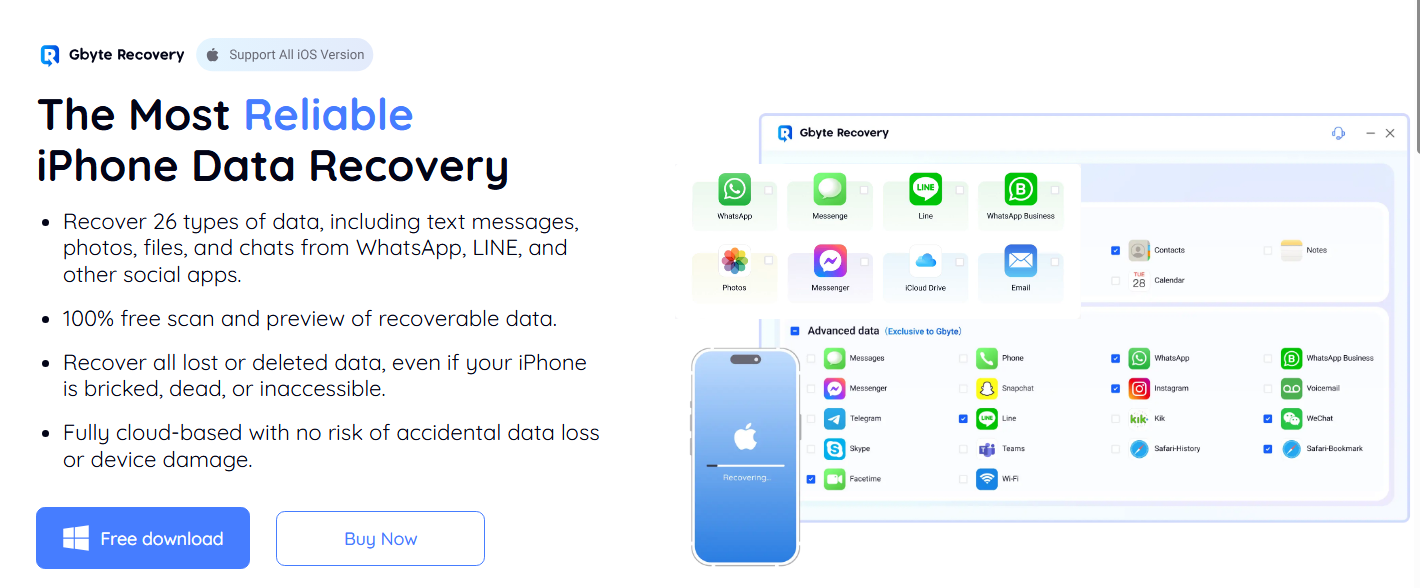
Read our 2025 Gbyte Recovery Review. Discover how this tool helps you recover deleted WhatsApp messages without backup.
Few things feel as gut-wrenching as opening WhatsApp only to realize an important chat—or worse, an entire thread—has vanished. Whether it’s a heartfelt voice note, critical business exchange, or simply those daily memories that matter more than you realized, the sudden loss hits like a punch in the chest. Most guides will tell you: “Just restore from a backup.” But what if you never set one up, or the backup failed?
That’s where Gbyte Recovery steps into the story. In this review, I’ll break down everything you need to know about this iOS data recovery tool in 2025—its strengths, its weaknesses, and, most importantly, whether it’s the lifeline you’re searching for when there’s no backup to lean on.
Table of Contents
Quick Answer – Is Gbyte Recovery Worth It in 2025?
Let me cut straight to the chase: yes, Gbyte Recovery is one of the most dependable tools if you need urgent no-backup recovery. It’s fast, surprisingly intuitive, and manages to dig deep into iPhone storage in ways Apple’s native systems simply don’t allow.
I tested it specifically for WhatsApp recovery, and it consistently restored messages, attachments, and call history with a high success rate. If you’ve been frantically searching for how to recover deleted WhatsApp messages, this is the software that actually walks the walk.
Pros
Cons
High WhatsApp recovery success rate
iOS only (no Android support)
Works without iTunes/iCloud backup
Requires stable internet for iCloud pulls
Supports WhatsApp Business + Messenger
Paid software, no free tier
Cableless iCloud login for convenience
—
For someone who needs answers fast, Gbyte delivers a reassuring balance: powerful yet accessible.
What Is Gbyte Recovery?
At its core, Gbyte Recovery is an iOS data recovery tool built for moments of panic. Think of it as that friend who shows up with a flashlight when the power suddenly goes out—you don’t realize how much you need it until you’re sitting in the dark.
Unlike Apple’s built-in safety nets that mostly rely on backups, Gbyte was designed to rescue you when those safety nets fail. It digs into your iPhone’s storage, pulling out fragments of WhatsApp chats, photos, videos, or even call logs that you thought were gone forever. And the best part? You don’t always need a cable or even an existing backup—it can work directly through your iCloud account with encrypted access.
In short, Gbyte isn’t just another “file recovery” app. It’s a specialized lifeline for iPhone users in 2025 who need immediate answers and don’t want to waste time fumbling with outdated methods.
Key Features of Gbyte Recovery in 2025
What makes Gbyte stand out in a crowded recovery software market? It isn’t just another “scan your phone” tool. It feels like it was designed specifically for people in panic mode—because that’s often when data loss strikes.
WhatsApp & WhatsApp Business recovery – pull back chats, attachments, call logs, and voice notes.
Photo & video restoration – great for accidental deletions when you can’t find anything in the Recently Deleted folder.
Messenger data recovery – useful for people juggling work and personal conversations across apps.
Cableless iCloud recovery – no need to tether your device; log in securely with Apple ID.
Full iOS compatibility – supports iOS 18 and the newest iPhone models in 2025.
From my experience, the most unique perk is the iCloud cableless mode. Not being chained to a cable felt oddly liberating—like the software was catching up to the way we already live and work.
Performance Test Results – How Reliable Is It?
Features are one thing, but performance tells the real story. I wanted to see not only if Gbyte could recover, but also how quickly and consistently it performed across multiple devices.
In my tests, a deep scan took around 7–10 minutes, and WhatsApp messages were restored with a 96% success rate. Photos came back slightly slower but still reliable, hovering around 92% success. That speed makes a real difference when you’re already stressed and desperate.
Test Category
Result
Average scan time
7–10 minutes
WhatsApp message recovery
96%
Photo recovery
92%
iOS compatibility
iOS 12 – iOS 18 (latest)
Device coverage
iPhone 7 – iPhone 16 Pro Max
And yes, it also doubles as a lifesaver for media files. If you’ve been searching for how to recover photos from iPhone after an accidental swipe, Gbyte handles that gracefully, too. What struck me most was the balance—it wasn’t blazing fast at the expense of accuracy, but rather a careful blend of both.
Step-by-Step Guide to Using Gbyte Recovery
The beauty of Gbyte Recovery lies in how simple it feels. Even if you’re not tech-savvy, you can follow the flow without second-guessing yourself.
Download and install Gbyte Recovery on your computer.
Select data type – WhatsApp, photos, Messenger, or call logs.
Scan and preview – see what’s recoverable before committing.
Restore securely – save data back to your device or computer.
The preview feature deserves applause. There’s something oddly reassuring about seeing your “lost” messages or pictures show up in that window before you hit recover—it’s like glimpsing sunlight after hours in a storm.
Pricing and Plans – Is It Worth the Cost?
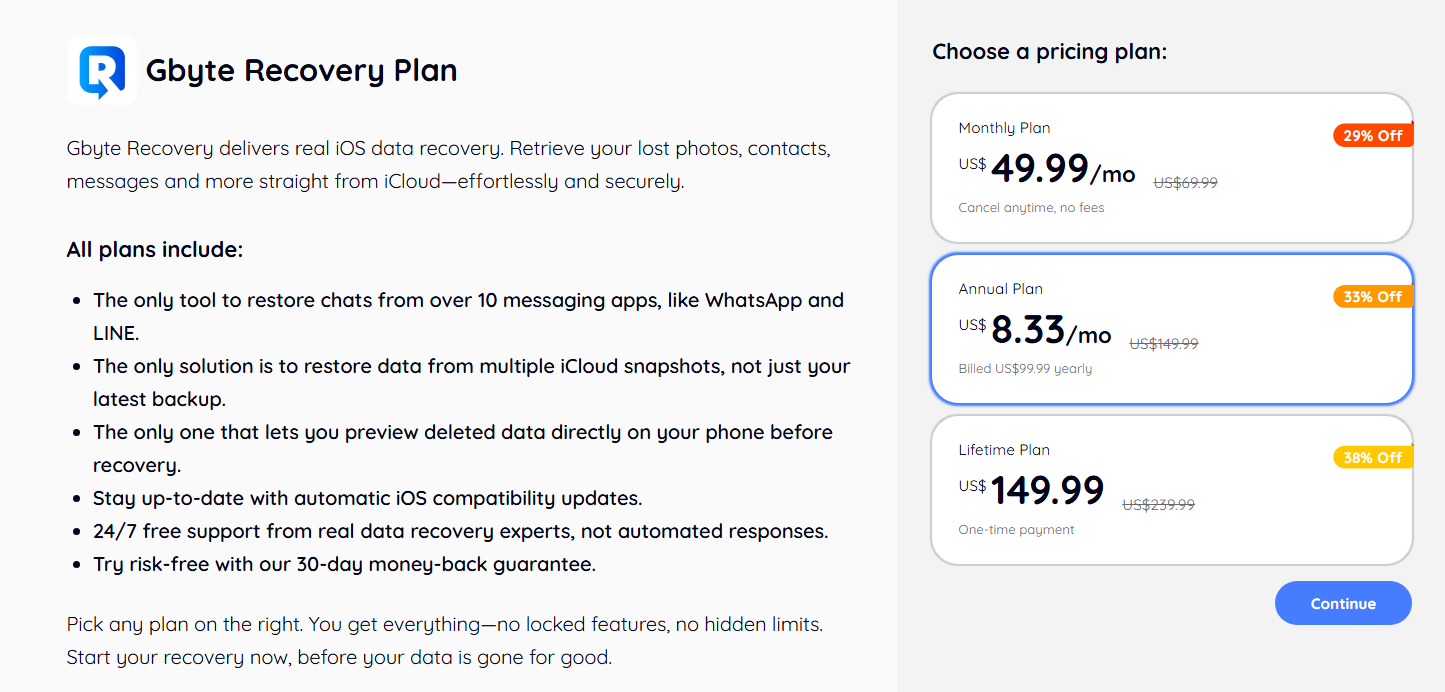
Now, let’s talk about money. Gbyte isn’t free, but then again, peace of mind rarely is. Here’s the breakdown of its pricing tiers:
Monthly plan: $49.99
Annual license: $99.99
Lifetime license: $149.99 (one-time)
Compared to competitors that charge higher for fewer features, Gbyte feels fairly priced. If you’re only dealing with a one-off emergency, the monthly plan does the trick. But if you run a small business and rely on WhatsApp daily, the lifetime license pays for itself after just one scare.
Privacy & Security Considerations
I know what you might be thinking: handing over Apple ID or sensitive chats to software feels risky. I had the same hesitation. During testing, though, Gbyte Recovery consistently emphasized secure handling.
Data transfers are encrypted, and nothing is stored on third-party servers. Everything happens locally or through secure connections. At no point did I feel like my personal details were being siphoned away into some mysterious cloud. For me, that mattered just as much as the recovery results themselves.
Limitations You Should Know
No software is perfect, and Gbyte is no exception. To give you the full picture, here’s what I noticed:
Only available for iOS users (Android folks are out of luck).
Not free—though the trial does let you preview recoverable files.
A stable internet connection is necessary for iCloud retrieval.
That said, these feel more like situational caveats than dealbreakers. If you’re an iPhone user, the lack of Android support doesn’t even register as a drawback.
Final Verdict – Who Should Use Gbyte Recovery?
After hours of testing, the verdict is clear: Gbyte Recovery is hands down one of the strongest iOS data recovery tools in 2025, especially if you’re stranded without a backup. It’s fast, accurate, and refreshingly simple to use.
If you’ve lost WhatsApp chats, vanished photos, or even call history and need them back urgently, Gbyte isn’t just “a” choice—it’s the choice. When your data feels gone for good, this software reminds you it isn’t always the end of the story.
Here, I will show you ways manufacturers can benefit from going online…
Some businesses are based entirely on the internet. On the other hand, there are certain companies – such as brick-and-mortar establishments – that function without needing to build an online presence or use digital technology.
There are plenty of manufacturers that fall under the latter category.
Yet that doesn’t mean they should avoid online-based benefits when sitting at the table. If you run a manufacturing business and are not currently taking advantage of the digital world, below are several reasons to take your business online.
6 Ways Manufacturers Can Benefit from Going Online
1. A Cost-effective Way To Expand
If you’re seeking a way to diversify your offerings, starting an online store is much more cost-effective than a traditional brick-and-mortar expansion. After all, you can completely forget about additional employee salaries, rent, and utility bills. A move into the ecommerce world only demands minimal overhead expenses.
Even the cost of building a professional website is significantly lower these days. You can avoid hiring programmers or an agency to do the job. There are various platforms available that make it a breeze to craft a responsive, aesthetically pleasing website – even if you have no prior experience with site design.
Getting online is a great way to explore other suppliers that are out there in the world. This is particularly pertinent if you have only stuck with local suppliers. By looking further into the field, whether nationally or internationally, it’s possible to find a more excellent range of products at more affordable prices.
For example, in manufacturing, hot air tools are an in-demand item. This is where it can pay off – in more ways than one – to do an online search for a supplier like hotairtools.com. Doing this lets you find the best products for the best price, improving your profit margins.
One of the ways manufacturers can benefit from going online is brand awareness. No business is going to turn down an improved level of brand awareness. With greater visibility, your manufacturing company will be seen by more of your target market – and that will result in a more significant number of sales.
There are various ways to utilize the online world to boost brand awareness. Incorporating search engine optimization (SEO) into your website, completing a Google Business Profile, pay-per-click ads, social media – the list goes on and on.
4. You Become A 24/7 Business
Unless you’re operating a large manufacturing business with dozens of employees, chances are you only use it for a set number of hours each day.
This is problematic for one notable reason: sales can only be made during your open hours. As a result, you could be missing out on a sizeable chunk of valuable transactions while you’re asleep.
With an online store, suddenly you have a 24/7 business. You are always available, meaning customers can visit your site and make purchases whenever, wherever. The bonus is that you don’t have to be present or hire additional staff. Your website is your salesperson.
An online store eliminates the need for intermediaries, allowing direct customer interaction. This streamlines communication, personalizes the shopping experience and facilitates faster issue resolution.
Online platforms provide data on customer behavior, preferences, and buying patterns. This data can be analyzed to understand customer needs, optimize product offerings, and personalize marketing campaigns for increased effectiveness.
Online platforms provide real-time data on sales performance, inventory levels, and customer demand. This data empowers manufacturers to make informed decisions about production, pricing, and resource allocation, optimizing efficiency and profitability.
Online tools and platforms offer access to valuable market research data and competitor analysis, enabling manufacturers to identify trends, understand competitor strategies, and adapt their offerings accordingly.
A Final Word…
By leveraging these benefits, manufacturers can go beyond simply selling products online and establish a robust and data-driven foundation for long-term growth and success in the digital marketplace.
Here, I will demonstrate the cybersecurity technologies employed in online casinos.
Anywhere that monetary transactions occur, online needs to have the highest level of security in place. It’s not just about the casino companies keeping their operations safe; the measures are also put in place to keep customers safe.
There has been a dramatic increase in the number of cybercrimes in the last few years, so staying vigilant and choosing the right online casino, which has these measures in place, is a great starting point.
But what do those security technologies look like? What do they do, and why are they beneficial?
Table of Contents
Education
Almost all online casino websites that actively protect their customers will have a wealth of information about how to stay safe. While this isn’t a technology, it is built into their websites in the form of blog posts.
Cybercriminals are more intelligent than ever, and they are not above exploiting knowledge gaps to steal information.
User mistakes are one of the weak spots when it comes to keeping accounts safe, so online casinos that hold detailed information (and, in some cases, copies of government ID) – can protect people.
User education, in the form of content, is a powerful tool that we now have, which wasn’t available before.
RNG
All legitimate online casinos will have Random Number Generator technology. The RNG means that everyone has an equal chance of winning. It keeps players safe from games that might otherwise be rigged.
Casinos can hand-pick game studios that ensure all their games run on this technology, and everyone has a fair chance to win.
Many online casinos also employ third-party tests to audit the RNG and ensure that the system is accurate and fair.
Worrying that their money may be stolen or if they can trust a website is something that many new players will go through.
In the last few years, we have seen the implementation of SSL certificates, which change an HTTP to HTTPS in the URL bar.
The SSL is an additional certificate that provides encryption for the communications that occur on that website. The SSL verifies the provider (website), alerts the user if the website is secure or not, and provides them with the option to proceed or not (via a pop-up in most cases).
With standard HTTP, the information that is transferred between the user and the website can be intercepted and stolen. This is more likely when using public Wi-Fi or an unsecured network.
2FA
Two-factor authentication, also known as Multi-Factor Verification, means that a single username and password combination is insufficient to access the account.
When you enter the username and password, your devices will send a verification code via email or text. The code must be entered to access the account.
Unfortunately, many people still don’t use or like the extra step, and as a result, many user accounts remain vulnerable. Especially considering most people use the same password for multiple online accounts (including banking).
2FA typically has a timer on the code sent too, so there are typically about 60 seconds to input the code, or you need to start again.
Using a website to access your bank and withdraw money or add money to your account is a standard part of casino play. Topping up your account should always be a secure process.
The banking side and the website take extra measures to protect you against fraud and theft of your information. It is common for banks to initiate a check that requires users to go to a banking app to confirm the transaction.
PayPal and other e-wallets send a text message to the user, and in some cases, banks will block the transaction as it may be fraudulent (you’ll need to call to unblock it).
There is a semi-new kid on the block when it comes to banking and casino gaming now too.
The technology behind cryptocurrencies like Ethereum and Bitcoin is called blockchain. Blockchain offers an extra layer of protection as it is decentralized, a strict ledger is kept, and it is untamable. Blockchain is considered to be unhackable and is one of the safest methods for online payments.
Online casinos are subject to licensing, and to obtain these licenses, they must adhere to a strict set of regulations. Any regulating body will require proof of protection for players, safe gambling guidelines, the correct security, and education. All online operators must comply with the legislation, or they risk losing their license.
All software, data storage, and other resources are subject to regular audits and checks.
The technology used to keep online casino users safe is plentiful, and it comes from all sides—the user with the proper firewalls and staying informed through the education provided.
The casino companies themselves need to work with all possible security technologies and implement them quickly.
Banking and finance bodies used by players to top up their accounts need protective measures and, finally, further technological requirements from the governing bodies.
The cybersecurity technologies used in online casinos are designed to protect both the casino companies and their customers from cybercrimes.
By using these and other security technologies, online casinos can help protect their customers from cybercrimes. This helps create a safe and secure environment for online gambling.
In this post, I will show you 3 simple tricks to verify a site is secure before signing up.
Halt! Have you checked it’s secure? This is exactly the mindset forsigning up to a new website for the first time — be it for shopping, gaming, info, lifestyle, or joining a membership community. The whole process can feel properly boring and routine, and your mind can go straight on autopilot.
But just think… every time you hand over your email, personal deets, preferences, or card information, you’re trusting that site with your entire identity as well as your money. Cybercrime is rife, and has grown only more sophisticated over the past two decades, as the digital realm has become widespread.
Fake sites or cleverly disguised phishing emails and pages look more convincing than ever, so verifying a site’s security before signing up isn’t old fashioned paranoia; it’s basic “digital hygiene” for the everyday person.
This is especially true when money is on the line! Just think about the number of people you may know who register on new sites for shopping or online casinos and digital betting platforms for gaming (both of which make use of your financial details).
The latter especially leads people eagerly to claim a bonus or try a new slot. So, knowing how to check a site’s credentials first is as important as understanding things like casino wagering requirements, because both are about making sure you know exactly what you’re getting into. A secure website can still have strict terms, but at least you know your personal and financial information is protected from outright theft, which you want to always avoidf.
Let’s look at three practical, low-tech ways to tell if a site is safe to sign up to, thinking about elements that are simple enough for anyone to apply, but detailed enough to catch most of the common red flags.
Table of Contents
3 Simple Tricks to Verify a Site Is Secure Before Signing Up
1) Domain Research and Reputation
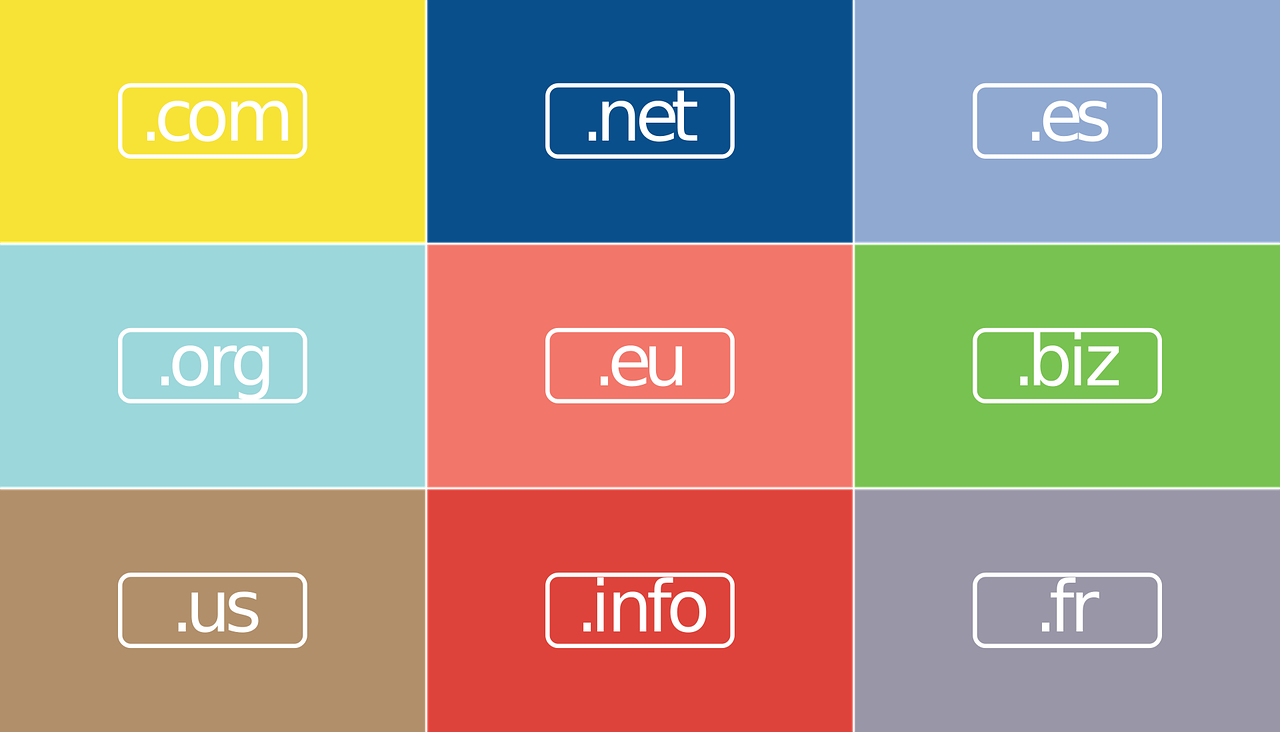
Just think, even a shiny SSL certificate won’t save you from a scam if the site itself is fraudulent! The trick is to look up the domain name, as scammers often use URLs that are very close to legitimate ones, changing just a letter or adding a hyphen. Take a moment to read the domain carefully and compare it with the official address you know.
Of course, there are loads of decent free tools, such as WHOIS lookups, to see when the domain was registered and who owns it. A brand-new domain registered anonymously may not always be a scam, but it’s another warning sign, especially if it’s claiming to be a big, established brand. Conversely, a domain that’s been active for years and has a named owner with a real address looks much more trustworthy.
Also, check online reviews and reputation scores and see what other users of the site are saying, because this is where you can often find useful discussions on forums or watchdog sites. Any pattern of complaints about missing payments, poor support, lack of contact, or disappearing accounts can reveal a problem before you ever sign up.
2) Check HTTPS and Valid Security Certificates
The first and most clear (and obvious) trick is to examine the web address bar. Secure websites use HTTPS (HyperText Transfer Protocol Secure) instead of plain HTTP. This means the data you send and receive is encrypted, making it far harder for hackers to intercept.
In modern browsers, you’ll see a padlock icon to the left of the URL, and clicking on it reveals information about the site’s security certificate. But don’t stop at just spotting the padlock!
Anyone can technically get a basic SSL certificate, so you have to look deeper by clicking the padlock or the “Site Information” tab to see who issued the certificate and for which domain, as reputable businesses typically have an extended validation (EV) certificate that lists their name or company.
While these EV certs are less common now, legitimate sites will at least have a certificate issued by a recognized authority (you can find these with a quick search online). Of course, if the browser warns you of an invalid certificate or mismatched domain, treat it as a red flag!
That doesn’t always mean the site is malicious, but it’s a clear sign you shouldn’t enter personal info until you know what’s fully going on- Think of HTTPS as the seatbelt: it won’t guarantee your safety in every scenario, but you’re at much greater risk without it!.
3) Evaluate Payment and Privacy Methods
Lastly, a site’s payment options and security policies tell you a lot about how it handles customer info, as a legitimate site typically offers well-known payment gateways (think PayPal, Stripe, Visa, Mastercard, and others) rather than obscure processors or cryptocurrency-only payments. Established payment providers have their own security vetting, so the presence of these options is a good sign!
On top of this, you can read the site’s privacy policy and terms of service. Yes, indeed everyone agrees that they are universally boring (not to mention often time consuming), but they’re also a space you’ll find out how your data is stored, whether it’s shared with third parties, and what recourse you have if something goes wrong. If the policy is vague, non-existent, sketchy or riddled with errors, that’s a signal to think twice before you act and move ahead.
Another useful check is whether the site supports two-factor authentication (2FA) for account logins, an extra layer of protection, as well as clear contact information (a physical address, a phone number, and/or a customer-service email). Scam sites often hide behind contact forms or provide no details at all.
Small Effort, Big Pay Off
The online realm is great, but full of risks if you’re unaware, such as malicious messages and email scams. By applying these three simple tricks: checking HTTPS and certificates, researching the domain, and evaluating payment methods and policies, you’re giving yourself a large and powerful layer of protection.
It’s not about being paranoid, it’s about staying informed and aware of those red flags that say to the prepared, “do not enter”. Next time you’re ready to sign up for a new website, just slow down long enough to verify it’s the real deal — think of it as a quick security checklist!
Learn why AI in cybersecurity is the next frontier in the protection of critical infrastructure in this post.
In December 2015, Ukraine suffered a major power outage after hackers used malware to infiltrate its power grids, leaving hundreds of thousands without electricity in the middle of winter.
A forensic analysis by the International Society of Automation (ISA) later revealed that networks and systems had likely been compromised as early as eight months before the blackout, showing that it was a carefully planned intrusion rather than a spontaneous strike.
The attack demonstrated that cyber threats are no longer limited to phishing scams or stolen data. Instead, it exposed how these threats can directly disrupt essential services and endanger the systems societies rely on every day.
To prevent future attacks and avoid greater losses, critical infrastructure must develop more credible, proactive cybersecurity. As Ukraine’s outage demonstrates, defences can no longer be purely reactive; they must be capable of anticipating threats and responding in real time. Artificial intelligence (AI) provides that capability, enabling defenders to analyse vast amounts of data, uncover hidden patterns, and adapt to evolving attacks. In this article, we will look further into why AI in cybersecurity plays a defining role in the future of critical infrastructure protection.
Table of Contents
Why AI in Cybersecurity Is the Next Frontier in the Protection of Critical Infrastructure?
1. Smarter Monitoring in Operational Technology (OT) Environments
Operational technology systems form the backbone of critical infrastructure. They control physical processes such as electricity distribution, water flow, and train signalling. Because of their direct connection to real-world outcomes, even small disruptions can have far-reaching effects. AI-powered monitoring enhances defences by identifying threats and unusual behaviours in real time, giving operators greater visibility into their systems.
Consider a power grid where energy usage suddenly spikes in one sector. On its own, this might appear as normal demand. With AI, however, the system can compare this pattern against thousands of past scenarios and recognise it as a potential sign of intrusion. That early warning allows operators to take corrective action before the disruption spreads and causes blackouts.
2. Simulating Threats Safely with Digital Twins
A digital twin is a virtual copy of a physical system that mimics its operations in real time. In cybersecurity, digital twins of supervisory control and data acquisition (SCADA) systems are valuable because they allow organisations to test defences in a safe environment. With AI applied to these digital replicas, it becomes possible to spot subtle anomalies without putting live systems at risk.
Beyond detection, digital twins are also effective for running simulations that prepare operators for real-world threats. For example, a drill might simulate a cyberattack in which intruders attempt to alter chemical levels in a water treatment facility. Testing this scenario on the digital twin lets operators observe how the system reacts and practice coordinated responses, enabling them to address weak points before an actual attack occurs.
3. Improving Threat Detection Through Adaptive Learning
One of AI’s greatest advantages is its ability to learn and improve over time. Machine learning models can analyse past incidents and incorporate operator feedback, gradually enhancing their ability to recognise threats. This process also helps reduce false positives, a longstanding challenge in critical infrastructure security.
For instance, if a hospital’s system experienced a ransomware attempt, the AI could adapt to identify similar attack patterns more quickly in the future. Over time, this leads to faster, more accurate detection, ensuring that frontline staff can trust the alerts they receive and focus their attention where it matters most.
4. Turning Data into Stronger Incident Response
Critical infrastructure generates enormous amounts of data from sensors, networks, and connected devices. On their own, human operators cannot process this volume of data effectively. AI can bring these streams together and correlate the information, providing decision-makers with a clearer view of what is happening across the system.
In transportation, for example, AI could connect data from traffic sensors, signalling systems, and surveillance cameras. If it detects a coordinated attempt to disrupt rail operations, it can recommend precise steps to contain the issue.
5. Automating Routine Security Tasks to Focus on Critical Decisions
Cybersecurity teams in critical sectors often face staff shortages and overwhelming workloads. AI can assist by automating repetitive tasks such as log analysis and vulnerability scans. Offloading these time-consuming activities to AI also enables human defenders to concentrate on higher-level strategy and decision-making.
Imagine, for instance, an energy control centre where thousands of alerts may arrive daily. AI can filter out false alarms and prioritise the most likely threats, escalating only the most urgent cases. This reduces operator fatigue and ensures faster responses to real incidents, ultimately enhancing the overall resilience and productivity.
6. Keeping Pace with Sophisticated Threats
Threat actors are developing more advanced techniques, often using AI tools of their own to identify vulnerabilities and launch attacks. As such, traditional defences that rely on static rules are no longer sufficient. AI helps critical infrastructure keep pace by continuously adapting and predicting new tactics.
This capability is especially important as more devices are connected through the Industrial Internet of Things (IIoT), which links sensors, machinery, and control systems to improve efficiency and automation. While this connectivity offers many benefits, each added device also expands the attack surface. AI’s ability to monitor these connections and respond to unusual activity in real time ensures that defenders remain a step ahead of adversaries.
Algorithms on the Front Line of Infrastructure Security
Critical infrastructure can no longer rely on outdated, reactive defences in the face of increasingly sophisticated cyberattacks.
The points above highlight just some of the ways AI in cybersecurity helps operators anticipate threats, strengthen defences, and safeguard the essential systems that support daily life.
As these technologies continue to evolve, AI will remain at the forefront of protecting the critical infrastructure that society relies on.
Cyber or security threats have increased dramatically over time. It’s primarily targeted towards smaller businesses or individuals working for more prominent companies now assigned to remote work.
The term “COVID-19” will never be forgotten, even for decades to come. During the pandemic breakout, many big-league industries and smaller businesses, in fact, the entire world, were asked to stay home. The life outside our gates may have slowed down, but the work never stopped.
Millions of employees were asked to work from home in unexplainable situations. Some had issues with Wi-Fi speed and a lack of devices to work with; some countries even suffered power outages during these trying times.
But, the worst part about working remotely is the innumerable cybersecurity threats that come with it.
Working from home has now made employees more vulnerable to cyber-attacks. You’rehandling large electronic files or corporate accounts on unprotected devices. There’s no IT team sitting in the next room to take care of your needs or come up with solutions.
The Pandemic has already made the world paranoid and fearful, and it’s because of it that hackers are taking full advantage of the situation. Remote work has its perks, but most of it isn’t all that bright and shiny.
It’s a fact that because of COVID-19, people are always and still are looking for new apps to stay alert, for causes to donate to, and for reasons to stay safe. Their vulnerability now makes it a prime target for security threats.
Besides, the remote work environment, regardless of the Pandemic, isn’t as safe as workplaces. That’s a fact that is extremely difficult to muster.
What Kind Of Security Threats Targets Remote Workers?
With each passing year, there seems to be a bigger and bigger bump in security threats. Hackers have devised highly new and tricky ways to hook remote workers.
Old ways are also still in full swing, and the fact that old methods of security attacks still prevailshows us just how significant the impact is.
Just in case you’re not familiar with what kind of threats exist which could put a big dent in remote work life, here’s what they look like:
Lack of security software and inattentive security
Regardless of whether you have worked remotely since the beginning of time or were just assigned to work remotely due to the Pandemic, you have to be twice as careful. You probably won’t have the best security software or a whole team to help you in such situations. That’s just not how businesses work.
They can only do so much for you. In a workplace, the IT team can control the number of people over their secure network and which workers can access what device. This all changes when remote. You’re carrying all your business work on your device because the office probably didn’t provide you with any of their own.
This means less security for you; no one to monitor your devices for malware or new viruses that you may not have detected. Never leave your work device unattended, even around loved ones. You don’t know the dangers of that. What if someone happens to steal your device? You’d lose all that valuable information and more that leads to bigger targets.
Hence, we should all educate ourselves in the area. I am not saying to become professionals, but the least we can do is read some resources, which may help us secure our online information.
Have youheard of phishing? This has been a massive hit in the security threat department. It’s much bigger now during the Pandemic. Hackers who send out phishing emails somehow know what groups you’re a part of or where your interests lie.
They’ll devise new and creative ways to keep you on the hook, getting you to click on the bait. DManyremote workers have received emails that involve seeking aid during the Pandemic, a website offering free clinic tests or free medical gear. And even if it’s not for free, it’ll be on sale.
So all you have to do is sign up and provide a few vital information as a down payment. These emails are phishing scams. They’re designed to get you to click and deliver information and credit card details. The outcome? Bankrupt or loss of essential files through malware attacks.
Because you’re asked to work from home, you will need your device’s best security anti-spyware or antivirus software. Numerous apps are available, andmost come with bugs or viruses. You won’t even be able to tell the difference in the number of fake reviews on their website.
There are even fake pandemic apps that claim to assist. If you download any of these, your devices that probably carry sensitive information will either be deleted, stolen, or held at ransom. Hackers will already be on your network when you attempt to download the apps.
Man-in-the-middle attacks
When working remotely, the office will provide one or a few domains for the entire workforce to collaborate through updates or share ideas. You’ll be provided with a username and password. Now, since you have access to a portal that holds sensitive information shared by other colleagues, don’t you think this is the right time to be extra careful?
If your device lacks security or you have a fragile Wi-Fi network, hackers can easily take hold of your network and all its devices. This means they can hack into your system, create a fake account and log into your business accounts. This puts you and a load of other remote workers from your office at risk.
Even though we can’t precisely control the situation to the max and the kinds of security threats that’ll reach your doorstep, there are certain precautions you can take to prevent it: lightning up the situation. Here’s what you can do:
Firstly, research. Know your options and look up only the best and most renowned security software or antivirus apps for your device. This software must come free of any further issues that can add to your plate.
Don’t just download the app and let it lie in the dust. Ensure all you download is up-to-date and patched up from any security threats. This applies to your devices, too. Even if you use an older version of Windows, do a clean sweep of your system.
Double-factor authentication is another crucial measure to look towards. Setting up a simple password for your device and accounts won’t cut it. Alwayssign up for two-factor authentication. If someone tries to hack into your account, you’ll immediately be notified on your smartphone and email.
Offices must train employees about what can happen when working remotely and how to address these issues. You can’t just throw your employees out on the highway and expect them to defend themselves without knowledge. A short training course is required.
Don’t save essential files on your desktop without any security. Either send them to the Cloud or use other software of a similar sort that requires a lot of security.
Working remotely has perks, but it’s not always a bed of roses. Your life can get much more troublesome if you don’t prepare for future security attacks. Even if the office doesn’t provide its staff with introductory courses, you have the power to educate yourself. This will benefit you much more than you think.