


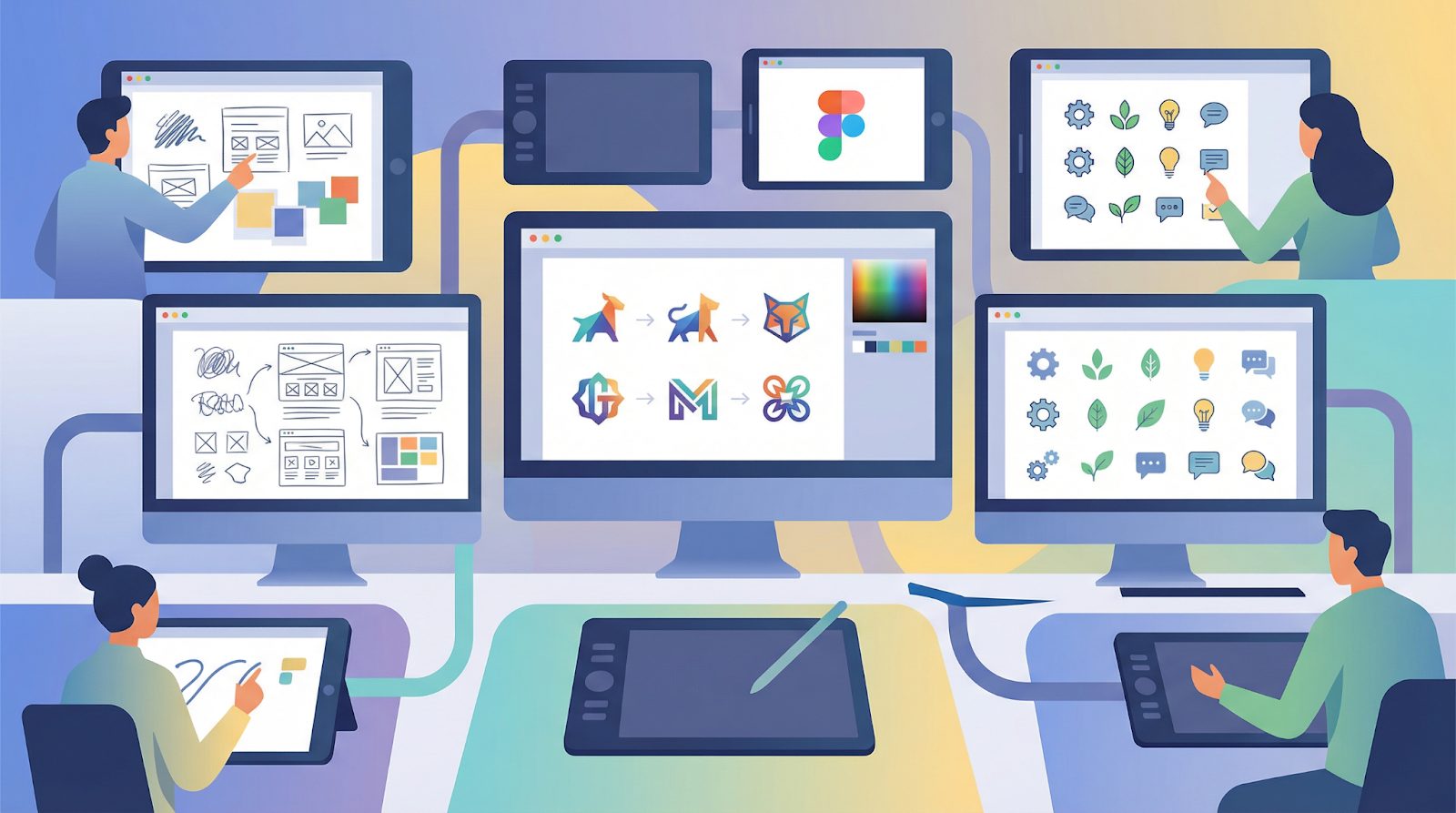

Read on as I show you a practical guide to AI Vector creation in this post.
In today’s multi-platform design environment, teams need graphics that scale cleanly and assets that can be produced quickly without compromising quality. The rise of AI-generated vectors offers an efficient way to meet these demands.
This article explores how AIVector fits into real creative workflows through a narrative, case-based approach.
Table of Contents
Why AI-Generated Vectors Are Becoming a Creative Essential
When Teams Need Clarity Across Every Size
A design team preparing a cross-channel campaign often faces a familiar challenge: the same asset must appear on mobile screens, presentation decks, storefront banners, and product packaging.
Bitmap images lose sharpness during resizing, forcing designers to rebuild versions manually. Vector graphics solve this problem by remaining crisp regardless of scale, and this shift has made vector-first asset creation an operational standard.
When Manual Vector Work Slows Momentum
Consider a small startup redesigning its interface while preparing for a product launch. Rebuilding icons or tracing sketches by hand can consume days. With deadlines approaching, the team needs an automated method to produce clean, consistent assets quickly.
This is where AI-powered vector creation becomes a strategic advantage, freeing time for higher-level design work instead of repetitive shape adjustments.
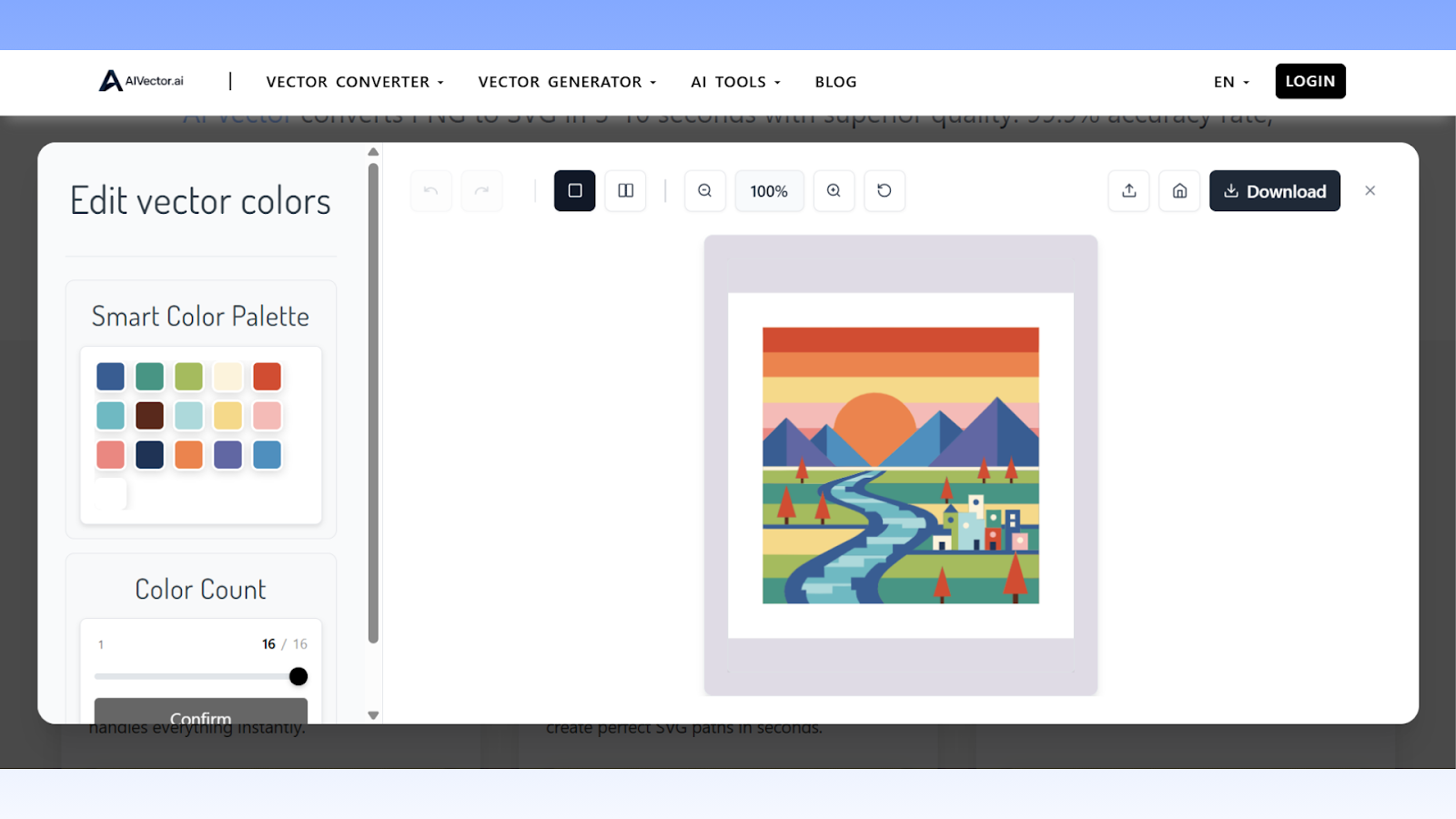
How AIVector Streamlines Vector Creation
When Simple Descriptions Must Become Concrete Assets
Imagine a marketer who needs three new icons for a landing page by noon. Instead of briefing a designer and waiting for drafts, they describe the visuals in plain language and generate them instantly using AI Vector. The ability to turn text into clean SVGs allows teams to move from idea to usable output in minutes rather than hours.
When Intent Needs to Translate Accurately
A product manager might write “a minimal shield with rounded edges,” expecting a sleek security icon. AI Vector interprets that intent and produces results that match stylistic expectations more reliably than traditional auto-trace tools. This reduces back-and-forth adjustments and keeps cross-functional teams aligned as they iterate.
When a Dedicated Text-Conversion Workflow Is Required
Some scenarios call for an even more structured route from prompt to vector. For example, UI teams developing an icon library may rely on a semantic pipeline that ensures consistency across multiple prompts.
In these cases, AIVector’s built-in text-to-vector feature provides a focused method for producing balanced, editable results. Writers often refine their descriptions beforehand, and tools like Sentence Rewriter can help sharpen wording before generation, improving both clarity and output quality.
How AIVector Supports Multi-Format Vector Conversion
When Legacy Assets Must Be Modernized
A brand designer may inherit outdated logos or low-resolution references from earlier campaigns. Redrawing these manually risks altering proportions or losing visual authenticity.
AIVector’s bitmap-to-vector conversion allows teams to preserve the core shapes while gaining fully scalable, path-based versions that fit modern design standards.
When UI Components Must Move from Code to Design
Product documentation often requires interface elements to appear in presentations, design systems, or marketing materials. Manually recreating these shapes within design tools is slow and prone to inconsistencies.
With AIVector, HTML elements can be converted into structured vector graphics that retain layout logic, letting teams adjust colors, spacing, and geometry without rebuilding from scratch.
Real Cases Where AIVector Improves Production Flow
When a Brand Refresh Requires Speed and Stability
A mid-sized company undergoing a brand refresh may need its logo, badges, and iconography updated at once.
AI Vector helps designers generate scalable variations quickly while maintaining the proportional accuracy required for brand integrity. This ensures that early visual concepts can be explored without slowing the broader rollout timeline.
When UI Teams Need Dozens of Icons in a Uniform Style
A SaaS product team might need to expand its icon system during a major feature update. AIVector helps them maintain stylistic harmony across dozens of assets by generating vectors with predictable path structures.
Designers then make fine adjustments—stroke width, curvature, alignment—while avoiding the manual foundational work typically required.
When Early-Stage Exploration Must Move Fast
In pre-production phases, creative leads often explore multiple directions before settling on a final aesthetic.
AIVector lets them generate visual drafts quickly, compare alternatives, and refine promising directions. This accelerates decision-making during critical planning stages and removes the friction of starting each concept from scratch.
Why AIVector Fits Naturally Into Today’s Design Workflows
When Teams Must Balance Speed With Editability
Creative teams need solutions that deliver fast output but also allow precise adjustments. AIVector’s structured vectors contain clean anchor points, logical paths, and easily modifiable geometry, letting designers retain full editorial control even when assets originate from AI.
When Collaboration Requires Consistency
Marketing, product, and design teams often share visual assets across multiple files and platforms.
AIVector produces stable, predictable vectors that integrate seamlessly into these collaborative environments. As assets travel between stakeholders, consistency is maintained, and revision overhead is minimized.
Conclusion: AIVector as a Practical Companion for Modern Visual Production
Growing visual demands, tighter timelines, and cross-platform design challenges have made scalable vector creation more essential than ever. AIVector offers a reliable, narrative-friendly workflow for turning text, images, and HTML into precise, editable vectors.
For teams looking to modernize production, support rapid experimentation, and maintain high design standards, AIVector provides an accessible, efficient, and future-ready foundation.
INTERESTING POSTS
- Let Viddo AI Take You to Witness the Next Revolution in Video Creation
- Cloud Security: Why Companies Should Not Fear To Move On The Cloud?
- 5 Cybersecurity Tips To Protect Your Digital Assets As A Business
- From Solidity to Move: What Security Engineers Should Know Before Switching
- How to Take Your First Step into Cybersecurity
About the Author:

Chandra Palan is an Indian-born content writer, currently based in Australia with her husband and two kids. She is a passionate writer and has been writing for the past decade, covering topics ranging from technology, cybersecurity, data privacy and more. She currently works as a content writer for SecureBlitz.com, covering the latest cyber threats and trends. With her in-depth knowledge of the industry, she strives to deliver accurate and helpful advice to her readers.


