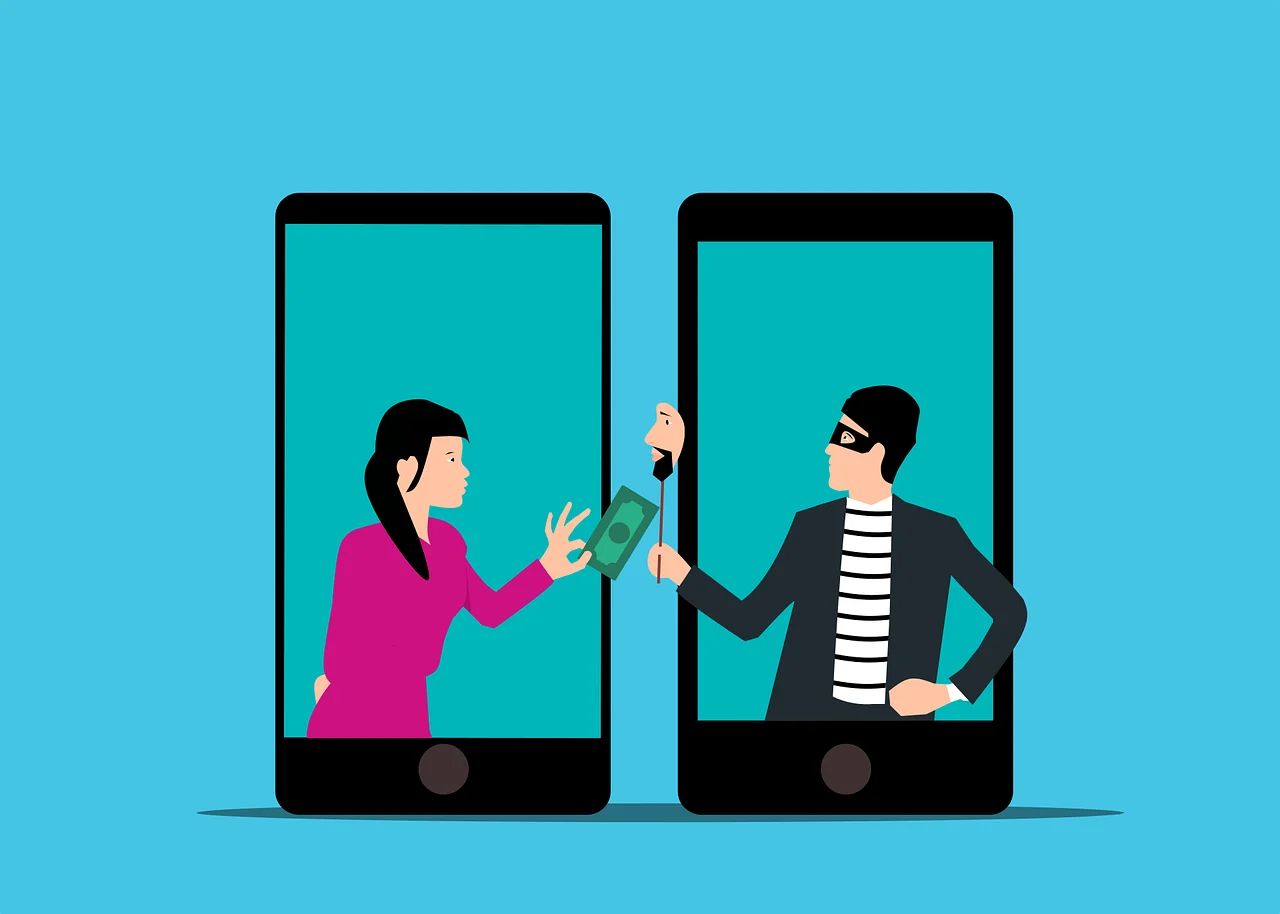
In this post, I will discuss dealing with web security when using online dating websites.
The main threat on a dating site is rarely the awkward date. It is the account takeover, the phishing link, and the stranger who asks for money before asking to meet. Online romance fraud cost Americans $823 million in 2024, and the Federal Trade Commission ranks it among the most expensive imposter scams by median loss. Half of victims lost more than $2,000. Most of that damage started with a security gap the user could have closed.
An online dating website holds a dense file on each user. Real name, photos, location, private messages, and often a saved payment method are stored behind one password. That makes the account worth stealing on its own, separate from any scam run through it. Treating a dating login with the same care as online banking is the baseline here.
Table of Contents
The Value of a Stolen Account
Most people picture the danger as a fake suitor. The bigger exposure is the account itself. A stolen dating login gives an attacker a verified identity, a photo set, and a private message history that can be used to extort or impersonate. Credential stuffing, where a leaked password from one site is tried on others, drives most of these takeovers automatically.
The 2015 breach of one dating service exposed the records of tens of millions of users and led to extortion campaigns that ran for years. An account is not disposable, and the data inside it does not disappear when the user stops logging in.
Passwords and Two-Factor Authentication
Two defenses stop most account theft. The first is a unique password, generated and stored by a password manager, so a leak on one site cannot unlock the dating account. The second is two-factor authentication, which requires a second code at login and blocks an intruder who already has the password.
Both take minutes to set up. Neither is optional on an account that holds photos and a payment method. A password reused from an old shopping site is the single most common way these accounts fall. A password manager fills a saved login only on the genuine site, which quietly defeats fake pages built to copy the real one.
Security Across Platform Types
The security rules do not change with the type of online dating website. A mainstream app, a marriage-focused service, and a niche sugar daddy website all store the same categories of personal data and face the same credential attacks. Users often drop their guard on smaller platforms, even though smaller operators sometimes run thinner security teams.
Whatever the platform, the same short checklist applies: a strong password, two-factor authentication, and a healthy suspicion of any link sent in chat.
Phishing and Fake Links
Phishing is the most common entry point after weak passwords. A match sends a link, maybe to a photo or a fake verification page, and the page quietly harvests the login. A phishing page usually asks you to sign in again or to confirm details the platform already has.
The rule is simple. Do not click links sent inside a dating chat, and never enter a password on a page reached that way. A dedicated email address for dating accounts adds another layer, keeping these attempts away from the inbox that controls everything else.
Catfishing and Identity Checks
A Norton survey found that 76% of adults who have used a dating site or app ran into at least one form of scam, from catfishing to outright financial fraud. Verification is cheap. A reverse image search on a profile photo often surfaces the same picture attached to a different name, and a quick search of the person’s claims exposes borrowed biographies.
The pattern to watch is speed. A contact who professes strong feeling within days, resists a video call, and steers toward a private channel is following the scammer script. None of those moves is proof on its own, and all three together are a reason to stop.
AI and the Automated Scammer
The newest development is automation. Romance scams increasingly run on AI chatbots that hold a convincing conversation with hundreds of targets at once. The old advice to watch for broken English no longer holds, because a language model writes clean, warm messages on demand.
That makes the structural signals matter more than the wording ever did. A message with perfect grammar that still pushes for money or a private channel is the same scam it always was, only better written.
Keeping the Conversation Inside the Platform
Dating services build monitoring into their own messaging. Moving to text or another app strips that protection and removes the record a platform keeps. Scammers push for the move early, because a private channel has no fraud detection and no report button.
Staying in-app is not permanent. Once a video call and a few offline details check out, the risk drops. The point is to keep the platform’s tools in place while the other person is still unverified.
The Money Request
Every romance scam ends at the same place: a request for money. It arrives as an emergency or an investment tip the other person swears is time-sensitive. The amount starts small to test compliance, then grows. Requests now favor gift cards and cryptocurrency because both move fast and cannot be reversed.
Adults over 60 lost $389 million to these scams in 2024, the largest share of any age group. The defense is a flat rule. No money and no account access to anyone met online and not met in person. A genuine connection survives that rule. A scam does not.
Security in an Afternoon
Online dating security comes down to a handful of habits that take an afternoon to set up. A password manager, two-factor authentication, a separate email, and a refusal to send money to anyone unmet cover almost every case in the FTC data. That is four settings against an $823 million problem. The awkward date fades by the weekend. A drained account and a stolen identity do not, and the afternoon spent locking things down is the cheapest insurance online dating offers.
Frequently Asked Questions
How can I make my online dating account more secure?
Start with a unique password stored in a trusted password manager and enable two-factor authentication whenever the platform offers it. These two steps prevent most unauthorized account access, even if your password is exposed elsewhere.
How can I recognize a phishing attempt on a dating website?
Be cautious of anyone who asks you to click a link, log in through another page, or verify your account outside the official website or app. When in doubt, open the dating platform directly through its official website or mobile application instead of following links sent in messages.
What are the warning signs of a romance scam?
Common warning signs include someone expressing strong emotions very quickly, refusing video calls, avoiding in-person meetings, asking to move conversations to another platform, or requesting money, gift cards, or cryptocurrency.
Can AI make romance scams more convincing?
Yes. AI tools can generate natural, convincing conversations that make scams harder to identify through grammar or writing style alone. Instead of focusing on how messages are written, pay closer attention to suspicious behavior, such as requests for money or attempts to move conversations away from the platform.
INTERESTING POSTS
About the Author:

Chandra Palan is an Indian-born content writer, currently based in Australia with her husband and two kids. She is a passionate writer and has been writing for the past decade, covering topics ranging from technology, cybersecurity, data privacy and more. She currently works as a content writer for SecureBlitz.com, covering the latest cyber threats and trends. With her in-depth knowledge of the industry, she strives to deliver accurate and helpful advice to her readers.