


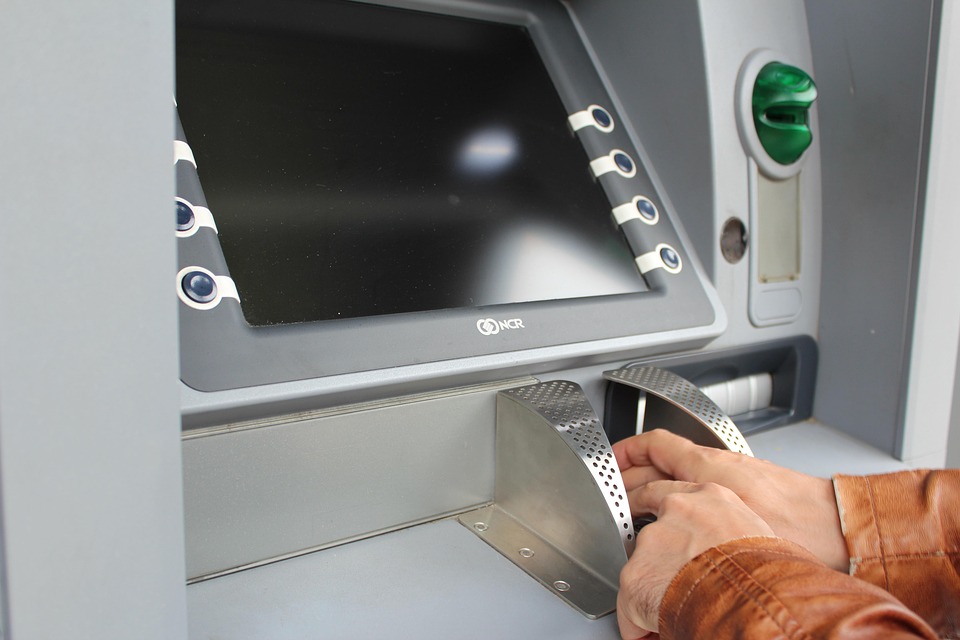

In this post, I will talk about the overlooked security risks of poor cash management in small businesses.
When small businesses think about security, attention often centres on cyber threats, data protection, and online fraud. While these risks are undeniably important, a more traditional vulnerability is frequently overlooked: the handling of physical cash.
Despite the growth of digital payments, many small businesses continue to accept and rely on cash. Retailers, hospitality venues, service providers, and market traders often deal with physical money on a daily basis. Without proper controls in place, poor cash handling can expose businesses to theft, fraud, and operational risk — sometimes without immediate detection.
Table of Contents
Why cash remains a security concern
Cash is inherently vulnerable. Unlike digital transactions, it lacks built-in traceability and relies heavily on manual processes. When procedures are informal or inconsistent, accountability becomes difficult to maintain.
Common security risks associated with cash include:
- Internal theft or skimming
- Misappropriation of funds
- Undetected counting errors
- Loss or damage during storage or transport
For small businesses with limited margins, even minor losses can have a disproportionate impact.

Internal threats are often underestimated
While external theft is an obvious concern, internal risks are often more difficult to identify. Small businesses tend to operate on trust, particularly when teams are small and long-standing relationships are in place.
However, trust without controls creates opportunity. Without clear processes, discrepancies may be attributed to mistakes rather than investigated as potential security issues. Over time, this can allow losses to continue unchecked.
Effective internal controls do not signal distrust — they protect both the business and its employees by creating transparency and accountability.
Human error as a security vulnerability
Not all cash losses are the result of deliberate actions. Human error remains one of the most common causes of financial discrepancies. Manual counting, rushed reconciliation, and inconsistent record-keeping all increase the likelihood of mistakes.
From a security perspective, these errors matter because they obscure visibility. When businesses cannot confidently distinguish between mistakes and misconduct, responding appropriately becomes challenging.
Reducing reliance on manual processes is therefore as much a security measure as it is an efficiency improvement.
The role of structured cash management in risk reduction
Strong cash management practices form a critical layer of defence against both error and fraud. Structure brings consistency, and consistency supports detection.
Well-designed processes typically include:
- Standardised cash handling procedures
- Regular reconciliation at defined intervals
- Clear documentation and reporting
- Separation of duties where possible
These measures help ensure that discrepancies are identified quickly and addressed before they escalate.
In many cases, reviewing and improving cash management processes is one of the simplest ways small businesses can strengthen their overall security posture without significant disruption.
Physical security and access control
Cash security is not limited to counting and record-keeping. Physical access also plays a significant role. Cash stored in unsecured locations or accessed by multiple individuals increases exposure to risk.
Best practices include:
- Limiting access to cash storage areas
- Using secure storage solutions
- Logging access and handling activities
These controls reduce opportunities for unauthorised access and provide clear audit trails if issues arise.
Reconciliation as a detection mechanism
Regular reconciliation is one of the most effective tools for identifying security issues. Comparing cash on hand against sales records helps reveal discrepancies early, making investigation easier and outcomes clearer.
Delayed reconciliation, on the other hand, allows problems to compound. The longer an issue goes unnoticed, the more difficult it becomes to determine its cause.
Establishing consistent reconciliation routines strengthens both financial accuracy and security oversight.
Training staff to support security objectives
Security is not solely a management responsibility. Staff play a crucial role in maintaining safe cash handling practices.
Training should emphasise:
- The importance of following procedures
- Awareness of common fraud risks
- How to report concerns without fear of blame
When employees understand the purpose behind controls, compliance improves and risks are reduced.
Balancing security with operational efficiency

Small businesses often worry that additional controls will slow operations or add complexity. However, poorly managed cash handling is far more disruptive in the long term.
Effective security-focused processes are designed to be repeatable and efficient. By reducing errors and uncertainty, they often save time rather than consume it.
Security and efficiency are not opposing goals — when designed well, they reinforce each other.
Looking ahead: cash security in a hybrid payment environment
As businesses continue to operate in hybrid payment environments, managing both digital and physical risks becomes increasingly important. While cyber threats dominate headlines, traditional vulnerabilities remain just as relevant.
Cash security should be viewed as part of a broader risk management strategy that encompasses people, processes, and technology.
Final thoughts
Poor cash handling is more than an administrative issue — it is a security risk. For small businesses, the consequences of weak controls can include financial loss, damaged trust, and operational disruption.
By strengthening cash management practices, improving internal controls, and treating physical money with the same attention as digital assets, small businesses can significantly reduce their exposure to risk. In an evolving threat landscape, overlooked vulnerabilities are often the most costly.
INTERESTING POSTS
About the Author:

Meet Angela Daniel, an esteemed cybersecurity expert and the Associate Editor at SecureBlitz. With a profound understanding of the digital security landscape, Angela is dedicated to sharing her wealth of knowledge with readers. Her insightful articles delve into the intricacies of cybersecurity, offering a beacon of understanding in the ever-evolving realm of online safety.
Angela's expertise is grounded in a passion for staying at the forefront of emerging threats and protective measures. Her commitment to empowering individuals and organizations with the tools and insights to safeguard their digital presence is unwavering.



