


In this post, I will talk about the legal considerations for web scraping.
Although web scraping has been in use for years, its legal status remains complex. For a fact, automated data collection is now more common across industries than before. So, courts, regulators, and legislators worldwide are paying closer attention to how and where scraping is being used.
If you want to scrape the web, it’s essential to grasp the legal framework before kicking off. We’ll explain in detail as you continue reading.
Table of Contents
Terms of Service Agreements
Per our expertise, a website’s Terms of Service (ToS) is the first and most crucial legal consideration. Why? Well, most sites include clauses that prohibit data mining, scraping, or any automated access.
Going against the terms makes you subject to legal problems. It doesn’t matter whether the data being collected is publicly available.
In our research, we noted that some courts have issued mixed rulings on whether ToS violations alone are illegal. However, the risk is real enough to take seriously. It’s best to read the terms of any site you intend to scrape and follow the instructions. If possible, seek written permission from the site owner.
The Computer Fraud and Abuse Act (CFAA)
The CFAA is a US federal law originally designed to prevent hacking and unauthorized computer access. In recent times, we’ve seen it apply to web scraping cases with varying outcomes. The biggest question under the CFAA is whether scraping a publicly accessible site equals unauthorized access.
Let’s take an example with the landmark hiQ Labs v. LinkedIn case. The Ninth Circuit Court of Appeals ruled that scraping publicly available data doesn’t violate the CFAA. It was a significant decision for the web scraping industry, but it doesn’t mean automatic protection.
From what we know, the ruling applies only to publicly accessible data. It doesn’t cover situations where you may bypass authentication, technical restrictions, or access data behind a login wall. Our point is that scraping publicly available information is easier to defend. However, anything beyond that carries a higher legal risk under the CFAA.
The General Data Protection Regulation (GDPR)
If you intend to scrape data that involves European Union residents, you can’t skip the GDPR. We consider it to be one of the most significant legal frameworks to understand. Even if your business is based outside of Europe, GDPR applies if you’re collecting data about EU individuals.
Under GDPR, personal details can’t be collected, stored, or processed without lawful permission. That covers names, email addresses, phone numbers, and any information that can identify a person. So, if you scrape such data, it’s a direct violation, with fines that can reach €20 million or 4% of global annual turnover. The higher figure applies.
Therefore, to stay in a legal position, the safest approach is to collect non-personal and aggregated data. These can be pricing information, product listings, business names, or industry trends.
Copyright Law
Scraping is one thing, and what you do with the data is another. The latter can lead to copyright issues. Most website content is protected by copyright the moment it’s created, especially text, images, product descriptions, and reviews.
If you scrape and publish content verbatim, it’s a direct copyright infringement. There’ll be less legal risk if you collect and analyze data for internal research purposes only. However, if you must put it out, it should be written differently or properly attributed to the source.
Best Proxies for Legal Compliance
As experts, we know that using proxy tools is a standard practice in web scraping. The good news is that they’re legal when applied responsibly. That said, it also depends on the service you’re using. For this reason, it’s essential to choose an established proxy provider to be on the safe side.
Reputable proxy services build their networks with compliance in mind, and these are the best three we recommend:
Oxylabs — Enterprise-Grade Performance & Reliability
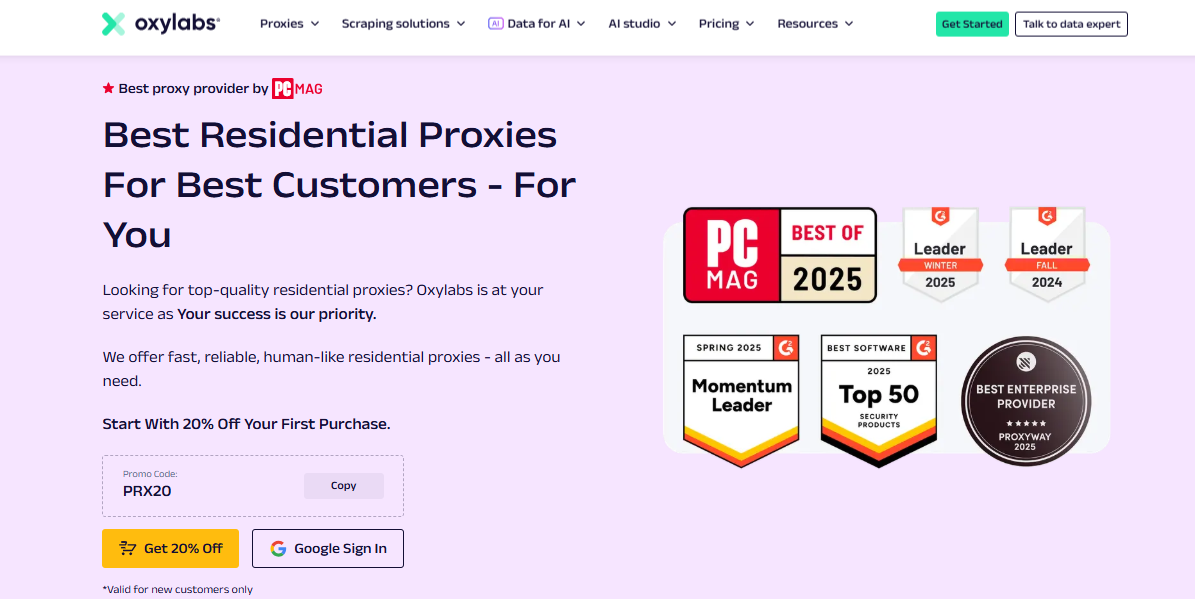
Oxylabs stands out as a premium, enterprise-focused proxy provider built for organizations that cannot afford downtime or data gaps. Its infrastructure is backed by ISO, ANSI/TIA, and NIST-certified datacenters, which signals strong adherence to global security and operational standards.
Beyond just proxies, Oxylabs offers a dedicated Web Scraper API, allowing businesses to streamline data extraction without building everything from scratch. Combined with a massive residential proxy pool and high success rates, it’s particularly well-suited for:
- Large-scale data collection (millions of requests)
- Mission-critical scraping operations
- Businesses requiring SLAs and dedicated account support
👉 If your priority is stability, compliance, and guaranteed performance, Oxylabs is one of the safest long-term investments.
Decodo — Scalable, Flexible & Ethically Sourced
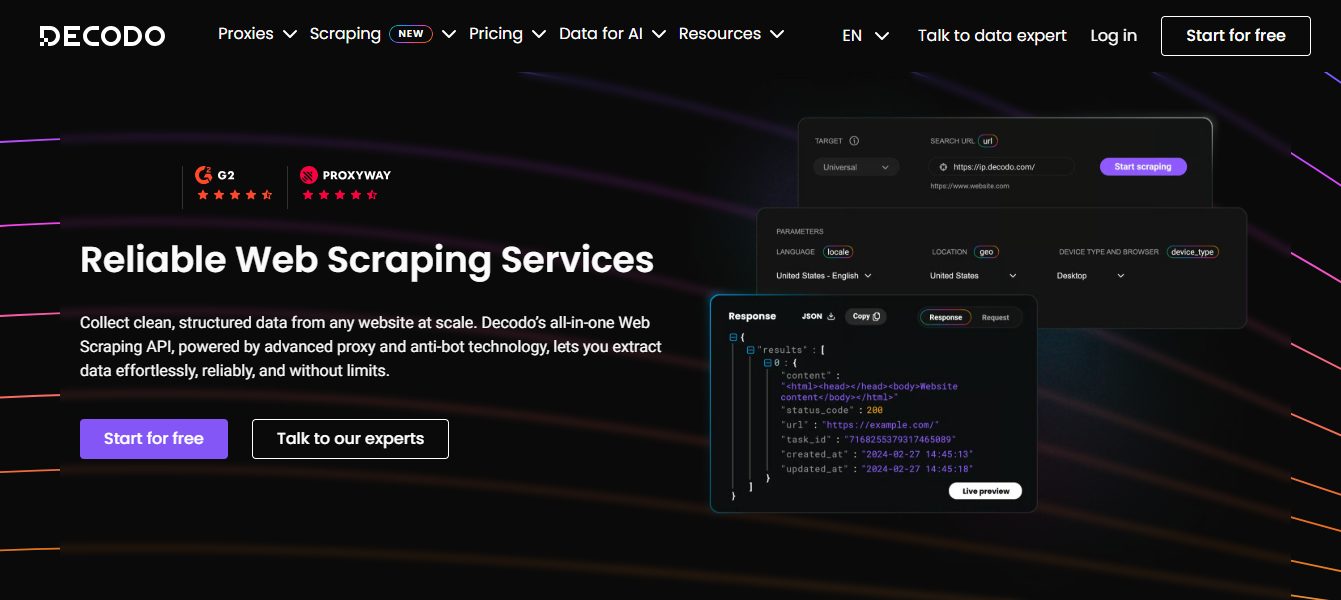
Decodo (formerly Smartproxy) strikes a strong balance between power, flexibility, and ethical sourcing. With access to 125+ million IP addresses, it provides excellent global coverage for both residential and mobile proxies.
One of its biggest strengths is its EWDCI certification, which emphasizes that its proxy network is built through ethical and sustainable sourcing practices—a growing concern in modern data operations.
Decodo is especially effective for:
- Bypassing advanced anti-bot systems
- Accessing geo-restricted content
- Scaling scraping operations without excessive complexity
👉 If you want a solution that is powerful yet adaptable, while maintaining ethical standards, Decodo is a very smart choice.
Webshare — Cost-Effective Scale with Built-In Simplicity
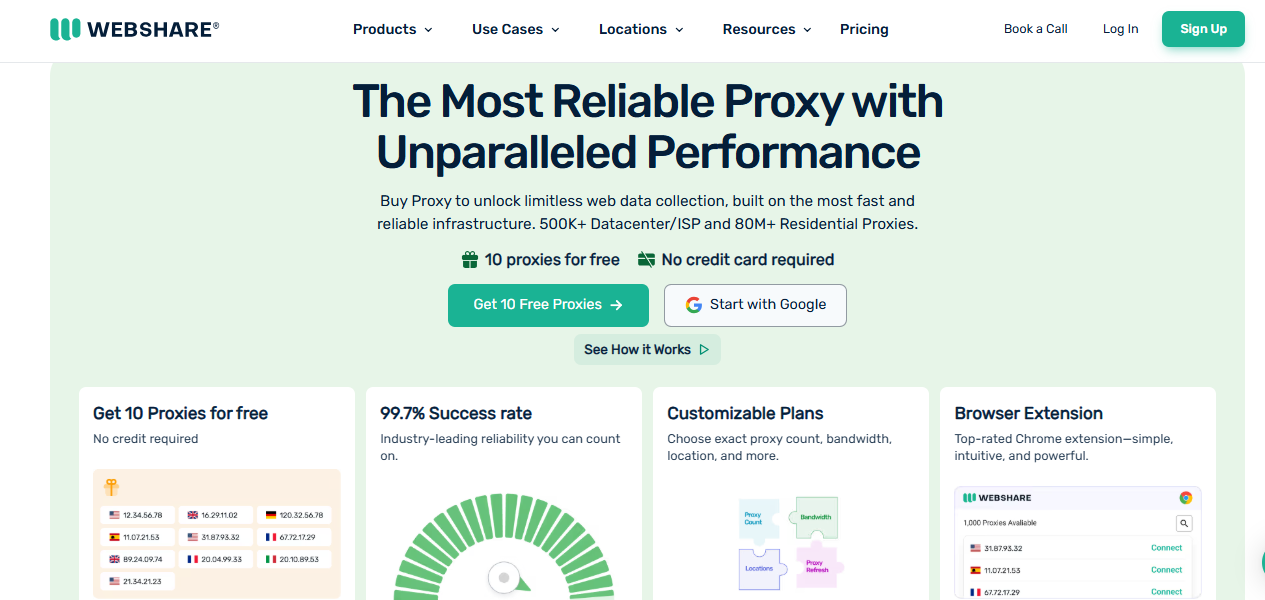
Webshare is known for delivering accessible, budget-friendly proxy solutions without sacrificing global reach. Its network includes 80+ million residential IPs and coverage across 195+ countries, making it ideal for distributed scraping tasks.
What makes Webshare particularly attractive is its ease of use and built-in data handling features, such as automatic aggregation, which reduces the need for additional tooling. It also operates under a clear and transparent Compliance Policy, reinforcing its commitment to legal usage.
Webshare works best for:
- Startups and growing scraping operations
- High-volume concurrent requests
- Teams that want simplicity without heavy infrastructure
👉 If your focus is affordability, scalability, and ease of deployment, Webshare offers excellent value.
Quick Positioning Guide
| Use Case | Best Choice |
|---|---|
| Enterprise, mission-critical scraping | 🟢 Oxylabs |
| Flexible scaling + ethical sourcing | 🔵 Decodo |
| Budget-friendly, high-volume scraping | 🟠 Webshare |
To avoid risks, don’t use proxies to bypass specific legal restrictions or authentication systems. Also, don’t deploy your scraping requests in a way that’s against a site’s terms.
Other Data Protection Laws
We’ve talked about GDPR, which is the most well-known data protection framework. However, it’s far from being the only one. We need to be aware of:
- CCPA (California Consumer Privacy Act): Governs the collection and use of personal data belonging to California residents.
- PIPEDA (Canada): Canada’s federal privacy law covering personal data collection in commercial contexts.
- PDPA (Thailand, Singapore, and others): Various Asia-Pacific nations have their own personal data protection laws with international reach.
Before performing a scraping operation targeting users or data from multiple countries, we advise conducting a jurisdiction-by-jurisdiction legal review. That way, you’ll know what specific data protection laws apply and what’s legal.
Bottom Line: Legal Compliance is Crucial for Sustainable Scraping
Businesses that successfully run durable, long-term scraping operations prioritize legal compliance. For your web scraping projects, you should treat compliance as a foundation rather than an afterthought.
As we explained, it starts by respecting the Terms of Service of your target site. Also, you have to stay within the boundaries of laws like the CFAA and GDPR, and use compliant proxy providers. Oxylabs, Decodo, and Webshare are the three top proxy services we recommend.
Finally, collect only the data you genuinely need for your project. If you do these, you can scrape with confidence, without unnecessary legal exposure.
FAQ: Legal Considerations for Web Scraping
1. Is web scraping legal?
Web scraping is not outright illegal, but its legality depends on how and what you scrape. The legal landscape is complex and varies by jurisdiction.
Key factors that determine legality include:
- Whether the data is publicly accessible
- Compliance with a website’s Terms of Service
- Whether personal data is involved
- How the data is used after collection
For sustainable operations, businesses must treat compliance as a core foundation, not an afterthought.
2. Can I scrape any website if the data is public?
Not necessarily. Even if data is publicly available, you must still respect the website’s Terms of Service (ToS). Many sites explicitly prohibit scraping or automated access.
Violating these terms can expose you to legal risks, even if courts have issued mixed rulings on enforcement.
Best practice:
- Always review the ToS before scraping
- Seek permission when possible
- Avoid aggressive scraping behavior
Public data is easier to defend legally—but it’s not a free pass.
3. What laws should I be aware of when scraping data?
Several major laws and regulations impact web scraping:
- CFAA (U.S.) → Focuses on unauthorized access (especially bypassing restrictions)
- GDPR (EU) → Strict rules on collecting personal data
- CCPA, PIPEDA, PDPA → Regional data protection laws across the US, Canada, and Asia
For example, under GDPR, collecting personal data without lawful basis can lead to fines up to €20 million or 4% of global turnover.
To stay safe, focus on non-personal, aggregated data like pricing, product listings, or trends.
4. Can I reuse or publish scraped content?
You need to be careful here. Most website content is protected by copyright law the moment it’s created.
- Copying and republishing content directly → ❌ High legal risk
- Using data for internal analysis → ✅ Safer
- Publishing insights with original wording or attribution → ✅ Acceptable
The key rule: Don’t reproduce scraped content verbatim without permission.
5. Are proxies legal to use for web scraping?
Yes—proxies are legal when used responsibly. They are a standard tool for managing requests and avoiding blocks. However, misuse (like bypassing login systems or legal restrictions) can create serious legal exposure.
To stay compliant, use reputable providers that prioritize ethical sourcing and legal standards:
- Oxylabs → Enterprise-grade proxies with certified infrastructure and Web Scraper API
- Decodo → Ethically sourced IPs with strong compliance credentials
- Webshare → Global proxy network with a clear compliance policy
Using trusted providers helps ensure your scraping operations remain both effective and legally sound.
INTERESTING POSTS
About the Author:

Daniel Segun is the Founder and CEO of SecureBlitz Cybersecurity Media, with a background in Computer Science and Digital Marketing. When not writing, he's probably busy designing graphics or developing websites.



