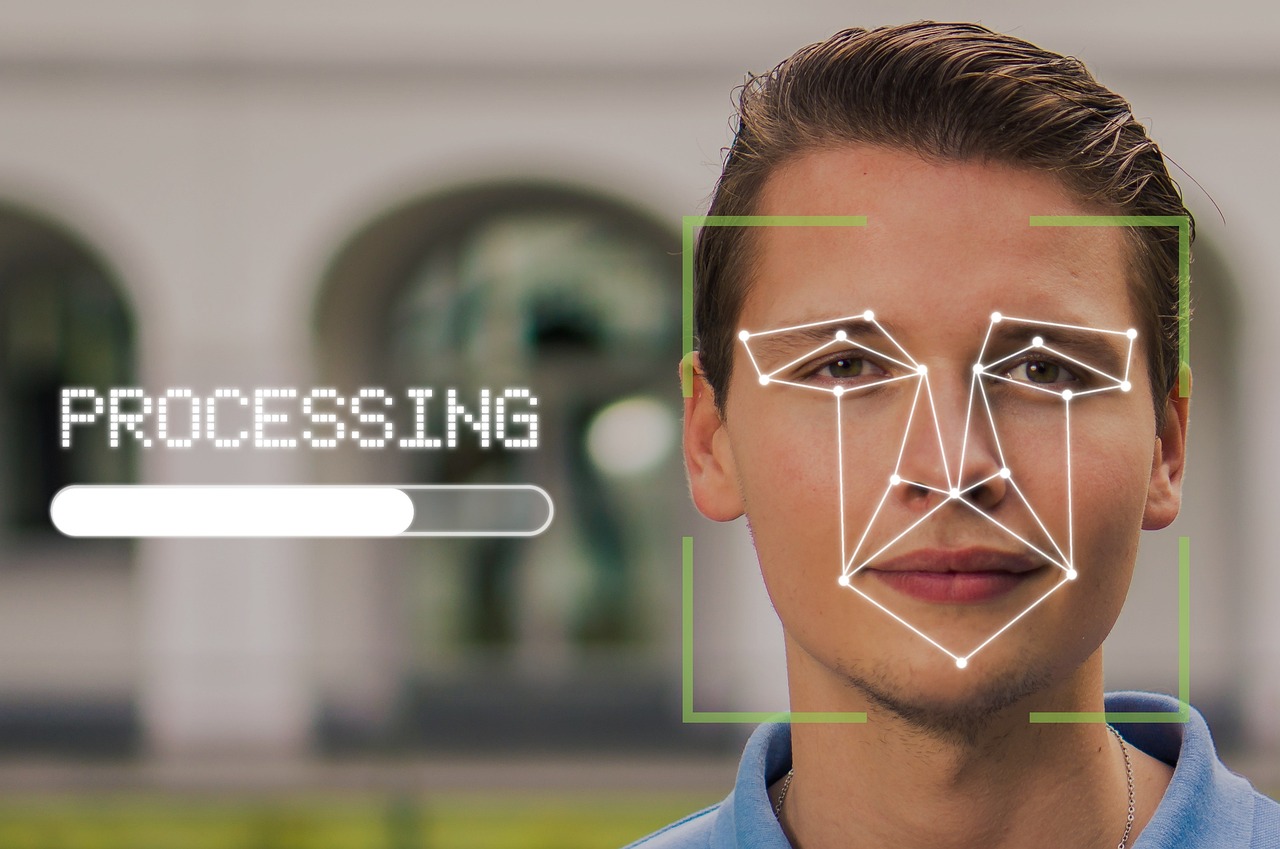
Facial recognition technology is now more than six decades old. In the 1960s, a research team conducted experiments on whether computers could recognize faces. Researchers used a primitive tool to map eyes, hairlines, and noses. The computer’s job was to find matches, but it failed to do so.
Table of Contents
Modern-day advances
More recently, developers unveiled what is now known as the “deep convolutional neural network.” In this network, a model detects image data patterns. It utilizes an artificial neural network that mimics the way the brain functions.
This network receives certain input values and checks the results for accuracy. If they are inaccurate, the system makes changes until the correct configuration is achieved. In other words, it teaches itself to recognize faces.

The technology has made impressive progress
In 2022, The New York Times reported that PimEyes, a tech-based website, could scour the web for faces and retrieve even the most obscure images. The service costs just $30 a month. What’s more, it took seconds to perform a search. The search yielded a grid of images that the technology identified as similar, along with links to the sites where they were published.
The medium conducted a test using PimEyes, and the site found pictures of every New York Times journalist, including some that the individuals weren’t aware were even online. Some of them got links to photos in which they were wearing a mask or a pair of sunglasses.
Mass devices are utilizing this cutting-edge technology. For instance, iPhones use 3D camera technology for their Face ID feature, which is based on infrared and available in the X models. Facial patterns are mapped by thermal IR imagery. They are mainly derived from blood vessels beneath the skin.
Apple uses protection measures, sending the detected pattern to a secure area. This makes sure authentication takes place locally, and Apple cannot access the patterns.
READ ALSO: AI-Driven Facial Analysis: Enhancing Portrait Composition and Framing
Facial detection vs. recognition
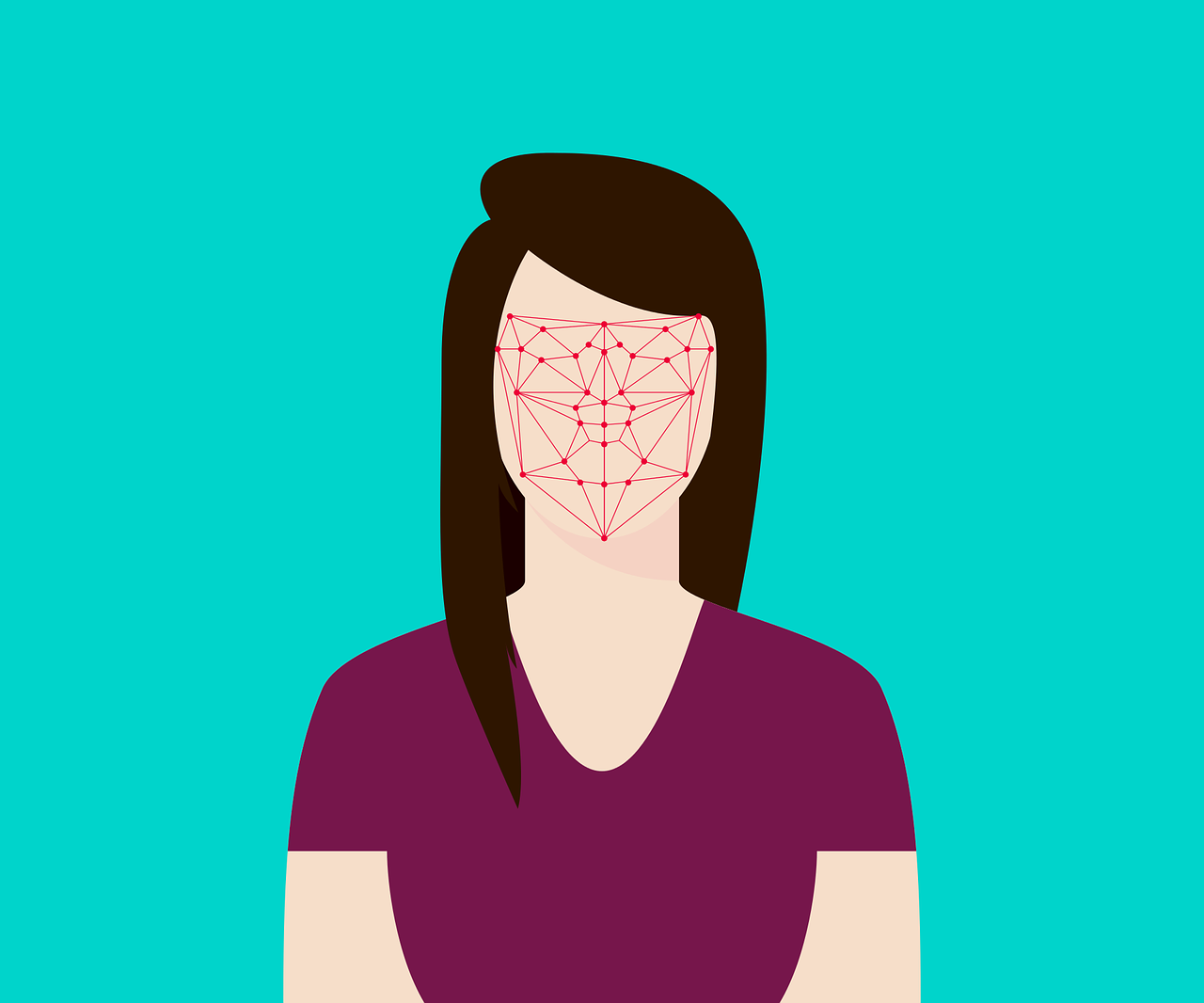
There are some key differences between face detection and recognition, although the terms are sometimes used interchangeably.
Face detection is when the network detects a face. Social networks utilize it to create extensive catalogs of images, enabling users to find people online, among other things.
Facial recognition, conversely, is the process of scanning a face and finding a match in a database. This is a more precise approach used to identify individuals when they enter buildings, unlock a phone or a door, etc.
Facial recognition assessment criteria
There are three criteria to assess facial recognition effectiveness, broadly speaking: true positives, false positives, and false negatives. True positive is when the system makes a correct match. High true positive rates are aimed for, obviously.
This isn’t the case with false positive incidences, where a system makes an incorrect match. These incidences should be low in number. The same applies to false negative rates, where the system fails to match a genuine user to their profile.
READ ALSO: How Private Is Your Search History?
Mass recognition: Worrying privacy issues
In 2019, it was revealed that the FBI’s facial recognition network system could match against nearly 650 million images. It was noted that this number exceeded the total population of the US. The vast database included driver’s license photos from almost two dozen states, including states that did not explicitly allow such use of driver’s license repositories.
The FBI performed more than 150,000 facial recognition searches from 2017 to 2019, which matched against mugshots. In addition to those searches, they ran ones on passport pictures and other external databases.
The number of searches was concerning, considering that FBI-led investigations resulted in only about 10,000 criminal convictions in 2017, according to an article published in Time Magazine.
How Far Have Facial Recognition Searches Come?
Facial recognition technology has undergone significant advancements in recent years, achieving higher accuracy and efficiency compared to its earlier iterations. Here’s a breakdown of the progress:
Early Stages (1960s-1990s):
- Limited capabilities: Early facial recognition systems relied on basic 2D image analysis and struggled with factors like lighting variations, pose changes, and facial expressions.
- Low accuracy: Recognition rates were often unreliable, hindering practical applications.
Improvements and Advancements (2000s-present):
- Shift to 3D recognition: The introduction of 3D imaging and more sophisticated algorithms has improved accuracy, accounting for facial depth and contours.
- Deep learning revolution: The integration of deep learning techniques, particularly convolutional neural networks (CNNs), significantly boosted performance.
- Increased accuracy: National Institute of Standards and Technology (NIST) tests have demonstrated significant improvements in facial recognition accuracy, with error rates decreasing from approximately 4% in 2014 to less than 0.2% in 2018 for certain datasets.
- Faster processing: Advancements in hardware and algorithms have enabled faster processing times, making real-time applications more feasible.
Current Applications:
- Law enforcement utilizes facial recognition in various applications, including criminal identification, missing person searches, and security surveillance.
- Consumer technology: Facial recognition is integrated into smartphones and other devices for unlocking, photo tagging, and personalized experiences.
- Border security: Some countries utilize facial recognition at airports and border crossings for identity verification.
Challenges and Concerns:
- Privacy concerns: The widespread use of facial recognition raises concerns about privacy, potential misuse, and the possibility of bias in algorithms.
- Ethical considerations: Ethical debates surround the use of facial recognition in public spaces and its implications for individual freedoms.
- Accuracy limitations: Although accuracy has improved, facial recognition technology remains susceptible to various factors, including image quality, pose variations, and lighting conditions.
READ ALSO: 5 Creative Ways to Show Employee Appreciation
Conclusion
Overall, facial recognition technology has advanced significantly in terms of accuracy and efficiency.
However, ethical considerations, privacy concerns, and limitations in accuracy remain significant aspects of the ongoing conversation surrounding this evolving technology.
INTERESTING POSTS
- Superior Security Enhancement With Biometric Fingerprint Scanner
- Test Automation: Features, Benefits, And Challenges Of Automated Testing
- Can Atomic Exchanges Achieve Critical Mass?
- Living by Upgrading: 5 Luxury Watches That Will Match Your Lifestyle
- Top Mobile Design Trends To Know This Year
- Sustainable Finance And Positive Global Transformation
- Smart Security Systems and Motion Sensors: Debunking Common Myths and Misconceptions
- Cricket Betting Sites In Bangladesh
About the Author:

Christian Schmitz is a professional journalist and editor at SecureBlitz.com. He has a keen eye for the ever-changing cybersecurity industry and is passionate about spreading awareness of the industry's latest trends. Before joining SecureBlitz, Christian worked as a journalist for a local community newspaper in Nuremberg. Through his years of experience, Christian has developed a sharp eye for detail, an acute understanding of the cybersecurity industry, and an unwavering commitment to delivering accurate and up-to-date information.