




In this post, I will talk about SEO writing habits for Bloggers in 2026.
SEO in 2026 is not the same as it was five years ago. Google’s algorithms are smarter, and they prioritize user experience over keyword stuffing and outdated tricks.
In fact, a recent SEMrush report revealed that content quality and relevance are more important than backlinks as the biggest ranking factors.
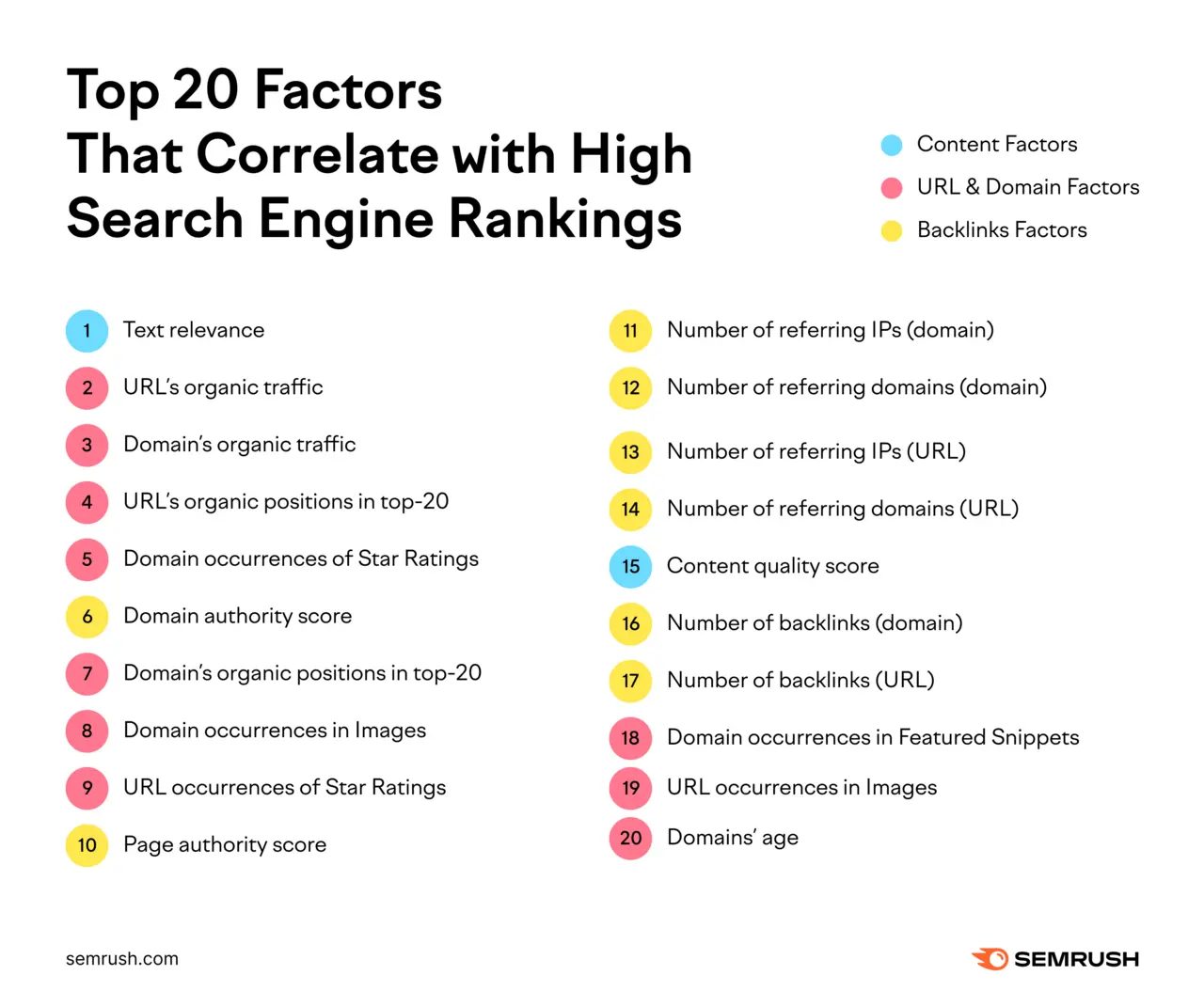
So, to generate SEO-friendly content, our writing has to be user-friendly as well. That is possible only if we develop some writing habits that help us create SEO-friendly content every time.
In this guide, I’ll share 9 powerful habits every blogger needs in 2026 to write content that ranks higher and attracts readers.
Table of Contents
9 SEO-friendly writing habits every blogger needs in 2026
Today’s SEO is about creating content that genuinely helps people while staying search-friendly.
So, the right writing habits can make your blog posts both rankable and readable. That will give you long-term visibility and loyal readers.
1. Start with the search intent of your audience
Before starting to write anything, you need to find out what your audience is looking for in the topic. And how they want to see it.
Because Google is smart enough to match content with what people really want. For example, someone searches for “best running shoes for beginners.” This means they don’t want a history of sneakers. They want to see some recommendations.
There are four intents to search on Google.
- Informational intent: Looking for some sort of information (blogs/answers)
- Navigational intent: Looking for a page or website (tool/platform)
- Commercial intent: Looking to buy or research (products/services)
- Transactional intent: Ready to buy something or complete an action
When you look for keywords, you also need to determine their intent. Most SEO tools, like Semrush, mention the intent along with the keywords.
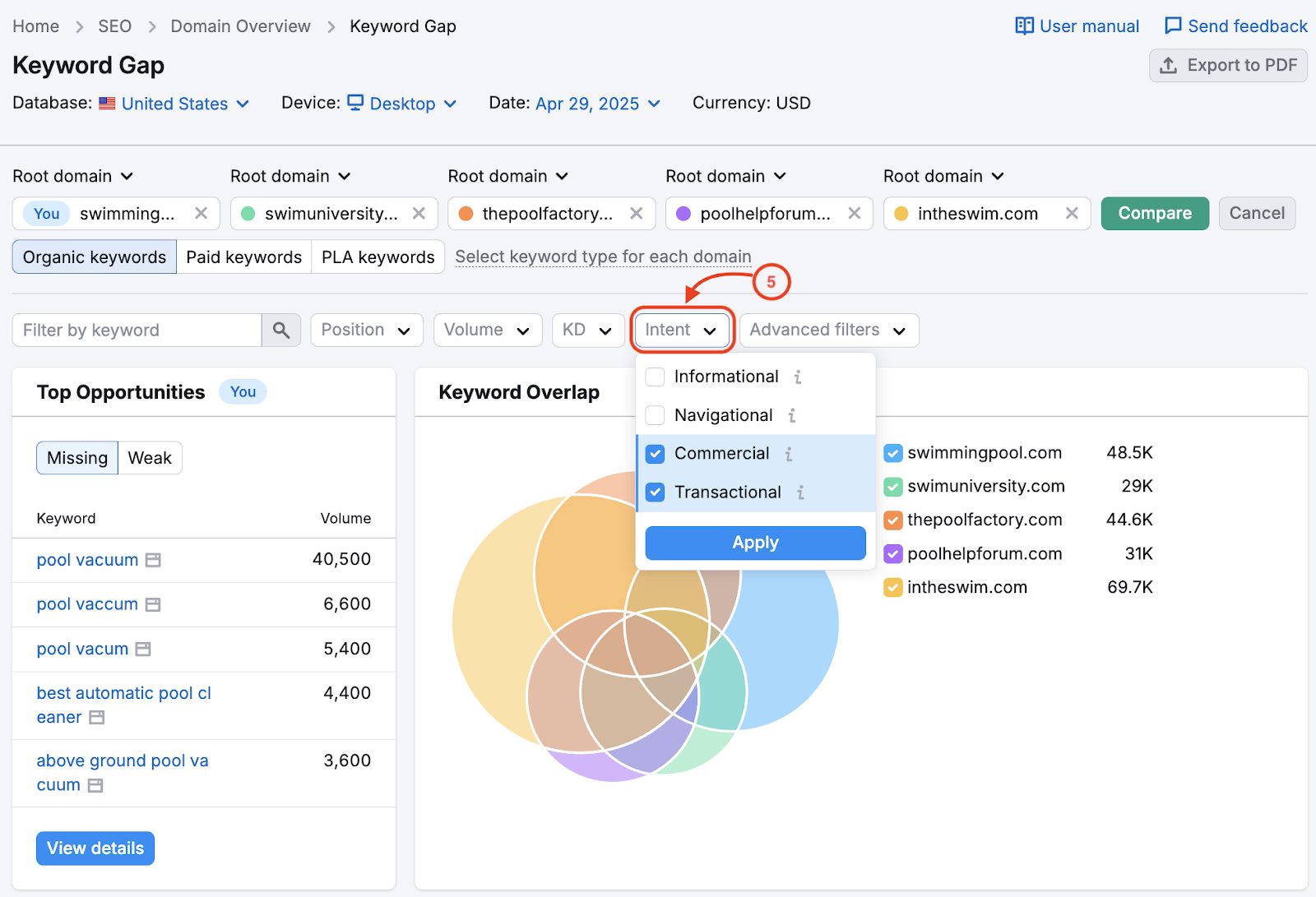
When you align your blog with search intent, you’re not just ranking. You’re answering your readers’ exact questions. That’s how you build trust.
2. Create click-worthy titles and meta descriptions
Your title and meta description are the first things readers see of your blog on Google. If they do not attract or promise value, people will scroll past them. Even if you’re ranking high.
Studies by Buffer show that titles with power words and clear benefits can increase click-through rates and conversions on social media. In the case of SEO, keywords are the power words. Because they create relevancy. And we have already seen that relevancy is the top-ranking factor on Google.
Keywords used in titles and meta descriptions with the user’s intent create an attraction for visitors. They convince readers to click.
Nail both, and you’ll win more traffic without moving an inch in rankings.
3. Use keywords naturally, not forcefully
Today’s Google is contextually smart. It knows if someone tries to stuff keywords to show relevancy. In fact, Google’s algorithms now penalize keyword stuffing.
What they reward instead is natural, reader-first writing. So you need to follow that. Only use keywords where they go naturally. Try to create a proper context around places where keywords are necessary, like meta descriptions, alt texts, and headings.
If you want to use more keywords, increase the length of your content. Just avoid using them too many times for no particular reason.
Keywords are guides for Google to match readers with the content, not a script for writers. Sprinkle them where they fit organically. The simple is to write for people first, optimize for search second.
Properly guide your AI writer to add keywords naturally (if you are using one for writing). Modern generative AIs, like an AI paragraph writer, can understand context and write paragraphs accordingly. The better you guide, the more natural their words will come out.
4. Write in a scannable format
Most readers don’t read every word of a blog—they just scan. According to Neilson Norman Group, users read at most 28% of the words on average. 20% are more likely.
So you need to write in a format that readers can get your main ideas by only scanning your page. If your blog looks like a giant wall of text, chances are they’ll leave.
Break up your content with short paragraphs, bullet points, subheadings, and bold highlights. Add visuals where they make sense. The easier it is to scan, the longer people stay. That signals to Google about your content’s quality.
One more thing, do not make grammatical mistakes. Or people will lose trust in your content. They will think you are careless. It is better to use a grammar checker after you are done writing something, such as the one by checker-plagiarism.com.
This tool not only points out grammar mistakes, but also checks readability and suggests improvements for clarity and better word choice. So with good grammar, you can improve both content and context.
5. Try adding E.E.A.T. in the content
Google itself tells us how to make quality content. Google clearly says it is looking for EEAT (Experience, Expertise, Authoritativeness, and Trustworthiness) to rank in 2025.
If you have this quality, Google does not care how you generated the content. But still, it is better to detect AI and humanize content before uploading.
Tools like ai-detector.info help you highlight even minor AI similarities in your content. So you can rewrite sentences and upload content with confidence.
For bloggers, EEAT means showing real-life experience and transparency with your readers. Means if you have used AI for any part of your content, do not claim that you have written it all by yourself.
For example, if you’re reviewing a product, share your personal use case. If you’re writing a how-to guide, add your own insights and cite reliable sources.
When readers (and search engines) see your content as experience-driven, they find it trustworthy. This builds both ranking power and loyal readers.
6. Optimize for user queries and voice search

WebFX says about 50% of U.S. consumers use voice search every day. So more and more people are asking Google questions in a conversational way. Especially through voice assistants like Siri, Alexa, or Google Home.
That means your blogs should be answering questions directly and clearly now. If you want your content to show up against those queries.
Therefore, do not just target “best coffee shops.” Answer questions like, “What are the best coffee shops near me?” or “Which coffee shop is open late tonight?” Use natural question-based phrases and FAQs like this in your posts.
Also, try to write in a conversational tone, like the way we talk to each other. You can take help from AI tools for that. A free AI humanizer like humanizador.net can mimic the human style of writing within seconds.
They will make your blog more likely to appear in voice search results.
7. Do not forget internal and external linking
Links are still very important in SEO. In fact, they are the backbone.
Internal links help search engines understand the structure of your site and help readers explore more of your content. External links to credible sources, on the other hand, show that your blog is trustworthy and well-researched.
Links are like building a web. When you connect your posts with each other and point to authoritative sources, you improve both SEO and user experience.
Just make sure your links feel natural. Do not force, or they will do more harm than good.
8. Enhance content with multimedia
Text alone isn’t enough in 2025. Now, readers want to learn quicker, and they get bored earlier. So they expect images, videos, infographics, and even short clips that make text more engaging and easier to digest.
Search engines also favor multimedia-rich posts. Because they improve user experience.
Additionally, a well-placed infographic can simplify complex ideas. Plus, optimizing multimedia with alt text, captions, and proper file names gives you more space to put your keywords in the webpage.
9. Update and repurpose old content
Search engines love fresh, relevant content. That’s why one of the smartest SEO habits is to update and repurpose older posts.
Do not let them sit unnoticed. Breathe new life into them every now and then. Like adding new stats, refining keywords, and improving readability. It may seem like a lot of work, but actually it isn’t. Especially with tools like the sentence rephraser.
This tool at sentencerewriter.net improves your word choice and gives a different tone to your content. Whatever you want, such as professional, academic, fluent, casual, or first-person.
Repurposing also stretches your content’s reach. You can turn a blog into a LinkedIn post, YouTube video, or infographic. That will improve your visibility across platforms.
Conclusion
SEO in 2025 is about creating content for both Google and your readers. By adopting these nine habits, you’ll boost your rankings. And build trust, authority, and long-term readership with your readers.
Search engines reward consistency and user value. So every small step adds up to big results. Whether you are updating old posts, adding multimedia, or writing with clarity.
Start applying these habits today. You’ll see your blog shine brighter in search results tomorrow.
INTERESTING POSTS
About the Author:

John Raymond is a cybersecurity content writer, with over 5 years of experience in the technology industry. He is passionate about staying up-to-date with the latest trends and developments in the field of cybersecurity, and is an avid researcher and writer. He has written numerous articles on topics of cybersecurity, privacy, and digital security, and is committed to providing valuable and helpful information to the public.


