




In this post, I will show you the 5 best anti-piracy video hosting platforms to protect premium content.
Someone in a creator community recently posted: “I just found my entire 12-module course being resold on a Telegram channel for $5. I had 600 paying students.”
The response thread went viral. Not because it was unusual. Because almost everyone had a version of the same story.
In 2026, video piracy is not a problem reserved for Netflix and Hollywood studios. The moment you charge money for video access, you become a target, and most video hosting platforms were not designed to protect you.
The platforms covered in this article were built with a different priority. Each one offers a genuine set of anti-piracy video hosting controls, not just a password field and a private link. Here is how the best anti-piracy video hosting platforms compare and which one fits your situation.
Table of Contents
Quick Picks
- Gumlet: Best for course creators, EdTech teams, and content businesses that want enterprise-grade protection without enterprise-level complexity or pricing.
- VdoCipher: Best for eLearning platforms and mobile-first course businesses, particularly in Asia.
- BuyDRM: Best for media companies with an existing delivery pipeline that need a dedicated licensing layer.
- Doverunner: Best for OTT platforms and studios where proving who leaked a file has legal weight.
- Brightcove: Best for large broadcasters and media organizations.
What Separates a Real Anti-Piracy Platform From a Basic Video Host
Standard hosts protect the page a video lives on. A genuine anti-piracy platform encrypts the stream itself, controls who can decrypt it, and tracks every session well enough to identify the source of a leak.
The Anti-Piracy Stack: Three Controls That Block Unauthorized Distribution
Three mechanisms form the backbone of any serious anti-piracy stack. Each one closes a different door.
DRM (Digital Rights Management)
DRM video piracy prevention works by encrypting the video stream and issuing playback licenses only to verified devices under specific conditions. The three major DRM standards are Widevine (Google), FairPlay (Apple), and PlayReady (Microsoft). A video protected by multi-DRM cannot be played outside an authorized player, even if someone downloads the file.
Dynamic Video Watermarking
Dynamic video watermarking takes a different approach. It does not prevent playback. Instead, it overlays the viewer’s identifying information (email address, IP address, or a custom user ID) as a moving element on the video frame.
The position shifts every few seconds so it cannot be cropped or blurred out cleanly. When a pirated copy surfaces on a piracy site or a Telegram channel, the watermark identifies exactly which account the leak came from.
Signed URLs and Expiring Playback Tokens
Signed URLs and expiring playback tokens address the third attack vector: link sharing. A signed URL is a cryptographically validated link that includes an expiry timestamp. After that window closes, the URL stops working.
Platforms that layer all three controls simultaneously are the ones that actually stop video piracy. Using only one or two of them leaves the remaining doors open.
Anti-Piracy Capabilities at a Glance
The table below compares the best video piracy protection capabilities across all five platforms. Always verify against current documentation before committing.
| Platform | Widevine + FairPlay DRM | Dynamic Watermarking | Signed URLs | Geo-blocking | Best For |
| Gumlet | Yes | Yes | Yes | Yes | Creators, EdTech, OTT, and SaaS |
| VdoCipher | Yes | Yes | Yes | Yes | eLearning platforms |
| BuyDRM | Yes | Via third-party | Yes | Varies | Enterprise OTT |
| Doverunner | Yes | Yes (forensic) | Yes | Yes | OTT and media companies |
| Brightcove | Yes | Yes | Yes | Yes | Large enterprises |
1. Gumlet
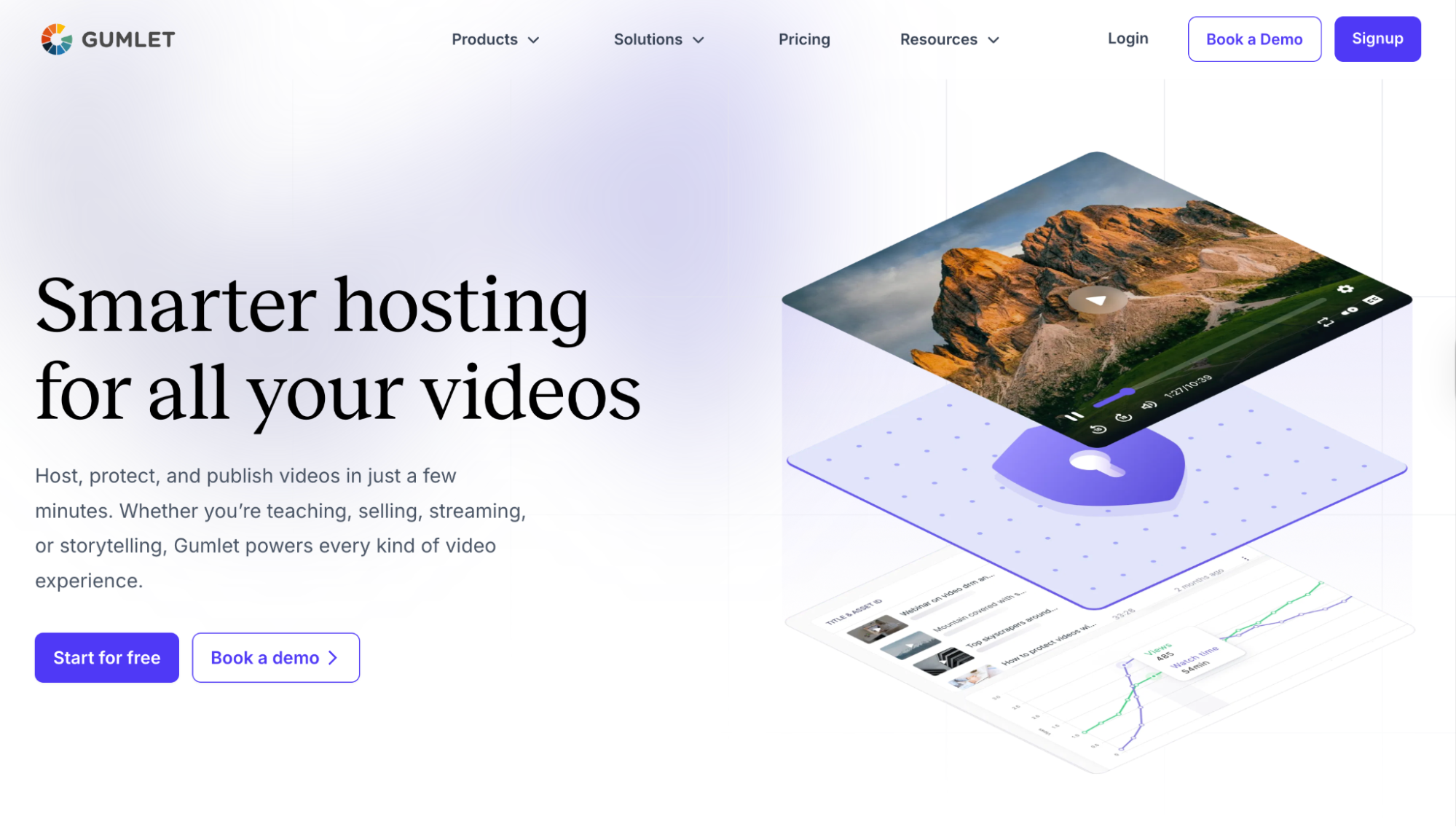
Gumlet is a secure video hosting provider covering hosting, protection, delivery, and analytics under one roof.
For anyone protecting paid video content, the most important thing to know is that Gumlet is a licensed Widevine and FairPlay DRM vendor. That means the encryption and license delivery pipeline lives inside the platform itself rather than depending on a third-party integration that needs to be wired separately.
All protection features are part of the core product, not locked behind an enterprise tier.
Anti-Piracy Features
- DRM encryption: using Widevine (Android, Chrome) and FairPlay (iOS, Safari), enabling encrypted HLS and DASH streams.
- Dynamic watermarking: that overlays viewer-specific information (email, IP address, or custom user identifier) as a moving, position-shifting element.
- Signed URLs and expiring tokens: that bind each playback session to a time-limited, cryptographically validated link.
- Domain restrictions: that block embeds outside your approved domains.
- Geo-blocking: for regional access control and licensing compliance.
All of these controls are available through Gumlet’s video protection, which manages DRM licensing, watermarking, and signed URL generation from a single interface, without requiring external vendor accounts or custom engineering work.
Best For
Independent course creators, EdTech platforms, and B2B content teams that want a complete anti-piracy stack without building a custom DRM architecture. Especially well-suited for businesses where a single leaked course represents a meaningful revenue loss and where the team managing content is not primarily made up of engineers. One EdTech platform that migrated from YouTube to Gumlet reported an 80 percent reduction in piracy incidents within one quarter.
2. VdoCipher
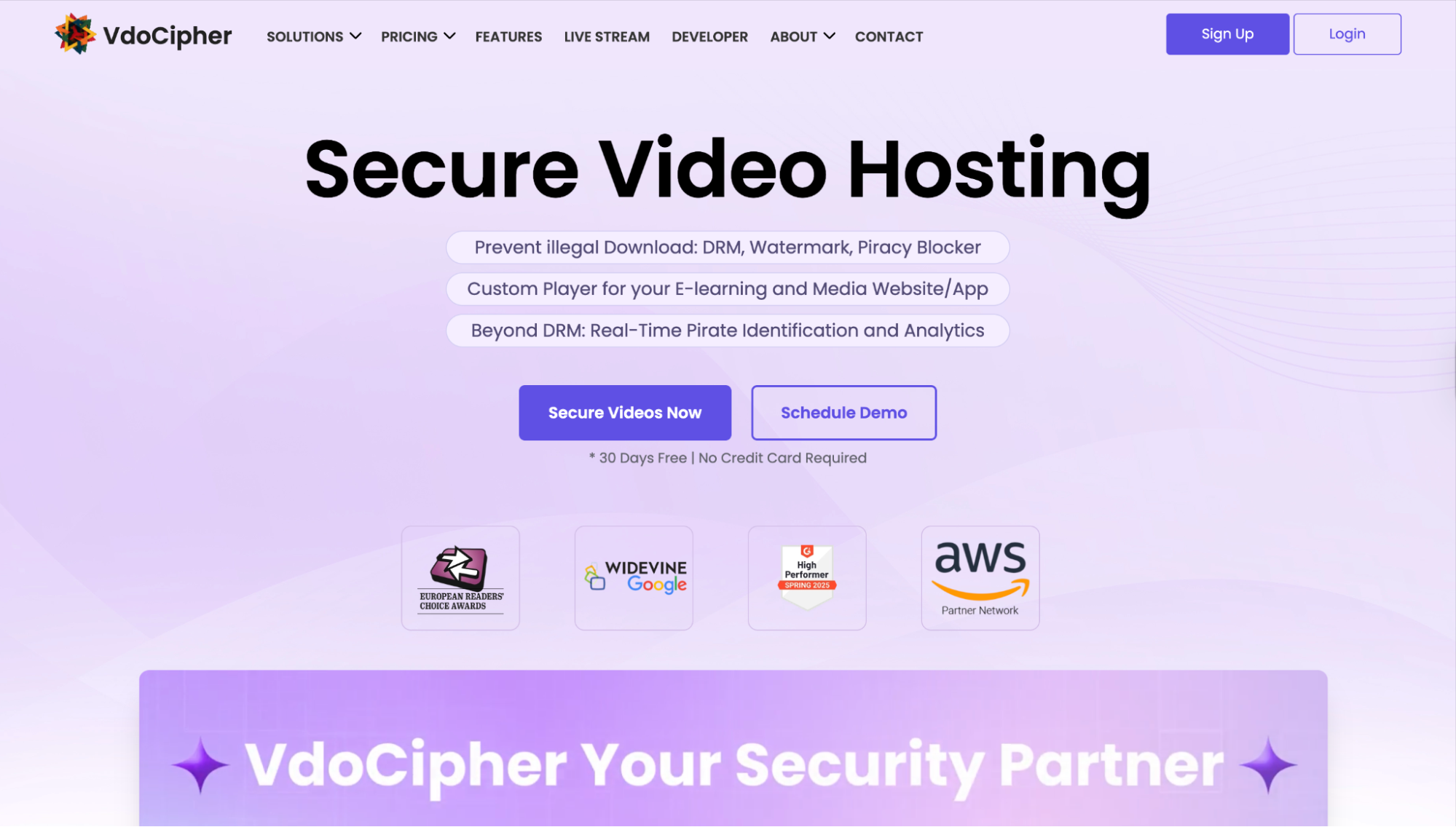
VdoCipher is a DRM-focused video hosting platform with a strong reputation in the eLearning market, particularly across India and Southeast Asia.
Its core differentiator is a Google-certified Widevine implementation, which places it in a different tier from platforms that implement DRM through indirect licensing. Its offline playback enforcement, which allows downloads without surrendering content control, is a standout feature for mobile-first platforms.
Anti-Piracy Features
- Google-certified Widevine DRM and FairPlay DRM: for cross-platform encrypted streaming
- Dynamic watermarking: with viewer-specific identifiers
- Offline DRM playback: downloaded content is encrypted and playable only within the authorized app
- Signed URLs: with configurable expiry
- Domain restrictions and geo-blocking
Best For
eLearning platforms and online course businesses with native mobile apps, or those that need to support offline viewing without surrendering control of the content. The offline DRM enforcement makes it a strong fit for course creators targeting markets where consistent internet access is not guaranteed.
READ ALSO: 7 Best Video Hosting Platforms to Stop Piracy in 2026 (Ranked by Depth of Protection)
3. BuyDRM
BuyDRM is a DRM licensing specialist, not a full-stack video hosting platform.
Its KeyOS platform provides multi-DRM license server infrastructure designed to sit on top of an existing CDN and encoding pipeline. If you need a dedicated DRM licensing layer and already have delivery infrastructure in place, BuyDRM is purpose-built for that.
Anti-Piracy Features
- Multi-DRM license server supporting Widevine, FairPlay, and PlayReady, covering every major device, browser, and smart TV environment
- KeyOS platform for centralized DRM key and license management
- Token-based license delivery tied to authenticated viewer sessions
- Integration with existing CDN infrastructure, designed to operate alongside rather than replace a delivery stack
- Forensic watermarking available through third-party integrations for post-leak tracing
Best For
Media companies, broadcasters, and OTT platforms that already have a CDN and encoding pipeline in place and need a dedicated, enterprise-grade DRM licensing layer. Not the right option for creators or small businesses that need an all-in-one hosted solution.
4. Doverunner
Doverunner is a cloud-based multi-DRM and forensic watermarking service. INKA Entworks was rebranded as Doverunner in March, 2026.
Its standout capability is forensic watermarking: an invisible, bitstream-level identifier embedded into the video data itself rather than overlaid on the frame.
This watermark survives re-encoding and compression, remaining detectable even in degraded pirated copies. For businesses where proving the source of a leak carries legal weight, that changes what is possible after a breach.
Anti-Piracy Features
- Multi-DRM support: Widevine, FairPlay, and PlayReady
- Forensic watermarking: embedded at the bitstream level, surviving re-encoding and compression
- Visible watermarking: as a secondary deterrent layer
- Signed URL support: and token-based license authentication
- Content Protection Service: for monitoring unauthorized distribution across the web
- CDN and encoding pipeline integrations: for embedding protection into existing workflows
Best For
OTT platforms, media companies, and premium video services where post-leak forensic attribution is operationally as important as prevention. Particularly relevant for content studios with regional licensing agreements, where identifying the source of a leak has legal consequences.
5. Brightcove

Brightcove is one of the longer-tenured enterprise video platforms on the market, with deep roots in media, broadcasting, and large-scale OTT delivery.
Its security stack covers DRM, forensic watermarking, monetization, live streaming, and analytics within one enterprise-grade environment. That scope comes with a price point to match.
Anti-Piracy Features
- DRM support: Widevine, FairPlay, and PlayReady
- Dynamic and forensic watermarking: for both deterrence and post-leak tracing
- Token-based playback authentication: and signed URL delivery
- Geo-blocking: and domain restrictions
Best For
Large enterprises, broadcasters, and media companies with substantial content libraries and the internal technical resources to manage an enterprise platform. Pricing is quote-based and not positioned for independent creators or small businesses.
How to Choose the Right Platform for Your Situation
The right platform depends on your scale, delivery method, and which attack vector you are most exposed to.
A Simple Decision Framework
If you are an independent creator or a small course business, look for a platform where DRM, dynamic watermarking, and signed URLs are part of the default offering. You should not need to engineer a custom architecture to get baseline video content theft protection. Gumlet and VdoCipher are built for this profile.
If your platform includes a native mobile app with offline viewing, DRM enforcement on downloaded files is non-negotiable.
A student who can save a lesson to their phone should not be able to play it outside your app or share the file. VdoCipher and Doverunner both handle this. Most general-purpose hosting platforms do not.
If your content has already been leaked and you need to trace future incidents to a specific account, forensic watermarking is the control you need. Visible overlays help. Bitstream-level forensic watermarking, as offered by Doverunner and Brightcove, holds up after the pirated copy has been compressed and re-uploaded multiple times.
If you have an existing CDN and encoding pipeline and only need a DRM licensing layer, BuyDRM’s KeyOS is built for exactly that use case.
Regardless of platform, the minimum viable stack for stopping course piracy is DRM encryption, dynamic watermarking, and signed URLs working together. Choose a platform that ships all three by default, because each control blocks a different attack, and protection only works when none of the doors are left open.
Frequently Asked Questions
1. What is the difference between DRM and watermarking in the context of video piracy protection?
DRM prevents unauthorized playback by encrypting the video stream and issuing playback licenses only to verified devices. Watermarking does not prevent playback.
It embeds viewer identity into the video itself so a pirated copy can be traced to its source. DRM is prevention. Watermarking is attribution. Platforms that offer both give you control over what happens before a leak and after one.
2. Can secure video hosting platforms stop screen recording?
DRM significantly reduces screen recording risk. On devices where DRM is enforced at the OS level, such as iOS using FairPlay, the operating system blocks screen capture during protected playback.
On desktop browsers, most screen recording tools are blocked, though not all configurations. Dynamic watermarking covers the remaining gap: if a recording does happen, the viewer’s identity is already embedded in the footage and survives compression and re-upload.
3. Is anti-piracy video hosting only for large businesses, or do independent creators need it too?
Piracy affects creators at every scale. A single paid course being shared in a Telegram group or resold on a third-party site is a direct revenue loss. For an independent creator with 400 paying students, one leak can hollow out the economics of an entire launch.
The good news is that the right platform to prevent video piracy now makes DRM, watermarking, and signed URLs accessible without enterprise-level pricing.
4. What happens if someone copies my signed video URL and shares it publicly?
Signed URLs include an expiry timestamp that is verified on every playback attempt. Once the window closes, the link stops working regardless of how many times it was copied or shared. Some platforms add a second layer by tying the URL to a specific session or IP address, so even a valid link fails from a different device.
5. Which DRM system do I need: Widevine, FairPlay, or PlayReady?
You need all three. Widevine handles Android and Chrome. FairPlay covers iOS, Safari, and Apple devices. PlayReady handles Microsoft Edge and smart TVs. Multi-DRM platforms ensure your content is protected regardless of device, not just for the majority of them.
Closing Thoughts
For the widest range of creators and content businesses, Gumlet delivers a full anti-piracy stack without requiring a custom architecture or a dedicated engineering team to manage it.
Before you move forward with any host, check one thing: whether your current platform ships DRM encryption, dynamic watermarking, and signed URLs as part of the standard plan. If any one of those three controls requires a separate configuration, a third-party integration, or an enterprise upgrade, your content is not as protected as you believe.
A full anti-piracy stack should be the default, not the exception. Find a private video hosting platform that ships DRM encryption, dynamic watermarking, and signed URLs as the default stack, not a premium add-on. Set it up before the next piece of premium content goes live.
INTERESTING POSTS
- AI-Powered Software Licensing: How Artificial Intelligence is Revolutionising Digital Rights Management
- Controlling Data Breach And The Use Of DRM For Document Security
- Starlink Secures $17B EchoStar Deal to Power Global Direct-to-Cell Service
- How URL Spoofing Makes Benign Applications Deadly
- Deciding On The Right Technology Stack For Your Project
- How Control Over Your Tech Stack Is Becoming a Competitive Advantage
About the Author:

Meet Angela Daniel, an esteemed cybersecurity expert and the Associate Editor at SecureBlitz. With a profound understanding of the digital security landscape, Angela is dedicated to sharing her wealth of knowledge with readers. Her insightful articles delve into the intricacies of cybersecurity, offering a beacon of understanding in the ever-evolving realm of online safety.
Angela's expertise is grounded in a passion for staying at the forefront of emerging threats and protective measures. Her commitment to empowering individuals and organizations with the tools and insights to safeguard their digital presence is unwavering.



