




In this post, I will talk about SERP data collection for SEO and market research. Read on for a complete guide.
Search Engine Results Pages (SERPs) contain valuable insights into how search engines rank websites, what users are searching for, and how competitors position their content. Businesses, SEO professionals, researchers, and marketers rely on SERP data collection to identify opportunities, monitor rankings, and make informed decisions.
However, collecting SERP data at scale can be challenging because search engines employ rate limits and anti-bot mechanisms. This is why many organizations combine web scraping tools with residential proxies, proxy servers, and IP rotation to collect publicly available search results more reliably and responsibly.
In this guide, you’ll learn how SERP data collection works, why it matters, which proxy solutions are best suited for the task, and how to choose the right residential proxy provider for your needs.
Table of Contents
What Is SERP Data Collection?
SERP data collection is the process of gathering publicly available information from search engine results pages. Instead of manually searching for hundreds or thousands of keywords, automated tools collect this information efficiently for analysis.
Common types of SERP data include:
- Organic search rankings
- Featured snippets
- Paid advertisements
- Local search results
- Related searches
- People Also Ask (PAA) sections
- Shopping listings
- Video and image results
Businesses use this data to understand search trends, improve SEO strategies, and monitor competitors.
Why SERP Data Matters
Accurate SERP data supports many digital marketing and research activities.
SEO Performance Tracking
SEO professionals monitor keyword rankings over time to measure the effectiveness of optimization efforts and identify ranking fluctuations.
Competitor Research
SERP analysis reveals:
- Which competitors rank for valuable keywords
- Content strategies that perform well
- Keyword gaps
- Changes in search visibility
Market Research
Businesses can identify emerging products, customer interests, seasonal demand, and industry trends by monitoring search results across different regions.
Content Planning
Writers and marketers use SERP insights to understand user intent and create content that better matches what search engines prioritize.
How SERP Data Collection Works
Most large-scale SERP data collection relies on automated web scraping tools.
The typical workflow includes:
- Submit a keyword query.
- Retrieve the search results page.
- Extract relevant data.
- Store the information in a database or spreadsheet.
- Repeat for additional keywords.
Because sending thousands of requests from a single IP address may trigger rate limits or temporary blocks, many organizations use residential proxy networks with IP rotation to distribute requests across multiple IP addresses.
Why Residential Proxies Are Important for SERP Data Collection
Residential proxies route requests through IP addresses assigned by Internet Service Providers (ISPs). Since these addresses appear as regular residential internet connections, they are commonly used for legitimate large-scale data collection where request distribution is necessary.
Benefits include:
- Better geographic targeting
- Reduced likelihood of temporary rate limits
- Support for IP rotation
- Improved reliability for large keyword lists
- Access to localized search results
Compared to many datacenter proxy servers, residential proxies often provide more realistic browsing behavior for location-specific SEO research.
Editor’s Choice: Best Residential Proxy Providers
Choosing a reliable proxy provider is essential for consistent SERP data collection. The providers below offer different strengths depending on your budget and project requirements.
🥇 1. Webshare — Best Budget-Friendly Residential Proxy Provider
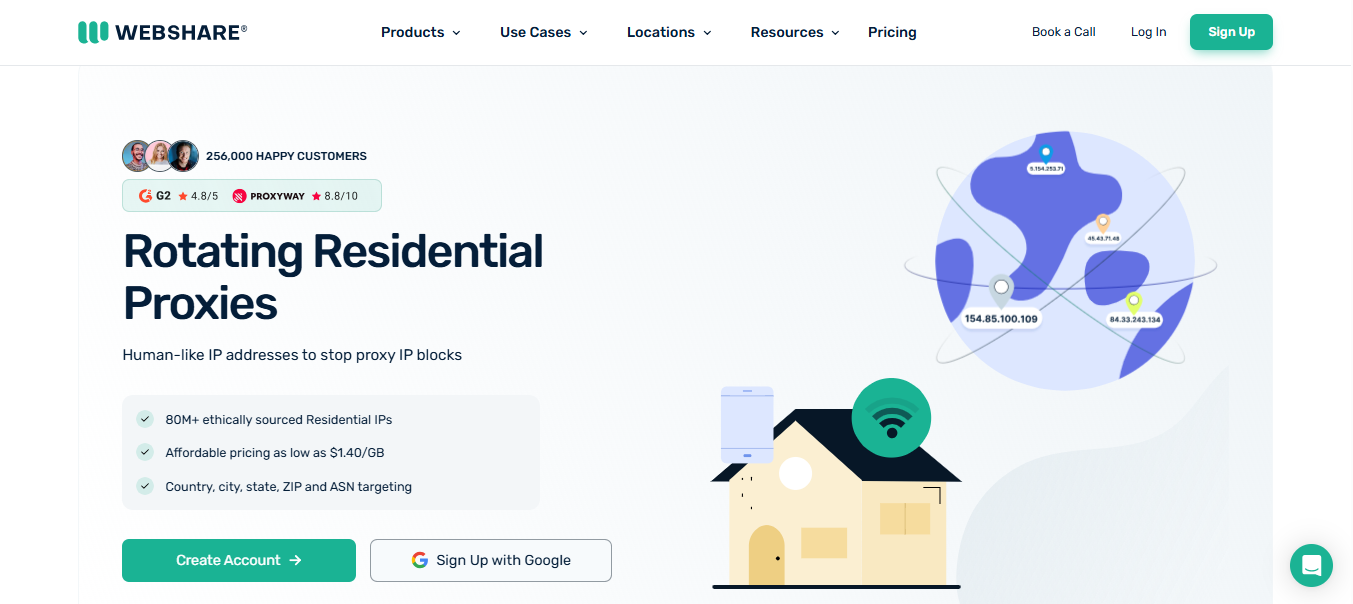
Webshare is an attractive option for users looking for affordable residential proxies without unnecessary complexity.
Advantages include:
- Affordable pricing
- Free plan availability (subject to current offerings)
- Easy deployment
- Reliable residential proxies
- Good performance
- Suitable for developers, students, freelancers, and small businesses
For users beginning with SEO research or small-scale data collection, Webshare offers excellent overall value.
🥈 2. Oxylabs — Best for Enterprise & Large-Scale Data Collection
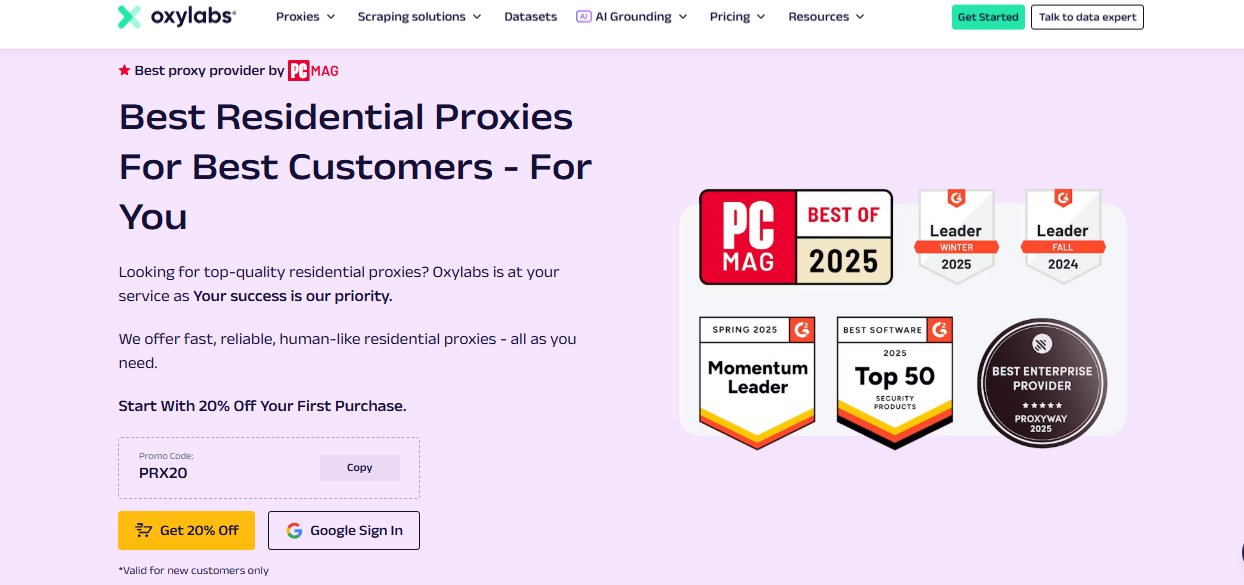
Oxylabs earns the Editor’s Choice position thanks to its enterprise-grade infrastructure and extensive residential proxy network. It is well suited for organizations performing large-scale web scraping, market intelligence, and ongoing data collection projects.
Key strengths include:
- Massive residential proxy network
- Enterprise-grade infrastructure
- Advanced geographic targeting
- High request success rates
- Reliable IP rotation
- Strong support for large businesses and research teams
While premium pricing may not suit every budget, many enterprise users choose Oxylabs because of its scalability, reliability, and advanced management features.

🥉 3. Decodo — Best Overall Residential Proxy Provider
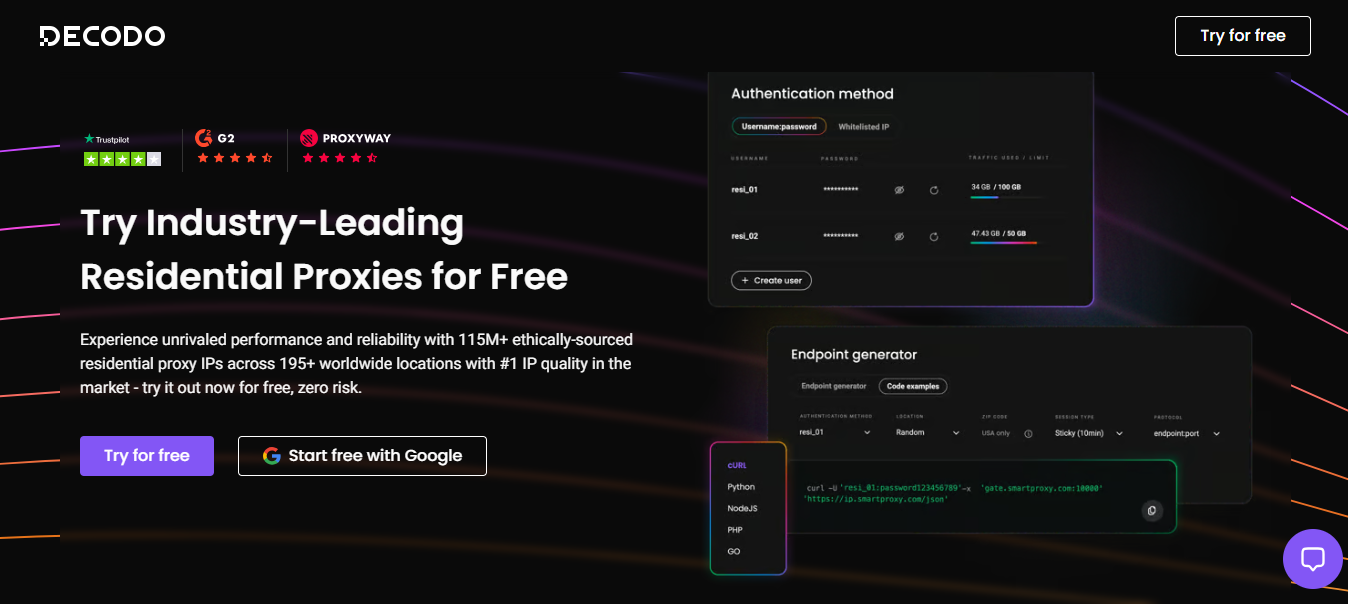
Decodo offers an excellent balance between performance, usability, and pricing, making it suitable for both beginners and experienced professionals.
Highlights include:
- Residential proxies
- Rotating proxies
- Beginner-friendly dashboard
- Fast setup
- Reliable performance
- API support
- Helpful documentation
Businesses, agencies, developers, and individual marketers often choose Decodo because it provides a straightforward experience without sacrificing essential features.

Provider Comparison
| Provider | Best For | Key Strength |
| Oxylabs | Overall | Balance of performance & value |
| Decodo | Enterprise | Large-scale proxy infrastructure |
| Webshare | Budget | Affordable and easy to use |
Other Residential Proxy Providers Worth Considering
Several other reputable providers also serve different use cases.
Mars Proxies
Offers residential and ISP proxies with competitive pricing suitable for many SEO and automation tasks.
IPRoyal
Known for flexible pricing models and residential proxy options for businesses and independent users.
Bright Data
Provides one of the industry’s largest proxy infrastructures with advanced targeting capabilities.
SOAX
Offers flexible residential proxy plans with detailed geographic filtering.
NetNut
Uses ISP-based infrastructure designed for stable residential connectivity.
ProxyEmpire
Provides residential and mobile proxies with global location coverage.
Rayobyte
Offers residential, ISP, and datacenter proxy solutions for various scraping workloads.
Infatica
Supports businesses performing market research, price monitoring, and web scraping.
Live Proxies
Provides rotating residential proxies suitable for multiple online data collection tasks.
Buying Guide: Choosing the Right Residential Proxy Provider
Not every proxy service fits every project. Consider these factors before making a decision.
Price
Choose a plan that matches your expected traffic and budget without paying for unnecessary capacity.
Performance
Reliable connection speeds improve scraping efficiency and reduce interruptions.
Reliability
Consistent uptime is essential for scheduled SEO monitoring and continuous data collection.
IP Pool Size
A larger residential proxy network generally offers more flexibility for request distribution.
Geographic Coverage
If you collect localized SERP data, ensure the provider supports your target countries and cities.
Rotation Options
Automatic IP rotation helps distribute requests and supports large keyword campaigns.
Dashboard
A well-designed dashboard makes setup, monitoring, and proxy management much easier.
Customer Support
Responsive technical support is valuable when troubleshooting integrations or scaling projects.
API Availability
Developers often benefit from APIs that simplify automation and proxy management.
Ease of Use
Clear documentation and intuitive configuration reduce deployment time.
Security
Choose providers that maintain secure infrastructure and protect customer accounts.
Scalability
As projects grow, your proxy provider should be able to accommodate increasing traffic demands.
Frequently Asked Questions
Is SERP data collection legal?
Collecting publicly available search result information may be permissible depending on applicable laws, website terms, and how the data is collected and used. Always review relevant legal requirements and comply with search engine policies.
Why are residential proxies preferred?
Residential proxies often provide more reliable geographic targeting and IP diversity, making them useful for large-scale SEO and market research.
What is IP rotation?
IP rotation automatically changes the IP address used for outgoing requests, helping distribute traffic across multiple addresses.
Can beginners collect SERP data?
Yes. Many no-code scraping tools and proxy providers make it easier for beginners to start collecting publicly available search data.
Are datacenter proxies suitable for SERP collection?
They can work for some projects, but residential proxies are often preferred when localized results and higher request reliability are important.
How often should SERP data be collected?
The frequency depends on your goals. Competitive industries may require daily monitoring, while smaller websites often benefit from weekly or monthly tracking.
Conclusion
SERP data collection has become an important component of SEO, competitive intelligence, and market research. By combining responsible web scraping practices with reliable residential proxies, organizations can gather valuable search insights while improving efficiency and scalability.
For users seeking enterprise-grade infrastructure and large-scale data collection capabilities, Oxylabs stands out as the strongest overall choice. Decodo offers an excellent balance of performance, usability, and features for businesses and professionals, while Webshare remains an appealing option for budget-conscious users, freelancers, and developers.
INTERESTING POSTS
- The Ultimate Guide to SERP Scraper APIs: Power, Performance & Providers
- How To Scrape SERPs To Optimize For Search Intent
- Public Data Collection for Financial Analysis: A Complete Guide to Ethical, Scalable Market Intelligence
- Proxy Security Best Practices: How to Stay Safe When Using Residential Proxies and Proxy Servers
- How AI Is Transforming Web Scraping
About the Author:

Gina Lynch is a VPN expert and online privacy advocate who stands for the right to online freedom. She is highly knowledgeable in the field of cybersecurity, with years of experience in researching and writing about the topic. Gina is a strong advocate of digital privacy and strives to educate the public on the importance of keeping their data secure and private. She has become a trusted expert in the field and continues to share her knowledge and advice to help others protect their online identities.



