




In this post, I will show you how AI is transforming web scraping.
Artificial intelligence (AI) is changing the way organizations collect and analyze information from the web. What once required manually building and maintaining scraping scripts can now be enhanced with machine learning models that adapt to changing websites, extract meaningful insights, and automate repetitive tasks.
As businesses increasingly rely on web scraping for market research, price monitoring, competitor analysis, cybersecurity intelligence, and academic research, AI is making these processes faster, smarter, and more efficient. At the same time, modern websites have become more sophisticated in detecting automated traffic, making the choice of infrastructure—such as residential proxies and reliable proxy servers—more important than ever.
In this guide, we’ll explore how AI is transforming web scraping, where residential proxy networks fit into the process, and how to choose the right proxy provider for your needs.
Table of Contents
What Is AI-Powered Web Scraping?
Traditional web scraping involves writing scripts that extract information from websites using predefined rules. While effective, these scripts often break whenever websites change their layout or structure.
AI-powered web scraping improves this process by introducing intelligent automation. Instead of relying solely on fixed rules, AI models can:
- Recognize patterns in web pages
- Identify relevant content automatically
- Classify extracted data
- Handle semi-structured information
- Adapt more effectively to website changes
This makes web scraping more resilient, especially when collecting data from large numbers of websites with different layouts.
How AI Improves Web Scraping
Smarter Data Extraction
Modern AI models can understand the context of web pages rather than simply reading HTML elements.
For example, instead of searching for a specific CSS selector, AI can identify product names, prices, customer reviews, contact information, or news headlines even when websites use different layouts.
This significantly reduces maintenance for scraping projects.
Better CAPTCHA and Bot Detection Handling
Many websites use anti-bot systems to prevent automated traffic.
While AI itself does not bypass security controls, it can help developers identify failed requests, optimize scraping workflows, and determine when adjustments are needed. Combined with residential proxies that support IP rotation, scraping systems can distribute requests more naturally and reduce unnecessary failures while respecting applicable laws and website terms.
Improved Data Cleaning
Collected data often contains duplicates, formatting inconsistencies, or irrelevant content.
AI helps by:
- Removing duplicate records
- Categorizing information
- Detecting anomalies
- Standardizing extracted datasets
This reduces the amount of manual work required before analysis.
Faster Content Classification
Businesses often scrape thousands or even millions of pages.
AI models can automatically organize collected information into categories, making it easier to perform:
- Market intelligence
- Sentiment analysis
- Product monitoring
- Competitive research
- Trend analysis
Why Residential Proxies Matter for AI Web Scraping
AI may improve how information is extracted, but reliable infrastructure remains essential.
Residential proxies route requests through real residential IP addresses assigned by Internet Service Providers (ISPs). Compared to many datacenter IPs, they often appear more like ordinary user traffic, making them useful for legitimate web scraping tasks that require stable access across multiple locations.
A quality residential proxy network typically offers:
- Large IP pools
- Geographic targeting
- Reliable IP rotation
- Stable connections
- High uptime
Combined with AI-powered scraping systems, residential proxies help businesses perform scalable data collection while reducing interruptions.
AI and Proxy Servers: A Powerful Combination
AI and proxy servers complement each other.
| AI Capability | Proxy Benefit |
| Intelligent extraction | Reliable website access |
| Automatic classification | Geographic targeting |
| Data cleaning | IP rotation |
| Adaptive scraping | Reduced request concentration |
| Large-scale analysis | Better scalability |
When selecting a proxy provider, look for services that support automation through APIs, flexible rotation options, and dependable infrastructure.
Editor’s Choice: Best Residential Proxy Providers
🥇 1. Decodo — Best Overall Residential Proxy Provider
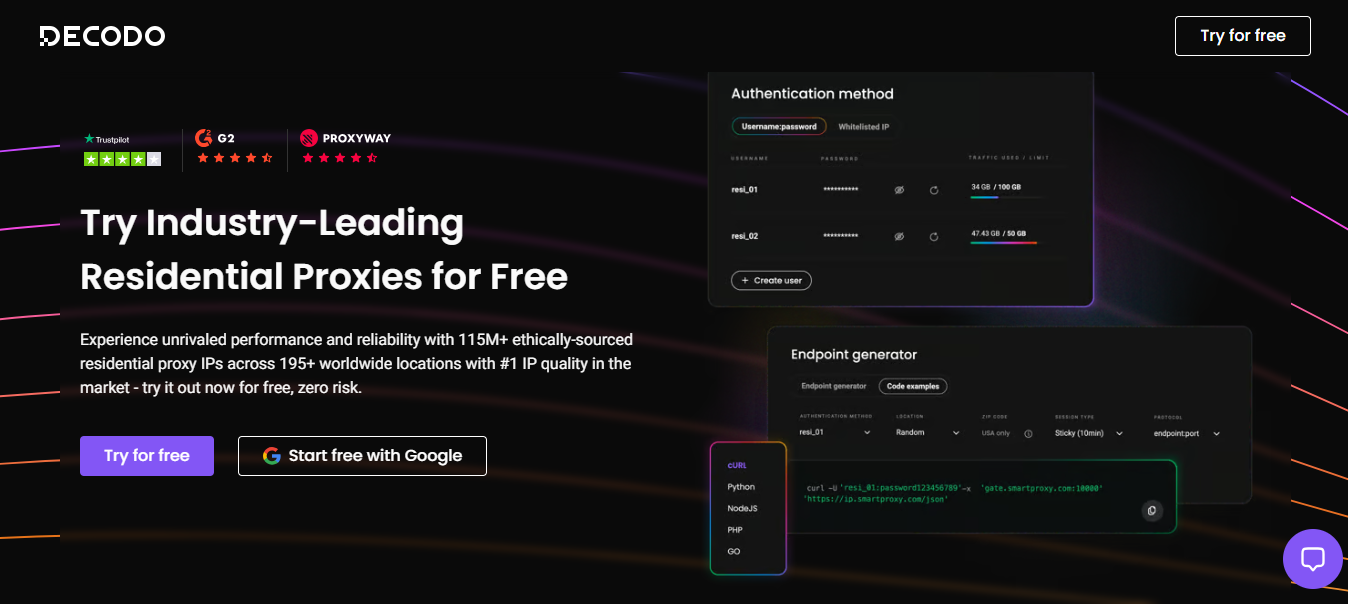
Decodo offers an excellent balance between performance, ease of use, and pricing.
Its beginner-friendly dashboard makes deployment straightforward, while support for residential proxies, rotating proxies, API integration, and automation allows developers and businesses to scale their projects efficiently.
Reliable performance and clear documentation make Decodo suitable for both newcomers and experienced users.

🥈 2. Oxylabs — Best for Enterprise & Large-Scale Data Collection
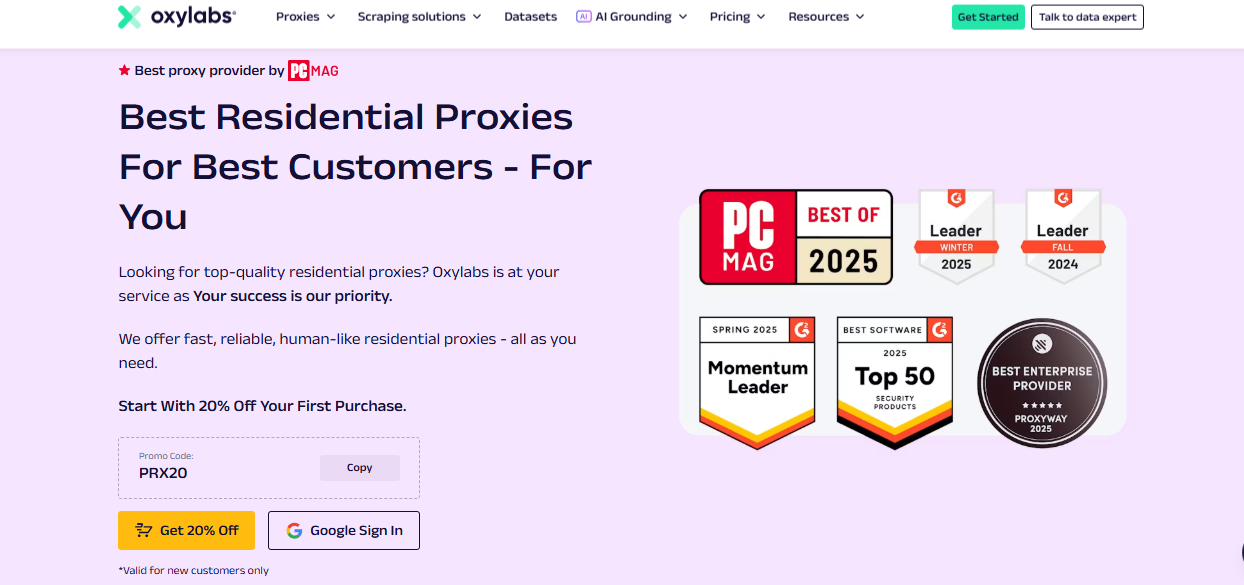
Oxylabs earns our Editor’s Choice because it combines a massive residential proxy network with enterprise-grade infrastructure designed for demanding workloads.
Its platform is well suited for organizations performing web scraping, market intelligence, price monitoring, and large-scale data collection. Advanced targeting capabilities, high reliability, and strong success rates make it a practical choice for businesses that depend on consistent access to publicly available web data.
Individual users with advanced projects also appreciate its comprehensive documentation, scalable architecture, and professional support.
🥉 3. Webshare — Best Budget-Friendly Residential Proxy Provider
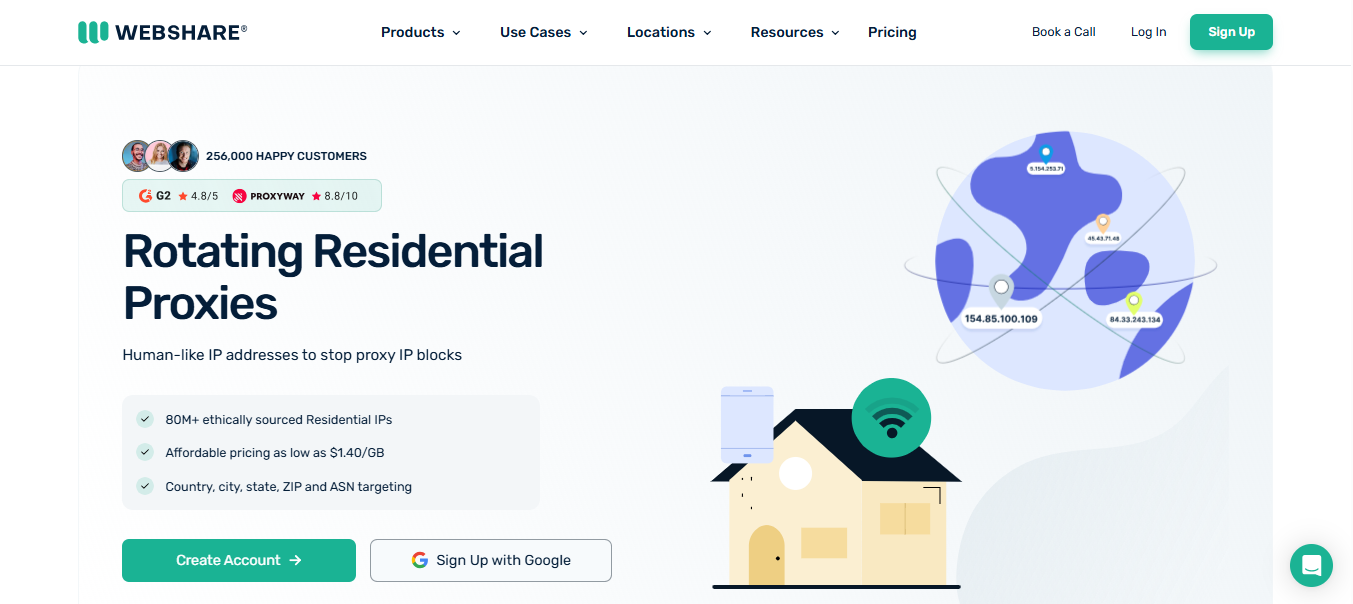
Webshare is an attractive option for users seeking affordable residential proxies without unnecessary complexity.
Its straightforward setup process, competitive pricing, and available free plan make it particularly appealing for:
- Developers
- Freelancers
- Students
- Small businesses
- Personal research projects
Although it may not target enterprise-scale deployments, Webshare provides good value for users with moderate scraping requirements.
Comparison Table
| Provider | Best For | Key Strength |
| Oxylabs | Overall | Balance of performance, scalability, and enterprise features |
| Decodo | Enterprise Users | Reliable infrastructure with strong automation support |
| Webshare | Budget | Affordable pricing and simple deployment |
Other Residential Proxy Providers Worth Considering
Several other reputable proxy providers deserve consideration depending on your requirements:
- Mars Proxies — Offers flexible proxy solutions for developers and automation projects.
- IPRoyal — Known for accessible pricing and residential proxy services for individuals and businesses.
- Bright Data — Provides an extensive proxy ecosystem with enterprise-oriented capabilities.
- SOAX — Focuses on flexible filtering and geographic targeting.
- NetNut — Offers stable proxy infrastructure for commercial data collection.
- ProxyEmpire — Supports residential and mobile proxy solutions with multiple rotation options.
- Rayobyte — Delivers a variety of proxy services suitable for businesses of different sizes.
- Infatica — Offers residential proxy solutions for market research and automation.
- Live Proxies — Provides residential proxy services for users requiring diverse IP locations.
Each provider has different strengths, making it worthwhile to compare features, pricing, and support before making a decision.
How to Choose the Right Residential Proxy Provider
Choosing the right provider depends on your goals and technical requirements.
Consider the following factors:
- Pricing that fits your budget
- Reliability and uptime
- Size of the residential proxy network
- Geographic coverage
- IP rotation options
- Dashboard usability
- API availability
- Customer support quality
- Security practices
- Scalability for future growth
A provider that performs well for occasional anonymous browsing may not be the best option for enterprise-scale web scraping or continuous data collection.
Frequently Asked Questions
Is AI replacing traditional web scraping?
No. AI enhances web scraping by improving data extraction, organization, and automation rather than replacing scraping technologies altogether.
Why are residential proxies commonly used for web scraping?
Residential proxies use IP addresses associated with real internet connections, making them useful for distributed data collection where geographic diversity and IP rotation are important.
What is IP rotation?
IP rotation automatically changes the IP address used for outgoing requests, helping distribute traffic across multiple addresses.
Can AI improve scraped data quality?
Yes. AI can classify information, remove duplicates, detect anomalies, and organize large datasets more efficiently.
Are proxy servers necessary for every scraping project?
Not always. Smaller projects may not require proxies, while larger or geographically distributed data collection often benefits from reliable proxy infrastructure.
What should beginners prioritize?
Ease of setup, documentation, transparent pricing, API support, and dependable customer service are good starting points.
Conclusion
AI is making web scraping more intelligent by improving data extraction, automation, and analysis. As websites continue to evolve, combining AI with reliable residential proxies and dependable proxy servers enables organizations to build more efficient and scalable data collection workflows.
For users selecting a proxy provider:
- Oxylabs is the strongest overall choice for organizations requiring enterprise-grade infrastructure and large-scale data collection.
- Decodo offers an excellent balance of usability, automation, and performance for businesses and professionals.
- Webshare stands out as a budget-friendly option for developers, students, freelancers, and small businesses.
Whichever solution you choose, match your provider to your project size, technical requirements, and long-term goals rather than focusing solely on price.
INTERESTING POSTS
About the Author:

Meet Angela Daniel, an esteemed cybersecurity expert and the Associate Editor at SecureBlitz. With a profound understanding of the digital security landscape, Angela is dedicated to sharing her wealth of knowledge with readers. Her insightful articles delve into the intricacies of cybersecurity, offering a beacon of understanding in the ever-evolving realm of online safety.
Angela's expertise is grounded in a passion for staying at the forefront of emerging threats and protective measures. Her commitment to empowering individuals and organizations with the tools and insights to safeguard their digital presence is unwavering.



 is changing the way organizations collect and)