



In this post, I will compare IPv4 and IPv6 proxies and show you the Differences and which one you should choose.
The internet continues to evolve, and so do the technologies that power online privacy, security, and connectivity. One important development is the gradual transition from IPv4 to IPv6. If you use proxy servers for anonymous browsing, web scraping, market research, or business operations, understanding the difference between IPv4 and IPv6 proxies can help you make better decisions.
While both proxy types perform the same core function—routing your internet traffic through another IP address—they differ in availability, compatibility, addressing, and practical use cases.
In this guide, you’ll learn how IPv4 and IPv6 proxies work, their advantages and limitations, when to choose each one, and which residential proxy providers are worth considering.
Table of Contents
What Are IPv4 and IPv6 Proxies?
A proxy server acts as an intermediary between your device and the websites you visit. Instead of exposing your real IP address, the website sees the proxy’s IP address.
The difference lies in the type of IP address being used.
IPv4 Proxies
IPv4 proxies use Internet Protocol Version 4 addresses, which consist of 32-bit numerical addresses (for example, 192.168.1.1). IPv4 has powered the internet for decades and remains the most widely supported protocol.
Because the pool of available IPv4 addresses is limited, high-quality residential proxies using IPv4 addresses are often more expensive and in greater demand.
IPv6 Proxies
IPv6 proxies use Internet Protocol Version 6 addresses, which feature 128-bit hexadecimal addresses. IPv6 was introduced to solve the shortage of IPv4 addresses by providing an almost unlimited address space.
Many modern websites and cloud services support IPv6, although some older platforms and applications still rely primarily on IPv4.
IPv4 vs IPv6 Proxies: Key Differences
| Feature | IPv4 Proxies | IPv6 Proxies |
| IP Address Size | 32-bit | 128-bit |
| Address Availability | Limited | Extremely large |
| Website Compatibility | Excellent | Good but varies by website |
| Cost | Usually higher | Often more affordable |
| Adoption | Universal | Growing steadily |
| Best For | General-purpose browsing, automation, business applications | Large-scale IP availability and modern infrastructure |
Although IPv6 offers significantly more addresses, IPv4 remains the safer choice when maximum compatibility is required.
Advantages of IPv4 Proxies
IPv4 proxies continue to dominate many industries for several reasons:
- Compatible with virtually every website and online service
- Ideal for legacy applications
- Widely supported by automation tools
- Commonly used for residential proxies
- Reliable for anonymous browsing and account management
Businesses performing data collection or web scraping often prefer IPv4 because fewer compatibility issues arise when interacting with older websites.
Advantages of IPv6 Proxies
IPv6 proxies offer several unique benefits.
- Vast address availability
- Lower cost per IP in many cases
- Better scalability
- Modern internet infrastructure support
- Suitable for applications requiring numerous unique IP addresses
Organizations managing large proxy deployments may find IPv6 attractive because obtaining large IP pools is considerably easier.
Which Proxy Type Is Better for Residential Proxies?
For most users, residential proxies are available primarily through IPv4 addresses because internet service providers still allocate many residential connections using IPv4.
A residential proxy network assigns IP addresses from real household internet connections, making requests appear more natural. This often improves success rates for:
- Web scraping
- Price monitoring
- Market research
- SEO analysis
- Ad verification
- Data collection
Some proxy providers also support IPv6 residential connectivity where available, but IPv4 remains the industry standard for residential proxy services.
IPv4 vs IPv6 for Web Scraping
The right choice depends largely on your target websites.
IPv4 proxies are generally preferred when scraping older websites, e-commerce platforms, search engines, and services with stricter anti-bot systems because compatibility is nearly universal.
IPv6 proxies can be useful when scraping websites that fully support IPv6 and where access to a large number of unique IP addresses is beneficial.
Regardless of the protocol, responsible web scraping should comply with applicable laws, website terms, and rate limits.
Editor’s Choice: Best Residential Proxy Providers
🥇 1. Oxylabs — Best for Enterprise & Large-Scale Data Collection
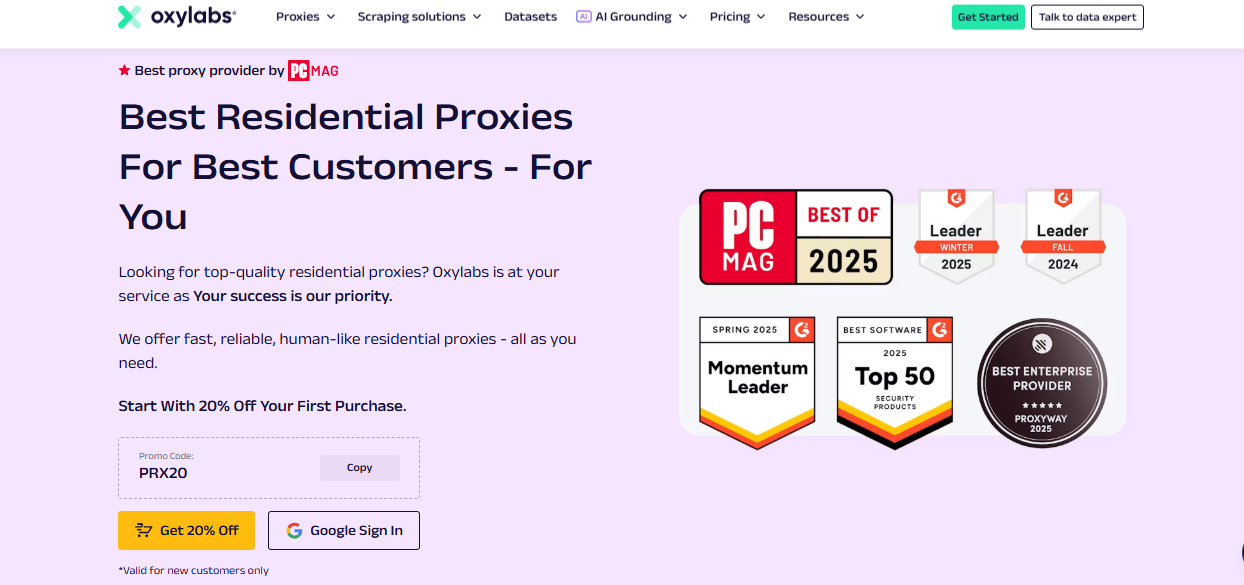
Oxylabs earns the Editor’s Choice position thanks to its massive residential proxy network, enterprise-grade infrastructure, and strong reputation for reliability.
Its platform supports advanced geographic targeting, high success rates, and scalable infrastructure suitable for businesses conducting market intelligence, web scraping, and large-scale data collection. Individual professionals also benefit from comprehensive documentation, automation tools, and dependable performance.
Organizations that require consistent uptime and sophisticated proxy management often choose Oxylabs for demanding projects.

🥈 2. Decodo — Best Overall Residential Proxy Provider
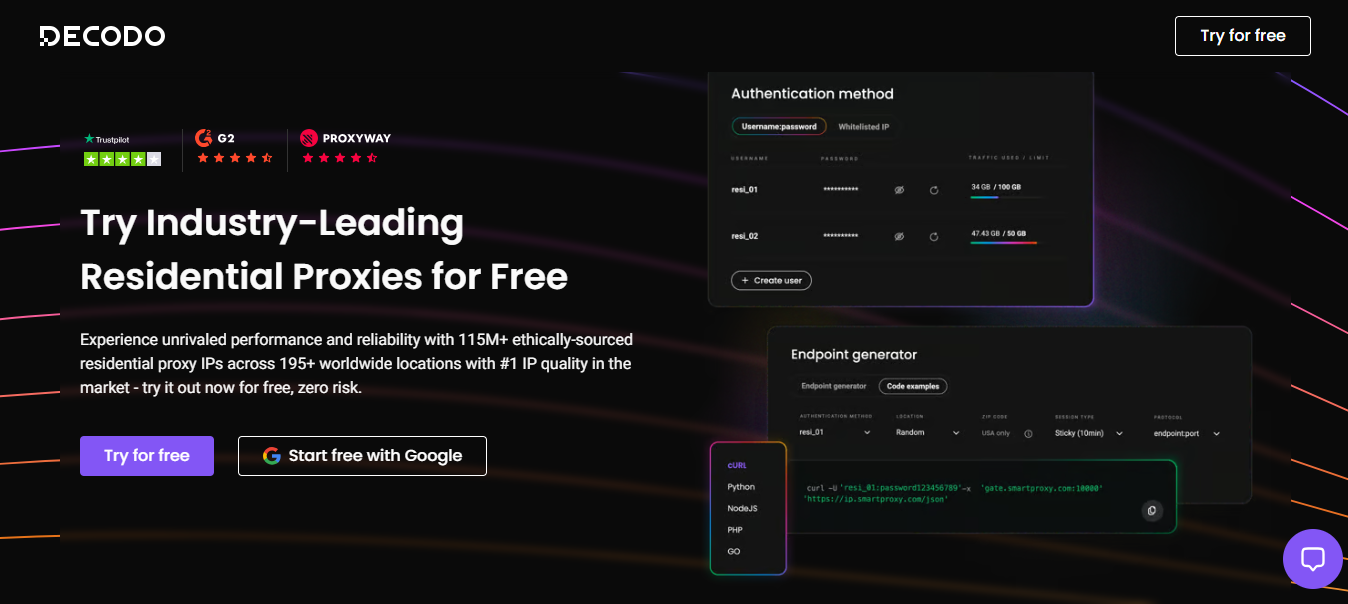
Decodo offers an excellent balance between affordability and performance.
Its beginner-friendly dashboard, rotating residential proxies, straightforward setup process, API support, and clear documentation make it suitable for both businesses and individual users.
Whether you’re building automation workflows or performing routine research, Decodo provides a smooth user experience without a steep learning curve.
🥉 3. Webshare — Best Budget-Friendly Residential Proxy Provider
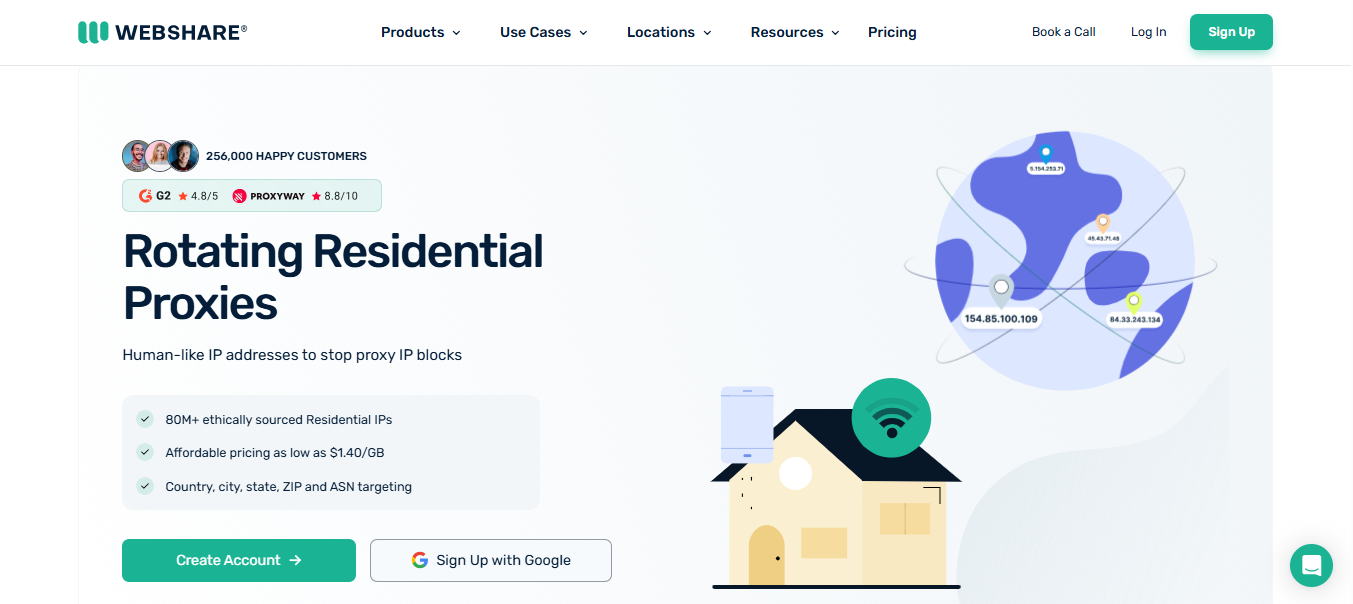
Webshare stands out as an affordable option for developers, freelancers, students, and small businesses.
Its easy setup process, reliable residential proxies, competitive pricing, and free plan availability for eligible users make it an attractive starting point for those exploring proxy technology without significant upfront costs.
Provider Comparison
| Provider | Best For | Key Strength |
| Oxylabs | Overall | Balance of performance & value |
| Decodo | Enterprise | Large-scale proxy infrastructure |
| Webshare | Budget | Affordable and easy to use |
Other Residential Proxy Providers Worth Considering
Several other reputable proxy providers deserve consideration depending on your requirements.
- Mars Proxies – Good option for individuals and growing businesses seeking residential proxies.
- IPRoyal – Offers residential, datacenter, and mobile proxy solutions with flexible plans.
- Bright Data – Well-known for extensive proxy coverage and enterprise-grade capabilities.
- SOAX – Provides residential proxy services with flexible geographic targeting.
- NetNut – Focuses on stable residential connectivity with strong performance.
- ProxyEmpire – Supports rotating residential proxies across multiple regions.
- Rayobyte – Offers residential and datacenter proxy solutions for businesses.
- Infatica – Suitable for data collection and automation projects.
- Live Proxies – Provides residential proxy options for various business use cases.
Each provider has different strengths regarding pricing, network size, targeting options, and scalability.
How to Choose the Right Residential Proxy Provider
Before selecting a proxy provider, evaluate several important factors.
- Pricing that matches your budget
- Reliable uptime and consistent performance
- Large residential proxy network
- Geographic coverage for your target regions
- Flexible IP rotation options
- User-friendly dashboard
- Responsive customer support
- API availability for automation
- Strong security and privacy practices
- Ability to scale as your projects grow
The ideal provider depends on whether your priorities are affordability, enterprise features, developer tools, or extensive global coverage.
Frequently Asked Questions
Are IPv6 proxies faster than IPv4 proxies?
Not necessarily. Performance depends more on the proxy provider’s infrastructure, routing, and network quality than on the IP protocol itself.
Are IPv6 proxies supported everywhere?
No. While IPv6 adoption continues to grow, some websites and legacy systems still operate primarily on IPv4.
Which proxy type is best for web scraping?
IPv4 proxies generally offer the broadest compatibility. IPv6 proxies can work well for websites that fully support IPv6.
Can residential proxies use IPv6?
Yes. Some residential proxy providers offer IPv6 addresses where supported by internet service providers, although IPv4 residential proxies remain more common.
Do IPv6 proxies improve anonymous browsing?
Both IPv4 and IPv6 proxies can support anonymous browsing when provided by a reputable proxy provider and configured correctly.
What is IP rotation?
IP rotation automatically changes the IP address used by your proxy connections, helping distribute requests across multiple addresses for large-scale data collection and automation tasks.
Conclusion
Choosing between IPv4 and IPv6 proxies depends on your goals.
If maximum compatibility, reliability, and support across websites are your priorities, IPv4 proxies remain the preferred option. If you need access to a large number of IP addresses and your target platforms fully support IPv6, IPv6 proxies can provide a scalable alternative.
For residential proxies, most users will continue to benefit from established IPv4-based residential proxy networks.
Based on overall strengths:
- Oxylabs is the best choice for users requiring premium performance, enterprise-grade infrastructure, and large-scale data collection.
- Decodo offers an excellent balance of usability, performance, and features for businesses and individuals.
- Webshare provides outstanding value for developers, students, freelancers, and budget-conscious users.
For additional guidance, consider exploring SecureBlitz’s related articles on VPNs, cybersecurity, password managers, privacy tools, secure browsers, web scraping best practices, and AI tools to build a more secure and efficient online workflow.
INTERESTING POSTS
About the Author:

Gina Lynch is a VPN expert and online privacy advocate who stands for the right to online freedom. She is highly knowledgeable in the field of cybersecurity, with years of experience in researching and writing about the topic. Gina is a strong advocate of digital privacy and strives to educate the public on the importance of keeping their data secure and private. She has become a trusted expert in the field and continues to share her knowledge and advice to help others protect their online identities.



