
In this post, I will show you how to actually evaluate a VPN’s security.
Walk through almost any VPN homepage and you will be told it is “military-grade,” “ultra-secure,” and “100% private.” Those phrases sound reassuring, but they do not prove much. The encryption standard many providers cite, such as AES-256, is widely used across the industry, and a marketing adjective is not the same thing as a security control.
For anyone willing to read beyond the homepage, the useful question is not which provider shouts the loudest. It is which claims can actually be verified. Here is the framework that separates the two.
Table of Contents
Independent Audits: Who, What Scope, and How Often
The strongest signal is whether a provider has submitted to independent auditing — but the details matter more than the headline. A “no-logs audit” can mean a serious review of infrastructure and operational controls, or it can mean a narrower check of one policy area. Scope is everything.
Look for what the audit actually examined. Did auditors inspect production servers, configurations, internal processes, and privacy controls? Did they review client applications or only the written privacy policy? Is the report available to users, even if only through an account dashboard? These questions matter because an audit that cannot be read or understood is harder to treat as evidence.
Who performed the audit also matters. Big-four accounting firms and specialist security labs often work under recognised assurance or penetration-testing frameworks. But reputation alone is not enough. The report should say what was tested, when it was tested, and what level of assurance was provided.
Cadence matters too. An annual or repeated audit creates more accountability than a one-time report from years ago. VPN infrastructure changes, ownership changes, server fleets change, and privacy practices can change with them. A provider with no independent audit at all is not automatically unsafe, but it is asking users to accept more on trust.
Server Architecture: RAM-Only and Why It Matters
The second pillar is how the servers are built. RAM-only, or diskless, infrastructure is designed so servers boot from controlled images and hold runtime data in volatile memory rather than writing it to persistent local disks. When the server reboots, that runtime state is wiped.
The practical value is straightforward: there is less persistent data sitting on the server for someone to seize, recover, or misuse. This design can support a no-logs claim by reducing what can remain behind on hardware.
Still, the follow-up question is the important one: has anyone verified it? A provider advertising RAM-only infrastructure is making a technical claim. A provider whose RAM-only design has been checked through an infrastructure audit is offering stronger evidence. Claims and verified claims are not the same thing.
Protocol Transparency and Practical Performance
Encryption strength is rarely the only differentiator. Protocol design, transparency, performance, and reliability often matter just as much.
Open and widely reviewed protocols have a clear advantage in transparency because their design can be inspected by researchers, developers, and the wider security community. That does not make any protocol perfect, but it does make its security assumptions more visible.
For ordinary users, the practical question is simpler: does the VPN offer modern, well-maintained connection options, and do they work reliably on the devices and networks you actually use? A secure setup that constantly drops, slows work to a crawl, or fails on restrictive networks can push users back to unprotected browsing. Security has to be strong enough to trust and usable enough to leave on.
The best approach is to look for clear documentation, regular updates, platform support, and transparent explanations of how the provider handles encryption, connection stability, and fallback behaviour. If the provider cannot explain those basics clearly, that is a reason to be cautious.
Leak Protection You Can Verify Yourself
The reassuring part of VPN evaluation is that some of it does not require trusting anyone. After installing a client, you can test it.
DNS, IPv6, and WebRTC leaks are common failure points where your real IP address or DNS queries can escape the tunnel despite an active VPN connection. A proper kill switch should also stop traffic if the tunnel drops, rather than quietly letting apps reconnect over the open network. These are practical protections, not marketing claims, and they can be checked with simple leak-test tools.
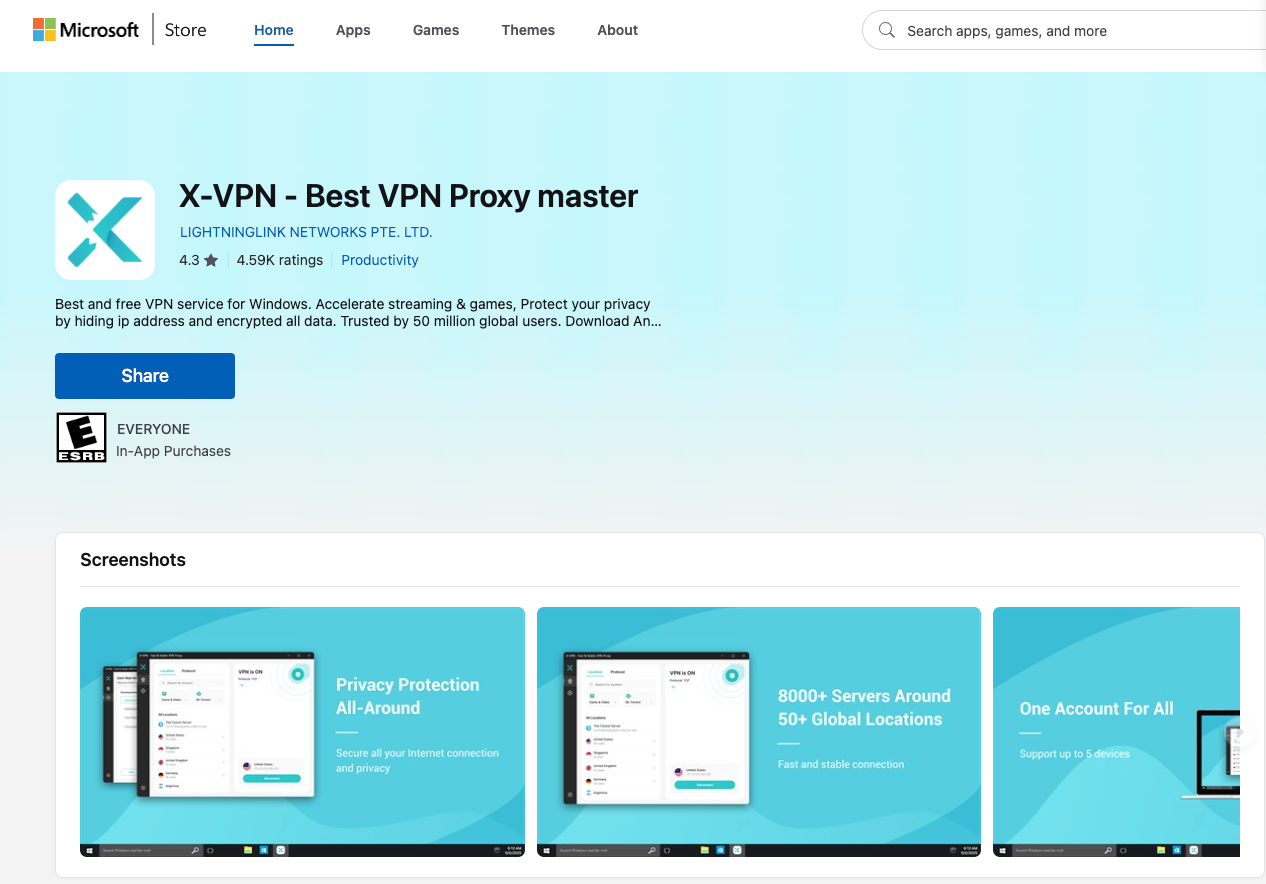
This is where hands-on assessment beats a glossy feature list. Install the client on the platform you actually use — for instance, X-VPN on the Microsoft Store for a Windows machine — connect, and run DNS, IPv6, and WebRTC leak tests before trusting it with anything sensitive.
A tool that passes your own checks has earned more credibility than one that only sounds impressive on a landing page.
A Framework, Not Brand Loyalty
The reason to think in terms of criteria rather than brand names is that the market shifts constantly. Audits age. Jurisdictions change. Ownership can turn over. Server architecture can evolve. A provider that was a good fit two years ago may not be the right fit today, and a provider that once looked weak may improve.
Hold any VPN against the same checklist: verifiable audits with meaningful scope, server architecture that supports its privacy claims, clear documentation of its security approach, and leak behaviour you have personally tested.
That is the difference between feeling secure and being able to show your work.
INTERESTING POSTS
- Should I Trust VPN Review Sites?
- How ERP Project Recovery Consultants Rescue Failing Projects and Boost ROI
- How Companies Can Use AI Cybersecurity Tools to Audit Their Defenses
- Best DNS, IP, and WebRTC Leaks Test Sites
- Beyond Breaches: Turning Cybersecurity Transparency Into a Business Advantage
- 3 Critical Cybersecurity Questions To Ask Before Buying a Marketing SAAS Product
About the Author:

Gina Lynch is a VPN expert and online privacy advocate who stands for the right to online freedom. She is highly knowledgeable in the field of cybersecurity, with years of experience in researching and writing about the topic. Gina is a strong advocate of digital privacy and strives to educate the public on the importance of keeping their data secure and private. She has become a trusted expert in the field and continues to share her knowledge and advice to help others protect their online identities.