In this post, I will show you how small businesses can build safer, smarter brand visibility at in-person events.
In-person events are back in a big way.
From local trade fairs and school fundraisers to startup meetups and industry conferences, businesses of all sizes are looking for ways to stand out when people are moving quickly from booth to booth. A good display still matters, but visibility today is about more than a banner and a stack of flyers.
People remember brands they interact with. They also remember brands that feel organized, approachable, and consistent. That is why smart event planning often blends presentation, team coordination, and practical security habits.
For smaller businesses in particular, this balance matters. You want to create a strong impression without overspending, and you want your team to be recognizable without making the setup feel overly polished or impersonal.
Table of Contents
Why visibility matters beyond the booth
Most event advice focuses on attracting attention. That is important, but the real goal is often easier to miss: helping people identify your team quickly and feel comfortable starting a conversation.
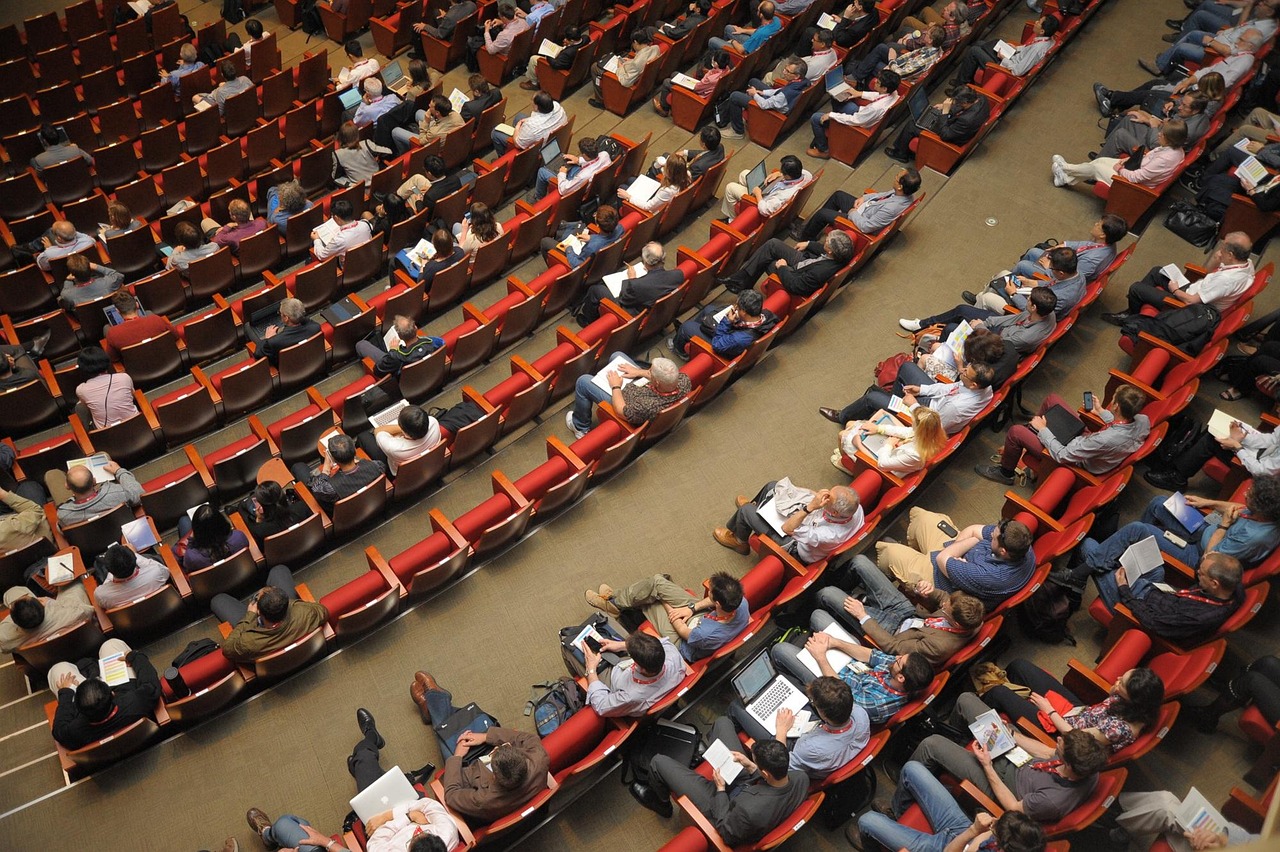
Think about a crowded conference hall. Visitors may notice your signage from a distance, but when they get closer, they are looking for cues. Who works here? Who can answer a question? Who is managing product demos, samples, or sign-ups?
Simple visual consistency solves a lot of this.
Matching shirts, name badges, color-coded materials, and clearly branded accessories help create structure. They reduce confusion for visitors and make your team easier to approach. This is especially useful at events where several brands offer similar services.
A consistent appearance also helps after the event. If attendees remember the company with the blue booth and the team wearing matching headwear, your brand has already become easier to recall.
The practical value of wearable branding
Branded apparel is often treated as a style choice, but it can serve a practical role too.
For one, it supports team coordination. When staff members are spread across an event space, it is easier for visitors and coworkers to spot them. That can improve customer interactions and make event logistics smoother.
It can also reduce a common problem at live events: mixed messages. If one staff member is dressed very casually and another looks formal, the overall brand impression becomes less clear. A simple, unified look keeps things grounded.
Headwear can be especially useful for outdoor events, festivals, and long activation days where comfort matters. Teams are more likely to actually wear something for hours if it is functional.
For brands planning seasonal campaigns, launches, or community outreach, custom trucker hats can work well because they are easy to wear, visible from a distance, and practical enough for staff use as well as limited giveaway runs.
The key is not to overdo it. Wearable branding works best when it feels natural and useful rather than overly promotional.
Choosing event materials that people will actually use
One mistake many businesses make is bringing items that look good on a table but do little once the event ends.
Useful items tend to stay with people longer. That could mean notebooks, water bottles, badge holders, or wearable items that fit the audience and setting. The more practical the item, the greater the chance it remains in circulation after the event.
This does not mean every event needs a pile of merchandise. In many cases, a smaller number of thoughtful items works better than a large volume of forgettable ones.
A local home services business, for example, may benefit from giving staff functional branded gear during a community event rather than distributing disposable novelty items. A startup attending an industry expo may decide that a clean, recognizable team uniform creates more impact than expensive swag bags.
Before ordering anything, it helps to ask a few questions:
- Will team members actually wear or use this?
- Does it fit the event environment?
- Will it help attendees recognize our staff?
- Does it match the way we want the brand to be perceived?
These questions keep event planning focused on usefulness rather than volume.
Don’t overlook basic security and privacy during events
On a site like SecureBlitz, it is worth highlighting that event visibility should never come at the cost of basic security.
In-person promotions create a surprising number of small risks. Teams often collect contact details, use shared devices, connect to public Wi-Fi, and move between crowded spaces with limited oversight. That makes even simple events worth planning carefully.
A few habits can go a long way:
- Use a dedicated device for registrations or lead capture.
- Avoid storing sensitive data longer than necessary.
- Make sure staff know which information they should and should not ask for.
- Use hotspot connections instead of public Wi-Fi when possible.
- Keep printed sign-up sheets out of public view.
- Assign one person to monitor devices, bags, and boxed materials during setup and breakdown.
Physical branding also intersects with trust. When your team is easy to identify, attendees are less likely to hand information to the wrong person. Clear, consistent presentation can support privacy in practical ways.
This is particularly important at community events, education expos, healthcare outreach programs, and trade shows where multiple vendors are operating close together.
Building a memorable brand presence on a realistic budget
Many small businesses assume event branding has to be expensive to be effective. In reality, clarity often matters more than scale.
A modest booth with a well-coordinated team can make a stronger impression than a larger setup that feels disorganized. If your staff are easy to recognize, your materials are easy to understand, and your message is focused, people will remember the interaction.
A realistic event kit might include:
- One clean banner with a clear value statement
- Simple printed handouts
- Name badges
- Coordinated apparel or headwear
- A secure sign-up method
- One or two practical takeaway items
This approach keeps the experience professional without turning it into a heavy production.
It also makes reuse easier. Businesses that attend several events per year usually get better results from durable, repeatable materials than from one-off campaigns that require a complete redesign each time.
What attendees actually remember
People rarely remember every detail from an event.
They remember whether your team was approachable. They remember whether the booth was easy to navigate. They remember whether someone answered their question clearly. And they often remember one visible element that tied the whole experience together.
That visible element does not need to be flashy. It just needs to be consistent.
For some brands, that may be a color scheme. For others, it may be signage, uniforms, or a simple piece of wearable branding that helps staff stand out in a crowded room.
When that consistency is paired with good preparation and sensible security habits, it creates something more valuable than attention alone. It creates trust.
Conclusion
A strong event presence is not just about getting noticed. It is about helping people recognize your team, understand your brand, and feel comfortable engaging with you.
For small businesses, that often comes down to practical choices: simple visuals, useful materials, coordinated apparel, and a few basic safeguards for data and devices.
When visibility and organization work together, even a modest event setup can leave a lasting impression. And in busy spaces where attention is limited, that kind of clarity is often what makes the difference.
INTERESTING POSTS
- 5 Amazing Ways To Host The Perfect Live Event
- Online Loan Vs In-Person Loan: What’s The Most Secure?
- The Cybersecurity Guide to Safer TV Streaming
- Event Security in the Digital Age: Why Cyber Threats Matter at Physical Gatherings
- Unlocking Engagement: Creative Trade Show Exhibit Designs for Magnetic Marketing Strategies
About the Author:

John Raymond is a cybersecurity content writer, with over 5 years of experience in the technology industry. He is passionate about staying up-to-date with the latest trends and developments in the field of cybersecurity, and is an avid researcher and writer. He has written numerous articles on topics of cybersecurity, privacy, and digital security, and is committed to providing valuable and helpful information to the public.