




In this post, I will show you how to build a scalable web scraping infrastructure.
Building a web scraping infrastructure is no longer reserved for large technology companies. Businesses, marketers, developers, researchers, and cybersecurity professionals increasingly rely on web scraping to gather publicly available data for market research, price monitoring, SEO analysis, competitive intelligence, and academic research.
However, scraping a handful of pages is very different from collecting millions of records daily. As projects grow, challenges such as IP blocking, rate limiting, infrastructure costs, and system reliability become increasingly important.
This guide explains how to build a scalable web scraping infrastructure, the technologies involved, and how choosing the right residential proxies and proxy provider can improve long-term performance.
Table of Contents
What Is a Scalable Web Scraping Infrastructure?
A scalable web scraping infrastructure is a collection of tools and services designed to collect web data efficiently while adapting to increasing workloads.
Instead of relying on a single script running from one computer, a scalable setup distributes scraping tasks across multiple workers, uses proxy servers for IP rotation, stores data efficiently, and monitors the entire process.
A typical architecture includes:
- Scraping workers
- Task queue
- Scheduler
- Database or cloud storage
- Monitoring and logging
- Residential proxy network
- Retry and error handling systems
This modular approach allows organizations to increase scraping capacity without redesigning their entire system.
Key Components of a Scalable Scraping System
Distributed Scraping Workers
Rather than executing every scraping job on one machine, distribute tasks across multiple servers or containers.
Benefits include:
- Faster data collection
- Better fault tolerance
- Easier horizontal scaling
- Reduced downtime
Cloud platforms make it easy to add or remove workers as demand changes.
Task Scheduling
A scheduler determines:
- Which websites should be scraped
- How often they should be visited
- Which worker handles each task
Popular scheduling approaches include cron jobs, queue systems, and workflow orchestration tools.
Data Storage
Collected information should be stored in a format appropriate for your use case.
Common options include:
- SQL databases
- NoSQL databases
- Object storage
- Data warehouses
Clean data pipelines also make downstream analytics much easier.
Monitoring and Logging
Monitoring helps identify problems before they affect production.
Track metrics such as:
- Request success rates
- Response times
- Failed requests
- Proxy health
- Worker utilization
Detailed logs simplify troubleshooting when websites change their structure.
Why Proxies Matter for Large-Scale Web Scraping
As scraping volume increases, websites often detect repeated requests from the same IP address.
This can lead to:
- Rate limiting
- Temporary bans
- CAPTCHA challenges
- Permanent IP blocking
Using reliable proxy servers distributes requests across many different IP addresses, making traffic appear more natural.
Residential proxies are especially valuable because they use IP addresses assigned by internet service providers, making them suitable for many legitimate web scraping and data collection projects where compliance with website terms and applicable laws is important.
Other benefits include:
- IP rotation
- Better geographic targeting
- Higher request success rates
- Reduced blocking
- More consistent anonymous browsing
IP Rotation Best Practices
IP rotation is one of the most important aspects of large-scale scraping.
Good practices include:
- Rotate IPs after a reasonable number of requests.
- Match request frequency to the target website.
- Introduce random delays where appropriate.
- Respect robots.txt where applicable and comply with applicable terms of service.
- Retry failed requests intelligently rather than aggressively.
Combining residential proxies with thoughtful request scheduling generally produces more stable results than relying solely on rapid IP switching.
Editor’s Choice: Best Residential Proxy Providers
Selecting the right proxy provider is one of the most important decisions when designing scalable scraping infrastructure.
🥇 1. Oxylabs — Best for Enterprise & Large-Scale Data Collection
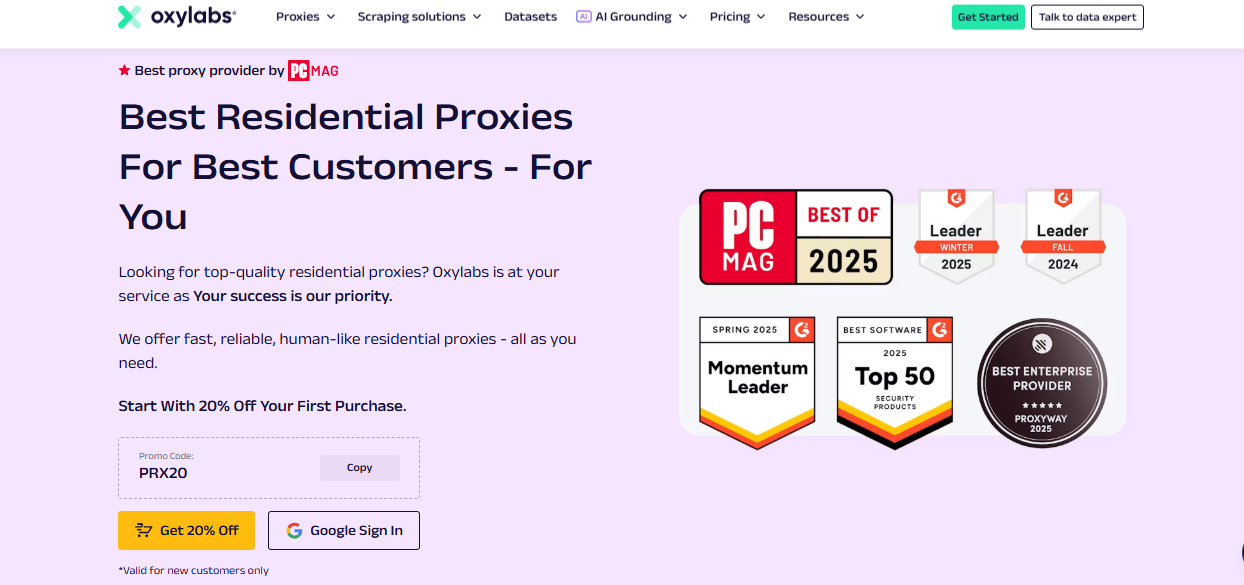
Oxylabs earns the Editor’s Choice position thanks to its enterprise-grade infrastructure and extensive residential proxy network designed for demanding workloads.
Key strengths include:
- Massive residential proxy network
- Enterprise-grade infrastructure
- Advanced geographic targeting
- High reliability
- Strong success rates for web scraping
- Excellent scalability for market intelligence and data collection projects
Its platform is suitable for organizations processing large volumes of requests while maintaining consistent performance. Individual developers with demanding projects may also appreciate its mature tooling and documentation.
🥈 2. Webshare — Best Budget-Friendly Residential Proxy Provider
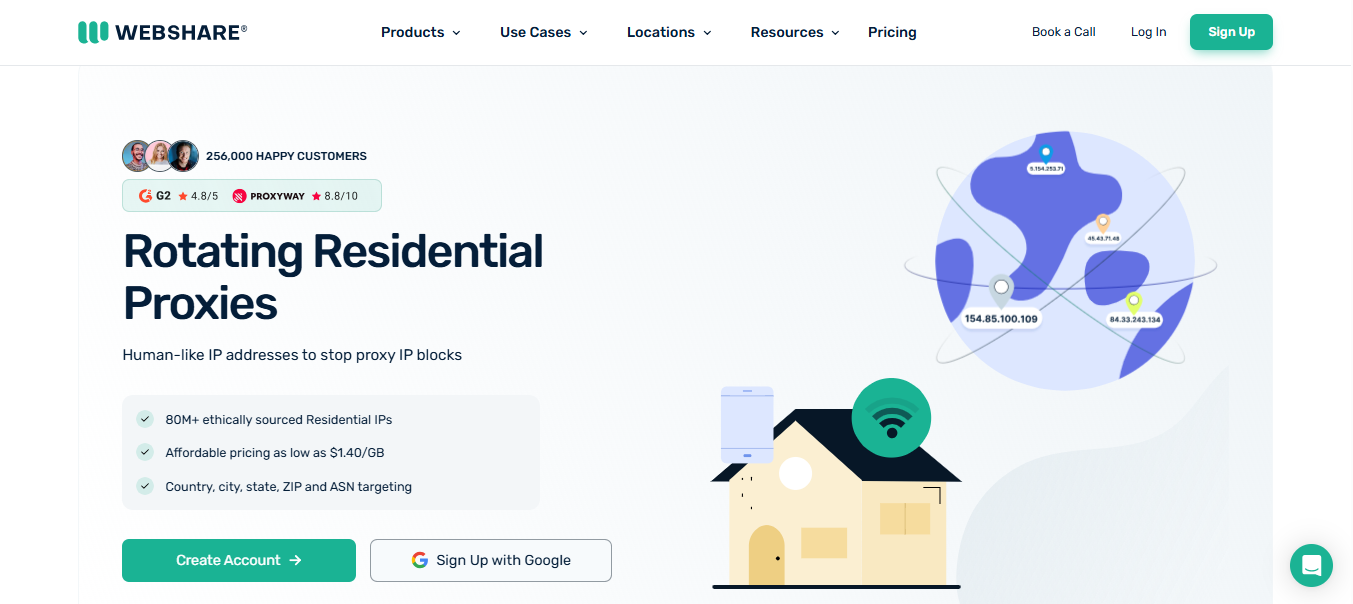
Webshare is a practical option for users who need dependable residential proxies without a large upfront investment.
Its advantages include:
- Affordable pricing
- Free plan availability for eligible users
- Simple setup
- Reliable performance
- Easy-to-use dashboard
Developers, freelancers, students, startups, and small businesses often find Webshare offers excellent value while still supporting scalable projects.
🥉 3. Decodo — Best Overall Residential Proxy Provider
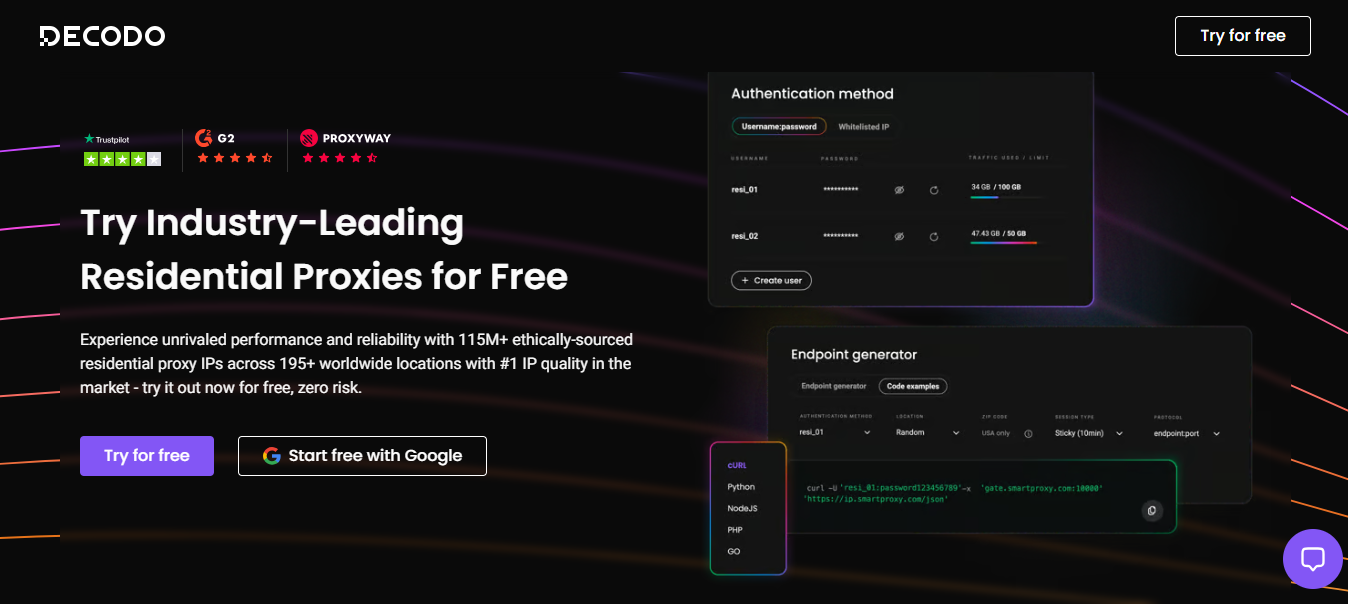
Decodo offers an excellent balance of performance, usability, and pricing.
Highlights include:
- Residential proxies
- Rotating proxies
- Beginner-friendly dashboard
- Fast setup
- Reliable performance
- API support
- Helpful documentation
Businesses, agencies, and individual developers often choose Decodo because it combines accessible pricing with features that support both small and growing scraping operations.

Comparison Table
| Provider | Best For | Key Strength |
| Oxylabs | Overall | Balance of performance & value |
| Decodo | Enterprise | Large-scale proxy infrastructure |
| Webshare | Budget | Affordable and easy to use |
Other Residential Proxy Providers Worth Considering
Several additional providers are also respected within the industry.
- Mars Proxies — Offers residential and mobile proxy solutions suitable for developers and smaller projects.
- IPRoyal — Provides flexible pricing with residential and datacenter proxy options.
- Bright Data — Well known for its extensive proxy infrastructure and advanced enterprise features.
- SOAX — Focuses on flexible geo-targeting and rotating residential IPs.
- NetNut — Offers ISP-backed residential connectivity with an emphasis on stable performance.
- ProxyEmpire — Provides residential and mobile proxies with location targeting.
- Rayobyte — Offers residential, ISP, and datacenter proxy solutions.
- Infatica — Supports global residential proxy coverage for data collection.
- Live Proxies — Delivers residential proxy services for various automation and scraping workloads.
Each provider has different strengths, so the right choice depends on project requirements, budget, and scale.
Buying Guide: Choosing the Right Residential Proxy Provider
When evaluating a residential proxy provider, consider the following factors:
- Price: Ensure the service fits your long-term budget.
- Performance: Look for consistent speeds and uptime.
- Reliability: Stable infrastructure reduces failed requests.
- IP Pool Size: Larger pools generally improve IP rotation.
- Geographic Coverage: Choose providers with locations relevant to your targets.
- Rotation Options: Flexible rotation improves scalability.
- Dashboard: A clear management interface saves time.
- Customer Support: Responsive support helps resolve issues quickly.
- API Availability: APIs simplify automation.
- Ease of Use: Good documentation reduces setup time.
- Security: Choose providers with strong operational practices.
- Scalability: Ensure the platform can grow alongside your workloads.
Frequently Asked Questions
What is the best proxy type for web scraping?
Residential proxies are commonly preferred for many large-scale scraping projects because they can reduce the likelihood of IP-based blocking compared to using a single static address.
Why is IP rotation important?
IP rotation distributes requests across multiple IP addresses, helping reduce rate limiting and improving reliability.
Can I scrape websites without proxies?
Yes, for small projects. However, larger scraping operations often encounter blocking or request limits without proxy servers.
How do I scale a web scraping project?
Use distributed workers, task queues, automated monitoring, cloud infrastructure, and a reliable residential proxy network.
What data storage should I use?
The choice depends on your workload. SQL databases work well for structured data, while NoSQL and cloud storage can be suitable for high-volume or unstructured datasets.
Are residential proxies better than datacenter proxies?
Residential proxies are often more effective for websites with stronger anti-bot protections, while datacenter proxies typically offer higher speed at a lower cost.
Conclusion
Building a scalable web scraping infrastructure involves much more than writing a scraper. A successful architecture combines distributed workers, efficient scheduling, robust monitoring, reliable storage, and carefully managed proxy servers with responsible request handling.
Choosing the right residential proxy provider also plays a significant role. Oxylabs stands out as the best overall choice for organizations requiring enterprise-grade scalability and extensive data collection capabilities. Decodo is an excellent option for enterprise users seeking a strong balance between usability and performance, while Webshare delivers outstanding value for developers, freelancers, students, and budget-conscious businesses.
INTERESTING POSTS
About the Author:

Gina Lynch is a VPN expert and online privacy advocate who stands for the right to online freedom. She is highly knowledgeable in the field of cybersecurity, with years of experience in researching and writing about the topic. Gina is a strong advocate of digital privacy and strives to educate the public on the importance of keeping their data secure and private. She has become a trusted expert in the field and continues to share her knowledge and advice to help others protect their online identities.



