


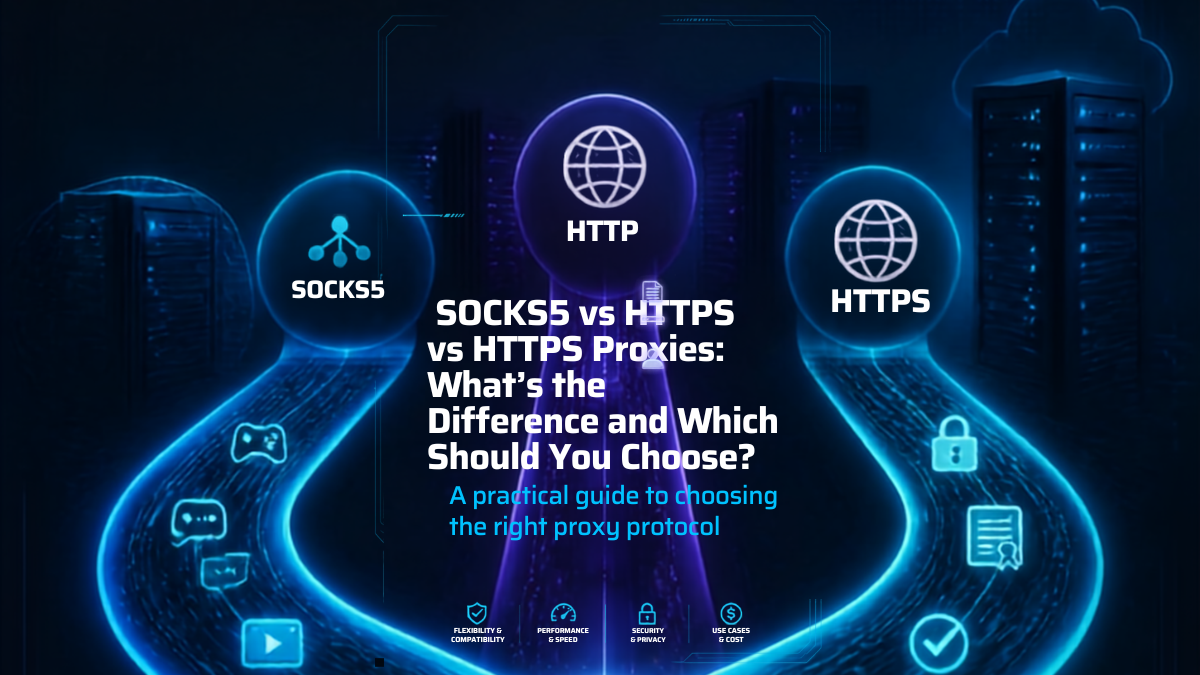

In this post, we will compare SOCKS5 vs HTTP vs HTTPS Proxies, and I will show the differences and which one you should choose.
Choosing the right proxy can significantly impact your online privacy, browsing performance, and data collection workflow. Whether you’re managing multiple accounts, conducting web scraping projects, or simply looking for more anonymous browsing, understanding the differences between SOCKS5, HTTP, and HTTPS proxies is essential.
Although all three types of proxy servers act as intermediaries between your device and the internet, they serve different purposes. Some prioritize speed, others focus on security, while some offer broader compatibility across applications.
In this guide, we’ll compare SOCKS5, HTTP, and HTTPS proxies, explain their strengths and limitations, and help you determine which option best fits your needs.
Table of Contents
What Are Proxy Servers?
A proxy server sits between your device and the destination website or online service. Instead of connecting directly, your requests pass through the proxy, which forwards them using a different IP address.
Depending on your goals, proxy servers can help with:
- Anonymous browsing
- Web scraping
- Data collection
- Accessing geo-restricted content
- Managing multiple accounts
- IP rotation
- Improving online privacy
When paired with a quality residential proxy network, proxy servers can provide more reliable access to websites while reducing the likelihood of IP bans.
HTTP Proxies Explained
HTTP proxies are designed specifically for web traffic using the HTTP protocol.
Because they only process web requests, HTTP proxies are lightweight and easy to configure. They are commonly used for browsing websites, filtering internet traffic, and basic automation tasks.
Advantages
- Simple to configure
- Fast for standard web browsing
- Compatible with most browsers
- Suitable for lightweight web scraping
Limitations
- Only supports HTTP traffic
- Does not encrypt data
- Unsuitable for applications outside web browsers
HTTP proxies work well when speed matters more than security.
HTTPS Proxies Explained
HTTPS proxies build upon HTTP proxies by supporting encrypted HTTPS connections.
Instead of transmitting information in plain text, HTTPS proxies establish a secure encrypted tunnel between your browser and the destination website.
This makes them a better option for handling sensitive information.
Advantages
- Encrypts web traffic
- Better protection on public Wi-Fi
- Supports secure websites
- Good balance between speed and privacy
Limitations
- Limited primarily to web traffic
- Slightly higher overhead than HTTP proxies
HTTPS proxies are ideal for secure browsing, online research, and accessing websites that require encrypted connections.
SOCKS5 Proxies Explained
SOCKS5 is a protocol rather than a web-specific proxy.
Unlike HTTP and HTTPS proxies, SOCKS5 can forward almost any type of internet traffic.
This includes:
- Web browsers
- Email clients
- FTP applications
- Gaming
- VoIP
- Torrent clients
- Streaming software
Because SOCKS5 works at a lower networking layer, it provides much greater flexibility.
Advantages
- Supports nearly all internet protocols
- Excellent compatibility
- Handles large amounts of traffic efficiently
- Often preferred for gaming and streaming
- Works well with applications beyond browsers
Limitations
- Does not encrypt traffic by default
- May require additional security layers when handling sensitive data
SOCKS5 is often chosen when flexibility matters more than built-in encryption.
SOCKS5 vs HTTP vs HTTPS: Comparison Table
| Feature | HTTP Proxy | HTTPS Proxy | SOCKS5 Proxy |
| Encryption | No | Yes | No (native) |
| Browser Support | Excellent | Excellent | Excellent |
| Application Support | Web only | Web only | Nearly all applications |
| Speed | Very Fast | Fast | Fast |
| Security | Basic | High | Depends on implementation |
| Web Scraping | Good | Excellent | Excellent |
| Anonymous Browsing | Moderate | High | High |
| Streaming & Gaming | Limited | Limited | Excellent |
Which Proxy Type Is Best for Different Use Cases?
For Anonymous Browsing
HTTPS proxies generally provide stronger protection because they encrypt web traffic.
For Web Scraping
Both HTTPS proxies and SOCKS5 proxies work well for web scraping.
When paired with a residential proxy network featuring IP rotation, they can help reduce request blocking while improving data collection reliability.
For Businesses
Organizations conducting market research or large-scale data collection often combine residential proxies with HTTPS or SOCKS5 connections depending on their applications.
For Developers
Developers usually appreciate SOCKS5 due to its compatibility with APIs, automation tools, command-line utilities, and various networking applications.
Editor’s Choice: Best Residential Proxy Providers
🥇 1. Oxylabs — Best for Enterprise & Large-Scale Data Collection
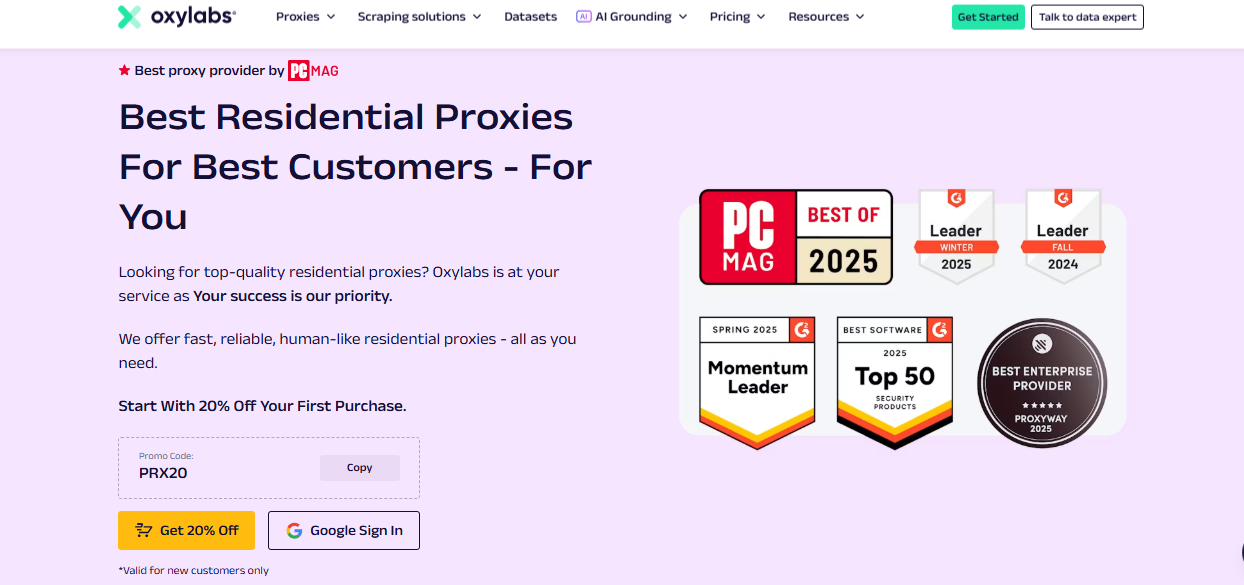
Oxylabs earns our Editor’s Choice recommendation thanks to its enterprise-grade infrastructure and extensive residential proxy network.
Its platform is designed for organizations that require dependable performance across large-scale web scraping, market intelligence, and data collection projects. Advanced targeting capabilities, high success rates, and reliable IP rotation make it a strong option for businesses that depend on consistent access to public web data.
Individual professionals can also benefit from Oxylabs if they need premium reliability and scalable proxy services, although its feature set is particularly attractive to larger organizations with demanding workloads.
Why it stands out:
- Massive residential proxy network
- Enterprise-grade infrastructure
- Advanced geographic targeting
- Reliable IP rotation
- High success rates for large-scale projects
- Suitable for market intelligence and web scraping

🥈 2. Decodo — Best Overall Residential Proxy Provider
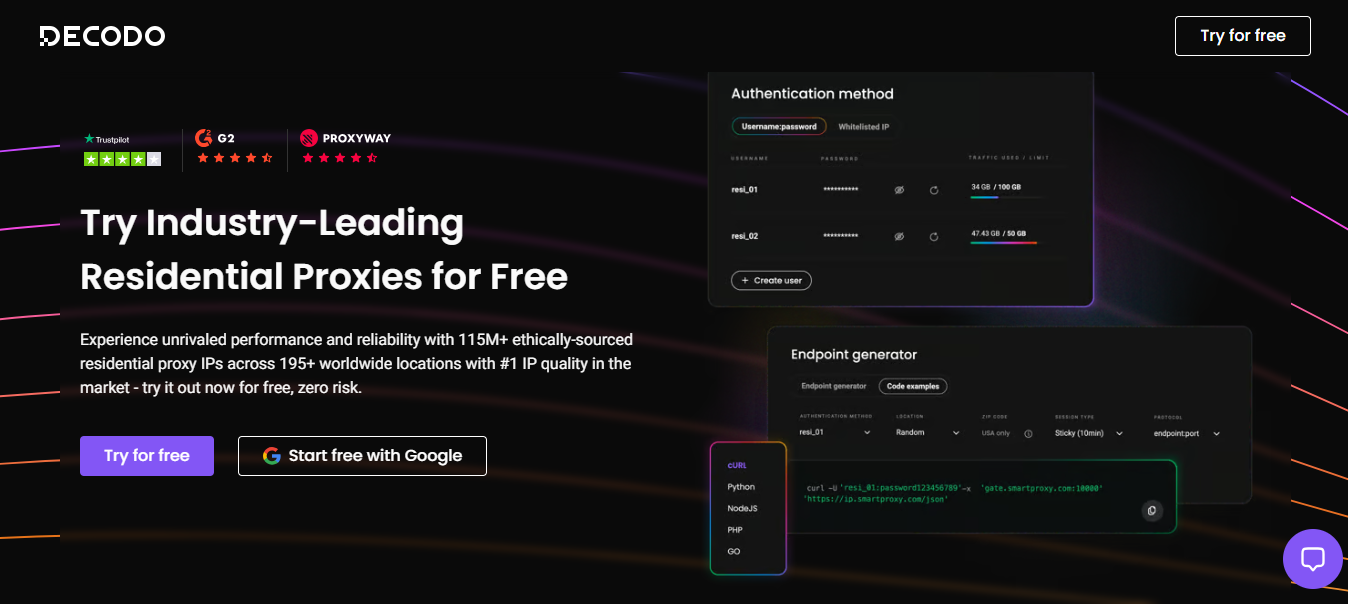
Decodo offers an excellent balance of affordability, performance, and ease of use.
Its intuitive dashboard makes setup straightforward for beginners, while API support and comprehensive documentation provide flexibility for developers and businesses. Decodo supports residential proxies and rotating proxies, making it suitable for a wide range of automation and research tasks.
Key strengths include:
- Excellent price-to-performance ratio
- Beginner-friendly interface
- Reliable residential proxies
- Rotating proxy support
- API integration
- Fast deployment
- Helpful documentation

🥉 3. Webshare — Best Budget-Friendly Residential Proxy Provider
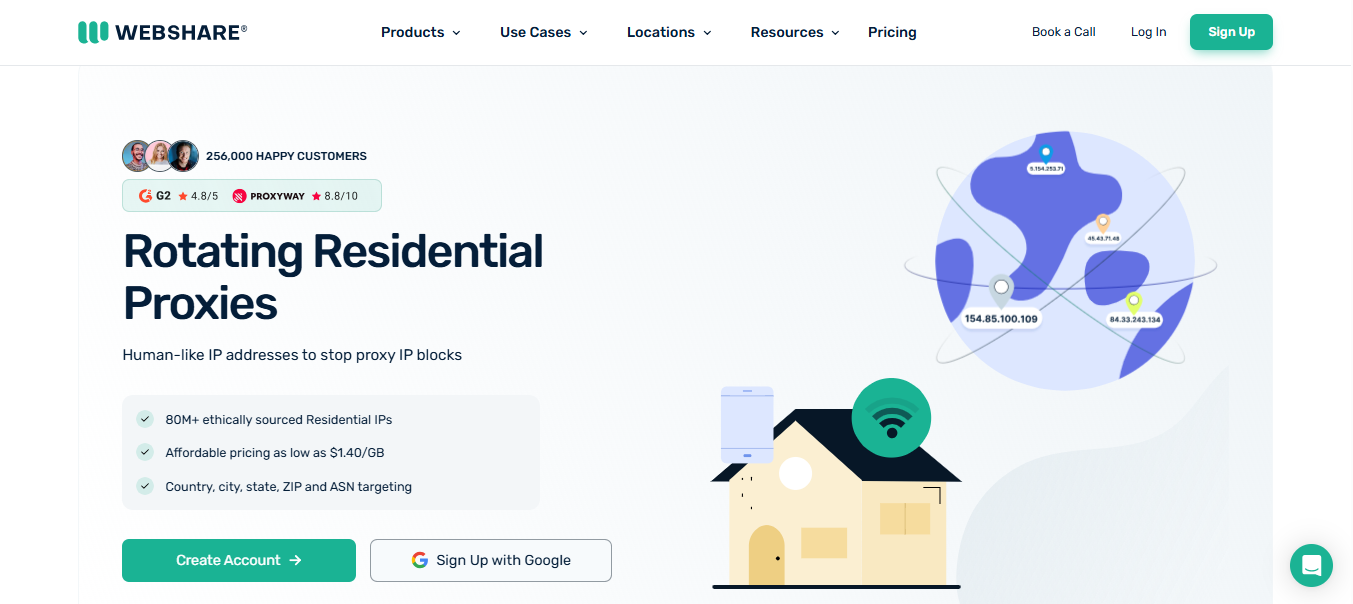
Webshare is a practical choice for users who need reliable residential proxies without a significant investment.
Its affordable pricing, straightforward setup, and available free plan make it appealing for freelancers, students, developers, and small businesses exploring proxy technology for the first time.
Highlights include:
- Affordable pricing
- Free plan availability
- Easy setup
- Reliable performance
- Residential proxy options
- Ideal for smaller projects and learning environments
Provider Comparison
| Provider | Best For | Key Strength |
| Oxylabs | Overall | Balance of performance & value |
| Decodo | Enterprise | Large-scale proxy infrastructure |
| Webshare | Budget | Affordable and easy to use |
Other Residential Proxy Providers Worth Considering
Several other providers also offer capable residential proxy services depending on your requirements:
- Mars Proxies — Competitive pricing with residential and ISP proxy options.
- IPRoyal — Popular among individuals and small businesses seeking flexible plans.
- Bright Data — Extensive proxy infrastructure with advanced management features.
- SOAX — Strong geographic targeting and flexible IP rotation options.
- NetNut — Focuses on stable residential connections for business users.
- ProxyEmpire — Supports residential and mobile proxies with customizable rotation.
- Rayobyte — Offers residential, ISP, and datacenter proxies for various workloads.
- Infatica — Suitable for web scraping and market research projects.
- Live Proxies — Provides residential proxy services for businesses requiring scalable access.
How to Choose the Right Residential Proxy Provider
Before selecting a proxy provider, consider the following factors:
- Pricing that matches your usage
- Reliability and uptime
- Residential proxy network size
- Geographic coverage
- Flexible IP rotation options
- Dashboard usability
- API availability
- Customer support quality
- Security features
- Ability to scale as your needs grow
The best provider depends on your intended use rather than simply choosing the largest network.
Frequently Asked Questions
Are SOCKS5 proxies more secure than HTTPS proxies?
Not necessarily. HTTPS proxies encrypt web traffic, while SOCKS5 focuses on compatibility and flexibility rather than encryption.
Which proxy is best for web scraping?
HTTPS and SOCKS5 proxies both perform well. Combining either with residential proxies and intelligent IP rotation generally provides more reliable results.
What is a residential proxy?
A residential proxy routes traffic through real residential IP addresses assigned by internet service providers, making requests appear more like regular user activity.
Can proxy servers improve online privacy?
Proxy servers help mask your IP address, but they are not complete privacy solutions. Combining proxies with good security practices provides better protection.
Do developers prefer SOCKS5?
Many developers choose SOCKS5 because it supports a wider range of applications and network protocols beyond web browsers.
Should businesses use residential proxies?
Businesses performing market research, competitive analysis, or large-scale data collection often benefit from residential proxies due to their higher trust levels and reduced blocking.
Conclusion
Choosing between SOCKS5, HTTP, and HTTPS proxies ultimately depends on how you plan to use them.
HTTP proxies are suitable for simple web browsing where encryption isn’t essential. HTTPS proxies are a better fit for secure browsing, research, and encrypted web traffic. SOCKS5 proxies offer the greatest flexibility, supporting nearly every type of internet application, making them especially useful for developers, gamers, and advanced users.
If you’re also evaluating residential proxy providers, each featured option serves a different audience:
- Oxylabs is our top recommendation for users who need enterprise-grade infrastructure, large-scale web scraping, and dependable data collection capabilities.
- Decodo is an excellent choice for organizations and individuals seeking a strong balance between performance, usability, and value.
- Webshare delivers solid functionality at an affordable price, making it ideal for developers, students, freelancers, and small businesses.
As your privacy and automation needs evolve, consider exploring other SecureBlitz resources covering VPNs, cybersecurity, password managers, antivirus software, privacy tools, secure browsers, web scraping, and AI tools to build a more complete online security toolkit.
INTERESTING POSTS
About the Author:

Marie Beaujolie is a computer network engineer and content writer from Paris. She is passionate about technology and exploring new ways to make people’s lives easier. Marie has been working in the IT industry for many years and has a wealth of knowledge about computer security and best practices. She is a regular contributor for SecureBlitz.com, where she writes about the latest trends and news in the cyber security industry. Marie is committed to helping people stay safe online and encouraging them to take the necessary steps to protect their data.



