


In this post, I will show you how phishing and fake trading platforms turn social media into investment scams.
Social media investment scams no longer look like obvious spam. They often begin with polished ads, cloned profiles, encrypted group chats, fake trading dashboards, and pressure from people who appear knowledgeable. For cybersecurity readers, the important lesson is that these schemes are credential attacks as much as financial frauds: the scammer is not only asking for money, but also trying to borrow the trust attached to a platform, broker, adviser, app, or community.
Table of Contents
Key Takeaways
- Cyber-enabled investment scams commonly combine phishing, impersonation, social proof, and fake trading interfaces.
- Encrypted group chats and “investment clubs” can create a controlled environment where victims see only curated claims and staged wins.
- Fake trading platforms often show fabricated balances, block withdrawals, and demand additional taxes, fees, or deposits.
- Investors should verify professionals and firms through official sources before sharing money, crypto, account access, or identity documents.
- After a suspected scam, preserving evidence quickly is often more useful than continuing to negotiate with the promoter.
Why Investment Scams Are A Cybersecurity Problem
Traditional investor education often focuses on risk, diversification, and sales practices. That still matters. But in 2026, many online investment scams start like a security incident: an unsolicited message, a malicious link, a spoofed website, a cloned identity, a convincing document, or an app that is designed to harvest information and payments.
According to Investor.gov, the SEC’s investor education staff warns that investors should not make investment decisions based only on social media platforms or apps. Its social media stock tip alert describes online ads, group chats, impersonated professionals, and promises of high returns with little or no risk as warning signs.
That is why the first defensive question is not only “Is this investment good?” It is also “Is this identity, domain, document, channel, and payment route real?” A legitimate investment professional should not need to hide behind a private messaging account, ask for screenshots of trades, demand crypto transfers to a personal wallet, or prevent you from verifying the firm through official databases.
How The Scam Funnel Usually Works
Many social-engineered investment scams follow a predictable funnel. The details vary, but the structure is often the same: visibility, trust, migration, payment, control, and extraction.
- Visibility: the victim sees an ad, comment, direct message, fake testimonial, or “wrong number” text connected to investing.
- Trust: the scammer uses a credible-looking persona, a borrowed professional name, a fake success story, or a group of apparent investors to lower skepticism.
- Migration: the conversation moves away from the original platform into WhatsApp, Telegram, Signal, or another channel where outsiders are less likely to intervene.
- Payment: the victim is told to open a brokerage account, buy a stock at specific times, deposit crypto, or fund an account on a trading site controlled by the scammer.
- Control: the platform or group chat supplies fake account growth, staged screenshots, and pressure to increase deposits.
- Extraction: when the victim asks to withdraw, the scammer delays, disappears, or demands another payment for taxes, liquidity, verification, or account release.
According to FINRA, fraudulent investment groups promoted through social media have produced a significant spike in investor complaints since fall 2023. FINRA’s 2025 investor alert describes bad actors posing as registered investment professionals, moving targets into encrypted group chats, and pitching stocks or crypto assets through tightly managed conversations.
Warning Signs To Check Before Money Moves
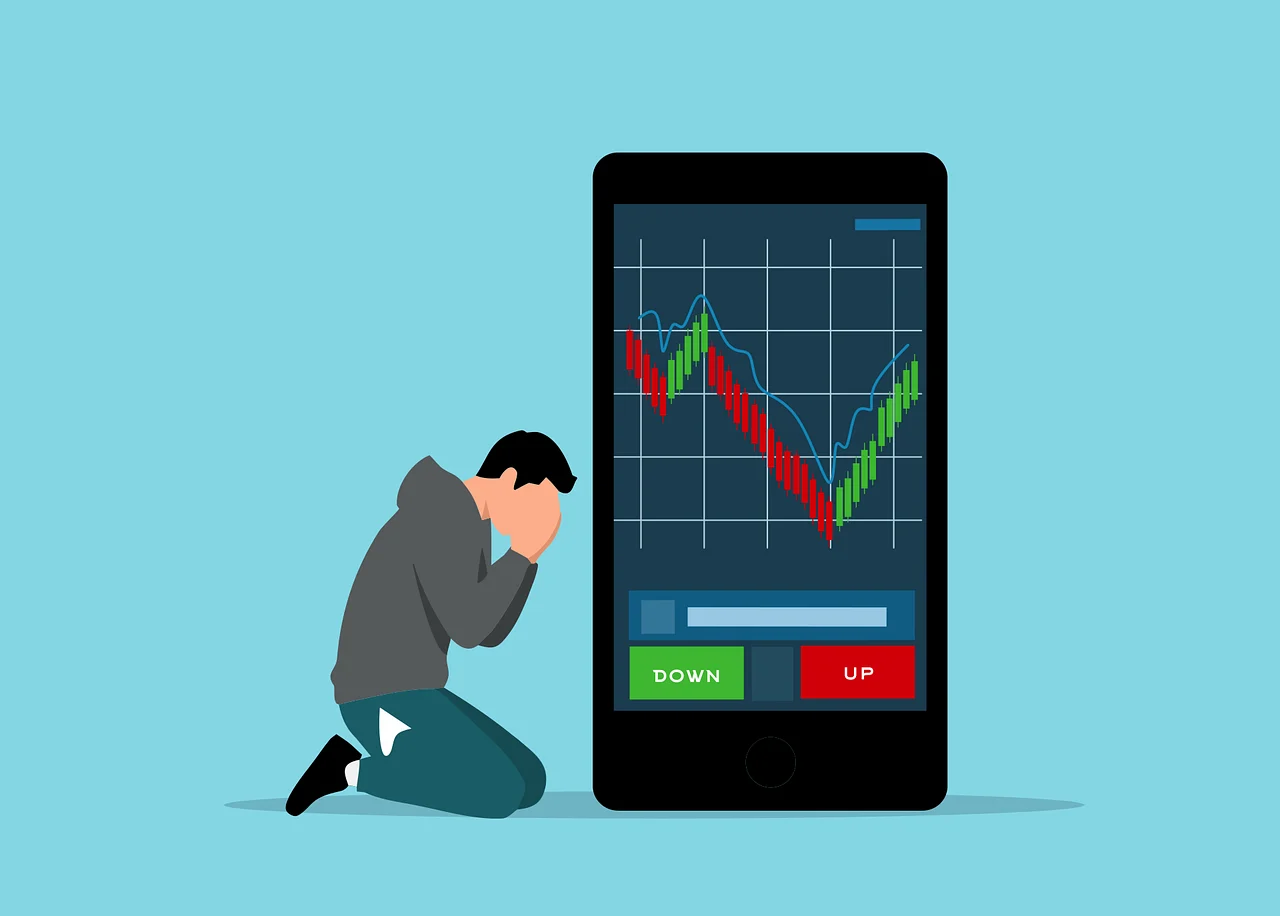
A fake platform can look more professional than a real one because it has only one job: persuasion. The dashboard may show clean charts, instant profits, perfect trade history, or a balance that rises in a straight line. The website may include badges, invented certificates, address claims, and compliance language. None of that proves registration, custody, trading activity, or legal authority.
Before sending funds, look for mismatches. Does the domain age match the company’s claimed history? Does the app developer match the firm name? Does the firm use the same phone number and website listed in official records? Is the promoter asking you to communicate through a personal account instead of a firm channel? Is the investment described clearly, or does the pitch rely on jargon, secrecy, and urgency?
A useful checklist of online investment scam warning signs should include both financial red flags and cyber red flags: spoofed domains, cloned profiles, fake registration documents, high-pressure private chats, refusal to identify the custodian, unusual transfer instructions, and new payment demands when a withdrawal is requested.
The SEC and CFTC staff advisory hosted by the CFTC on fraudulent digital asset and crypto trading websites warns that fraudulent crypto trading websites may promise high returns, claim little or no risk, stop communicating after funds arrive, or demand additional payments before releasing supposed profits. Those behaviors are not normal account administration. They are signs that the displayed gains may never have existed.
Real-World Example: Fake Trading Platforms And Investment Clubs
In December 2025, the SEC announced charges against three purported crypto asset trading platforms and four investment clubs in a matter involving retail investors targeted through social media. The SEC release alleged that the clubs used WhatsApp, social media ads, and supposed AI-generated investment tips to move investors toward fake crypto asset trading platforms.
The alleged pattern is important for security teams and individual investors because it shows the connection between social engineering and the final loss. The fraud was not just a bad investment recommendation. The alleged conduct included identity signals, group pressure, fake platform infrastructure, false license claims, and advance-fee demands when investors tried to withdraw. The SEC alleged at least $14 million was misappropriated from U.S.-based retail investors.
For example, a victim may believe the account is real because the platform shows a growing balance and because other members in the chat claim they withdrew money. In a fraudulent trading platform, those signals can be manufactured. A small early withdrawal may be allowed only to create confidence before a larger deposit is solicited.
Real-World Example: Group-Chat Ramp-And-Dump Schemes
According to the FBI IC3, the 2024 Internet Crime Report combined 859,532 complaints and reported losses exceeding $16 billion, a 33 percent increase from 2023. The FBI also reported that phishing or spoofing, extortion, and personal data breaches were the top three cybercrime categories by complaint count in 2024, while investment fraud involving cryptocurrency produced the highest reported losses at more than $6.5 billion. Those figures appear in the FBI’s 2024 Internet Crime Report announcement.
The FBI’s July 2025 public service announcement on investment clubs accessed through social media and messaging apps described ramp-and-dump stock manipulation aimed at U.S. stock investors. It reported at least a 300 percent increase in victim complaints referencing ramp-and-dump stock fraud compared with 2024.
For instance, a scam group may begin by recommending recognizable, actively traded stocks. After trust builds, the group pivots to thinly traded names where coordinated buying can move the price. The victim may be told exactly when to buy, how much to buy, and when not to sell. When the insiders sell, the apparent opportunity collapses into an investment loss.
What To Do If You Already Sent Money Or Crypto

Do not keep paying withdrawal fees, taxes, verification costs, or “unlock” charges just because the platform says more money will release your balance. That is a common second-stage extraction tactic. Preserve the evidence before the chat is deleted, the website disappears, or the app changes names.
Save account screenshots, wallet addresses, transaction hashes, wire confirmations, ACH records, emails, text messages, call logs, user names, profile URLs, group-chat member lists, IP-related notices, device notifications, and any documents the promoter supplied. Write a timeline while the details are fresh. Include dates, amounts, platforms, names used, payment rails, and every reason the promoter gave for why more money was required.
According to Federal Trade Commission data, consumers reported losing $12.5 billion to fraud in 2024, and investment scams accounted for $5.7 billion of those reported losses. The FTC’s 2024 scam data also reported that people contacted through social media were more likely to report losing money and reported $1.9 billion in social-media-originated losses.
Reporting is not a substitute for legal analysis, but it can help preserve a record. Potential reporting channels include IC3, the FTC, the SEC, FINRA, a state securities regulator, a bank or brokerage fraud department, and local law enforcement. If the transfer involved crypto, provide wallet addresses and transaction hashes exactly as they appear. If the transfer involved a brokerage account, preserve statements showing when the trade or transfer occurred.
How Security Habits Reduce Investment Risk
Basic security discipline can stop many investment scams before the money leaves. Search the firm’s name outside the link sent by the promoter. Type official websites directly into the browser. Verify broker and adviser status through regulator tools. Compare phone numbers, firm addresses, and email domains against official records. Use a password manager to detect spoofed domains. Enable multi-factor authentication on financial accounts, but remember that MFA will not help if the victim voluntarily sends money to the scammer.
Strong skepticism is not the same as cynicism. It is normal operational security. A legitimate professional should be willing to slow down, explain the product, provide written disclosures, use firm-controlled channels, identify the custodian, and let the investor verify every claim independently.
Frequently Asked Questions
Are social media stock tips always scams?
No. But unsolicited tips, private group-chat pressure, guaranteed or unusually consistent returns, secrecy, and instructions to trade at specific times should be treated as high-risk signals. Never invest based only on a social media post, chat message, or online testimonial.
How can I tell whether a trading platform is fake?
Look for mismatched domains, unverifiable company information, unknown app developers, cloned branding, pressure to use crypto, withdrawal blocks, and demands for additional payments before funds can be released. A platform that controls every information channel should be treated with caution.
What evidence matters after an online investment scam?
Useful evidence includes transaction records, wallet addresses, wire receipts, account statements, screenshots, chats, emails, phone numbers, profile URLs, app names, website domains, and a dated timeline of what happened. Save originals where possible and avoid editing screenshots.
Should I keep communicating with the promoter to recover my money?
Usually no. Continued communication can expose the victim to more payment demands, identity theft, or recovery-scam targeting. Preserve the messages, stop sending funds, and report through appropriate channels.
Can cybercrime reporting and legal recovery happen at the same time?
Yes. Reporting to regulators or law enforcement can document suspected misconduct, while a legal review can evaluate possible claims, responsible parties, tracing issues, and recovery routes. The right path depends on the facts, payment method, parties involved, and available evidence.
Disclaimer: This content is for general information only and is not legal advice. Reading it does not create an attorney-client relationship.
INTERESTING POSTS
- BriansClub Hack Rescue 26 Million Stolen Credit Cards From Hackers
- Data Privacy Lessons from Sports Communities
- Top 8 Options-Friendly Stock Analysis Tools and Platforms
- What To Do If You’ve Been Scammed Online: A Comprehensive Guide
- The History Of Online Gambling And How It Has Developed Over The Past 20 Years
- A Beginners Guide To Cryptocurrency Investment
- Investing 101: Should You Use Investment Apps?
- 5 Ways To Identify Phishing Or Fake Websites
About the Author:

Meet Angela Daniel, an esteemed cybersecurity expert and the Associate Editor at SecureBlitz. With a profound understanding of the digital security landscape, Angela is dedicated to sharing her wealth of knowledge with readers. Her insightful articles delve into the intricacies of cybersecurity, offering a beacon of understanding in the ever-evolving realm of online safety.
Angela's expertise is grounded in a passion for staying at the forefront of emerging threats and protective measures. Her commitment to empowering individuals and organizations with the tools and insights to safeguard their digital presence is unwavering.