In this post, I will show you how to build a smarter SEO strategy with Semrush and competitor research.
Creating content without doing competitor research is a bit like opening a new restaurant without looking at the other places on the same street. You might serve something great, but if you don’t know what customers already have, it’s much harder to stand out.
The same idea applies to SEO.
Many website owners spend hours brainstorming topics, writing articles, and optimizing pages, only to wonder why they never gain much traction. The problem often isn’t the quality of the content. It’s that they’re creating it in isolation.
Your competitors have already invested time and money figuring out what their audience wants. The good news is you don’t have to copy them to learn from them. In fact, the goal isn’t to recreate someone else’s strategy. It’s to understand what’s working, identify what’s missing, and publish something that’s genuinely more useful.
Here’s a simple workflow that can help you do exactly that.
Table of Contents
Start with the Right Competitors
The biggest mistake people make is choosing the wrong competitors.
Your business competitors and your SEO competitors are not always the same. A local company selling the same product may not compete with you in search results, while a blog you’ve never heard of could be attracting the audience you want.
Start by searching for the topics you hope to rank for. Pay attention to the websites that consistently appear near the top of the results. These are the sites worth studying because they have already earned Google’s attention.
Once you’ve identified a handful of competitors, you’re ready to move beyond guesswork.
This is where a platform like Semrush becomes helpful. Instead of manually checking dozens of search results, you can quickly identify your organic competitors and begin comparing their performance with your own.
Find Out What Already Works
Once you’ve identified the right competitors, resist the urge to dive straight into keywords.
Instead, ask a simpler question.
Which pages bring them the most traffic?
Their best-performing content tells you far more than their homepage ever will. You may discover that a detailed tutorial consistently outperforms short blog posts, or that comparison articles generate far more visibility than product pages.
Looking at these patterns helps you understand what audiences are actually searching for.
Semrush makes this process much easier by showing which pages attract the most organic traffic and which keywords contribute to that success. Rather than guessing why a competitor performs well, you can see the broader picture and begin spotting trends across multiple websites.
The goal isn’t to copy those pages. It’s to understand why they resonate.
Look for the Gaps Instead of the Winners
One of the most valuable discoveries in competitor research isn’t finding what everyone has already covered.
It’s finding what nobody has covered well.
As you review competing articles, look for questions that receive only brief answers or topics that appear repeatedly but never in much detail. Sometimes several websites mention an idea without fully explaining it. Other times, you’ll notice outdated information that no longer reflects how search works today.
These are opportunities.
Semrush can help uncover additional keyword variations and related topics that competitors rank for but haven’t explored in depth. Combined with your own knowledge of the subject, those insights often lead to stronger content than starting with a blank page.
The best-performing articles rarely become successful because they’re longer.
They succeed because they’re more complete.
Review Backlinks and AI Visibility
Publishing great content is only part of the equation.
You should also understand why competing pages have earned authority.
A quick backlink review can reveal whether a competitor’s article is attracting links from respected publications, industry blogs, or resource pages. That information helps you decide whether link building should become part of your own strategy once your content is published.
Another factor that’s becoming increasingly important is AI visibility.
Many businesses still measure success using rankings alone, but search has evolved. People now discover brands through Google AI Overviews, ChatGPT, Gemini, and Perplexity, often before they ever visit a website.
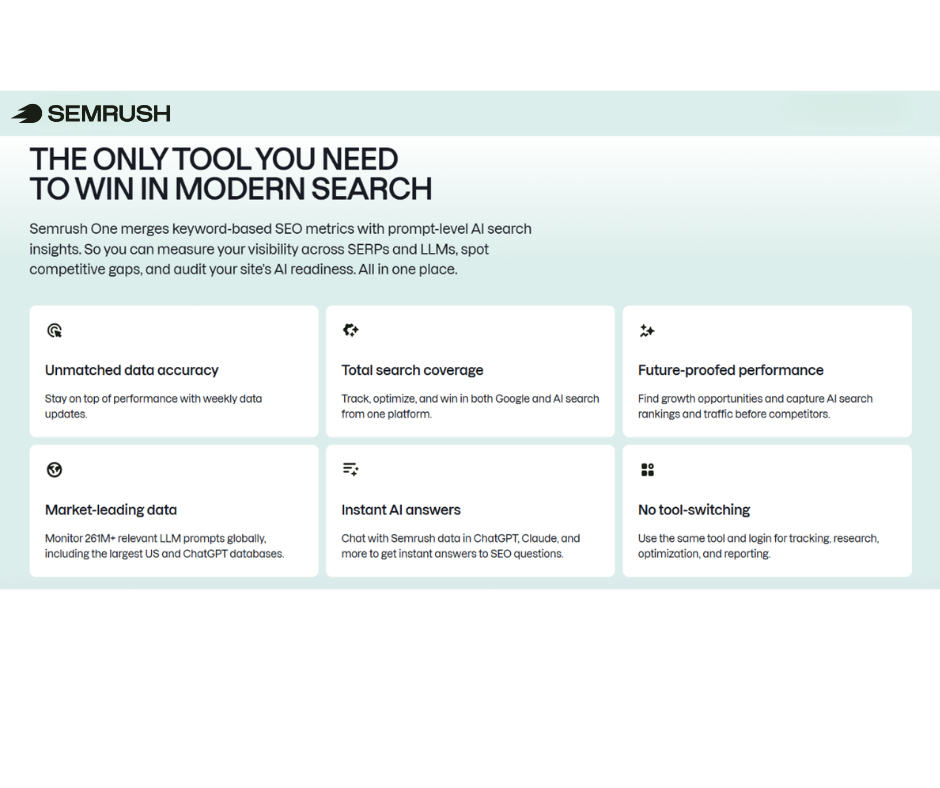
Semrush combines traditional SEO research with its AI Visibility Toolkit, allowing you to see how brands appear across these AI-powered experiences. You can monitor prompt visibility, citations, competitor mentions, sentiment, and share of voice, giving you a much broader understanding of online visibility than rankings alone can provide.
For marketers trying to understand why traffic has changed even when rankings appear stable, these insights can be especially valuable.
If you’re just getting started with the platform, the Getting Started with Semrush: A Tutorial for Navigating the Essentials guide is an excellent resource. It explains the core features and offers practical examples that make it easier to apply this workflow to your own projects.
Build Something Better, Not Just Different

Competitor research should always end with one question.
How can I make this more useful?
Sometimes the answer is adding better examples. Other times it’s updating outdated information, simplifying complicated explanations, or combining several related topics into one comprehensive guide.
Readers don’t benefit from another version of the same article. They benefit from content that answers their questions more clearly than anything else available.
That’s why it’s important to treat competitor research as inspiration rather than a blueprint.
No SEO tool can tell you exactly what to write, and no software replaces thoughtful research or strong writing. The best tools simply remove the guesswork so you can spend more time creating something worthwhile.
Many experienced marketers rely on several platforms throughout their workflow because different tools excel at different tasks. The important thing is choosing tools that help you make better decisions instead of simply generating more data.
Semrush fits naturally into that process because it brings together competitor research, keyword discovery, backlink analysis, technical SEO, and AI visibility in one place. Rather than jumping between multiple dashboards, you can spend more time acting on insights and less time collecting them.
The next time you’re wondering what to publish, don’t start with a blank document. Start by understanding the landscape, finding the gaps your competitors have overlooked, and creating something readers will genuinely appreciate.
If you’re ready to make competitor research a regular part of your content strategy, explore Semrush and apply this workflow to your next article. The goal isn’t to imitate what’s already ranking. It’s to uncover opportunities others have missed and turn them into content that’s genuinely worth reading.
INTERESTING POSTS
- Market Research Web Scraping
- Corporate Anonymity: How Modern Enterprises Obscure Their Digital Tracks from Competitors
- 23 Best Cybersecurity YouTube Channels
- Insurance Requirements Push Atlanta Businesses Toward Professional Cybersecurity Services
- Why Smart CEOs View Outsourced IT as Their Secret Competitive Weapon
- Ultimate List Of The Best Antivirus Blogs [MUST READ]
About the Author:

Chandra Palan is an Indian-born content writer, currently based in Australia with her husband and two kids. She is a passionate writer and has been writing for the past decade, covering topics ranging from technology, cybersecurity, data privacy and more. She currently works as a content writer for SecureBlitz.com, covering the latest cyber threats and trends. With her in-depth knowledge of the industry, she strives to deliver accurate and helpful advice to her readers.