




In this post, I will talk about the best managed DDoS testing services to stress-test without risking an outage.
Last year, a single botnet hurled 31.4 Tbps of junk traffic at one target—shattering every distributed-denial-of-service (DDoS) record on the books. Regulators moved fast: under Europe’s NIS2 directive and the new U.S. four-day disclosure rule, boards now have to prove their defenses can take that kind of beating. The safest route? Run a controlled “friendly-fire” drill with specialists at the helm.
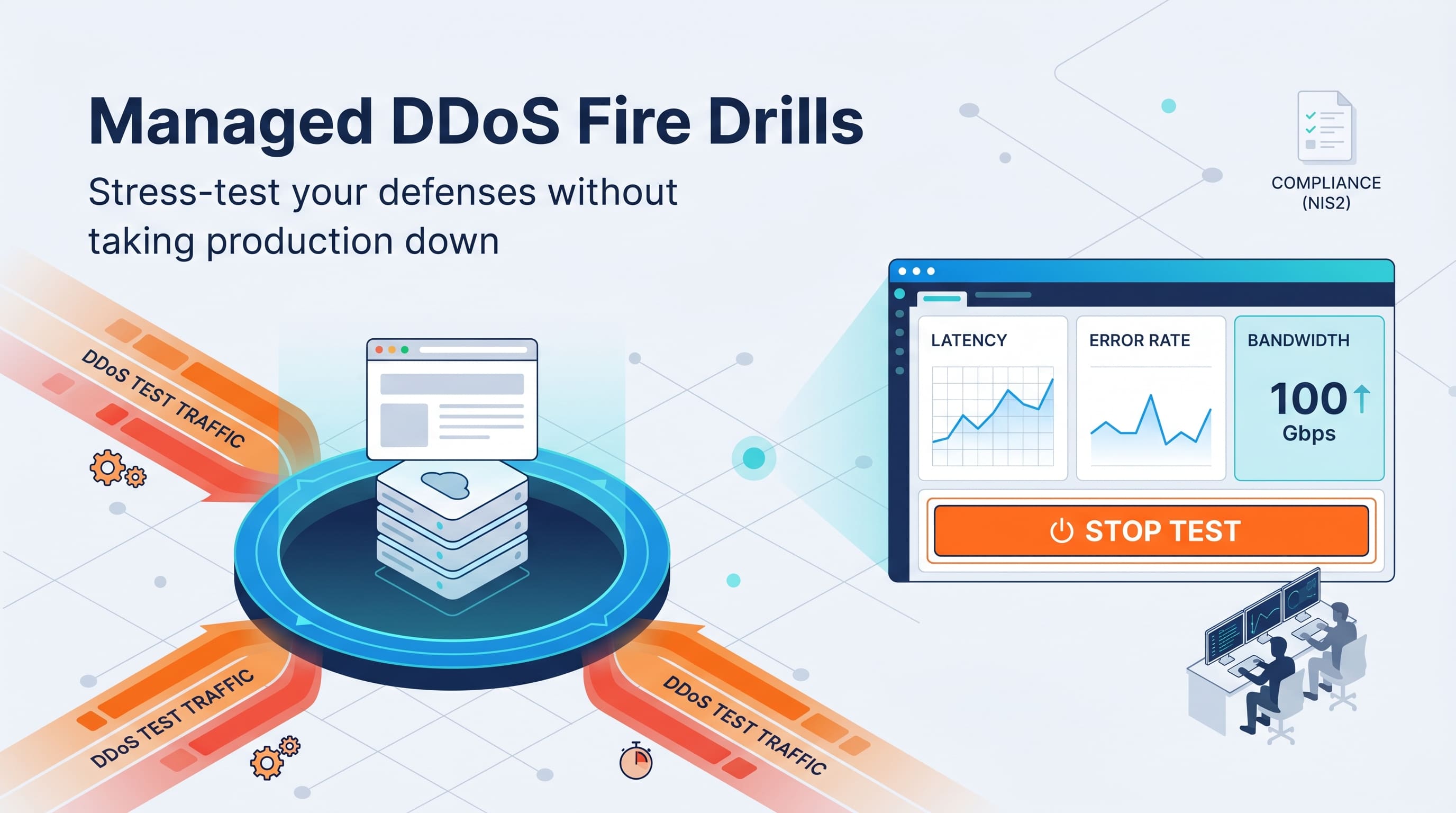
Managed DDoS-testing teams launch the traffic, watch live KPIs, and kill the stream before customers feel a bump. In this guide, we compare the top providers by engagement style, scale, and reporting depth so you can choose the drill that fits your risk and budget.
Table of Contents
How we picked the contenders
First, every vendor had to clear two non-negotiables:
- run legal, enterprise-grade DDoS simulations (no gray-market “booter” traffic), and
- show real-time safeguards that stop a drill before it degrades production.
With that safety baseline set, we scored each candidate against seven weighted factors security leaders say shape the buying decision:
- Attack realism (25 percent). Do their playbooks mirror today’s multivector campaigns, from terabit UDP floods to HTTP/2 rapid-reset volleys?
- Safety controls (25 percent). Is there a live kill switch, gradual ramp-up, and health-metric telemetry?
- Scalability (15 percent). Peak firepower: 20 Gbps or multi-terabit?
- Reporting depth (10 percent). Packet captures and board-ready takeaways, or a simple pass/fail?
- Expert guidance (10 percent). Will a seasoned engineer be on the bridge, or are you self-navigating?
- Cost transparency (10 percent). Published pricing beats endless “contact sales” loops.
- Compliance readiness (5 percent). Cloud-provider approval letters and auditor-friendly artifacts.
Safety and realism carry double weight because a glossy PDF is useless if the test never strains your defenses—or, worse, takes the site down.
Finally, we grouped the winners by engagement style: white-glove consultancy, self-service portal, or DIY lab gear, so you can jump straight to the model that fits your culture.
Fully managed fire drills: experts in the driver’s seat
With a managed engagement, a dedicated DDoS team plans the scenario, launches traffic from its controlled “friendly botnet,” and watches your KPIs in real time, ready to kill the stream the moment latency or error budgets spike. You walk away with raw packet captures and a live debrief that turns the test into practical training without burning hours on setup uncertainty.
Red Button: Azure-approved depth and detail

Microsoft lists Red Button as an authorized DDoS attack-simulation partner for Azure, so every drill follows the cloud provider’s own rules and telemetry hooks. Their latest breakdown of ddos testing options—managed engagements, self-service portals, and automated SaaS probes—helps clients see exactly where this white-glove service lands on the spectrum before any packets fly. Before traffic flies, Red Button engineers run architecture reviews, mitigation walk-throughs, and stakeholder sign-offs; so the test plan is signed off before anything launches.
During the exercise, a senior consultant stays on a live bridge with your team, narrating each vector while dashboards stream KPIs. If latency or error rates cross the thresholds you agreed on, the operator stops the traffic within seconds.
Their cloud attack engine tops out near 300 Gbps, enough to stress most enterprise or SaaS stacks. Afterward you receive:
- a minute-by-minute timeline of every attack phase
- full packet captures for root-cause analysis
- a DDoS Resiliency Score (Red Button’s open-standard metric) that benchmarks your protection level against peers in your industry
Engagements start in the low five figures, and clients leave with prioritized fixes and an audit-ready paper trail, far cheaper than an unplanned outage.
NimbusDDOS: Live-fire drills that double as incident-response practice
NimbusDDOS treats every engagement as a rehearsal for the real thing. Before launch, the team runs a half-day workshop where network and security leads chart critical services, set “safe-fail” thresholds, and test comms channels. When test day arrives, everyone already knows which metric triggers a pause.
A dedicated Nimbus engineer joins your bridge and adjusts vectors on the fly. If a 50 Gbps SYN flood barely dents your firewall, they pivot to a slow-loris HTTP attack or a DNS amplification burst, pressure-testing both tech and people. Traffic ramps in measured steps, and the operator hits a global kill switch the instant latency or error budgets tip.
After the drill, you receive a minute-by-minute timeline, packet captures, and prioritized fixes. More important, your team walks away with lived muscle memory; the next 2 a.m. alert feels familiar instead of chaotic.
Engagements are project priced, often mid-five figures for a full-scale drill, and suit organizations that want to test infrastructure and sharpen human reflexes in the same controlled session.
Self-service and hybrid platforms: power on your schedule
Sometimes you don’t need a consulting entourage; you just need to light up a test at 1 a.m., watch the graphs, and go back to shipping code. Self-service and hybrid platforms let you pick vectors, set peak bandwidth, and press Launch while an on-call engineer shadows the run in case KPIs wobble. The outcome is consultant-grade safety with DevOps-grade speed.
RedWolf Security: terabit-scale testing you drive
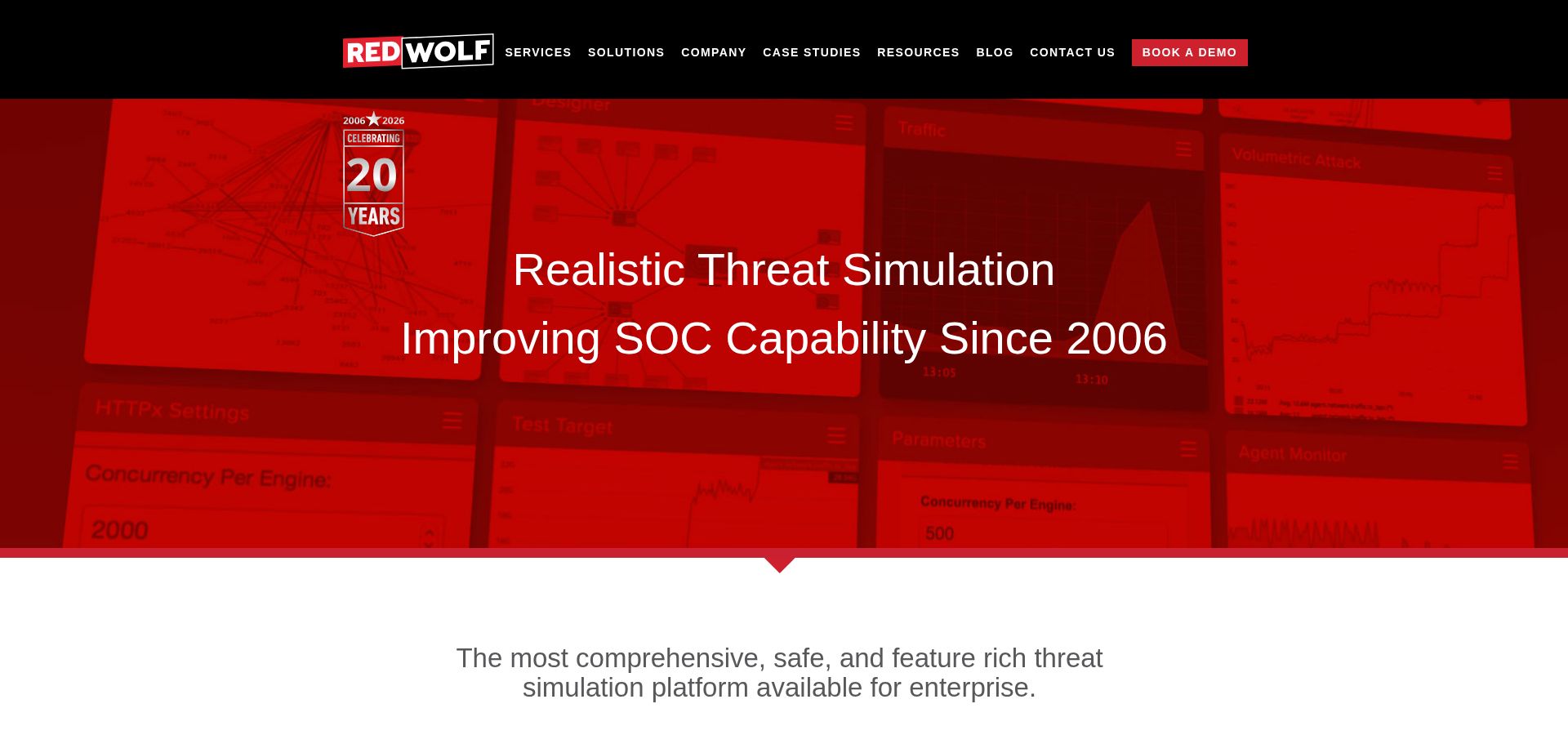
RedWolf focuses on raw capacity, yet you stay in control. Its cloud portal lets you choose from more than 300 attack vectors, pick launch regions, and set peak bandwidth. Want to see whether your anycast CDN can take a 1 Tbps UDP flood? Dial it in and hit Launch; the platform can scale to multi-terabit traffic across dozens of nodes without a support ticket.
Safety is built in. Traffic ramps gradually while telemetry watches latency, error rates, and mitigation logs. Cross a predefined threshold and an automatic kill switch stops the test in about 10 seconds. A big red Stop button is always on your dashboard for manual aborts.
Customers often start in “concierge” mode, where RedWolf engineers sit on the bridge and refine scenarios, then graduate to pure self-service, scheduling monthly drills straight from CI/CD pipelines. Same-day reports overlay attack curves with mitigation events and leak points, so dev and network teams can patch issues before the next sprint closes.
Pricing is usage based. One-off tests are available, while most enterprises choose a subscription that offers unlimited drills up to a bandwidth quota. You pay only for the traffic you generate, not idle capacity. If your culture prizes autonomy and your threat model includes headline-level floods, RedWolf puts the terabit cannon in your hands without the risk.
LoDDoS: self-service portal with a human safety net
LoDDoS gives you dashboard control without the solo pressure. Build a test, pick vectors, peak bandwidth, and start time, then hit Schedule. A LoDDoS engineer shadows the run in real time and can pause or tune traffic the moment latency or error rates drift.
Typical drills run 50–200 Gbps from cloud regions already cleared with major providers, so you avoid last-minute ISP paperwork. Results land in a shareable web portal, handy for looping in your ISP or scrubbing-center vendor without shipping giant PDFs.
The platform is sold on an annual subscription. Teams running quarterly or monthly drills get predictable costs, while one-off compliance checks may find the model expensive. For organizations that want repeatable, self-driven tests without the “what if we break prod?” anxiety, that silent co-pilot is often worth the premium.
Cyttack.ai: AI-planned drills for lean security teams
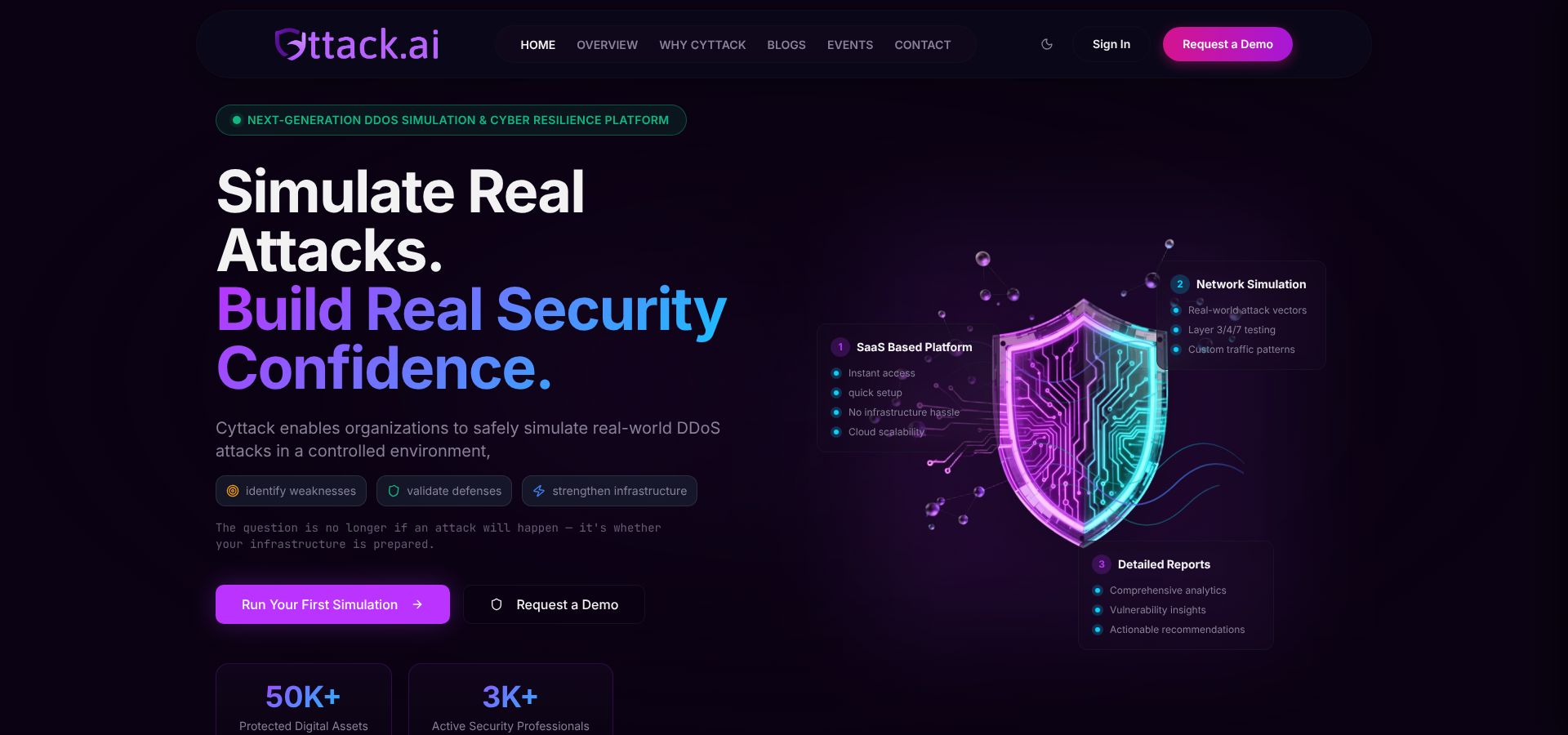
Cyttack.ai turns DDoS testing into a SaaS signup. Enter a credit card, answer a guided questionnaire about your stack, and an AI engine assembles a tailored attack plan in minutes. Choose an intensity preset (Breeze, Blast, or Storm) and schedule the run.
A web dashboard streams live bandwidth, latency, and error rates, with a one-click Stop test button for peace of mind. The cloud botnet peaks near 100 Gbps, enough for most SaaS or fintech workloads, and already includes modern HTTP/2 rapid-reset vectors alongside classic floods.
Within minutes of completion you receive a PDF that pairs an executive pass/fail summary with a technical appendix of packet traces, sample WAF rules, and rate-limit values. In-platform chat connects you to an engineer when deeper questions arise, but the default is self-service speed.
Pricing is posted up front. Packages start in the low-four-figure range per month and scale by Gbps and test frequency. For teams with tight headcount but strict audit demands, Cyttack condenses a month of consulting into a same-day checklist.
Keysight BreakingPoint & CyPerf: build-your-own test lab
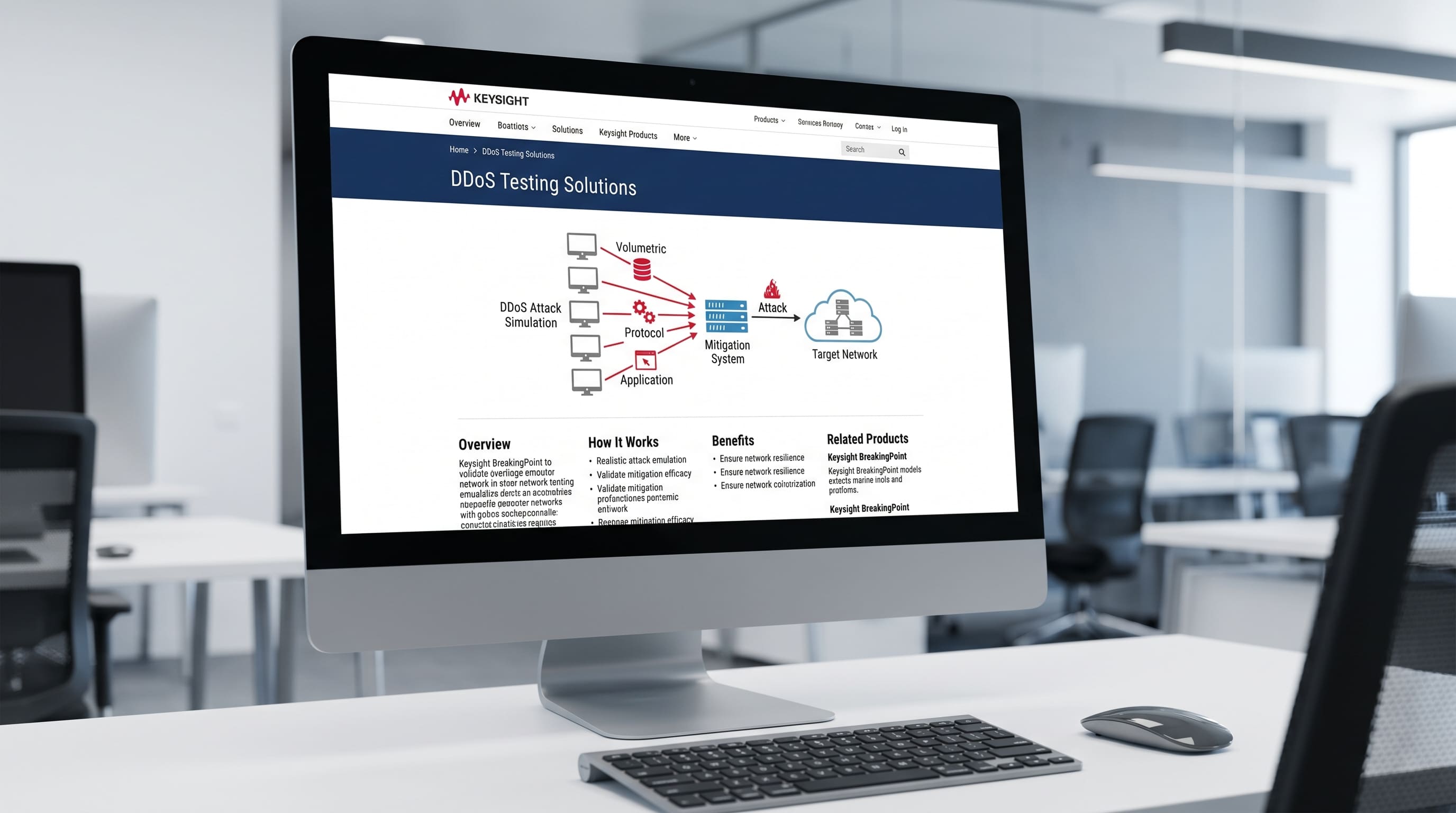
For some organizations, trust comes only from generating every packet in-house. BreakingPoint hardware and CyPerf cloud agents give large enterprises and telcos that do-it-yourself option: rack the chassis (or spin up virtual agents), script any mix of legitimate and malicious traffic, and launch it across isolated links or sand-boxed testbeds.
A single chassis delivers about 150 Gbps of stateful traffic; cluster a few and you reach multi-terabit scale, which is why firewall vendors and mobile carriers use BreakingPoint to certify new gear. The trade-off is responsibility: there’s no managed kill switch. Misroute a flood toward production and the outage is on you, which is why most users keep the system in a dedicated lab and staff it with engineers who live and breathe packets.
The upside is freedom and repeatability. You can replay last night’s attack at 2× scale, or spin CyPerf agents in three clouds to validate a firmware patch before rolling it global. Upfront costs (hardware, licenses, support) run well into six figures, plus staff time for test design and analysis. If DDoS validation is a weekly engineering task rather than an annual checkbox, owning the toolchain can be cheaper and faster than booking outside drills.
DDoS services at a glance
| Provider | Engagement model | Peak traffic | Key vectors | Safety control | Reporting depth | Pricing model | Best fit |
| Red Button | Fully managed consultants | ~300 Gbps | L3–L7, including HTTP/2 | Live engineer with instant kill switch | Executive summary plus packet captures and resiliency score | Project based | Azure-hosted enterprises that need audit-ready depth |
| NimbusDDOS | Managed drill with incident-response coaching | High-hundreds Gbps (per scenario) | Adaptive multivector | Embedded engineer, soft ramp | Minute-by-minute timeline and fixes | Project based | Teams seeking a full incident-response rehearsal |
| RedWolf Security | Self-service portal (concierge optional) | Multi-terabit | 300+ L3/L4/L7 vectors | Auto kill within 10 s | Same-day portal and PDF | Subscription or per test | Operators that need terabit-scale bursts on demand |
| LoDDoS | Self-service with human safety net | 50–200 Gbps | Common floods plus HTTP | Operator monitors live | Shareable web reports | Subscription | Orgs wanting frequent drills plus backup eyes |
| Cyttack.ai | Automated SaaS | Up to 100 Gbps | Modern L3–L7, including HTTP/2 | One-click stop | Auto report with AI-generated fixes | Published SaaS tiers | Lean teams needing quick, low-cost proof |
| Keysight BreakingPoint / CyPerf | DIY hardware and cloud agents | 150 Gbps per chassis; stackable to Tbps | Script any traffic mix | User managed | Raw captures and stats | Capital expense plus support | Telcos or labs with in-house experts |
Conclusion: managed vs. DIY — picking the model that matches your culture
First decision: who’s at the console when packets start flying?
- Managed service. Think of it as hiring a race team. Consultants design the scenario, watch KPIs in real time, and hand you a remediation plan. Your staff learns without touching traffic generators. Typical cadence: one or two large drills per year at a five-figure project cost.
- DIY toolkit. You buy the hardware or cloud agents, write the scripts, and own every safety check. Great for weekly change cycles or lab certification, but you’ll budget skilled engineers plus six-figure CapEx.
- Hybrid/SaaS platform. A web portal lets you launch tests on demand while automated throttles, or a remote operator, stand by to stop traffic if KPIs wobble. Ideal for DevOps teams that fold security tests into CI/CD.
Before you choose, answer three questions:
- How often will we test? Annual show-me drills fit managed services. Monthly or continuous checks align with hybrid or DIY options.
- Do we have DDoS expertise on payroll? If not, outsource the first engagements and learn by watching.
- What’s our outage tolerance? Industries that can’t afford a single blip lean on tightly staged consultant drills.
Line up your answers with the options above and your shortlist writes itself.
INTERESTING POSTS
- Data Recovery Guide: Strategies, Tools, and Best Practices
- 5 Affordable Enterprise Internet Scalability Solutions in South Carolina Compared
- SEO Companies: Red Flags That You Are In The Wrong Company
- Bonuses At American Casino Red Dog: How To Choose The Best Promotions?
- Why Small Businesses Should Invest In Managed IT
- What Are Managed Services? [MUST READ]
About the Author:

Meet Angela Daniel, an esteemed cybersecurity expert and the Associate Editor at SecureBlitz. With a profound understanding of the digital security landscape, Angela is dedicated to sharing her wealth of knowledge with readers. Her insightful articles delve into the intricacies of cybersecurity, offering a beacon of understanding in the ever-evolving realm of online safety.
Angela's expertise is grounded in a passion for staying at the forefront of emerging threats and protective measures. Her commitment to empowering individuals and organizations with the tools and insights to safeguard their digital presence is unwavering.



