


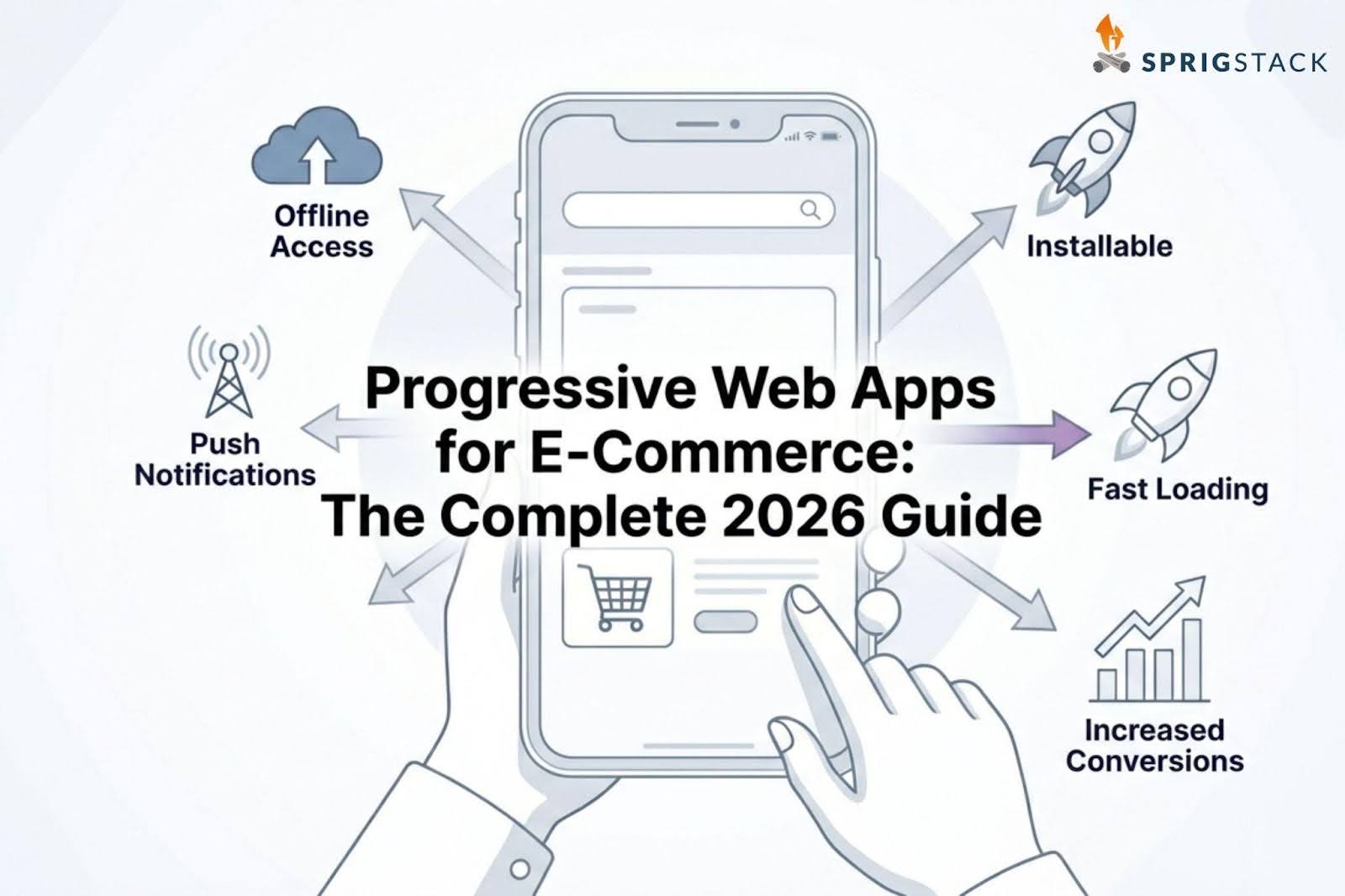

In this post, I will talk about progressive web apps for E-Commerce.
Running an e-commerce platform is definitely going to get more complicated in 2026. This is because the expectations of today’s users are all about speed, ease, and a smooth digital experience.
This is where Progressive Web Apps have revolutionized the whole concept of digital experiences. This has brought the best of web and mobile applications together, allowing businesses to offer fast and engaging experiences to their users through their browser.
This has the added advantage of being closer to native applications, as it offers the functionality and features, such as sending push messages and allowing users to install the application on their home screen.
The move towards Progressive Web Apps is not just about adopting the latest trends and technologies by online retailers. This is all about conversions, satisfaction, and retaining their users in the long run. A slow-loading website is not only a pain for the user, but it also affects their sales.
Businesses associated with a web development company have already started adopting Progressive Web Apps to be competitive in the market. Progressive Web Apps have never been more powerful than today. In the following sections of this blog, we will see what Progressive Web Apps have brought to the world of e-commerce.
Table of Contents
What is an E-Commerce Progressive Web App?

E-Commerce PWA is a type of web application that offers a native app-like experience to end users for an e-commerce business through a browser. It is a combination of modern web development and mobile application development. It offers a quick and responsive experience to end users on different devices and screen sizes without installing a mobile application or a website.
Many businesses are now considering a custom web application development company solution to develop a PWA for their e-commerce business. This is helping them meet their requirements and offer a smooth experience to end users.
How PWA Works in E-Commerce
There are three ways in which PWAs deliver a fast, reliable, and engaging experience for users. Through the use of the web app manifest, app shell architecture, and service workers, it delivers you the end results.
Web App Manifest
The Web App Manifest is a JSON document that specifies the look and launch of a PWA on the user’s device. The Web App Manifest includes the name, icons, and colors of the application, which helps in the delivery of the “Add to Home Screen” feature. The feature gives the user a native-like experience with fast, branded access.
Service Workers
Service workers are the scripts that run in the background that allow the PWA to function while the user is offline. They help in storing files in the cache and pushing notifications to the user. Thus, they are important parts of the performance and usability of PWA.
Strategic Implementation of PWAs
Progressive Web Apps for e-commerce businesses need to be implemented strategically. This is not simply a matter of adopting new technology but also needs to be implemented strategically for its performance and flexibility.
App Shell Architecture
The app shell can be referred to as the core of the PWA. This loads instantaneously with the aim of providing a fast user interface to the end user. This ensures that the user interface is seamless and navigable by the end user as the content is loaded in the background.
Service Worker Orchestration
The service workers must be well-orchestrated with the aim of delivering the best performance and functionalities to the end users of the e-commerce website. This can be referred to as the core of PWAs and must be done strategically.
Future-Proof APIs
The use of modern and future-proof APIs enables PWAs to integrate with various services like payment gateways and inventory systems. This helps the application stay future-proofed to accommodate the evolving needs of the business.
Seamless Transitioning
Progressive Web Apps also allow for seamless transitioning between pages without needing you to constantly refresh pages. This essentially provides an app-like interface to the end-users of the e-commerce website.
Streamlined Asset Delivery
Optimization of the delivery of various assets, like AVIF and WebP images and scripts, is essential. This helps PWAs achieve high performance and provide an improved user experience.
Many businesses seek the services of a reliable web development company to ensure the successful implementation of these strategies. This helps them achieve high performance and scalability in their PWA.
Key Benefits of Progressive Web Apps in 2026

In 2026, e-commerce businesses have witnessed tremendous changes with the advent of Progressive Web Apps. The use of PWAs has proven to be highly beneficial in delivering high-performance user-centric applications. The features of PWAs have made them the first choice among modern e-commerce businesses.
Higher Conversion Rates
The use of PWAs helps businesses achieve high conversion rates. The application of PWAs eliminates the friction when it comes to the user experience. The faster load times and improved navigation enable PWAs to achieve high conversion rates.
Better User Experience
The use of PWAs has enabled businesses to achieve high user engagement. The characteristics of PWA, such as smooth transitions and access to the application even when offline, have ensured user engagement.
Better Visibility in Search Engines
PWAs are also discoverable via search engines like traditional websites. Thus, they are helpful for businesses to achieve better search engine results page rankings due to their fast-loading speed and mobile optimization.
Cost-Effective Development
One of the biggest advantages of developing a PWA is that it does not require developing different apps for different platforms. Thus, businesses can save a lot of money on developing a PWA compared to developing a native application.
Faster Loading Times
PWAs are also helpful in delivering a fast user experience to customers. They use caching and faster resource loading techniques that make a webpage open in near-instant time.
Less Data Usage
PWAs use much less data compared to the implementation of traditional applications or websites. This makes PWAs highly useful for users who have a low internet connection or live in a region with a low internet connection.
Conclusion
PWAs have brought tremendous changes in the field of e-commerce in 2026. With the emergence of PWAs, users can experience fast and highly engaging applications. With such a high number of benefits, it is truly recommended for businesses to implement the PWA concept with the assistance of an advanced website development company.
INTERESTING POSTS
- Why Digital Marketing Is Crucial for Startup Success
- How Did My Personal Information End Up on the Dark Web?
- Top 5 Cybersecurity Threats That eCommerce Websites Should Watch Out For
- E-Commerce Fraud: Navigating the Challenges in Online Retail
- Managing Deliveries on the Go: Top Apps for Delivery Professionals
- Payment Challenges: How E-Commerce Businesses Can Deal With Payment Errors
About the Author:

Marie Beaujolie is a computer network engineer and content writer from Paris. She is passionate about technology and exploring new ways to make people’s lives easier. Marie has been working in the IT industry for many years and has a wealth of knowledge about computer security and best practices. She is a regular contributor for SecureBlitz.com, where she writes about the latest trends and news in the cyber security industry. Marie is committed to helping people stay safe online and encouraging them to take the necessary steps to protect their data.


