




In this post, I will show you how to test proxy speed and reliability.
Testing proxy speed and reliability is essential before using proxy servers for web scraping, anonymous browsing, data collection, SEO monitoring, market research, or business automation. Even a large residential proxy network can deliver inconsistent results if it suffers from slow response times, frequent disconnections, or poor IP quality.
Whether you’re an individual, developer, marketer, researcher, or business, understanding how to evaluate a proxy provider helps you avoid downtime, improve productivity, and achieve more consistent results.
In this guide, you’ll learn what proxy performance means, which metrics matter most, how to test residential proxies effectively, and what to look for when choosing a reliable proxy provider.
Table of Contents
Why Proxy Speed and Reliability Matter
A proxy acts as an intermediary between your device and the destination website. Every request passes through the proxy server before reaching its destination.
If the proxy is slow or unreliable, you may experience:
- Delayed page loading
- Failed connections
- Interrupted automation tasks
- Lower success rates during web scraping
- Inconsistent IP rotation
- Reduced productivity
For businesses that depend on large-scale data collection or developers running automated workflows, reliable proxy performance is just as important as a large IP pool.
Key Metrics to Measure
Before testing, it’s important to understand the performance indicators.
Response Time (Latency)
Latency measures how long it takes a proxy server to respond after receiving a request.
Lower latency generally means:
- Faster browsing
- Quicker API responses
- Improved user experience
- Faster web scraping sessions
Download Speed
Download speed determines how quickly data is transferred through the proxy.
Higher speeds become especially valuable when:
- Downloading large datasets
- Collecting product information
- Accessing media-rich websites
Connection Stability
A reliable proxy should maintain stable connections over extended periods.
Watch for:
- Unexpected disconnects
- Timeout errors
- Connection resets
Frequent interruptions may indicate overloaded infrastructure or poor network quality.
Success Rate
Success rate refers to how many requests successfully reach the target website.
Higher success rates are especially important for:
- Web scraping
- Data collection
- Search engine monitoring
- Price intelligence
- Automation
IP Quality
Residential proxies are often preferred because they use IP addresses assigned by Internet Service Providers (ISPs), making traffic appear more like regular user activity. Good IP quality helps reduce unnecessary blocks when used responsibly for legitimate purposes.
How to Test Proxy Speed
Testing proxy performance does not require complex tools.
1. Measure Latency
Send several requests through the proxy and record response times.
Instead of relying on one result, perform multiple tests throughout the day.
Average performance is more useful than a single measurement.
2. Test Download Speed
Visit websites containing images, scripts, and multimedia.
Observe:
- Page loading time
- Resource loading consistency
- Overall browsing responsiveness
3. Run Multiple Requests
For web scraping or automation projects, send multiple requests through the same proxy.
Monitor:
- Failed requests
- Timeouts
- Unexpected delays
Consistency matters more than occasional peak performance.
4. Test Different Locations
Many residential proxy providers offer geographic targeting.
If your work depends on location-specific content, verify performance from several countries or cities.
How to Test Proxy Reliability
Speed alone does not guarantee a good proxy.
Reliability should be evaluated over longer sessions.
Long-Duration Testing
Run your proxy continuously for several hours.
Check whether it remains connected without frequent interruptions.
IP Rotation
If using rotating residential proxies, verify that IP rotation occurs smoothly according to your selected settings.
Unexpected rotation behavior can interrupt automation or authenticated sessions.
Website Compatibility
Different websites apply different anti-bot protections.
Test your proxies on the websites you actually intend to access rather than relying solely on benchmark tools.
Logging Errors
Keep a simple log of:
- Failed requests
- Timeout frequency
- Response times
- Successful requests
Patterns become much easier to identify after several hundred requests.
Common Factors That Affect Proxy Performance
Several variables influence proxy speed and reliability.
| Factor | Impact |
| Server location | Closer servers generally reduce latency |
| Residential proxy network size | Larger networks often provide more routing options |
| Network congestion | Heavy traffic may increase response times |
| IP rotation settings | Frequent rotation may introduce slight delays |
| Target website restrictions | Some websites limit automated requests |
| Proxy provider infrastructure | Higher-quality infrastructure generally offers more consistent performance |
Editor’s Choice: Best Residential Proxy Providers
🥇 1. Oxylabs — Best for Enterprise & Large-Scale Data Collection
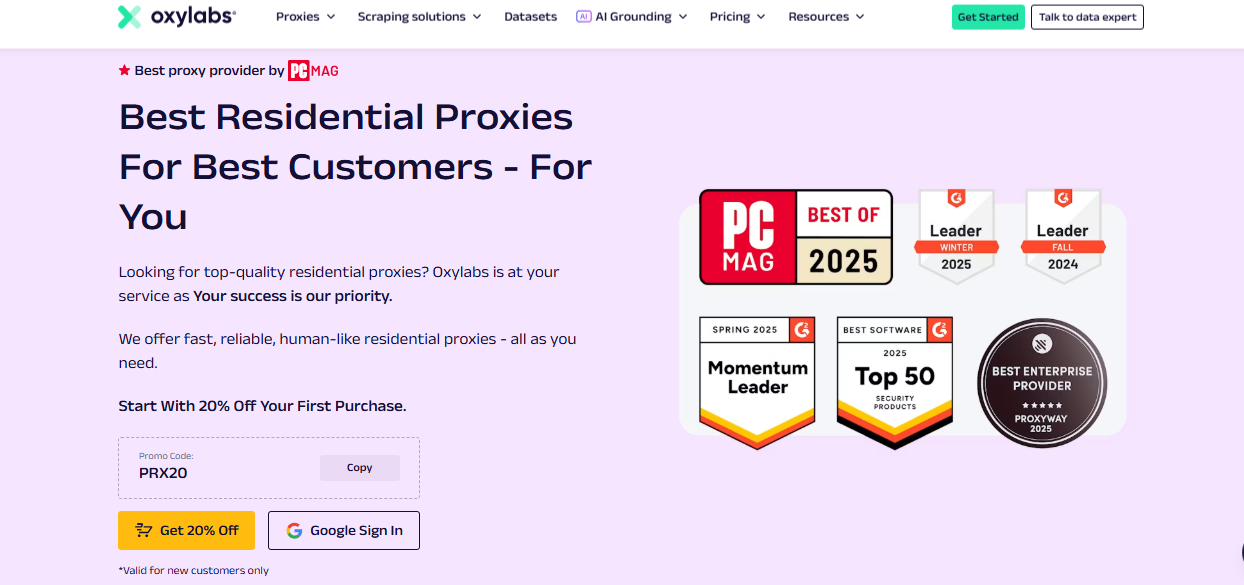
Oxylabs earns the Editor’s Choice position because it combines a massive residential proxy network with enterprise-grade infrastructure designed for demanding workloads.
Its platform supports advanced targeting options, dependable IP rotation, and consistently strong performance for large-scale web scraping, market intelligence, and data collection projects. Businesses handling high request volumes often choose Oxylabs because of its mature infrastructure, extensive documentation, and scalable solutions.
For organizations that prioritize reliability, geographic flexibility, and long-term scalability, Oxylabs is a strong overall choice.

🥈 2. Decodo — Best Overall Residential Proxy Provider
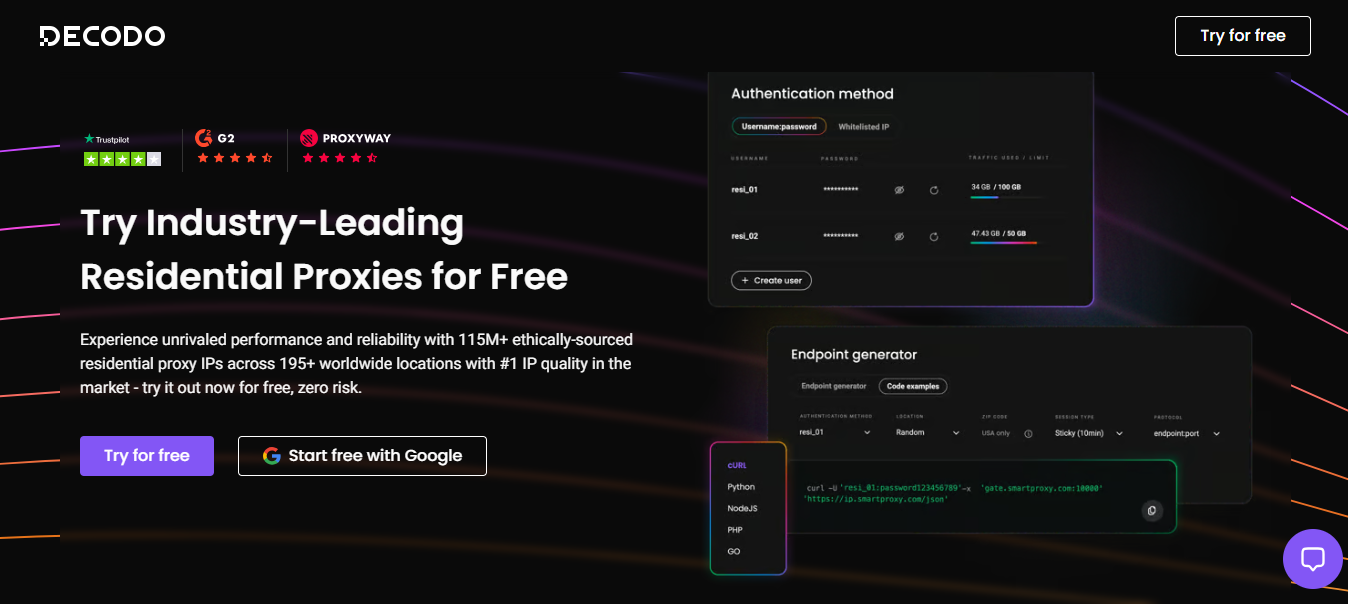
Decodo offers an excellent balance between price and performance, making it suitable for both beginners and experienced users.
Its intuitive dashboard simplifies setup, while support for residential proxies, rotating proxies, API integration, and clear documentation makes deployment straightforward. Individuals, agencies, developers, and businesses can quickly integrate Decodo into web scraping, automation, and anonymous browsing workflows.
Its combination of usability and dependable performance makes it an attractive all-around option.

🥉 3. Webshare — Best Budget-Friendly Residential Proxy Provider
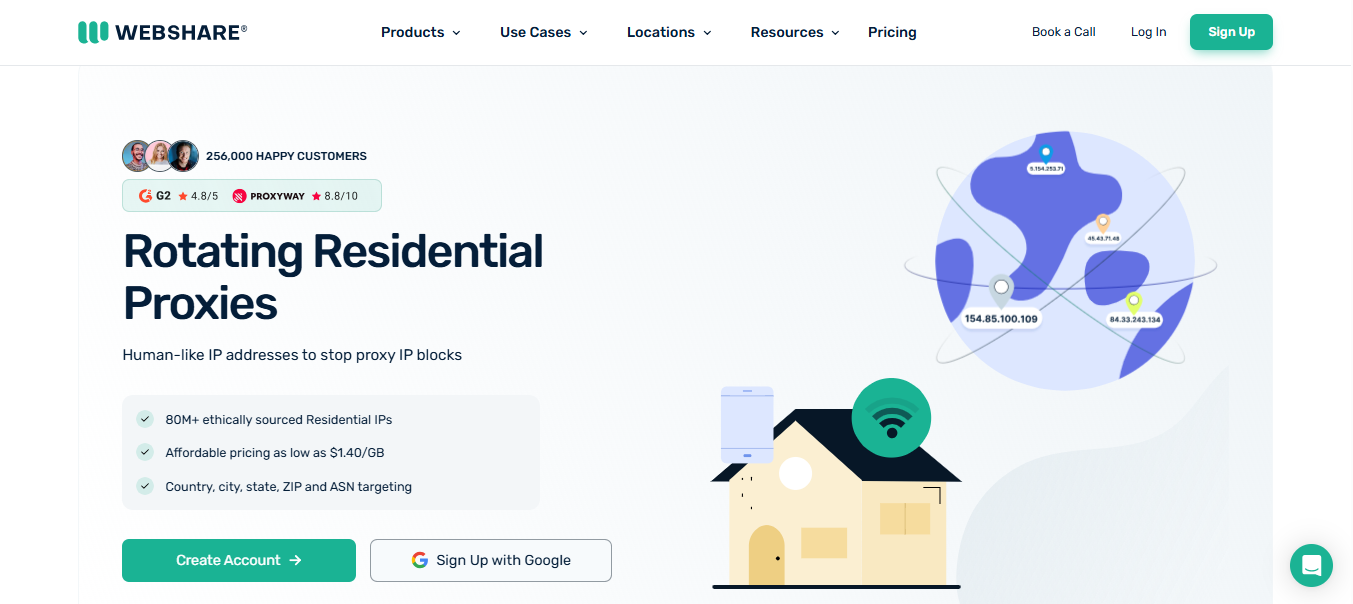
Webshare is a practical option for users seeking affordable residential proxies without sacrificing usability.
Its straightforward setup process, competitive pricing, and available free plan (subject to current offerings) make it appealing to developers, freelancers, students, and small businesses. While it may not target enterprise-scale workloads, it provides reliable performance for many everyday proxy use cases.
For budget-conscious users, Webshare represents strong overall value.

Provider Comparison
| Provider | Best For | Key Strength |
| Oxylabs | Overall | Balance of performance & value |
| Decodo | Enterprise | Large-scale proxy infrastructure |
| Webshare | Budget | Affordable and easy to use |
Other Residential Proxy Providers Worth Considering
Several other reputable providers also serve different needs:
- Mars Proxies — Offers residential and ISP proxies with an emphasis on simplicity and affordability.
- IPRoyal — Popular among individuals and small businesses looking for flexible pricing.
- Bright Data — Known for its extensive proxy network and advanced enterprise features.
- SOAX — Provides flexible location targeting and rotating residential proxies.
- NetNut — Focuses on stable connectivity through ISP-backed infrastructure.
- ProxyEmpire — Offers residential, mobile, and rotating proxy solutions for varied workloads.
- Rayobyte — Provides residential, ISP, and datacenter proxies with business-oriented plans.
- Infatica — Supports global proxy access for data collection and automation projects.
- Live Proxies — Offers proxy services suitable for browsing, automation, and research use cases.
Each provider has different strengths, so the best choice depends on your technical requirements, budget, and expected workload.
How to Choose the Right Residential Proxy Provider
When comparing providers, consider these factors:
- Pricing that fits your budget and expected usage
- Consistent speed and performance
- Reliable uptime and infrastructure
- Large residential proxy network
- Geographic coverage and location targeting
- Flexible IP rotation options
- User-friendly dashboard
- Responsive customer support
- API availability for automation
- Strong security and privacy practices
- Ability to scale as your needs grow
Avoid selecting a provider based solely on the size of its IP pool. Real-world reliability, documentation, and customer support often have a greater impact on long-term satisfaction.
Frequently Asked Questions
Are residential proxies faster than datacenter proxies?
Not necessarily. Datacenter proxies often deliver higher raw speeds, while residential proxies typically provide better anonymity and lower detection rates on websites with anti-bot protections.
How often should I test my proxies?
Regular testing is recommended, especially before starting large automation or web scraping projects and after changing providers or proxy configurations.
Can free proxy servers be reliable?
Free proxy servers may work for occasional testing, but they often have limited performance, inconsistent availability, and fewer reliability guarantees than paid services.
What is a good proxy response time?
The ideal response time depends on your application. Lower latency generally improves browsing, automation, and data collection performance.
Why do proxy speeds vary?
Performance can change based on server location, network congestion, target websites, IP rotation settings, and the proxy provider’s infrastructure.
Does IP rotation affect speed?
Rotating IPs may introduce slight delays during switching, but proper configuration helps maintain reliable long-term performance while reducing the likelihood of repeated requests coming from the same IP.
Conclusion
Testing proxy speed and reliability helps ensure that your proxy servers deliver consistent performance for anonymous browsing, web scraping, and data collection. Instead of focusing only on advertised features, evaluate latency, stability, connection success rates, and IP quality under real-world conditions.
For users seeking premium scalability and enterprise-grade infrastructure, Oxylabs stands out as the best overall choice. Decodo offers an excellent balance of usability, features, and performance for businesses and individuals alike, while Webshare provides an affordable entry point for developers, freelancers, students, and smaller teams.
As your proxy requirements evolve, continue monitoring performance and revisit your testing process periodically. For additional guidance, consider exploring other SecureBlitz resources covering VPNs, cybersecurity, password managers, antivirus software, privacy tools, secure browsers, web scraping techniques, and AI tools to build a more secure and efficient online workflow.
INTERESTING POSTS
About the Author:

Daniel Segun is the Founder and CEO of SecureBlitz Cybersecurity Media, with a background in Computer Science and Digital Marketing. When not writing, he's probably busy designing graphics or developing websites.



