




In this post, I will show you how businesses use proxies for competitive intelligence.
Competitive intelligence has become a critical part of modern business strategy. Whether a company wants to monitor competitors’ pricing, track market trends, analyze customer sentiment, or identify new opportunities, access to accurate and timely data is essential.
However, collecting publicly available online data at scale isn’t always straightforward. Many websites use rate limits, IP-based restrictions, and anti-bot systems that can block repeated requests from the same address. This is where proxy servers play an important role.
By using residential proxies, IP rotation, and responsible web scraping practices, businesses can gather publicly accessible information more efficiently while reducing the risk of disruptions. In this guide, we’ll explain how businesses use proxies for competitive intelligence, the different use cases, and how to choose a reliable proxy provider.
Table of Contents
What Is Competitive Intelligence?
Competitive intelligence is the process of collecting and analyzing publicly available information about competitors, customers, and market conditions to support better business decisions.
Businesses commonly monitor:
- Product pricing
- Inventory availability
- Customer reviews
- Advertising campaigns
- Search engine rankings
- Industry trends
- Marketplace listings
- Regional product availability
The goal isn’t to obtain confidential information but to analyze publicly accessible data in an organized and efficient way.
Why Proxy Servers Matter for Competitive Intelligence
A proxy server acts as an intermediary between your device and the websites you visit. Instead of connecting directly, requests are routed through another IP address.
For businesses performing large-scale data collection, proxies provide several advantages:
- Reduce the likelihood of IP-based rate limiting
- Enable geographic testing from different regions
- Support anonymous browsing during market research
- Improve reliability for automated web scraping workflows
- Help distribute requests through IP rotation
Residential proxies are particularly valuable because they use IP addresses assigned by internet service providers (ISPs), making requests appear similar to regular user traffic.
Common Ways Businesses Use Residential Proxies
Market Price Monitoring
Retailers frequently monitor competitors’ pricing to stay competitive.
Using a residential proxy network allows automated systems to collect publicly available pricing information across multiple locations without sending every request from a single IP address.
This helps businesses:
- Compare prices across competitors
- Monitor promotions
- Detect pricing changes quickly
- Adjust pricing strategies
Competitor Product Research
Companies often analyze competitor product catalogs to understand:
- New product launches
- Feature updates
- Product descriptions
- Category expansion
- Stock availability
Web scraping combined with residential proxies makes large-scale monitoring significantly more efficient than manual research.
Localized Search Results
Search engines frequently personalize results based on location.
Businesses use proxy servers to:
- Check localized rankings
- Analyze regional search results
- Test geo-targeted campaigns
- Verify local SEO performance
Ad Verification
Digital advertisers often need to verify how ads appear in different countries or cities.
Using residential proxies enables teams to:
- View localized advertisements
- Verify campaign placement
- Detect incorrect targeting
- Monitor competitor advertising
Brand Protection
Businesses also monitor online marketplaces for:
- Counterfeit products
- Unauthorized sellers
- Trademark misuse
- Brand impersonation
Residential proxies make continuous monitoring more reliable when collecting publicly available listings.
Residential Proxies vs Datacenter Proxies
| Feature | Residential Proxies | Datacenter Proxies |
| IP Source | Internet Service Providers | Cloud/Data Centers |
| Detection Risk | Lower | Higher |
| Best For | Competitive intelligence, web scraping, market research | High-speed automation |
| Geographic Coverage | Extensive | Varies by provider |
| Anonymous Browsing | Excellent | Good |
For competitive intelligence projects that rely on public websites with anti-bot protections, residential proxies are generally the preferred option.
Editor’s Choice: Best Residential Proxy Providers
[Insert Oxylabs Homepage Screenshot Here]
🥇 1. Oxylabs — Best for Enterprise & Large-Scale Data Collection
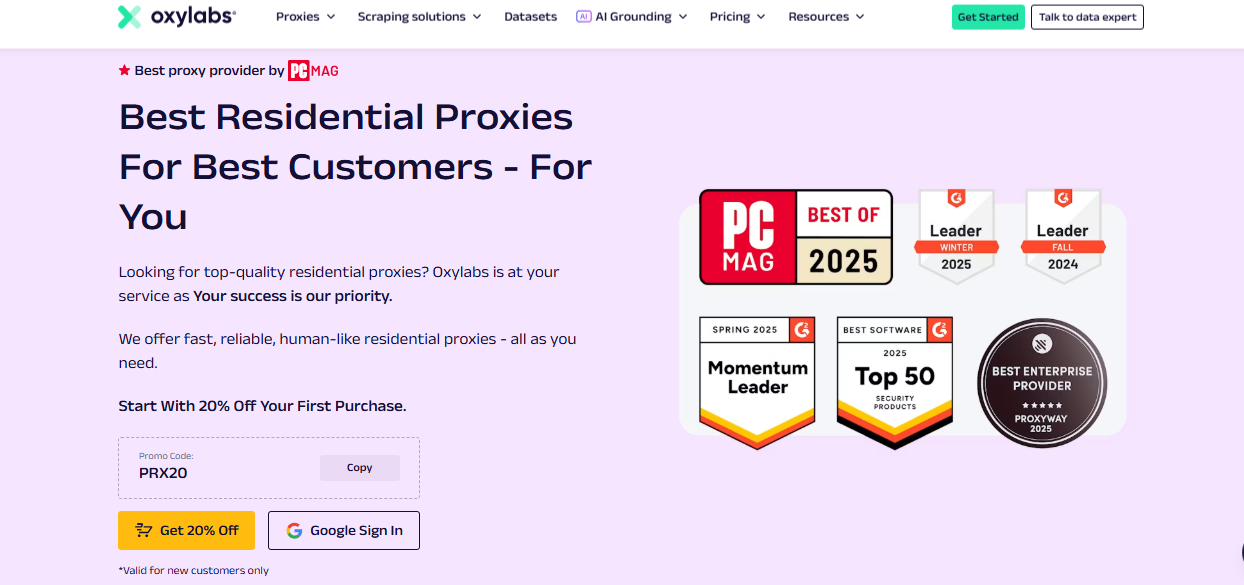
Oxylabs earns our Editor’s Choice recommendation because it combines a massive residential proxy network with enterprise-grade infrastructure designed for professional data collection.
Key strengths include:
- Massive residential proxy network
- Advanced geographic targeting
- Premium reliability
- High success rates
- Excellent support for web scraping
- Strong performance for market intelligence
- Enterprise-focused infrastructure
Businesses conducting large-scale competitive intelligence often choose Oxylabs because of its consistent performance, advanced targeting options, and scalability for demanding projects.

🥈 2. Decodo — Best Overall Residential Proxy Provider
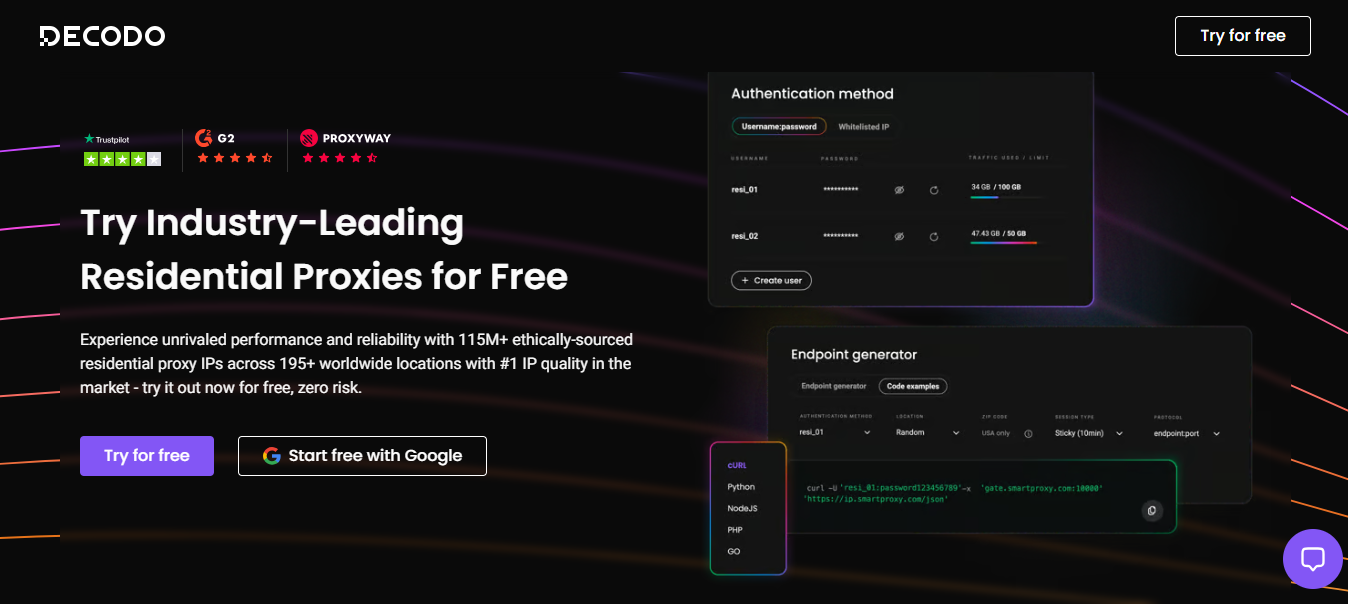
Decodo offers an excellent balance of usability, performance, and affordability, making it suitable for both individuals and businesses.
Highlights include:
- Beginner-friendly dashboard
- Reliable residential proxies
- Rotating proxies
- Fast setup
- API support
- Good documentation
- Stable performance
- Suitable for growing businesses
For teams that want a smooth onboarding experience without sacrificing functionality, Decodo is a well-rounded choice.

🥉 3. Webshare — Best Budget-Friendly Residential Proxy Provider
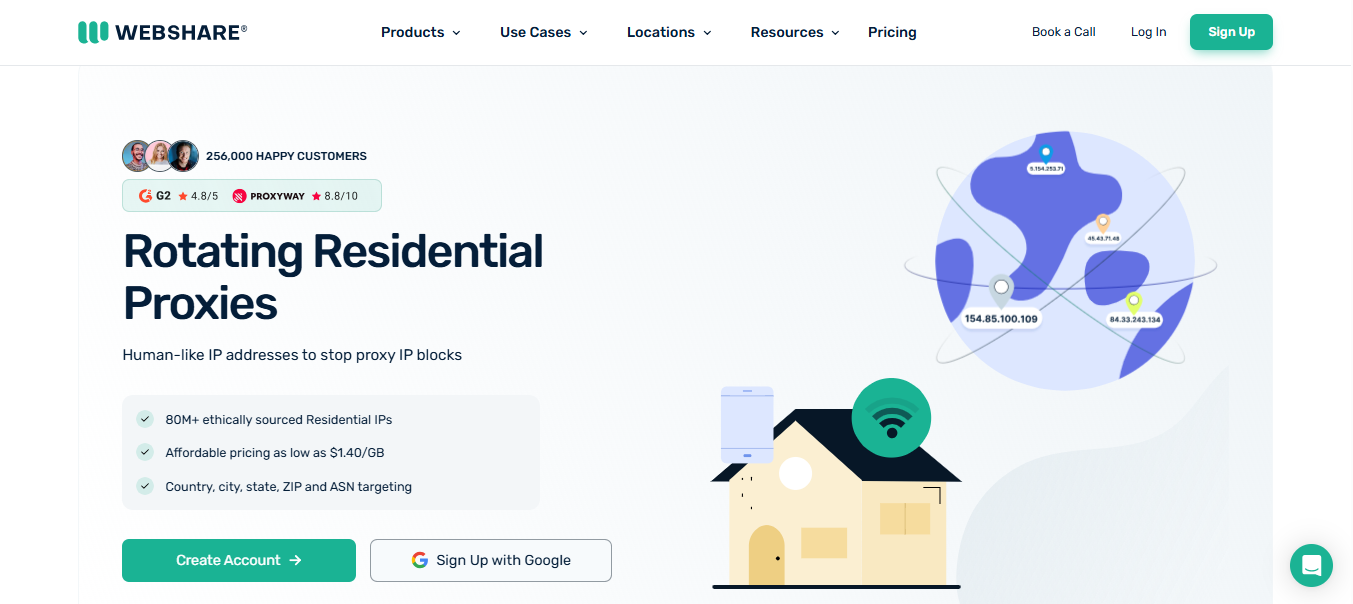
Webshare is an attractive option for developers, freelancers, startups, and small businesses looking for affordable residential proxies.
Advantages include:
- Affordable pricing
- Free plan availability
- Easy setup
- Reliable performance
- Residential proxy support
- Developer-friendly interface
Its combination of value and simplicity makes Webshare an excellent entry point for organizations with modest proxy requirements.

Comparison Table
| Provider | Best For | Key Strength |
| Oxylabs | Overall | Balance of performance & value |
| Decodo | Enterprise | Large-scale proxy infrastructure |
| Webshare | Budget | Affordable and easy to use |
Other Residential Proxy Providers Worth Considering
Several other reputable providers are also worth evaluating depending on your requirements:
- Mars Proxies — A growing provider offering residential and ISP proxy options suitable for many business use cases.
- IPRoyal — Known for flexible pricing and residential proxy services for developers and small businesses.
- Bright Data — Offers an extensive proxy infrastructure with advanced enterprise capabilities.
- SOAX — Provides residential proxies with flexible filtering and geographic targeting.
- NetNut — Focuses on stable residential connectivity and enterprise-grade performance.
- ProxyEmpire — Supports residential and mobile proxies with global coverage.
- Rayobyte — Offers proxy solutions for data collection and automation projects.
- Infatica — Provides residential proxy services with worldwide IP availability.
- Live Proxies — Suitable for businesses requiring rotating residential proxy access.
Each provider has different strengths, pricing models, and feature sets, making it worthwhile to compare them based on your specific workload.
Buying Guide: How to Choose the Right Residential Proxy Provider
Before selecting a proxy provider, evaluate the following factors:
Performance
Look for stable connections and consistent response times, especially if you plan to perform large-scale data collection.
IP Pool Size
A larger residential proxy network generally provides greater diversity and reduces repeated IP usage.
Geographic Coverage
Choose a provider that supports the countries and cities relevant to your research.
IP Rotation
Flexible IP rotation options help distribute requests and improve long-running scraping sessions.
Dashboard and Ease of Use
A well-designed dashboard simplifies proxy management, usage monitoring, and configuration.
API Availability
Developers should prioritize providers with well-documented APIs for automation.
Customer Support
Responsive technical support can save valuable time when troubleshooting deployments.
Pricing
Compare pricing alongside available features rather than selecting solely based on cost.
Scalability
Businesses expecting growth should choose providers capable of supporting increasing workloads.
Frequently Asked Questions
Are residential proxies legal?
Residential proxies are generally legal. However, users should comply with applicable laws, website terms, and ethical data collection practices.
Why are residential proxies preferred for competitive intelligence?
Because residential IP addresses resemble normal user traffic, they are often better suited for accessing publicly available information across multiple websites.
What is IP rotation?
IP rotation automatically changes the outgoing IP address during browsing or automated requests, helping distribute traffic.
Can proxies improve anonymous browsing?
Yes. Proxy servers help mask your original IP address, adding an additional layer of privacy during browsing.
Do all businesses need residential proxies?
Not necessarily. Smaller projects may work with datacenter proxies, while larger competitive intelligence operations often benefit from residential proxy networks.
Can proxies be used for web scraping?
Yes. Many organizations use proxies alongside web scraping tools to collect publicly available information more reliably while respecting website policies and applicable laws.
Conclusion
Competitive intelligence enables businesses to make better decisions based on publicly available market information. Whether monitoring competitor pricing, researching products, verifying advertisements, or performing large-scale data collection, proxy servers help improve reliability and flexibility.
For organizations seeking enterprise-scale infrastructure, Oxylabs stands out as the strongest overall choice thanks to its extensive residential proxy network and advanced capabilities. Decodo offers an excellent balance of performance and usability for businesses of various sizes, while Webshare delivers outstanding value for developers, freelancers, startups, and budget-conscious teams.
As your proxy needs grow, compare providers based on performance, geographic coverage, reliability, IP rotation, and ease of use rather than focusing solely on price.
INTERESTING POSTS
About the Author:

Christian Schmitz is a professional journalist and editor at SecureBlitz.com. He has a keen eye for the ever-changing cybersecurity industry and is passionate about spreading awareness of the industry's latest trends. Before joining SecureBlitz, Christian worked as a journalist for a local community newspaper in Nuremberg. Through his years of experience, Christian has developed a sharp eye for detail, an acute understanding of the cybersecurity industry, and an unwavering commitment to delivering accurate and up-to-date information.



