



In this post, I will talk about the 6 best Bitcoin vulnerability scanners & blockchain security tools.
Last year, North Korean hackers siphoned $2 billion in cryptocurrency—about sixty percent of all reported thefts in 2025—with a single $1.5 billion exchange breach leading the spree. Google’s Quantum AI team estimates a quantum computer will break Bitcoin’s signature scheme as early as 2029. Meanwhile, Project Eleven tracks 13.7 million exposed addresses holding 6.78 million BTC—coins that will vanish the moment “Q-Day” hits.
You need proven defenses now. We reviewed incident data, vendor documentation, and developer forums to rank six tools that guard everything from exposed keys to phishing drains. Here’s how they stack up.
Table of Contents
How we picked the stand-out six
We needed a yardstick you can trust, before calling anything “best.”
First, we asked one question: Does this tool stop or reveal a weakness that can cost you Bitcoin? It never left the bench, if the answer was “no.”
Next, we graded every candidate on five measurable attributes. The comparison table that follows shows the scores, and here’s the plain-language logic:
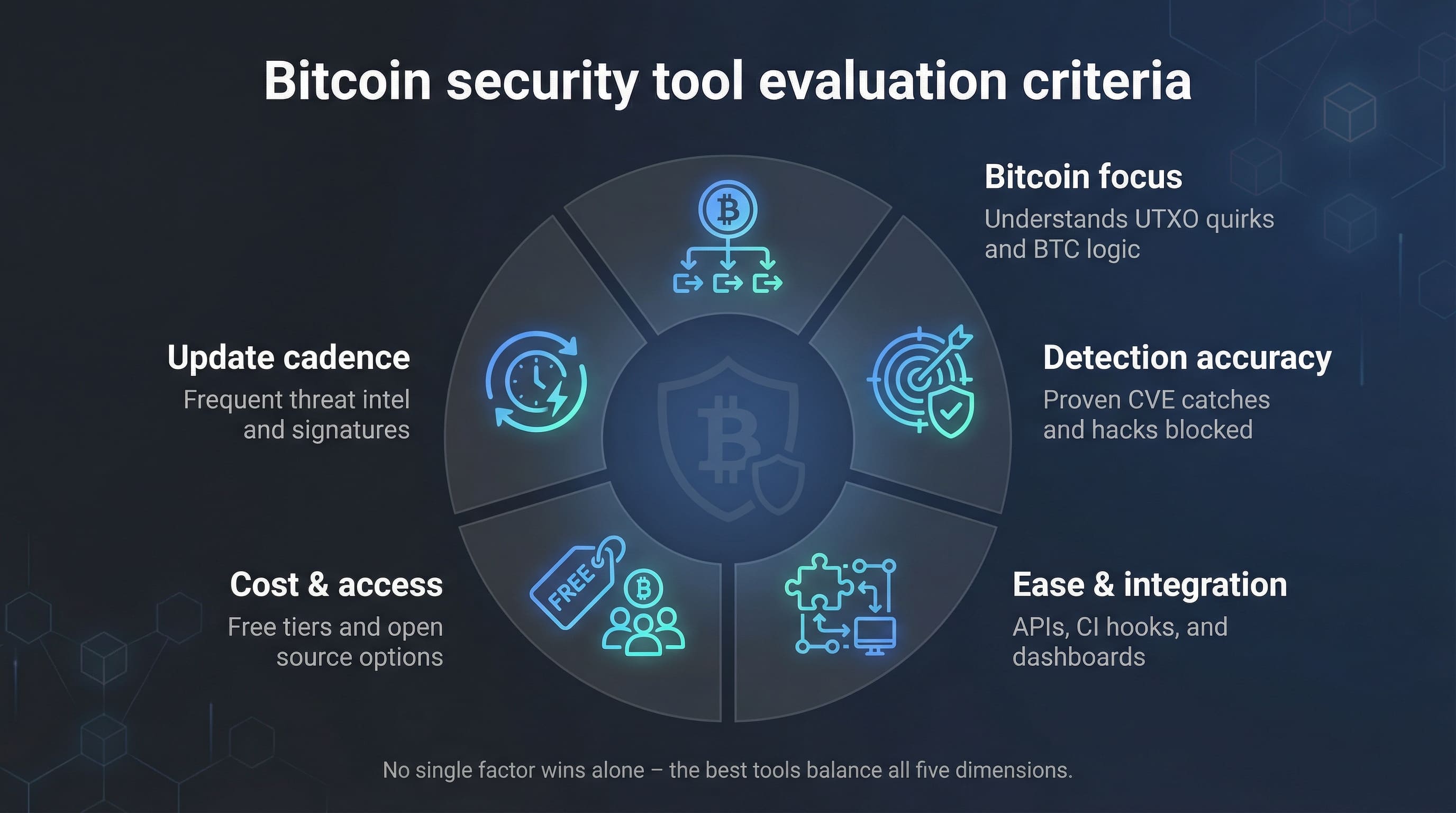
- Bitcoin focus. A scanner that understands UTXO quirks earns full marks. Pure-Ethereum tools sink to the bottom.
- Detection accuracy. False alarms waste time; missed threats burn money. We looked for documented catches—public CVEs found, hacks blocked, audits praised.
- Ease & integration. Security that lives in silos gathers dust. APIs, CI hooks, and friendly dashboards ranked higher than “consult the CLI manual.”
- Cost & access. Free tiers and open source widen adoption, so they gain points. Enterprise-only price tags lose a little shine.
- Update cadence. Crypto threats shift hourly. Tools that refresh signatures or intel in near real time climbed the ranks.
Project 11 proves the point—its August 2025 release notes for RISQ List v2 show the crawler re-indexes the full Bitcoin network every week, classifies each exposed address by root cause (key reuse, P2PK, partial spend, etc.), and even graphs how the at-risk balance changes over time, so ops teams can prove risk is shrinking instead of reacting to a one-off alert.
No single factor wins alone. A flawless Bitcoin focus means little if the database sits stale for months, and a lightning-fast scanner fails if it ignores BTC address logic.
We totaled the scores, debated edge cases, and pressure-tested the shortlist against real incidents, such as last year’s $2 billion Lazarus haul and the ticking quantum countdown.
The six survivors you’re about to meet didn’t just check boxes. They already cut risk today and keep pace with tomorrow’s threats.
Let’s get started.
Table 1: Compare the six tools at a glance
You know the scoring system; now see how the finalists stack up side by side.
| Tool | Core purpose | Bitcoin support | Free version | Stand-out strength |
| Project Eleven – Bitcoin RISQ List | Flags addresses whose public keys are exposed and therefore quantum-vulnerable | ✔ Bitcoin-only | ✔ | Quantifies “BTC at risk” and updates every block |
| Chainalysis KYT | Real-time AML and illicit-flow monitoring | ✔ 100+ chains incl. BTC | Demo | Compliance gold standard used by exchanges and law enforcement |
| Tenable Nessus | Network and server CVE scanner | Partial (Bitcoin node plugins) | ✔ Essentials | Finds misconfigurations that open the door to hacks |
| Slither | Static analysis for Solidity contracts | ✖ (EVM focus) | ✔ Open source | Catches code bugs in seconds; plugs into CI pipelines |
| CertiK Skynet + Audits | Deep audit plus 24/7 on-chain monitoring | Limited BTC touch-points | ✖ | Combines manual expertise with AI alerts for live protocols |
| Blockaid | Real-time scam and phishing transaction filter | Some (flags known BTC scam addrs) | ✖ | Warns users before they sign a malicious transaction |
Use this table as your quick reference. The next sections unpack each tool, starting with the priority for Bitcoin holders: moving coins already exposed to quantum risk.
1. Project Eleven – Bitcoin RISQ List
What this tool is
Project Eleven runs a live, searchable database that spotlights every Bitcoin address whose public key is already visible on-chain.
That detail matters more than most people realise. Once a key is exposed, a future quantum computer can reverse the private key and sweep the coins within minutes. The latest snapshot shows the RISQ List tracking 13.7 million addresses holding 6.78 million BTC, which is about one third of the entire supply.
The site updates with every block. You paste an address and see at a glance whether your coins are safe or need to move. No installation, no API keys, no guesswork.
In plain terms, it is a Geiger counter for quantum risk. Instead of hoping your wallets are fine, you see the exposure and can fix it before Q-Day.
How it works under the hood
Every Bitcoin address starts life protected because its public key is hidden by a hash. The danger appears only after you spend from that address; the key becomes visible in the spending transaction and stays on-chain forever.
Project Eleven’s crawler watches each new block, collects output scripts, and checks two facts:
- Has the public key for this address appeared on-chain?
- Does that address still hold unspent coins?
If both answers are yes, the address lands on the RISQ List with a red flag and a timestamp. The system sums the satoshis across all flagged addresses, updates the headline metric, and exposes a CSV so anyone can audit the math.
Because the scan runs block by block, exposure windows stay brief. After you sweep coins to a new Taproot address, the dashboard reflects one fewer risky wallet within minutes. The process relies on standard Bitcoin Core RPC calls plus a dedicated indexer; no proprietary heuristics.
Why it matters to you
Quantum risk feels distant. It becomes immediate the moment a capable machine arrives. If Google’s timeline holds, any BTC with a revealed public key becomes easy pickings by 2029.
That includes exchange deposit wallets, early hodler addresses, and the Satoshi stash. Bitcoin’s signature scheme cannot be upgraded overnight, and moving millions of UTXOs in a panic would clog the network.
The RISQ List quantifies every Bitcoin at risk of quantum attack, letting you act now, move funds gradually, and shrink the attack surface long before the deadline. Think of it as patch management for public keys.
Where it shines
- Zero friction: web interface plus downloadable CSV; even non-technical treasurers can audit wallets during lunch.
- Granular insight: flags why an address is exposed (P2PKH reuse, old P2SH script, or a multisig reveal), so you solve the root cause.
- Open data: the dataset is public, which keeps vendors and exchanges honest.
Where it falls short
- Narrow focus: it will not alert you to malware, phishing, or node CVEs. Pair it with other tools in this guide.
- No migration wizard: you still have to craft and sign sweeping transactions or rely on wallet software.
- Early-access API: enterprises must request firehose access; self-serve endpoints are coming.
Quick win checklist
- Export every cold-storage address you control.
- Paste them into Project Eleven’s checker.
- Sweep any flagged balance to a fresh Taproot address that you will never reuse.
- Run the scan again and confirm the risk score falls to zero.
- Schedule a quarterly review so keys stay safe and you sleep better.
Bottom line: if you hold Bitcoin for the long haul, this free tool buys time, the one resource nobody can reclaim once Q-Day lands.
2. Chainalysis KYT: your AML early-warning radar
What KYT is in plain English
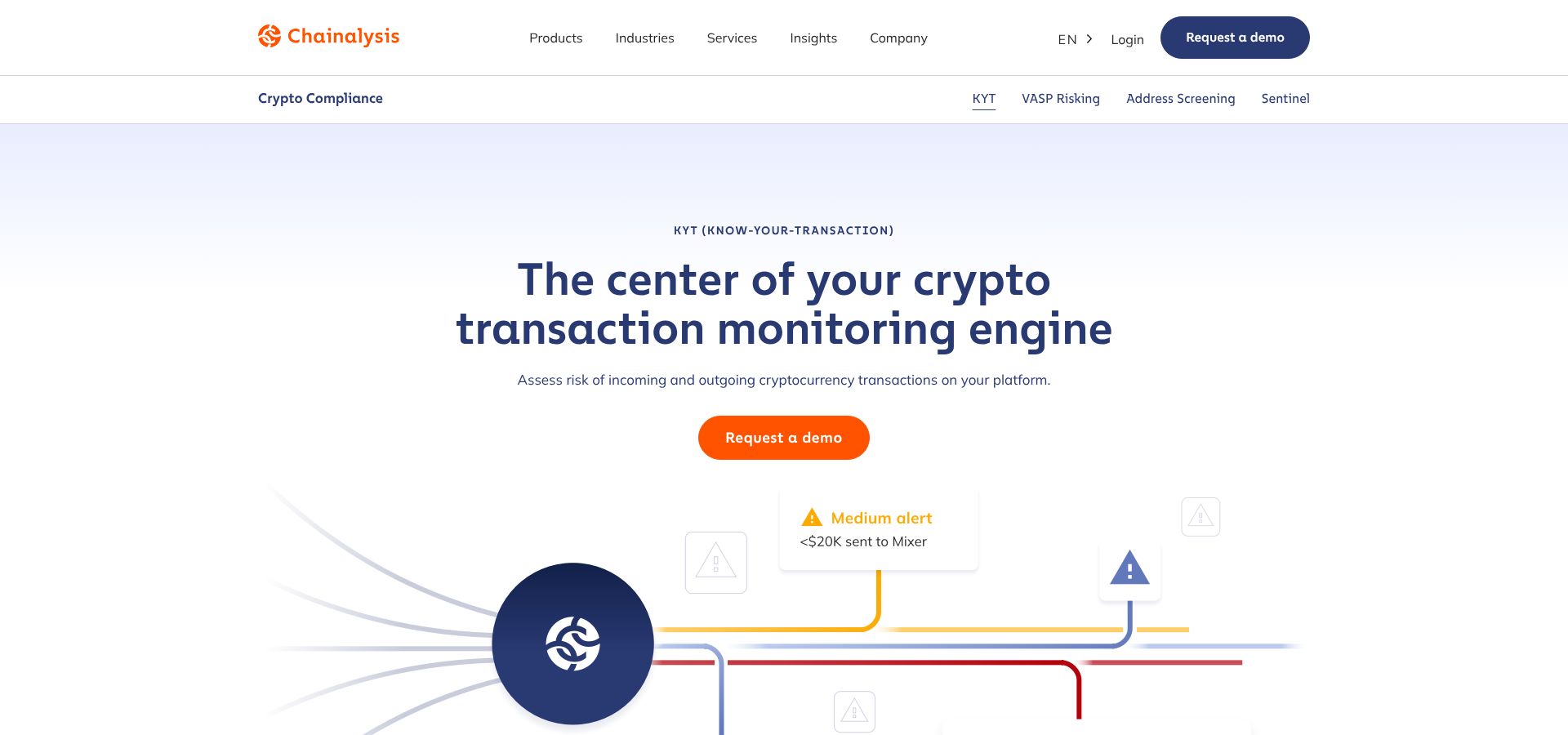
Chainalysis KYT (short for “Know Your Transaction”) is a real-time screening engine that checks every Bitcoin transfer you handle—plus transactions on more than 100 other chains—against the largest database of illicit blockchain activity on earth.
Picture airport security for crypto flows. The moment a deposit lands on your exchange or a withdrawal heads out, KYT flashes green for clean coins or red if those sats link to hacks, sanctions, darknet markets, or ransomware wallets.
Big exchanges rely on it to freeze funds before regulators or North Korean hackers make headlines. We use it because it shuts the compliance door before dirty money sneaks through and poisons the books.
How KYT works behind the screen
Every deposit, withdrawal, or internal transfer you process flies through three lightning-fast checkpoints.
- KYT tags the origin and destination addresses against its constantly updated library of more than a billion labeled wallets. If an address belongs to a sanctioned entity, a darknet marketplace, or last night’s hacked exchange, the system assigns a high risk score.
- It reconstructs the money trail several hops backward and forward. Mixing services, peel chains, or hop patterns light up like flares. Machine-learning models weigh the evidence and adjust the score in milliseconds.
- KYT triggers real-time alerts through an API endpoint (or a visual dashboard). Your compliance rule set decides what happens next: auto-freeze, manual review, or straight-through processing.
Because the engine sees the full blockchain firehose, it spots illicit flows within minutes. Its data helped Bybit intercept and recover $300 million in suspected scam withdrawals in late 2025.
Net result: you stay on the right side of regulators, fraudsters hit a brick wall, and clean users glide through without friction.
Why KYT belongs in your stack
Last year, crypto thieves grabbed more than $2 billion, and Chainalysis data shows North Korean crews took most of that haul by funnelling hacked coins through mixers and shell accounts.
Regulators noticed. Today, one tainted deposit can freeze an exchange’s banking lines or trigger a hefty fine. KYT flips that risk around: instead of reacting after funds settle, you block or flag suspect flows the instant they touch your ledger. Clients keep trading; auditors keep smiling.
For investigators, the payoff is bigger. KYT’s historical graph turns scrambled mixers into breadcrumb trails. When law-enforcement subpoenas arrive, you already have the dossier.
Strengths you’ll feel on day one
- Depth of intel. Chainalysis maps more addresses, mixers, and scam clusters than any rival, giving risk scores real teeth.
- Milliseconds, not minutes. The API handles burst traffic without slowing user deposits, which helps during market surges.
- Custom policy engine. You set thresholds, sanctions lists, and regional rules, so alerts match your appetite, not someone else’s.
Trade-offs to watch
KYT is an enterprise product with enterprise pricing. Solo traders will not like the bill, and privacy maximalists dislike on-chain surveillance. If those concerns matter, lightweight lookups like Scorechain’s free address checker provide basic hygiene but lack KYT’s muscle.
Quick start tip
Point KYT at your cold-wallet sweep address first. Stopping dirty inbound coins early prevents a compliance mess later, and you’ll see value before tackling every hot-wallet edge case.
3. Tenable Nessus: patch the holes hackers love to exploit
What Nessus brings to the table
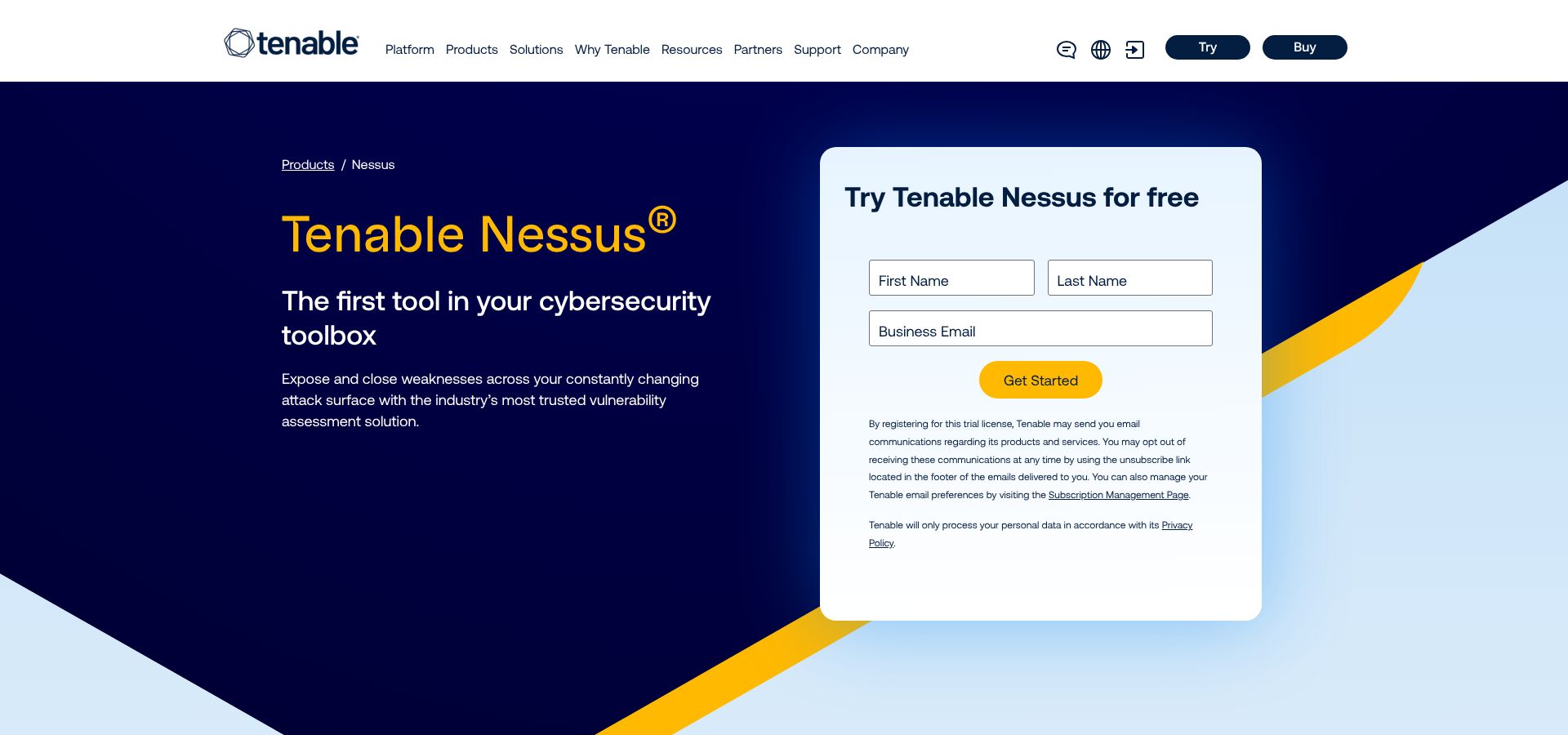
Most crypto breaches do not start on-chain. They begin with an open port, an unpatched CVE, or a dev server running last year’s Linux kernel. Nessus is the scanner that spots those weak points before attackers do.
Point it at your exchange frontend, custody servers, or even the box running bitcoind. In minutes you receive a colour-coded report of every known vulnerability, ranked by severity and linked to clear remediation steps.
For Bitcoin teams, Nessus also recognises crypto-specific services. One plugin flags a host that exposes port 8333, the Bitcoin peer port; another detects stray Stratum-mining daemons. If someone leaves a node or mining proxy live on a production subnet, you will know quickly.
How the scan cycle works
Nessus ships with more than 70,000 plugins. Each plugin checks a single flaw: version numbers, unsafe configs, or a benign payload that shows how software reacts.
We schedule a weekly external scan to catch internet-facing risks and a monthly credentialed scan inside the firewall for patch hygiene. New plugins land every few days, so the tool stays current with fresh CVEs such as Heartbleed, Log4Shell, or tomorrow’s wallet-API bug.
Strengths you will notice immediately
- Breadth. From SSL misconfigurations to WordPress wallet-plugin XSS, Nessus covers the full stack.
- Actionable reports. Findings map to CVE advisories and vendor patches, so both rookies and veterans can act fast.
- Free entry point. The Essentials licence scans up to 16 IPs; perfect for a lean custody setup or side project.
Where it falls short
Nessus does not read blockchain data or smart-contract logic. It will not warn you about a malicious token approval or an exposed public key. Treat it as your baseline hygiene layer, not a substitute for on-chain tools.
Quick win checklist
- Add every node and web asset to a visible inventory.
- Run a credentialed scan and fix anything tagged High or Critical first.
- Create an alert in your CI pipeline to block deploys if Nessus finds a new Critical on staging.
- Re-scan after patching to verify the fix and sleep easier.
Use Nessus to close the common doors. Attackers then have to work harder, and you can focus on the truly crypto-native threats.
4. Slither: catch smart-contract bugs before launch day
Why Bitcoin teams should still care
“Wait, I build on Bitcoin. Why worry about Solidity?” Wrapped BTC, bridges, and sidechains push your coins into EVM land every day. If the contract holding your wBTC has a reentrancy hole, you are one hack away from watching value vanish.
That is where Slither shines. Built by the audit team at Trail of Bits, this open-source static analyser scans Solidity code and flags more than 100 known vulnerability patterns in seconds. Think of it as eslint for smart contracts, except the stakes are deposits, not dev kudos.
How a Slither run looks
Clone the repo, point it at your project folder, and type slither .. You receive a concise report: unchecked external call on line 142, missing reentrancy guard on line 207, unused return value in transferFrom. Each finding links to docs that explain impact and fixes.
Because Slither parses the Abstract Syntax Tree, it never executes the code, so analysis finishes before coffee brews. Output formats include JSON and SARIF, making it simple to wire into GitHub Actions. Break the build when severity ≥ High, and no sloppy commit reaches mainnet.
Strengths that save real money
- Speed. Hundreds of contracts scanned in under a minute; perfect for every pull request.
- Signal over noise. Years of audit feedback keep false positives low, so developers trust the output.
- Community growth. New detectors land fast; the latest release added “dangerous delegatecall” and “unchecked SafeERC20 return” rules.
Limitations to note
Slither does not catch runtime or economic exploits that appear only during complex state changes. It also ignores non-EVM code, so pure Bitcoin Script remains outside its scope. Pair it with dynamic fuzzers like Echidna and with on-chain monitors for full coverage.
Quick start tip
Set up a GitHub Action that runs Slither on every PR. Fail the build if any High issue surfaces. Developers fix bugs while context is fresh, audits shrink, and launch day feels less like roulette.
5. CertiK: audit plus 24/7 Skynet eyes
The value proposition in one line
CertiK delivers a deep pre-launch code audit and a live security operations center that keeps watching long after your contracts reach mainnet.
How the two halves fit together
When you share your repo with CertiK, its engineers run multiple analyzers (Slither forks, formal-verification tools, symbolic execution) and then review every line by hand. The result is a public report with severity ratings and recommended fixes, often the difference between investor trust and hesitation.
After you deploy, Skynet takes over. The cloud dashboard ingests on-chain data, GitHub commits, and even social chatter. It scores your project daily, pings you if an admin key changes, and tweets real-time alerts when an exploit starts draining funds. Media outlets quote those alerts because they often reach the public before the dev team.
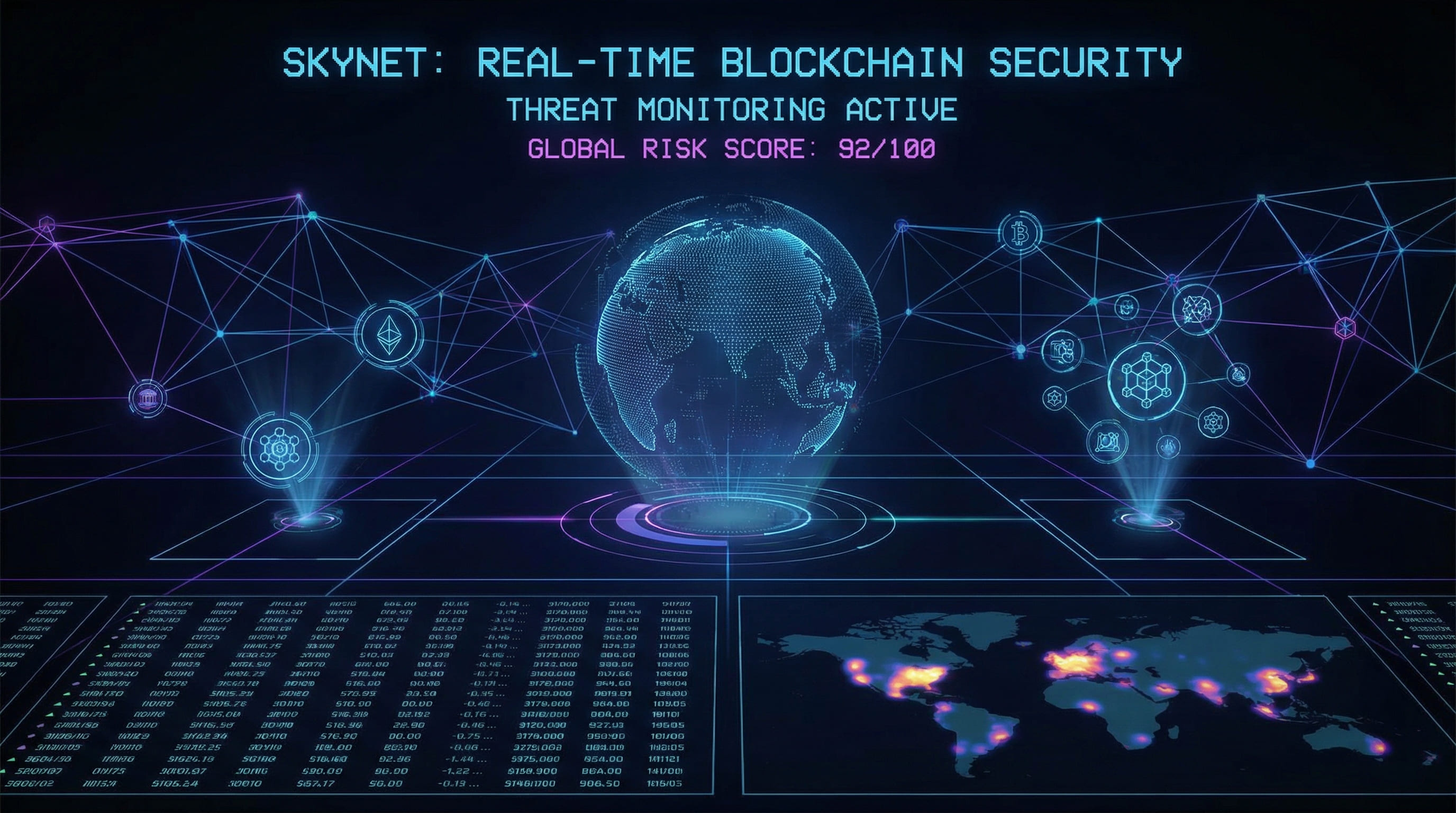
For Bitcoin-adjacent projects such as bridges, staking wrappers, and sidechains, this continuous monitoring is gold. If your wrapped-BTC pool suddenly spikes in outflow volume, Skynet sounds a siren while there is still time to pause contracts.
Where CertiK excels
- Credibility. CertiK has worked with more than 5,000 enterprise clients and secured over $600 billion in digital assets; users recognise it.
- Broad coverage. Code health, on-chain behaviour, governance risks, and social signals roll into one score.
- Incident response. Analysts dissect hacks minutes after they start and help victims coordinate freezes and law-enforcement outreach.
Costs and caveats
Audits are not cheap; mid-five figures is common, and Skynet is a paid subscription. Because humans are in the loop, timelines can slip when the market heats up. If your project relies only on Bitcoin Script, CertiK adds limited value.
Quick start tip
Book an audit early, before marketing ramps. Fixes found pre-launch stay quiet; post-launch patches become PR headaches. Keep Skynet running in read-only mode so the dashboard doubles as a public trust signal.
6. Blockaid: stop scam transactions before you click “Confirm”
Why Blockaid exists
Most individual losses are not caused by zero-day exploits. They happen with a single signature, approved on a fake website after a slick social-engineering pitch. Blockaid acts as a firewall at that moment, warning users when a smart contract or Bitcoin address looks fraudulent.
How it works in practice
When your wallet or exchange front end integrates Blockaid’s API, every outbound transaction runs through three checks in less than 200 milliseconds.
- Database match. The engine compares destination addresses and contract bytecode against a live blacklist of ransomware wallets, drainer contracts, and pig-butchering rings.
- Transaction simulation. It executes the call off-chain to show what would happen if you sign. If the contract tries to transfer your entire balance next, the system raises the alarm.
- Machine-learning layer. New addresses are clustered by behaviour across time-series flows, token mix, and prior links, so even fresh scams with no history trigger a probabilistic risk score.
Your UI then shows a clear “High-risk transaction” banner or blocks the send outright, depending on your policy.
What makes it special
- User-centric. Protection sits at the wallet layer, where the decision happens, not after coins are gone.
- Zero-day coverage. Pattern analysis lets Blockaid detect novel drainers within the first few victims, not the hundredth.
- Chain-agnostic with Bitcoin hooks. While the simulation shines on EVM chains, Blockaid also flags known Bitcoin scam addresses, so a phisher cannot trick someone into sending BTC to a ransomware wallet.
Downsides to weigh
Blockaid is a commercial API. If you run an open-source wallet on a tight budget, licensing could sting. Privacy advocates may note that transaction details leave the device for scoring, although partners state that metadata is hashed and minimised.
Quick win checklist
- Enable Blockaid in your wallet build; test a known drainer address to watch the alert fire.
- Add a policy that blocks “approve unlimited spend” unless the user toggles an advanced setting.
- Feed any new scam addresses you discover back to Blockaid, so the network learns and every other user benefits.
With Blockaid in the stack, the next phishing DM or deep-fake video call is far less likely to end in an empty balance. That is one of the cheapest security moves you can make.
Conclusion
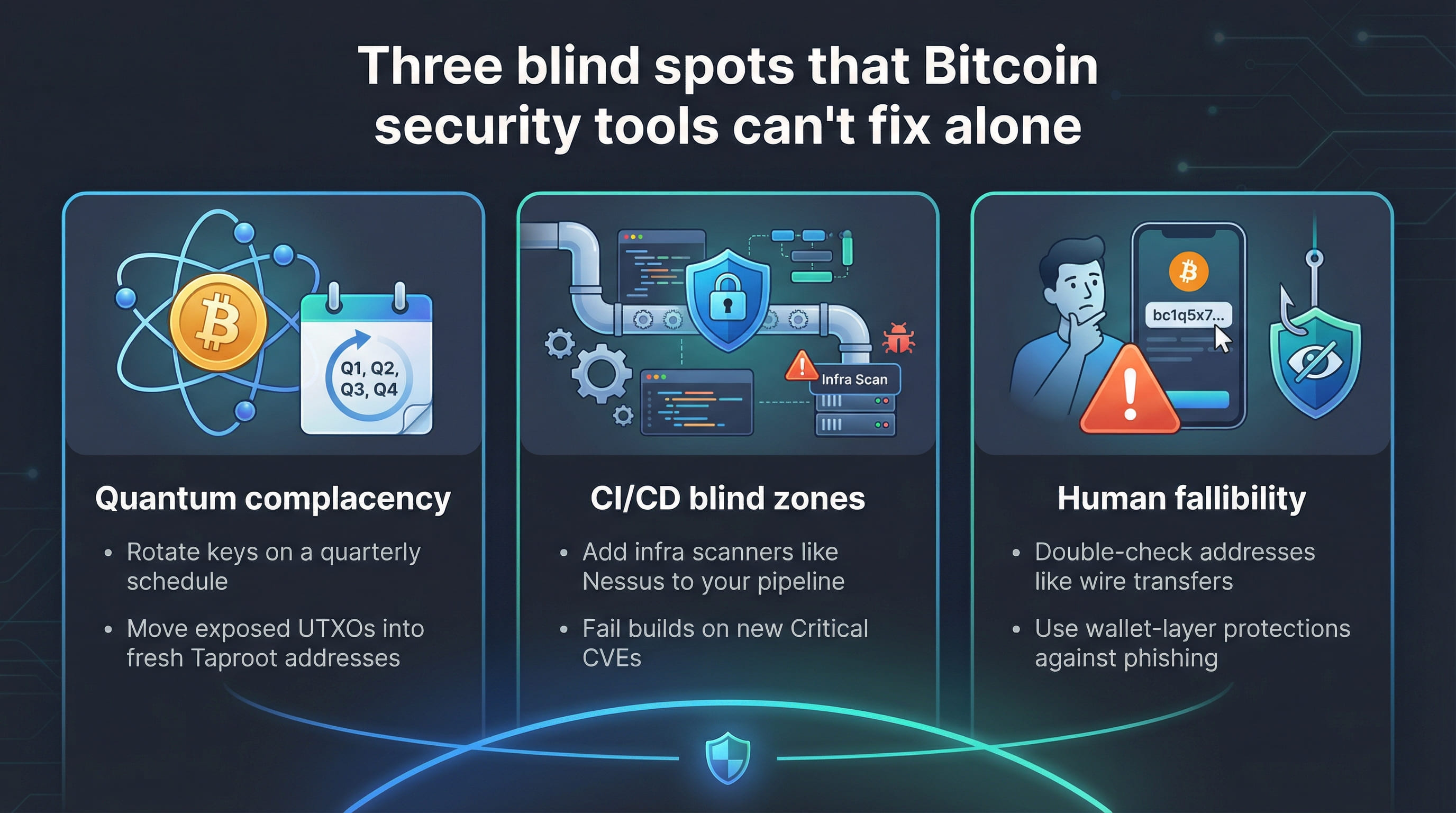
No single tool, or even our top six combined, covers every crack in Bitcoin security. Each scanner lights one area, leaving others in shadow. Before we finish, here are three blind spots and quick habits that close them.
Quantum complacency
The RISQ List reveals exposed addresses, but only you can move the coins. Block out a quarterly key-rotation day. Sweep old balances into fresh Taproot addresses, even if they hold pocket change. Small, steady moves beat a rushed migration in 2029.
CI/CD blind zones
Slither protects pull requests, yet many teams skip infrastructure scans in the same pipeline. Add Nessus (or the open-source OpenVAS) to a nightly workflow. Fail the build if a new Critical CVE appears on staging. Security then becomes another test, not a special meeting.
Human fallibility
Blockaid warns users at the moment of truth, but only if wallets embed it. Teach staff and friends to treat “Paste address here” like entering a wire-transfer number: double-check the first and last four characters, use address books, and verify requests on a second channel. Tools help; habits stick.
INTERESTING POSTS
About the Author:

Meet Angela Daniel, an esteemed cybersecurity expert and the Associate Editor at SecureBlitz. With a profound understanding of the digital security landscape, Angela is dedicated to sharing her wealth of knowledge with readers. Her insightful articles delve into the intricacies of cybersecurity, offering a beacon of understanding in the ever-evolving realm of online safety.
Angela's expertise is grounded in a passion for staying at the forefront of emerging threats and protective measures. Her commitment to empowering individuals and organizations with the tools and insights to safeguard their digital presence is unwavering.



