


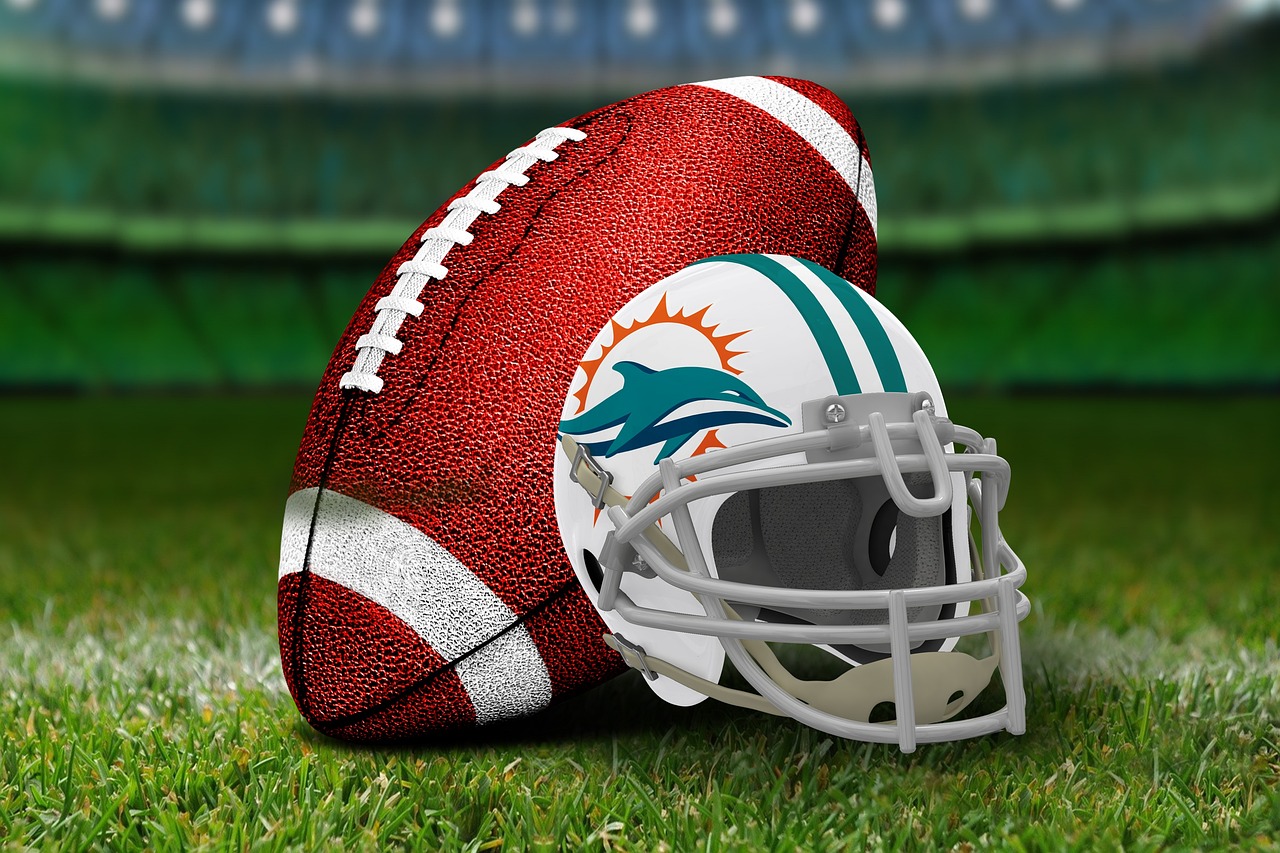

In this post, I will answer the question – who is the youngest player in the NFL?.
Table of Contents
The Age Question the League Asks Every September
There is something the NFL does at the start of every season that most other major sports leagues never have to think about quite as deliberately — it calculates exactly how young its youngest player is. Not the youngest star, not the youngest starter, but the youngest person on an active roster. Analysts, roster-watchers and platforms like db bet track this number with genuine curiosity because it tells you something specific about the pipeline of young football players entering professional sport at the earliest point the rules allow. For the 2025-26 season, that number belonged to a running back from Baton Rouge named Dylan Sampson, who was twenty years old when the Cleveland Browns took the field for Week 1.
Twenty. Against fully grown professional defensive linemen who have been lifting weights since before he started high school.
The Rule That Sets the Floor

Before getting into who the youngest NFL player in the current cycle is, the rule that creates the situation is worth understanding. The NFL requires players to be at least three years removed from high school graduation before they can be drafted. This is not the same as requiring players to complete four years of college — it means a player who graduates high school in May 2022 is eligible for the draft in April 2025, regardless of how much college they played.
The practical effect is that the youngest players tend to arrive through one of two paths: early college enrollment, where a player starts college a semester ahead of schedule and compresses his eligible window, or exceptional early development that makes declaring after two or three college seasons the obvious choice. Either way, the NFL occasionally gets players who are genuinely twenty years old when professional football begins, carrying pads through a locker room full of veterans who are a decade older.
The youngest player in any era of NFL history is Jim Snyder, who played one game with the Milwaukee Badgers in 1925 at the age of just sixteen. In the modern NFL, the honor goes to Amobi Okoye, a defensive tackle who was just nineteen when he was drafted by the Houston Texans in 2007. Those records are unlikely to fall given the current eligibility framework.
Dylan Sampson: The Answer to Who Is the Youngest Player in the NFL
So who is the youngest player in the nfl for the 2025-26 season? Dylan Sampson, a rookie running back from the University of Tennessee selected in the fourth round by the Cleveland Browns, was twenty years old at the start of the season — the only player from the 2025 draft class who hadn’t celebrated his twenty-first birthday when the regular season kicked off.
Sampson was born September 14, 2004, in Baton Rouge, Louisiana, and attended Dutchtown High School in Geismar, where he surpassed Eddie Lacy as the school’s all-time leading rusher. The Tennessee career he built from there was legitimately impressive before it was old enough to vote. He won the 2024 SEC Offensive Player of the Year award after rushing for 1,491 yards and leading the conference with 22 rushing touchdowns, also leading the SEC in rushing yards per game at 114.69.
Sampson was selected 126th overall in the 2025 draft. Fourth round. Not a first-round prospect, which matters for understanding his situation in Cleveland — he arrived as a complementary back, not a franchise investment, which creates a different kind of pressure for a twenty-year-old trying to prove he belongs.
What Sampson’s Rookie Season Actually Looked Like
The honest answer is: uneven. Which is exactly what you would expect from a fourth-round rookie running back on a team in the middle of a quarterback situation that changed multiple times across the season.
Sampson rushed twelve times for 29 yards and caught eight passes for 64 yards in his NFL debut, a 17-16 loss to the Bengals in Week 1. After that, with second-round pick Quinshon Judkins entering the backfield, Sampson’s playing time dropped and there were questions about whether the undersized rookie — 5-foot-8, 200 pounds — had the physical profile to hold up at NFL level.
Then Week 12 happened. Sampson provided a spark in the Browns’ 24-10 win over the Las Vegas Raiders — his most significant performance of the season — taking a screen pass from Shedeur Sanders 66 yards for a touchdown, the first passing score of Sanders’ NFL career. Through eleven games, he had started once, with 38 carries for 89 yards and 23 catches for 195 yards with two scores.
Those numbers don’t make him a star. They make him a young football player learning the NFL while navigating a difficult roster situation — which is actually a fairly normal first year for a player his age and draft position.
The Broader Cohort: Not Just Sampson
Answering who is the youngest player in the nfl at any given moment captures one name, but it undersells the actual width of the NFL’s youth movement in the 2025-26 cycle. The layer directly above Sampson’s age is genuinely deep.
Braelon Allen of the New York Jets entered 2025 at 21, having already spent a season learning behind Breece Hall. Allen’s profile — six feet one inch, 235 pounds, 3,494 rushing yards and 35 touchdowns on 597 carries at Wisconsin — suggested from the start that his frame would translate. In the 2024 season, Allen became the youngest player in NFL history to score two touchdowns in a single game. That record is structurally almost impossible to beat given the eligibility rules, which makes it one of the stranger permanent marks in league history.
Malik Nabers at the New York Giants represents a different kind of young football player story — the one who arrives and immediately looks like he belongs. In his 2024 rookie season, Nabers shattered the Giants’ rookie reception record and ranked sixth in ESPN receiver tracking metrics as a 21-year-old. Seriously, sixth in tracking metrics across the entire league, as a rookie. That is not a developmental number. That is a player who arrived ready.
Drake Maye in New England operates in yet another tier of expectation that few young football players are asked to handle. First-round quarterback selections carry franchise weight that no other position in the sport generates. Maye was handed the Patriots’ starting job in his first season, asked to run an offence that wasn’t fully built around his strengths, and evaluated in real time against an impossibly compressed timeline. The Super Bowl LX result — six sacks, two interceptions, scoreless for three quarters — was a difficult night for a 22-year-old, but it was also his second professional season in a conference that included Patrick Mahomes.
What the Three-Year Rule Produces and What It Costs
The NFL’s entry age requirement is occasionally described as a player welfare measure — keeping nineteen-year-olds out of a physically brutal professional league until they’ve had time to develop. That framing is partially accurate but doesn’t capture the full picture, because the rule also serves college football’s commercial interests in retaining talent through the most profitable viewing years.
What it produces in practice is a league where the youngest players are almost always twenty or twenty-one, carrying bodies that are physically ready but operating within systems of professional complexity they’ve been exposed to for months rather than years. The adjustment period is real. Browns coach Kevin Stefanski noted during Sampson’s early struggles that the rookie wasn’t getting adequate blocking when he received the ball — a charitable but not entirely wrong assessment of a situation where a twenty-year-old was being evaluated before the infrastructure around him was functioning.
The flip side of entry age is that the players who arrive young and survive the adjustment often develop into some of the best players the league produces. Youth at entry means more developmental years under professional coaching before the physical decline that eventually affects every player. A wekawin.com or lose individual games, the teams that invest in twenty and twenty-one-year-old talent are making a bet on what those players look like at twenty-five and twenty-six — which is, for most positions, when NFL players reach their actual ceiling.
The Historical Baseline: How Young Has the NFL Ever Gone?
In the modern NFL, the honour of youngest player ever drafted goes to Amobi Okoye, a defensive tackle who was just nineteen when he was selected by the Houston Texans in 2007. Okoye had accelerated through school, graduating high school at sixteen and completing three years at Louisville before declaring. He played seven NFL seasons — a respectable career, though never the dominant force his draft position and pre-draft profile suggested.
The gap between nineteen and twenty sounds small. In professional sport, in a physical collision game where bodies absorb punishment at NFL speed, it is not small. The players who have entered at nineteen or twenty in various eras have almost universally described the physical adjustment as something they couldn’t fully anticipate from college football alone, regardless of how good their college competition was.
Sampson’s age relative to Okoye’s record puts the current moment in context. The youngest nfl player of the 2025 season is still a full year older than the youngest player the modern draft has ever produced.
What Youth Actually Buys in the NFL
There is a version of the young football players conversation that focuses purely on upside — the developmental arc, the untapped potential, the cost-controlled contracts that allow teams to build depth. All of that is real. But it coexists with a harder reality about what youth costs in a league where the average career lasts roughly three seasons.
A twenty-year-old entering the NFL has, statistically, more career ahead of him than a twenty-four-year-old. He also has less experience navigating the specific pressures that compress NFL careers — injury, positional depth changes, scheme transitions, contract disputes, the particular psychological weight of being evaluated in public by an industry that moves very quickly from one player to the next.
Seriously, the players who survive the transition from youngest-in-the-league to established starter tend to be the ones who found something to do in their limited opportunities during those early seasons. For Sampson, Week 12 against Las Vegas was that moment — one 66-yard screen pass that changed how coaches viewed him, how fans discussed him, and how his own season was being written. Not a career statement. A data point that kept the narrative open rather than closing it.
Conclusion
Who is the youngest player in the nfl is a question with a clean annual answer and a complicated context. For 2025-26, that answer was Dylan Sampson — a twenty-year-old running back from Tennessee who spent his first professional season working out of a rotation, fighting through questions about his size, and producing the occasional play that reminded people why he was worth the fourth-round investment.
Around him, a cohort of young football players — Allen, Nabers, Maye, Mykel Williams, LeQuint Allen Jr., a dozen others — is in the process of determining whether youth at entry translates into impact at peak. Some of them will. Some won’t. The NFL has never been particularly sentimental about which outcome arrives for which player.
The youngest nfl player of any given season is usually carrying more weight than his age suggests he should be. That gap between expectation and experience is, in one form or another, the whole story of how young people enter the hardest professional league in American sport.
INTERESTING POSTS
- Inside The Cyber Security Practices Of Major League Teams
- Best Online Class Websites for College Students: Learn Smarter, Not Harder
- Fantasy Football Philippines 2026: FPL, UCL Fantasy, Stats Apps, and the Betting Layer
- The Data Behind Basketball’s Geographic Talent Pipeline
- Best Cybersecurity Black Friday Deals For 2025
About the Author:

Mikkelsen Holm is an M.Sc. Cybersecurity graduate with over six years of experience in writing cybersecurity news, reviews, and tutorials. He is passionate about helping individuals and organizations protect their digital assets, and is a regular contributor to various cybersecurity publications. He is an advocate for the adoption of best practices in the field of cybersecurity and has a deep understanding of the industry.


