



In this post, I will talk about cybersecurity services for businesses that “don’t have anything worth stealing”.
Every business owner has said it at least once. Usually during a conversation about budgets, insurance, or that nagging feeling that they should probably be doing more about security.
“We’re small. We don’t really have anything worth stealing.”
It sounds reasonable. It even sounds humble. But it’s one of the most expensive assumptions a business owner can make, and the cost usually shows up long after the moment it would have been cheap to fix.
Here’s the truth that most owners learn the hard way. Hackers are not casing your business like a jewel thief cases a museum. They’re running automated scans across thousands of networks at once, looking for the easy door. The unlocked one. The default password. The software update that never got installed. The employee who clicks the link that looks like a FedEx tracking notice.
They’re not targeting you because you have something valuable. They’re targeting you because you might be easy. And if you are, you become part of a larger operation that quietly uses your systems, your email, or your customer data to fund the next round of attacks.
This is why professional cybersecurity services exist. Not to protect the crown jewels, but to make sure your business isn’t the easy door.
Table of Contents
What Hackers Actually Want From a Business Like Yours
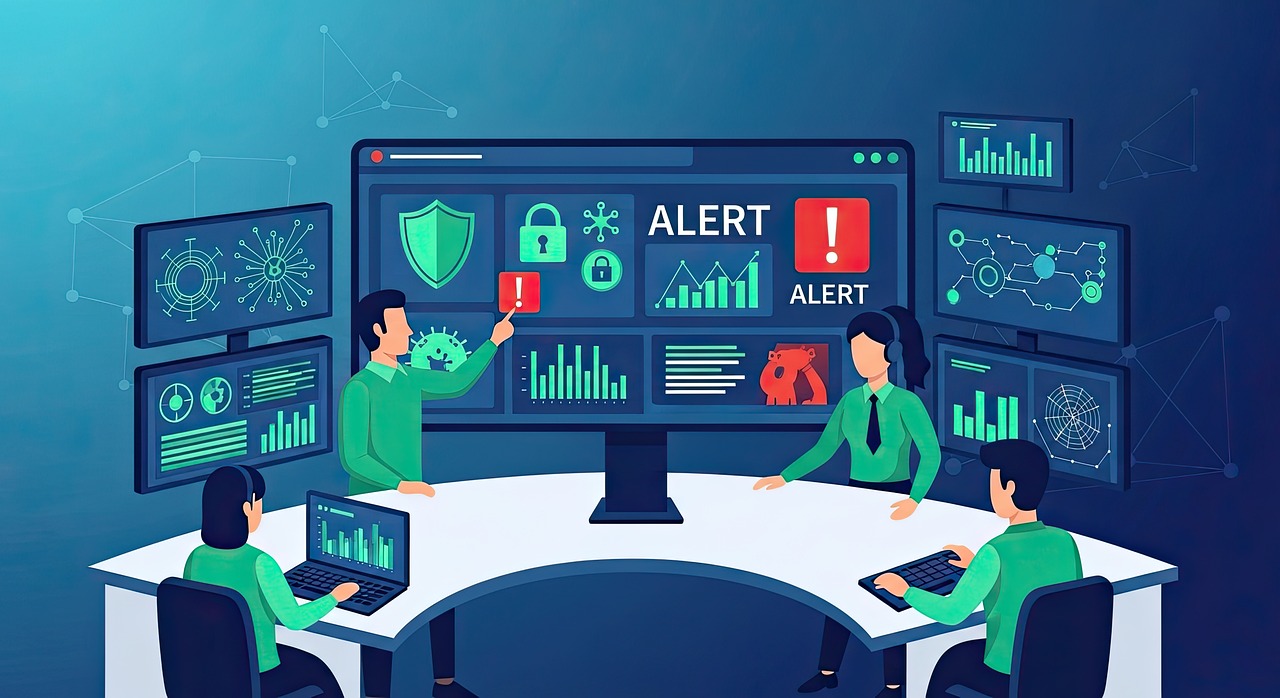
Most owners picture a hacker as someone who breaks in, grabs the sensitive files, and disappears into the night. That image is mostly wrong.
Here’s what really happens. A small accounting firm in a strip mall gets hit with ransomware. The attackers don’t care about the client tax returns. They care about the fact that the firm will pay to get them back. A plumbing company with 14 employees has its email compromised. The attackers don’t want the plumbing schedules. They want to use that email account to send invoices to customers with a new routing number.
The target is rarely the data itself. The target is usually one of three things.
Your money, through ransomware or fraudulent transfers. Your identity, meaning your business name, domain, and email reputation, which can be used to scam others. Or your access, meaning your connection to a larger company that the attackers actually want to reach.
That third one is the one most owners miss. If you do business with a larger client, a hospital, a law firm, or a manufacturer, you are a door into their network. Attackers know this. They specifically look for smaller vendors who have trusted relationships with bigger targets. Your lack of security becomes their way in.
The “Nothing Worth Stealing” Myth, Broken Down
Let’s walk through what a typical small business actually has sitting on its network.
You have email accounts, probably connected to customer records, vendor contacts, and financial correspondence. You have employee personal information, including Social Security numbers, home addresses, and banking details for direct deposit. You have customer data, which depending on your industry could include payment information, health records, or contract terms. You have login credentials to your bank, your accounting software, your payroll provider, and your cloud storage.
You have all of that, and you probably have it protected by a password someone has been using since 2019.
Now ask the question again. Do you have anything worth stealing?
The honest answer is yes. Every business does. The difference between a secure business and an insecure one is not what they have. It’s whether they’ve acknowledged what they have and taken reasonable steps to protect it.
Why Small Businesses Are the Easiest Target
Large companies have entire teams dedicated to security. They have firewalls, monitoring, policies, training, and the budget to back it all up. They are not impossible to breach, but they are hard work.
Small businesses are different. Most run on a patchwork of consumer-grade antivirus, a firewall someone set up years ago, and the hope that nobody notices them. Training is rare. Updates are inconsistent. Multi-factor authentication is often considered too much friction for the team.
Attackers know all of this. They are not looking for the hardest target. They are looking for the path of least resistance, and that path runs straight through small and mid-sized businesses that haven’t invested in basic protections.
The economics make it worse. Automated attack tools can scan thousands of small business networks in the time it takes to drink a cup of coffee. There is no targeting required. There is no research. There is just software looking for openings, and there are a lot of openings.
What Reasonable Protection Actually Looks Like
This is where most business owners get nervous. They assume security means an enterprise budget, a full-time staff member, and a stack of tools they’ll never understand.
It doesn’t. Reasonable protection is a set of fundamentals, applied consistently, and maintained over time. Here is what that actually includes.
Multi-factor authentication on every account that matters. This is the single highest-impact step a business can take. If a password gets stolen, and passwords get stolen constantly, MFA is what stops the attacker from walking through the front door. It should be on email, banking, accounting software, cloud storage, and anything else that touches money or sensitive data.
Endpoint detection and response, not just antivirus. Traditional antivirus looks for known threats. Modern endpoint protection watches behavior. It notices when something on a computer starts acting wrong, even if the threat has never been seen before. This matters because most attacks today are not old viruses. They are new tactics designed to slip past last year’s definitions.
Email filtering and security awareness. Email is still the number one way attackers get in. Good filtering catches most of the junk before it reaches the inbox. The rest comes down to people, which means training matters. Not the boring annual video kind. Short, regular, practical reminders about what the current scams look like and what to do when something feels off.
Patching and updates, handled. Most breaches trace back to a known vulnerability that was never patched. The fix existed. It just never got installed. This is unglamorous work, but it is some of the most important security work a business can do.
Backups that actually work. A backup you’ve never tested is a hope, not a plan. Ransomware is designed to find and encrypt backups too. Real protection means backups that are separated from the main network, tested regularly, and ready to restore when something goes wrong.
A documented response plan. When something happens, and eventually it will, the worst time to figure out what to do is during the crisis. A simple plan that says who to call, what to disconnect, and how to communicate can turn a disaster into a manageable incident.
None of this requires a Fortune 500 budget. It requires consistency, attention, and the willingness to treat security as part of running the business rather than an afterthought.
The Cost of Doing Nothing
Here is the part most owners don’t calculate until it’s too late.
A single ransomware incident for a small business can mean weeks of downtime, lost revenue, customer notifications, potential legal exposure, and the cost of rebuilding systems that may or may not be fully recoverable. The disruption alone, not the ransom, is often the most expensive part.
Then there is the trust cost. Customers who learn their data was exposed don’t always come back. Vendors who see your email used to send fraudulent invoices start asking questions. Partners who rely on your security posture start looking elsewhere.
The cost of reasonable protection is almost always lower than the cost of a single serious incident. The problem is that protection is a quiet expense and an incident is a loud one. It’s easy to skip the quiet expense until the loud one arrives.
The Honest Bottom Line
If you own a business, you have something worth protecting. Not because you’re a target, but because you’re an opportunity, and opportunities are exactly what automated attacks are built to find.
You don’t need to become a security expert. You don’t need to build a fortress. You need to close the easy doors, maintain the basics, and have someone watching who knows what to look for.
That’s it. That’s the whole job. And it’s a lot cheaper than the alternative.
Frequently Asked Questions
Do small businesses really get targeted by hackers?
Small businesses are not usually targeted individually. They get caught in automated scans that look for unprotected networks. Attackers go after volume, not specific victims, which makes any unprotected business a potential target.
What is the most important cybersecurity step for a small business?
Multi-factor authentication is widely considered the single most effective control. It prevents the majority of account takeover attempts, even when passwords have been stolen.
Is antivirus enough to protect a business?
Traditional antivirus is no longer sufficient on its own. It catches known threats but misses new and behavioral attacks. Modern endpoint detection and response watches for unusual activity and is far more effective against current threats.
How much should a small business spend on cybersecurity?
There is no universal number, but reasonable protection is generally far less expensive than recovering from a single incident. Most small businesses can establish solid fundamentals through managed services without building an internal security team.
What happens if a business gets hit by ransomware?
Typical consequences include operational downtime, data loss, revenue disruption, customer notification requirements, and potential legal exposure. Recovery can take weeks, and some businesses never fully recover. Having tested backups and a response plan significantly reduces the impact.
Does cybersecurity require a long-term contract?
Not always. Many providers offer month-to-month arrangements. The right approach depends on the business, the level of support needed, and the provider’s structure. It’s worth asking before committing.
INTERESTING POSTS
- Why Millions of People Are Finally Looking Up What a VPN Is (And What to Do Next)
- A Clean Domain Name Is No Longer a Trust Signal
- Is Surfshark One Worth It? [Honest ANSWER]
- Is Surfshark Antivirus For Mac Worth It? [Here’s the ANSWER]
- Why Your House Looks Clean But Still Feels Dirty
- How To Choose The Best IT Service Provider
- Scraping At Scale: The Metrics That Keep Pipelines Honest
- How Phishing and Fake Trading Platforms Turn Social Media Into Investment Scams
About the Author:

Meet Angela Daniel, an esteemed cybersecurity expert and the Associate Editor at SecureBlitz. With a profound understanding of the digital security landscape, Angela is dedicated to sharing her wealth of knowledge with readers. Her insightful articles delve into the intricacies of cybersecurity, offering a beacon of understanding in the ever-evolving realm of online safety.
Angela's expertise is grounded in a passion for staying at the forefront of emerging threats and protective measures. Her commitment to empowering individuals and organizations with the tools and insights to safeguard their digital presence is unwavering.



