
In this post, I will talk about the best AI video models for marketers in 2026 that are tested for ads, social content, and product campaigns.
AI video generation has quietly become one of the most useful tools in modern marketing. I no longer think of it as an experimental technology. I use it to create product launch videos, social ads, campaign concepts, and promotional content that would previously require agencies, production crews, and long timelines.
The challenge today is not finding an AI video model. There are plenty of them. The difficult part is figuring out which model actually helps marketers create better content faster. Some tools are excellent at cinematic storytelling but too slow for daily marketing needs. Others generate content quickly but struggle with realism and consistency.
After testing today’s leading AI video models in real marketing scenarios, I found that each one has clear strengths and weaknesses. The best choice depends entirely on the kind of marketing content you’re creating.
Table of Contents
Why AI Video Matters for Marketers in 2026
Marketing teams are expected to create more content than ever. A single campaign might need product videos for a landing page, vertical ads for social platforms, and multiple creative variations for paid acquisition testing.
Traditional production simply cannot keep up with that demand.
AI changes the economics of content creation by allowing marketers to:
- Generate multiple ad concepts quickly
- Test different visual directions before production
- Create campaign assets for multiple platforms
- Produce videos without large budgets
- Scale content production without expanding teams
The biggest benefit is speed. Instead of spending weeks moving from idea to final video, marketers can often go from concept to usable creative in hours.
How I Tested These AI Video Models
I didn’t evaluate these tools using benchmark prompts. I tested them the way marketers actually work.
I created:
- Product launch campaigns
- Ecommerce advertisements
- SaaS explainer videos
- Lifestyle product promotions
- Social-first ad creatives
- Brand awareness videos
I tested both AI image generator and video generation capabilities whenever possible to see how each model performed in real marketing scenarios. Some campaigns started with product concepts created from text prompts, while others began with existing brand assets that needed to be enhanced or repurposed.
For video production, I experimented with both AI text to video and AI image to video approaches. In some cases, I generated entirely new scenes from a prompt. In others, I transformed static visuals into animated marketing content, depending on what best matched the campaign.
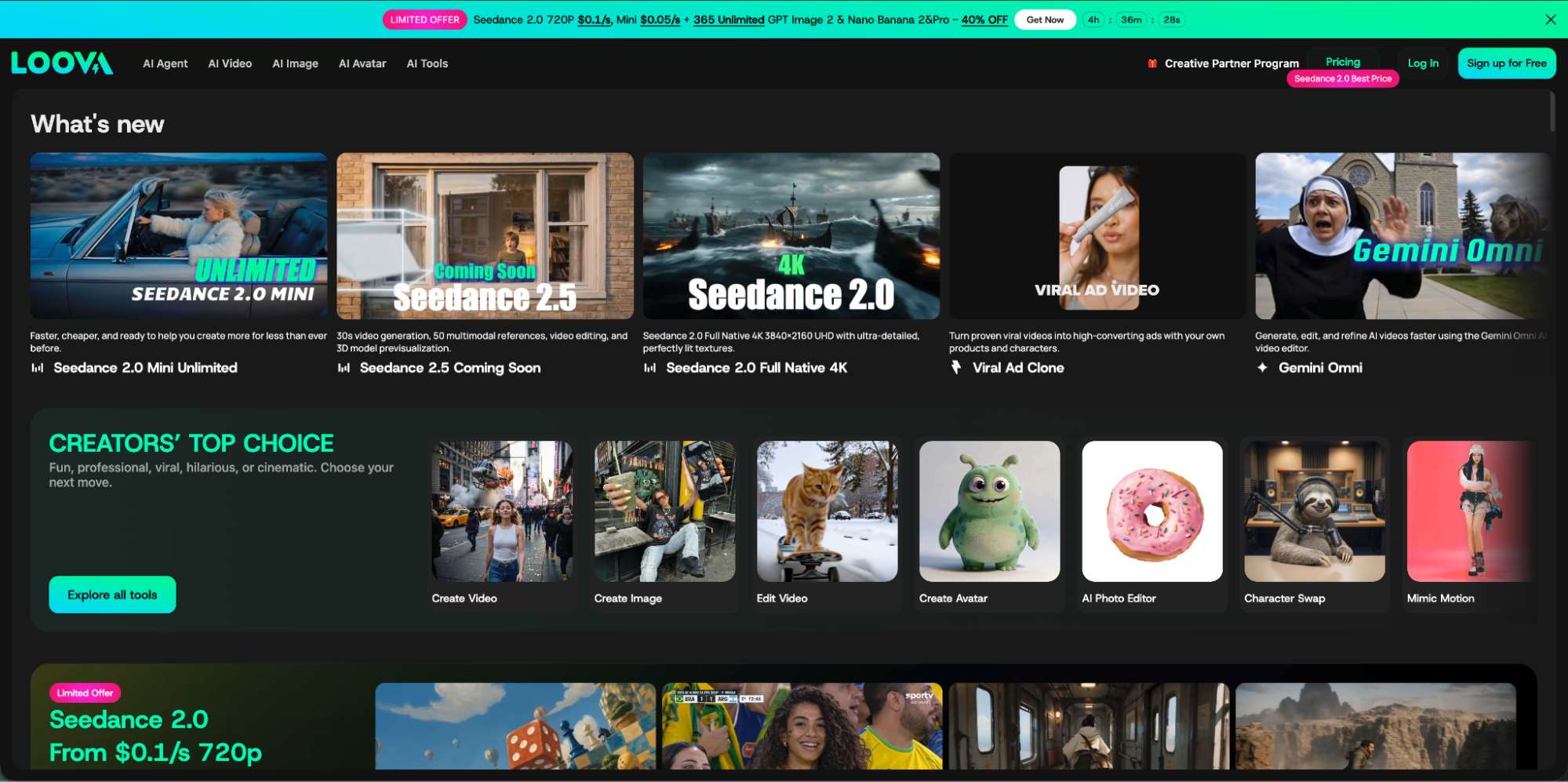
Most of the testing happened inside Loova. Since the platform integrates multiple AI models in one place, it allowed me to compare outputs side by side using the same creative brief. That process made it much easier to identify which models were actually useful for different marketing situations.
What Makes a Great AI Video Model for Marketing
Marketers usually have different priorities than filmmakers.
The most cinematic model is not always the most practical one.
When evaluating these tools, I focused on:
- Ad quality
- Content production speed
- Product consistency
- Human realism
- Ease of creating variations
- Platform compatibility
- Creative flexibility
For example, a beauty brand launching a new serum might need a premium hero video for its website, short social ads for TikTok, and several UGC-style creatives for paid campaigns. The ideal AI model should make those different formats easier to produce.
Seedance 2.0
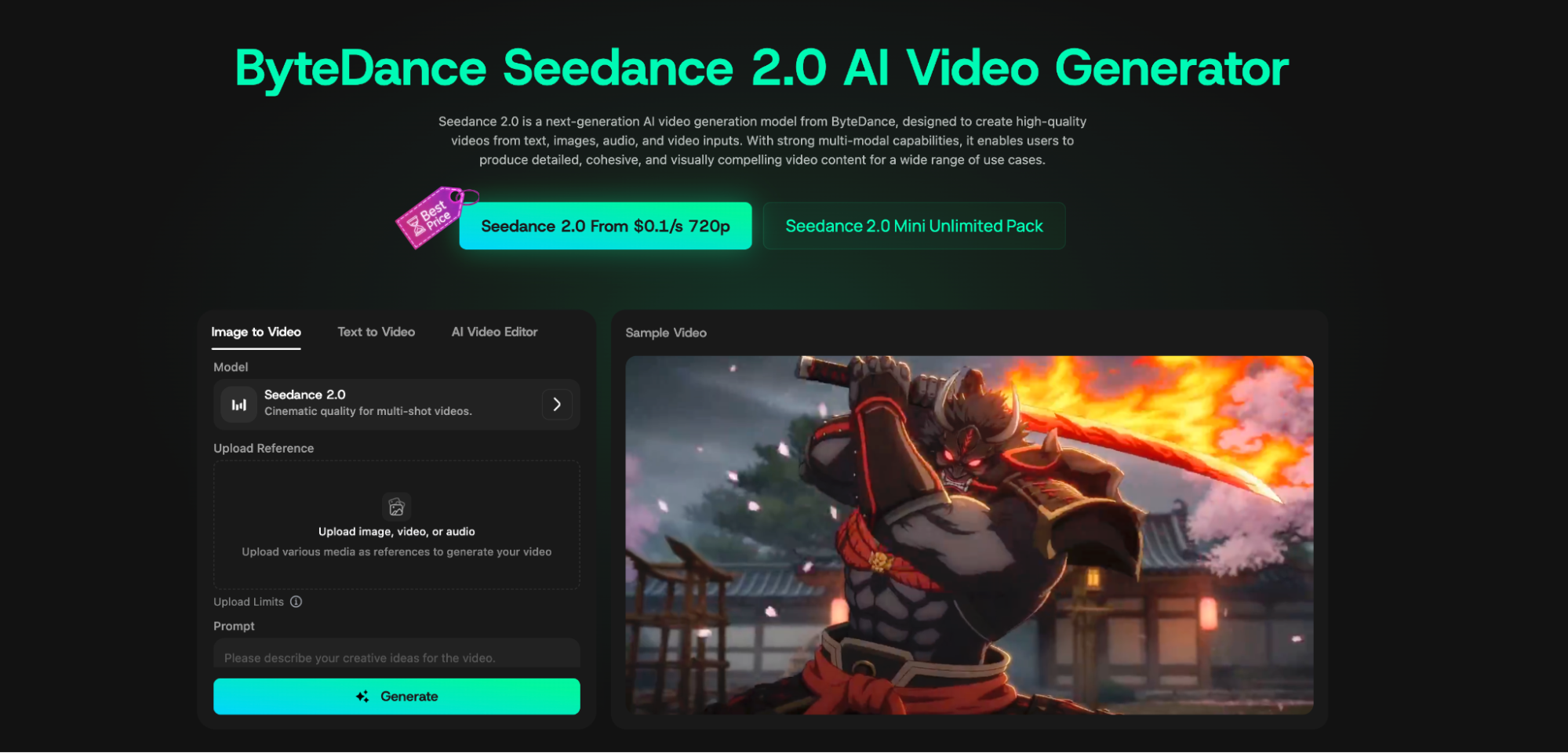
Best for premium product advertising
Seedance 2.0 consistently produced some of the strongest commercial visuals I tested. It understands cinematic composition, lighting, and atmosphere particularly well.
I used it to create a fictional luxury skincare campaign featuring close-up product shots, reflective surfaces, and soft studio lighting. The output looked remarkably similar to premium beauty advertisements produced by large brands.
Seedance performs especially well when the goal is to elevate product perception and build an emotional connection around the brand.
I would recommend it for:
- Beauty campaigns
- Luxury products
- Jewelry brands
- Premium ecommerce businesses
The tradeoff is that it usually requires more prompt refinement than faster, social-first tools.
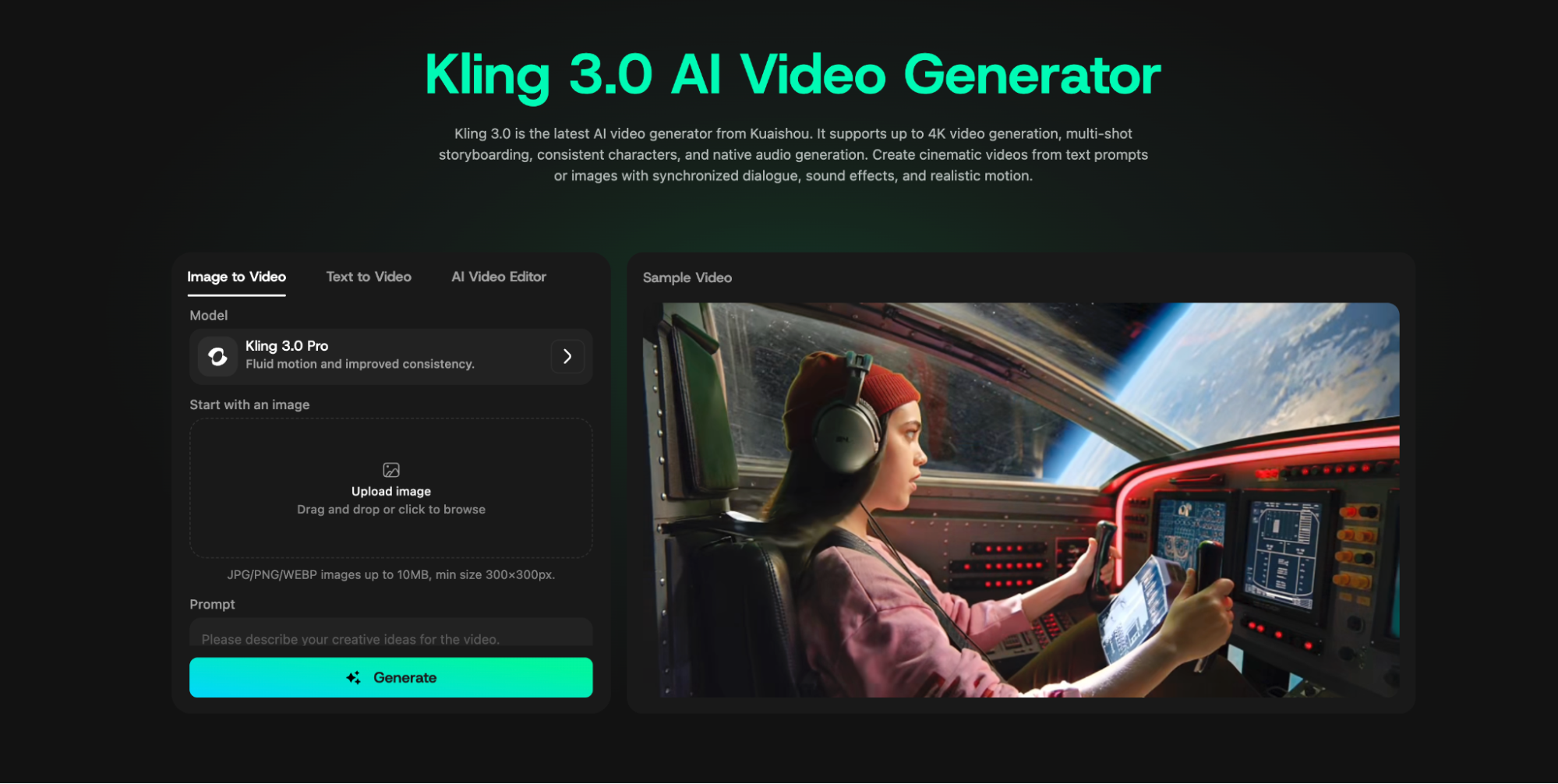
Kling 3.0 Pro
Best for UGC and lifestyle marketing
Human-centered advertising continues to dominate social media, and this is where Kling 3.0 performs exceptionally well.
I tested it on fashion campaigns, fitness advertisements, and creator-style product promotions. The body movement, facial expressions, and environmental interactions looked more believable than most competing models.
This matters because many of today’s highest-performing ads feel authentic rather than overly produced.
Kling is particularly effective for:
- UGC-style ads
- Influencer marketing
- Fashion campaigns
- Fitness brands
- Consumer products
If your campaigns rely heavily on people interacting with products, Kling is one of the most useful tools available.
Google Veo 3.1
Best for high-end marketing campaigns
Google Veo 3.1 delivered some of the most balanced results across all my testing. It combines realism, camera control, and strong environmental detail.
I used it to create a product launch campaign for a fictional consumer electronics brand. The camera movement and lighting felt polished enough for large-scale advertising.
Veo works especially well for:
- Product launches
- Website hero videos
- Brand awareness campaigns
- Consumer electronics marketing
The model performs best when marketers already have a clear creative direction and want premium execution.
PixVerse V6
Best for social media campaigns
Speed matters enormously in modern marketing.
Many teams need to publish content daily, test multiple creatives, and respond quickly to trends. PixVerse V6 is designed for exactly this type of production.
I tested it on product-focused social campaigns and app promotions. The model generated short-form content quickly and made it easy to experiment with different ad variations.
PixVerse works particularly well for:
- TikTok ads
- Instagram Reels
- Product promotions
- Daily content production
While it doesn’t match the cinematic depth of Veo or Seedance, it often feels more practical for day-to-day marketing execution.
Sora 2
Best for storytelling campaigns
Some of the most memorable marketing campaigns feel more like short films than advertisements.
This is where Sora 2 performs particularly well.
I tested it using a coffee brand campaign that followed a customer throughout different moments of the day. Instead of focusing entirely on the product, the ad emphasized the emotional experience surrounding it.
Sora’s ability to maintain continuity across scenes makes it useful for:
- Brand films
- Story-driven advertising
- Lifestyle campaigns
- Customer journey content
For marketers focused on long-term brand building rather than immediate conversion, Sora offers compelling creative possibilities.
Midjourney and text to image tools
Best for campaign planning
Video production often starts long before motion generation.
Many of my projects begin with visual exploration using AI text to image tools. With Midjourney, creating product concepts, storyboards, and mood boards helps establish a clear visual direction before moving into video production.
Strong planning usually leads to stronger final campaigns.
I use these tools for:
- Campaign concepts
- Product presentation ideas
- Storyboarding
- Brand identity development
They may not produce final videos, but they often determine the success of everything that follows.
How Marketers Are Combining AI Models
One of the biggest lessons from my testing is that the best marketing videos rarely come from a single model.
A typical campaign might start with AI text to image generation to explore visual directions. Product shots may then be turned into motion using AI image to video capabilities. Premium hero scenes could be generated using Seedance or Veo, while lifestyle scenes are created with Kling and social variations are produced using PixVerse.
This approach gives marketers much more flexibility.
It also reduces creative bottlenecks because every model contributes where it performs best.
That is one reason platforms like Loova are becoming increasingly useful. Instead of managing multiple subscriptions and moving assets between different tools, marketers can compare outputs and experiment with different models inside one environment.
The Future of AI Marketing Content
The way marketers create content is changing quickly.
I expect three major trends to continue:
First, campaign production will become increasingly multi-model. Different tools will specialize in different types of content.
Second, marketers will rely more heavily on AI image and video generation for rapid experimentation and creative testing.
Finally, AI-assisted production will become part of everyday marketing operations rather than an occasional creative exercise.
The teams that succeed will not necessarily use the most advanced model. They will understand which model works best for each specific campaign objective.
Final Thoughts
The best AI video model for marketers depends entirely on what you’re trying to achieve.
If your goal is premium product storytelling, Seedance and Veo are difficult to beat. If your campaigns depend on authentic human interactions, Kling remains one of the strongest options available. For social-first marketing and rapid experimentation, PixVerse offers excellent speed and flexibility.
What stood out most during testing is that modern marketing no longer revolves around a single creative tool. The strongest campaigns are increasingly built through combinations of image generation, video generation, and multi-model experimentation.
Now, all in one platforms like Loova make that process easier by giving marketers access to different AI capabilities in one place and allowing them to move from concept to finished campaign much more efficiently.
Frequently Asked Questions
What is the best AI video model for marketers in 2026?
There is no single best model for every marketing task. If you’re producing premium brand campaigns and cinematic product ads, Seedance 2.0 and Google Veo 3.1 are among the strongest choices. If your focus is social media marketing and rapid content production, tools like PixVerse may be more practical. The best option depends on your campaign goals, budget, and content format.
Which AI model is best for product launch videos?
For product launches, I would recommend Seedance 2.0 and Google Veo 3.1. Both models handle lighting, camera movement, and product presentation exceptionally well. They are particularly effective for technology launches, beauty products, luxury goods, and premium ecommerce campaigns where visual quality directly influences brand perception.
Are AI video generators useful for social media marketing?
Absolutely. AI video generators make it much easier to create content at the speed that social platforms demand. Marketers can generate product teasers, promotional clips, educational videos, and multiple ad variations in a fraction of the time required by traditional production. This allows teams to publish more consistently and test more creative ideas.
What is the difference between ai text to video and ai image to video?
AI text to video generates videos directly from written prompts. For example, you can describe a luxury watch rotating under dramatic studio lighting, and the model creates the scene from scratch. AI image to video starts with an existing image and adds motion to it. Marketers often use image to video to animate product photos, create subtle camera movements, or turn static campaign visuals into engaging social content.
Which AI model works best for UGC-style advertising?
Kling 3.0 is currently one of the strongest models for UGC-style ads because it handles human movement and interactions naturally. This makes it particularly effective for creator-style product demonstrations, lifestyle campaigns, and social ads that need to feel authentic rather than heavily produced.
Can AI video generators help ecommerce brands create ads?
Yes. Ecommerce brands can use AI video tools to create product showcase videos, social ads, seasonal campaigns, and landing page visuals without large production budgets. AI also makes it easier to generate multiple creative variations for testing, which is especially valuable for performance marketing and paid acquisition campaigns.
Should marketers use one AI model or multiple models?
In most cases, using multiple models produces better results. Different tools have different strengths. One model may excel at cinematic product shots, another may be better for realistic people, and another may generate social content more quickly. Many marketers now combine several tools to build more effective campaigns and improve creative flexibility.
How do marketers use AI video tools in real campaigns?
Most campaigns begin with concept development and visual planning. Marketers may first generate ideas and storyboards, then create product scenes, lifestyle shots, and social content using different AI models. Finally, they produce multiple variations for different platforms and audiences. This process allows teams to move from idea to publish-ready content much faster while maintaining creative quality and scalability.
INTERESTING POSTS
About the Author:

Amaya Paucek is a professional with an MBA and practical experience in SEO and digital marketing. She is based in Philippines and specializes in helping businesses achieve their goals using her digital marketing skills. She is a keen observer of the ever-evolving digital landscape and looks forward to making a mark in the digital space.