



In this post, I will show you how proxy rotation works as I give you a complete beginner’s guide to IP rotation and residential proxies.
Proxy rotation is one of the most important technologies behind anonymous browsing, web scraping, and large-scale data collection. Whether you’re a business gathering public market data, a developer building an automation tool, or a cybersecurity professional testing web applications, understanding how proxy rotation works can help you improve efficiency while reducing the risk of IP bans.
In this guide, we’ll explain what proxy rotation is, how it works, why it matters, and how to choose the right proxy provider for your needs. We’ll also compare some of the leading residential proxy providers available today.
Table of Contents
What Is Proxy Rotation?
Proxy rotation is the process of automatically changing the IP address used when sending internet requests through proxy servers. Instead of using the same IP address repeatedly, a rotating proxy service assigns a different IP from its available pool based on predefined rules.
This process makes requests appear as though they originate from multiple real users rather than a single device. As a result, websites are less likely to detect repetitive activity or trigger rate limits.
Proxy rotation is commonly used with:
- Web scraping
- Market research
- Price monitoring
- SEO tracking
- Ad verification
- Brand protection
- Anonymous browsing
- Large-scale data collection
Many residential proxies include built-in IP rotation, allowing users to rotate IPs automatically without manual intervention.
How Proxy Rotation Works
At its core, proxy rotation relies on a proxy provider maintaining a large pool of available IP addresses.
Here’s a simplified workflow:
- A user sends a request through the proxy server.
- The proxy provider assigns an IP address from its residential proxy network.
- The request reaches the target website using that IP.
- For the next request—or after a specified time interval—the provider assigns another available IP.
- The process repeats automatically.
Depending on the provider, IP rotation can happen:
- After every request
- Every few minutes
- At scheduled intervals
- When a connection ends
- On demand through an API
This automated IP rotation helps distribute requests across thousands or even millions of residential IP addresses.
Types of Proxy Rotation
Rotating Residential Proxies
Rotating residential proxies automatically switch between genuine residential IP addresses assigned by Internet Service Providers (ISPs).
These are widely used because they resemble normal user traffic and generally experience fewer blocks than many datacenter proxies.
They are particularly useful for:
- Web scraping
- Search engine monitoring
- Social media management
- Market intelligence
- Geographic testing
Sticky Sessions
Sometimes users need to maintain the same IP address for a period of time.
A sticky session allows one residential proxy to remain active for several minutes before rotating to another IP.
Sticky sessions are useful for:
- Logging into websites
- Shopping carts
- Multi-step workflows
- Account management
Manual Rotation
Some proxy servers allow users to manually request a new IP whenever needed.
This option gives developers greater control over automation workflows.
Why Proxy Rotation Matters
Without IP rotation, sending hundreds or thousands of requests from one address quickly attracts attention.
Many websites use automated security systems to detect unusual traffic patterns.
Rotating proxies help reduce these risks by:
- Distributing requests across multiple IP addresses
- Lowering the chance of IP bans
- Improving request success rates
- Supporting large-scale automation
- Enabling anonymous browsing
For businesses collecting publicly available information, proxy rotation also improves reliability by minimizing interruptions caused by blocked IPs.
Common Use Cases
Proxy rotation supports many legitimate business and research activities.
Some common examples include:
- Collecting publicly available pricing information
- Monitoring search engine rankings
- Brand protection
- Ad verification
- Competitor research
- Academic research
- Website quality assurance
- Localization testing
Organizations performing web scraping often combine rotating residential proxies with scraping frameworks to improve reliability while respecting applicable laws and website terms of service.
Editor’s Choice: Best Residential Proxy Providers
🥇 1. Oxylabs — Best for Enterprise & Large-Scale Data Collection
Oxylabs earns the Editor’s Choice position because it combines a massive residential proxy network with enterprise-grade infrastructure designed for demanding workloads.
Its platform offers advanced geographic targeting, high reliability, and consistent performance for organizations handling large-scale web scraping, market intelligence, and data collection projects.
Both enterprise teams and experienced individual users appreciate its strong documentation, automation capabilities, and dependable infrastructure.
Best for:
- Enterprise businesses
- Large-scale data collection
- Market intelligence
- Web scraping
- Advanced targeting

🥈 2. Decodo — Best Overall Residential Proxy Provider
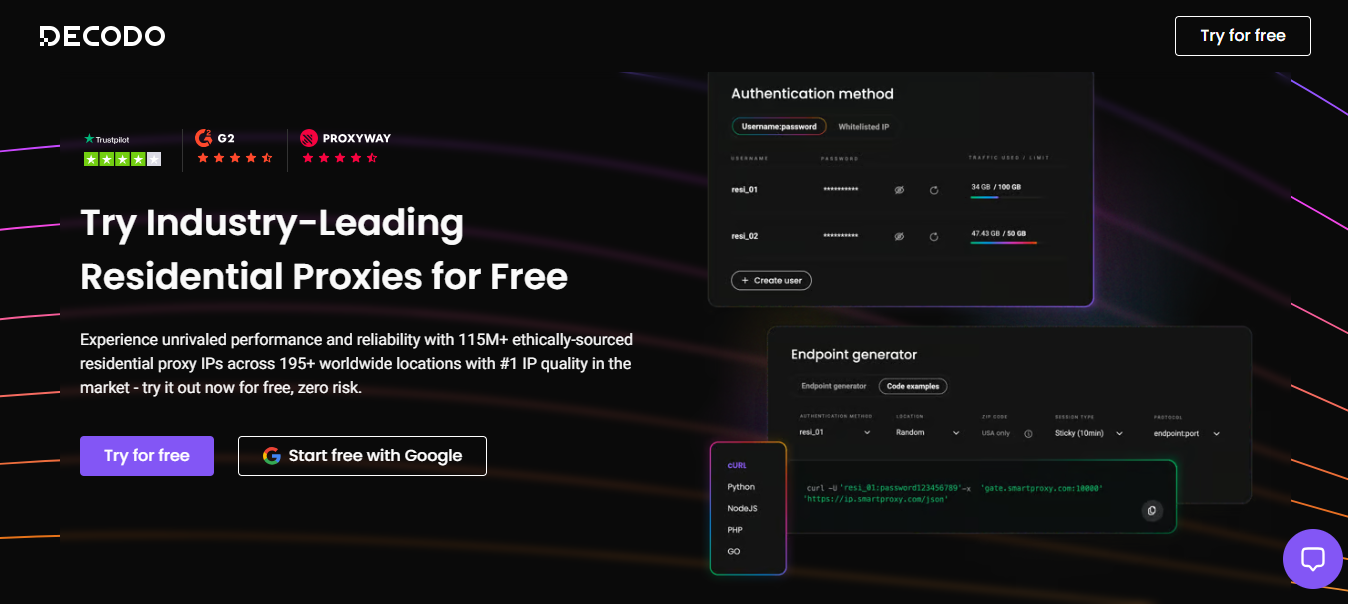
Decodo provides an excellent balance between affordability, ease of use, and performance.
Its beginner-friendly dashboard makes deployment straightforward, while rotating residential proxies, API support, and clear documentation make it suitable for developers and businesses alike.
Fast setup and dependable performance make it an attractive option for users who want enterprise-quality features without unnecessary complexity.
Best for:
- Businesses
- Developers
- Beginners
- Automation projects
- Residential proxies

🥉 3. Webshare — Best Budget-Friendly Residential Proxy Provider
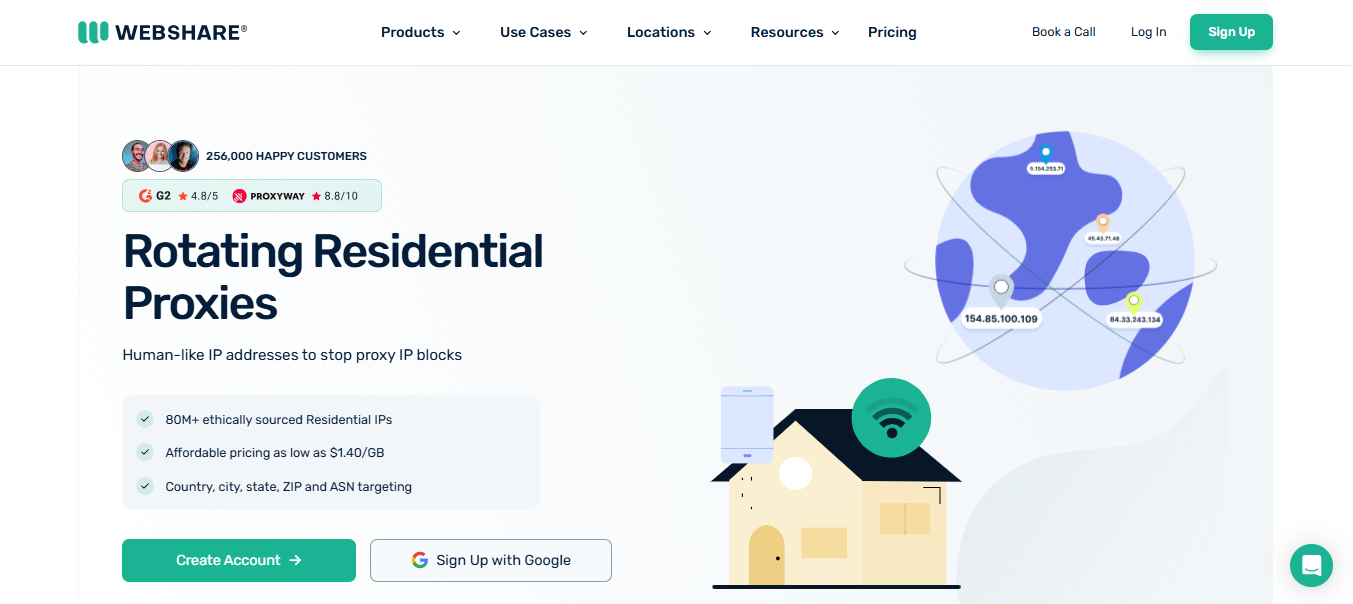
Webshare stands out by making residential proxies accessible to individuals, freelancers, developers, and small businesses.
Its affordable pricing, simple dashboard, and available free plan allow users to experiment before upgrading.
Despite its lower pricing, it still offers reliable performance for many everyday proxy use cases.
Best for:
- Students
- Freelancers
- Developers
- Small businesses
- Budget-conscious users

Provider Comparison
| Provider | Best For | Key Strength |
| Oxylabs | Overall | Balance of performance & value |
| Decodo | Enterprise | Large-scale proxy infrastructure |
| Webshare | Budget | Affordable and easy to use |
Other Residential Proxy Providers Worth Considering
Several other reputable proxy providers also offer quality residential proxy services:
- Mars Proxies — Suitable for users looking for flexible residential proxy plans and competitive pricing.
- IPRoyal — Popular among developers and smaller businesses seeking straightforward proxy solutions.
- Bright Data — Offers one of the industry’s largest proxy infrastructures with extensive targeting options.
- SOAX — Known for flexible rotation controls and broad geographic coverage.
- NetNut — Focuses on high-speed residential connectivity with direct ISP relationships.
- ProxyEmpire — Provides rotating residential proxies with global coverage for business users.
- Rayobyte — Offers residential and datacenter proxy solutions for various automation tasks.
- Infatica — Supports businesses with scalable proxy infrastructure for data collection.
- Live Proxies — Delivers rotating proxy services suitable for research, monitoring, and automation.
Each provider has strengths depending on your technical requirements, budget, and intended use case.
Buying Guide: Choosing the Right Residential Proxy Provider
Before selecting a proxy provider, evaluate the following factors:
- Price: Compare subscription plans against expected usage.
- Performance: Look for consistent speed and connection stability.
- Reliability: Providers should maintain high uptime.
- IP Pool Size: Larger residential proxy networks offer greater flexibility.
- Geographic Coverage: Choose providers with locations matching your target markets.
- Rotation Options: Support for automatic and sticky IP rotation can improve workflows.
- Dashboard: A clear management interface simplifies administration.
- Customer Support: Responsive technical support is valuable for troubleshooting.
- API Availability: Developers should verify automation support.
- Ease of Use: Simple setup benefits both beginners and professionals.
- Security: Ensure encrypted connections and responsible infrastructure management.
- Scalability: Your provider should accommodate future growth.
Frequently Asked Questions
Is proxy rotation legal?
Proxy rotation itself is generally legal. However, users should always comply with applicable laws, website terms of service, and ethical data collection practices.
What’s the difference between residential proxies and datacenter proxies?
Residential proxies use IP addresses assigned by ISPs to real devices, while datacenter proxies originate from cloud or hosting providers.
How often should IPs rotate?
It depends on the application. Some tasks benefit from rotating after every request, while others require sticky sessions for several minutes.
Does proxy rotation improve web scraping?
Yes. Rotating IP addresses can reduce the likelihood of rate limits and temporary blocks, improving reliability for many scraping tasks.
Are rotating proxies suitable for anonymous browsing?
Yes. Rotating proxy servers can help improve privacy by regularly changing the visible IP address, although they are not a complete replacement for broader online security practices.
Can developers automate proxy rotation?
Most modern proxy providers offer APIs that allow applications to manage IP rotation automatically.
Conclusion
Proxy rotation has become an essential technology for businesses, researchers, marketers, developers, and cybersecurity professionals who rely on reliable internet access at scale. By automatically changing IP addresses through a residential proxy network, rotating proxy servers improve anonymous browsing, support web scraping workflows, and reduce the likelihood of connection interruptions.
For users seeking enterprise-grade performance and large-scale data collection capabilities, Oxylabs stands out as the strongest overall choice. Decodo offers an excellent combination of usability, features, and dependable residential proxies for businesses and professionals, while Webshare remains an attractive option for developers, students, freelancers, and anyone seeking reliable residential proxies on a budget.
To continue learning about online privacy and security, consider exploring SecureBlitz guides covering VPNs, cybersecurity, password managers, antivirus software, privacy tools, secure browsers, web scraping, and AI tools. These resources complement proxy technology and can help you build a more secure and efficient online workflow.
INTERESTING POSTS
- Best Rotating Proxies for Web Scraping in 2026
- What Is a Residential Proxy? 2026 Guide, Types & Uses (Complete Breakdown)
- Best Web Scraper APIs: Unlocking the Web’s Data
- Ultimate Guide To Proxy Service: How to Choose for Any Use Case in 2026
- Top 10 Data Masking Techniques Enterprises Use to Prevent Large-Scale Data Breaches
About the Author:

Meet Angela Daniel, an esteemed cybersecurity expert and the Associate Editor at SecureBlitz. With a profound understanding of the digital security landscape, Angela is dedicated to sharing her wealth of knowledge with readers. Her insightful articles delve into the intricacies of cybersecurity, offering a beacon of understanding in the ever-evolving realm of online safety.
Angela's expertise is grounded in a passion for staying at the forefront of emerging threats and protective measures. Her commitment to empowering individuals and organizations with the tools and insights to safeguard their digital presence is unwavering.



