




In this duel, I will show you AI Humanizers vs. AI Detectors: who’s winning the race?
You’ve spent hours prompting an AI to generate the perfect blog post, only to run it through a detector and see the dreaded result: “100% AI-Generated.” It’s a common frustration for marketers, students, and writers trying to leverage technology for efficiency.
This creates a significant roadblock, leaving you to wonder if your hard work will be penalized or dismissed. The core of the problem is that while AI is great for creating drafts, its output often lacks the natural variation and nuance of human writing.
This is where a new class of tools comes into play. An AI Humanizer is designed to bridge this gap. It refines AI-generated text by adjusting sentence structures, swapping out predictable phrasing, and introducing the subtle complexities that are characteristic of human expression. The goal isn’t to deceive, but to polish a machine’s output into something that reads more naturally and connects better with a human audience.
Effectively, these tools help you get the best of both worlds. You get the speed and scale of artificial intelligence without the robotic and often repetitive language that AI detectors are built to spot.
Learning how to Humanize AI Text is becoming a crucial skill for anyone who wants to produce high-quality content efficiently. It’s about taking a solid AI foundation and layering on the finesse that makes your writing truly stand out and pass digital scrutiny.
Table of Contents
What Are AI Detectors and How Do They Really Work?
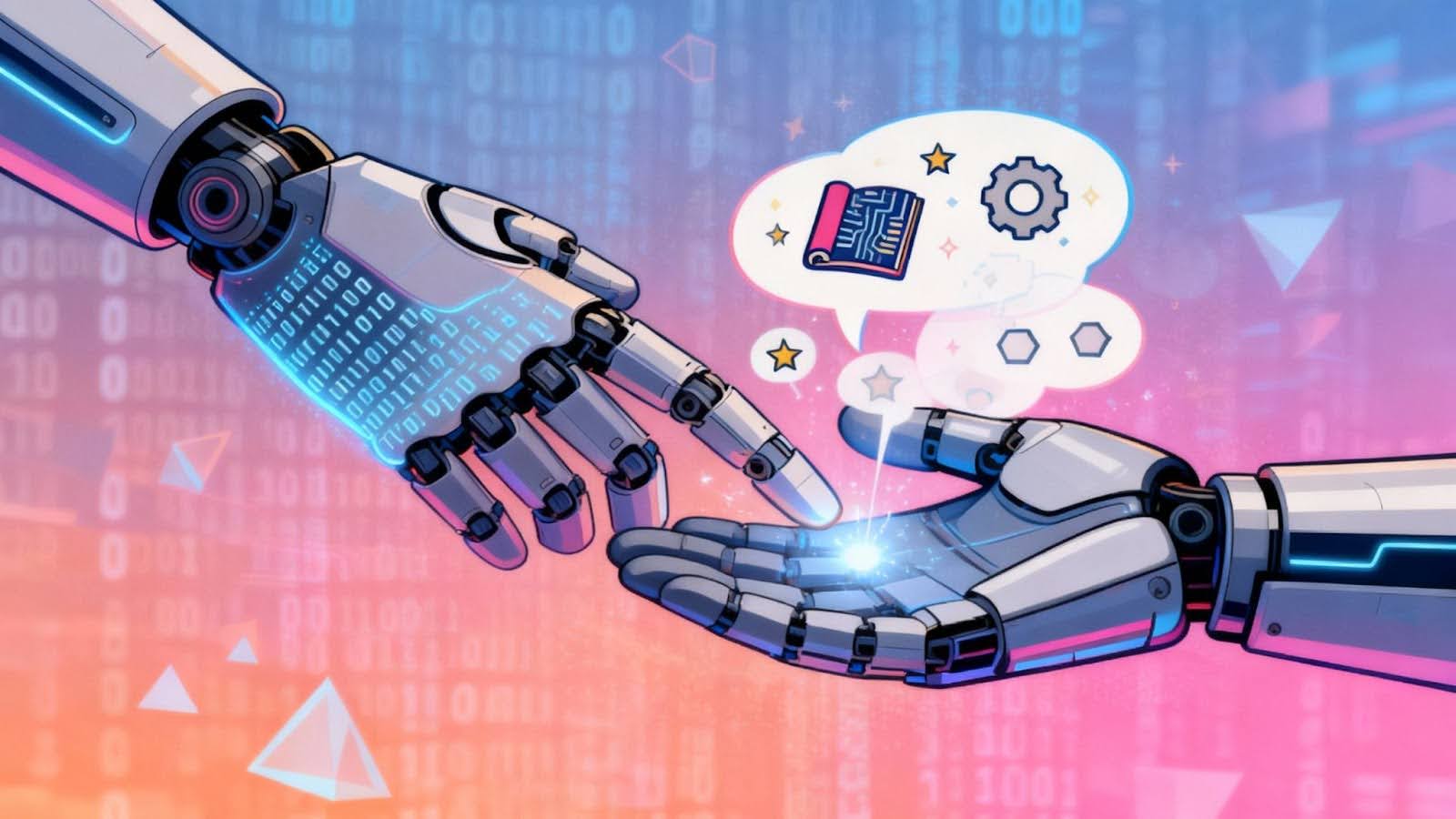
AI detectors are software programs designed to answer a simple question: Was this text written by a human or a machine? They don’t actually “understand” the content in the way a person does. Instead, they act as sophisticated pattern recognition systems.
They analyze text for specific statistical markers that are common in AI-generated content. Two of the main concepts they rely on are “perplexity” and “burstiness.”
* Perplexity: This measures how predictable a piece of text is. AI models, trained on vast datasets, tend to choose the most statistically likely word to follow the previous one. This makes their writing very smooth but also very predictable. Human writing is less predictable and has a higher perplexity score.
* Burstiness: This refers to the variation in sentence length and structure. Humans naturally write in bursts, using a mix of short, punchy sentences and longer, more complex ones. AI models, on the other hand, often produce sentences of similar length and structure, resulting in a monotonous rhythm that detectors can easily flag.
The Problem with AI Detectors
While clever, these tools are far from perfect. Their biggest drawback is the risk of “false positives,” where human-written text is incorrectly flagged as being AI-generated. This can happen for many reasons. A writer who uses a formal tone or follows a rigid structure might trigger the detector.
Even text from non-native English speakers can sometimes be flagged due to less varied sentence patterns. This unreliability creates a major problem for content creators who fear being unfairly penalized by search engines or academic institutions.
The Solution: Top-Tier AI Humanizer Tools
In response to the limitations and pressures of AI detectors, humanizer tools have emerged as an essential part of the modern writer’s toolkit. These platforms are engineered to do one thing exceptionally well: restructure AI text to mirror human writing patterns. They are not simple “spinners” or paraphrasers that just swap out words.
A high-quality humanizer analyzes the entire text and makes intelligent changes:
* Varies Sentence Structure: It breaks up long, complex sentences and combines shorter ones to create a more natural flow.
* Improves Word Choice: It replaces common AI vocabulary with more engaging and contextually appropriate words.
* Introduces Nuance: It adds the subtle idiomatic expressions and turns of phrase that make writing feel authentic.
By focusing on these core elements, a leading tool like the one from MyDetector.AI can transform a robotic draft into a polished piece of content that is indistinguishable from human writing.
It directly addresses the metrics of perplexity and burstiness, making the text less predictable and more dynamic, allowing it to bypass even the most advanced detectors. This gives creators the confidence to use AI for brainstorming and drafting without worrying about their final product being flagged.
READ ALSO: The Art of Natural Writing: Turning AI Text into Human-Like Content
The Efficiency Argument: Why You Need a Humanizer
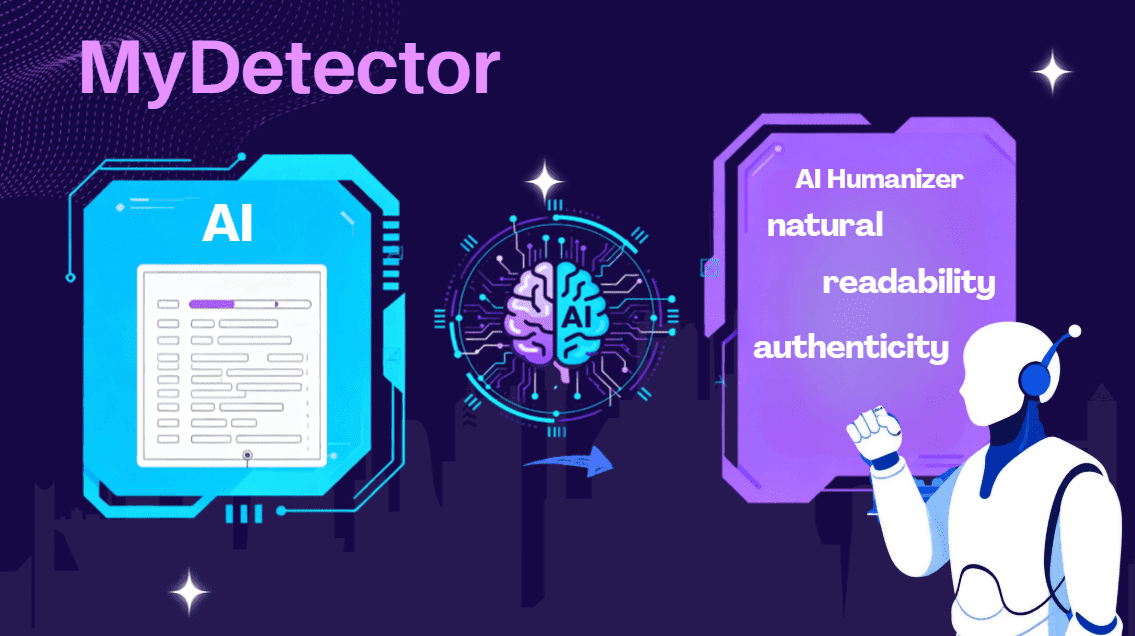
The debate isn’t just about avoiding detection; it’s about reclaiming your time and boosting your productivity. Content creation is a demanding process, and AI has provided a powerful way to accelerate the initial stages. A humanizer tool perfects that process.
Overcoming Writer’s Block
Every writer has stared at a blank screen, unsure where to start. AI can generate a comprehensive draft in seconds, providing the raw material you need to get going. A humanizer then refines that material, making it easier for you to start the final editing and personalization process. It removes the initial friction, turning a daunting task into a manageable one.
Scaling Content Production
For businesses and marketers, the demand for fresh content is relentless. You need blog posts, social media updates, emails, and reports. Using an AI-to-humanizer workflow allows you to scale your output without sacrificing quality. You can produce more content in less time, freeing up your team to focus on strategy, research, and creative thinking.
Enhancing Readability
Sometimes, AI-generated text can be grammatically perfect but still feel dense and difficult to read. Humanizers often simplify convoluted sentences and improve the overall flow. This makes the content more engaging for your audience, which can lead to lower bounce rates, more time on page, and better overall performance.
Navigating the Ethics of AI Humanization
As with any new technology, it’s important to consider the ethical implications. Is using an AI humanizer a form of cheating or deception? The answer depends entirely on your intent.
The ethical line is drawn between enhancement and dishonesty. Using a tool to refine your own ideas, improve clarity, or polish a draft is a responsible use of technology. It’s no different from using a grammar checker or a thesaurus. You are still the author; you are simply using a tool to improve the final product.
However, using these tools for academic dishonesty, generating spam, or creating misleading content is a clear ethical violation. The technology itself is neutral. It’s a powerful instrument that should be used to augment human creativity, not replace it. The goal should always be to produce authentic, valuable content that you stand behind.
Practical Steps to Humanize AI Content a Better Way
Simply running your text through a humanizer isn’t the final step. To create truly exceptional content, you need to combine technology with a human touch.
1. Start with a High-Quality Prompt
The quality of your final output depends heavily on the quality of your initial input. Don’t just give the AI a simple topic. Provide it with a detailed prompt that includes your target audience, desired tone, key points to cover, and specific keywords. The better the raw material, the better the final result.
2. Use the Humanizer as Your First Editor
Once you have your AI-generated draft, run it through a trusted humanizer tool. This will handle the heavy lifting of restructuring sentences and improving the text’s flow. It’s like having an assistant who prepares a rough-cut for you to finalize.
3. Add Your Unique Voice and Experience
This is the most important step. No AI or tool can replicate your personal stories, insights, or opinions. Go through the humanized text and inject your unique perspective. Add a personal anecdote, a case study from your experience, or a strong, original conclusion. This final layer is what separates good content from great content.
4. Fact-Check and Verify Everything
AI models can sometimes “hallucinate” or present information that is inaccurate or outdated. It is your responsibility as the publisher to verify every fact, statistic, and claim in the article. Never trust AI-generated information without cross-referencing it with reliable sources.
The Final Word
The relationship between AI humanizers and AI detectors is an ongoing technological race. As one gets smarter, the other adapts. For content creators, the key is to stay focused on the ultimate goal: creating high-quality, authentic, and valuable content for a human audience.
AI humanizers are not about tricking a system. They are powerful efficiency tools that, when used ethically, help you refine AI drafts into polished, readable, and engaging pieces. By combining the speed of AI with the irreplaceable touch of human insight, you can produce better content faster than ever before.
INTERESTING POSTS
About the Author:

Chandra Palan is an Indian-born content writer, currently based in Australia with her husband and two kids. She is a passionate writer and has been writing for the past decade, covering topics ranging from technology, cybersecurity, data privacy and more. She currently works as a content writer for SecureBlitz.com, covering the latest cyber threats and trends. With her in-depth knowledge of the industry, she strives to deliver accurate and helpful advice to her readers.


