


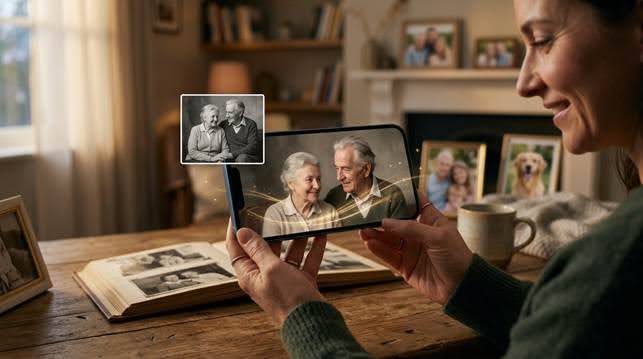

Learn how Relumi uses AI photo animation to bring still images to life with natural motion, subtle expression changes, and a simple mobile workflow for portraits, old photos, pets, and personal memories.
If you have ever looked at a photo and felt that the moment inside it was bigger than a still frame, you already understand why AI photo animation is getting so much attention. A smile, a glance, a pet expression, or an old family portrait can carry more emotion than one frozen image seems able to hold. The appeal of animation is not only that the picture moves. It is that the memory starts to feel closer again.
The challenge is that motion can easily go wrong. If the movement feels too strong, the result looks artificial. If the expression changes too much, the person stops feeling like themselves. If the effect feels generic, the emotional value disappears. That is why the best AI photo animation tools are not just adding movement. They are trying to understand the structure, mood, and visual logic of the original image before anything begins to move.
Table of Contents
Part 1. Why people want photos to move in the first place
There are several reasons, and most of them are emotional. You may want to see an old family portrait feel alive again. You may want a pet photo to reflect the personality you remember so clearly. You may want a memorial image to feel gentler and more present. Or you may simply want a stronger visual for social media, where static images often disappear quickly in the feed.
In every case, the goal is not motion for its own sake. You are trying to recover something the still image cannot fully show on its own. That is why people respond so strongly when a photo animation works. The image stops feeling like a record of the moment and starts feeling a little closer to the moment itself.
Part 2. What makes AI photo animation feel natural instead of fake
Natural motion depends on restraint and structure. A useful animation tool has to read facial shape, body position, lighting, and the emotional tone of the picture. It needs to add movement that feels physically possible and visually consistent with the original frame. If the motion ignores those details, the result often looks like a gimmick rather than a memory coming back to life.
This is why subtle motion matters so much. A small smile shift, a soft blink, a slight head movement, or a gentle body cue can feel far more convincing than a big dramatic effect. The best result is often the one that feels easiest to believe. When you can imagine the subject really moving that way, the animation becomes much more powerful.
Part 3. Why Relumi fits this technology trend so well
When you look at Relumi, the main strength is that it treats animation as an emotional extension of the original image. The goal is not to force action into the frame. The goal is to let the photo move in a way that still feels true to the memory.
That is what makes AI photo animation so compelling when it is done well. The technology is useful because it reads structure, lighting, and expression before adding motion, which makes the result feel softer and more believable.
For you as a user, that means less technical friction. You do not need to build a video from scratch or learn complex animation tools. You can start with one meaningful picture and turn it into something that feels more present without losing its original emotion.
Why this feels useful beyond simple visual novelty
The strongest value is emotional clarity. The app is not only trying to make your photos more dynamic. It is trying to make them feel closer to how you remember them. That matters if the image is personal, nostalgic, or deeply meaningful. It also matters if you simply want a more engaging visual without learning full video editing.
Part 4. How to animate a photo on mobile
If you want a simple mobile workflow, the official photo animation guide gives you a clear path. You choose the image, start the animation process, review the result, and save it once the motion feels right. The steps are simple, but the emotional effect can be surprisingly strong when the source photo already matters to you.
Step 1. Choose the photo you want to animate
This is where you decide which memory deserves more movement. It could be an old portrait, a pet photo, or a personal image that already means a lot to you but still feels too quiet as a still frame.
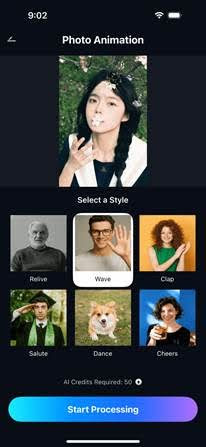
Step 2. Start the photo animation process on mobile
Once the image is selected, the app begins turning a static picture into something more alive. This matters because most people want motion that feels easy to create, not a long editing workflow that turns one photo into a complicated project.
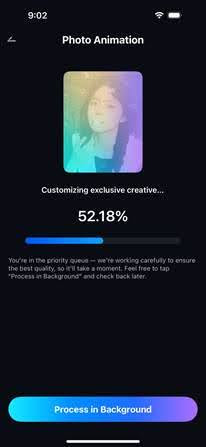
Step 3. Review the animated result
A good result should feel gentle and believable. You want motion that supports the feeling of the photo instead of making it look exaggerated or artificial. That is why this review step matters so much.

Step 4. Save the animated photo and keep or share it
When the motion feels right, saving becomes more than a final tap. It turns the photo into something you can revisit, share with family, post online, or keep as a private memory that now feels a little closer to life.

Part 5. Where AI photo animation matters most
Old family photos are one of the most obvious examples. A still portrait from decades ago can suddenly feel warmer when a subtle expression shift or small motion is added. The point is not to rewrite history. The point is to reconnect with it in a way that feels more immediate.
Pet photos are another strong use case. People often remember the energy of an animal more vividly than any single frozen picture can show. A little motion can help the image feel more true to the personality you knew. That is why pet animation can feel playful and emotional at the same time.
Social content is also part of the story. In crowded feeds, motion naturally draws more attention than a static image. If you want your profile visual, thumbnail, or post to feel more alive, animation can help without requiring a full video production workflow.
Quick comparison: what makes animation feel worth keeping
| What you want from animation | What often feels wrong | What makes it feel better |
| A moving old photo | The result feels forced or fake | Subtle motion that respects the original image |
| A pet portrait with personality | The movement feels random | Motion that matches posture and mood |
| A tribute image | The effect feels too dramatic | Gentle motion that stays respectful |
| A social content asset | The image still feels flat | More visual energy without heavy editing |
When those elements come together, animation stops feeling like a trick. It starts feeling like a better way to hold onto the emotion already inside the photo.
Conclusion
The technology behind AI photo animation matters because movement only feels powerful when it still respects the original image. That is why better tools focus on subtle motion, emotional consistency, and a believable visual result instead of exaggerated effects.
If you want a mobile way to bring still images closer to life, Relumi is easy to notice in this category. It supports AI photo animation in a way that feels simpler, more personal, and more emotionally useful for portraits, pets, old photos, and the moments you do not want to leave frozen.
INTERESTING POSTS
- Why Enroll Your Kids In 3D Modelling And Animation Courses
- Understanding the Risks of Face Swap Videos: A Practical Safety Guide
- Why Is A CompTIA Certificate Important?
- AI Face Editor Guide: AI Photo Retouch & Open Eyes Photo Editor Now
- Smart Security Systems and Motion Sensors: Debunking Common Myths and Misconceptions
- AI Art Generator Platforms: Features, Comparisons, and User Experiences
About the Author:

John Raymond is a cybersecurity content writer, with over 5 years of experience in the technology industry. He is passionate about staying up-to-date with the latest trends and developments in the field of cybersecurity, and is an avid researcher and writer. He has written numerous articles on topics of cybersecurity, privacy, and digital security, and is committed to providing valuable and helpful information to the public.


