




Enterprise security has never been more urgent — or more misunderstood.
Despite ballooning security budgets, the average cost of a data breach hit a record high in 2024, and the trend hasn’t reversed. Organizations are spending more on tools than ever before, yet the breaches keep coming.
The uncomfortable truth? Spending more isn’t the problem. Spending on the wrong things, in the wrong order, with no unified strategy, is.
If your enterprise security posture feels like a patchwork quilt of disconnected point solutions, you’re not alone. But you are exposed. Here’s what modern enterprise security actually requires — and where most organizations fall short.
Table of Contents
The Biggest Gaps in Enterprise Security Today
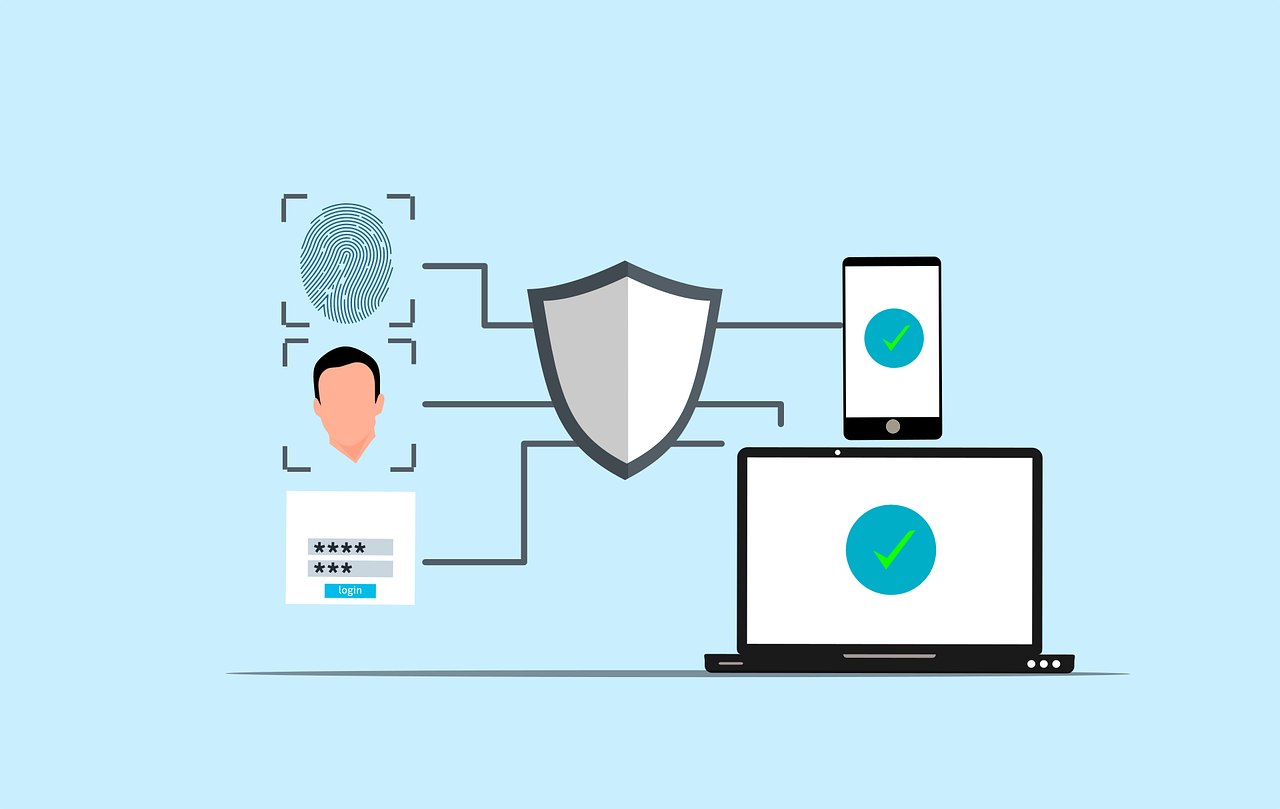
Before you can fix your security posture, you need to understand where the real holes are. Most enterprise breaches don’t happen because attackers outsmarted cutting-edge AI defenses. They happen because of predictable, avoidable failures.
1. Overreliance on Perimeter-Based Thinking
The “castle and moat” model of security — where you protect everything inside a defined perimeter — has been functionally dead since remote work went mainstream. Yet many enterprises still architect their defenses around it.
A 2025 IBM report found that over 60% of breaches involved compromised credentials — valid logins from outside the traditional network perimeter. If your security assumes that anything inside your network is trustworthy, attackers only need one set of stolen credentials to own your environment.
What to do instead: Adopt a Zero Trust Architecture (ZTA). Never trust, always verify — regardless of whether a request originates inside or outside your network. Every user, device, and application should be authenticated and authorized continuously.
2. Neglecting Physical Access Control
Here’s one that often gets overlooked in conversations dominated by firewalls and endpoint detection: physical security is still a massive attack vector.
Tailgating into server rooms, piggybacking onto badge access, or socially engineering your way past reception are all live threats. Enterprises operating across multiple sites — offices, data centers, warehouses — face exponentially more exposure if physical access isn’t centrally managed and regularly audited.
Platforms like Acre Security specialize in enterprise-grade access control, offering scalable solutions that integrate with broader security ecosystems. It’s a layer that enterprise security teams too frequently treat as an afterthought.
3. Insufficient Privileged Access Management (PAM)
Privileged accounts — admins, service accounts, root users — are prime targets. Compromising a standard user account often means limited damage. Compromising a privileged account can mean total network control.
Common failures include:
- Shared credentials across admin accounts
- Stale privileged accounts never deprovisioned
- Excessive privilege granted to users who don’t need it
The principle of least privilege is simple in theory and chronically under-implemented in practice. Quarterly access reviews, just-in-time provisioning, and mandatory MFA on all privileged accounts are non-negotiables.
4. Shadow IT Running Unchecked
Employees using unapproved SaaS tools, spinning up personal cloud storage, or connecting unauthorized devices to corporate networks creates blind spots that security teams simply can’t monitor or protect.
Shadow IT isn’t a malicious problem — it’s a convenience problem. People work around friction. The answer isn’t just blocking tools; it’s building a security-aware culture where employees understand why unapproved tools create risk, and approved alternatives are easy enough to actually use.
Building a Defensible Enterprise Security Strategy

Reacting to incidents isn’t a strategy. Here’s how to build one that’s proactive, layered, and scalable.
Start With a Comprehensive Risk Assessment
You can’t protect what you don’t know you have. A proper enterprise security risk assessment maps every asset — hardware, software, data repositories, cloud environments, third-party integrations — and evaluates the likelihood and potential impact of threats against each.
Many organizations skip this step or do it superficially. The result: expensive EDR tools protecting endpoints while unmonitored shadow IT instances sit wide open.
For a foundational walkthrough of how to structure this process, the Enterprise Security Guide covers risk frameworks, threat modeling, and compliance considerations in depth.
Layer Your Defenses Deliberately
Defense in depth means multiple independent security layers, each designed to catch what the previous one misses. In practice:
- Network security: Next-gen firewalls, network segmentation, IDS/IPS
- Endpoint security: EDR solutions with behavioral detection, not just signature-based AV
- Identity security: Zero Trust, MFA, PAM, and identity governance
- Data security: Encryption at rest and in transit, DLP tools, data classification
- Application security: Secure SDLC, WAFs, regular penetration testing
- Physical security: Access control, CCTV, visitor management, security patrols
No single layer is sufficient. The goal is to make each stage of an attack costly and detectable enough to catch threats before they become catastrophic.
Build an Incident Response Plan Before You Need It
The worst time to figure out your incident response process is mid-breach. Yet a significant portion of enterprises either have no formal IR plan or have one that hasn’t been tested in years.
A functional IR plan includes:
- Clear roles across IT, legal, PR, and executive leadership
- Defined communication chains — internal and external
- Playbooks for the most likely threat scenarios (ransomware, credential compromise, insider threat)
- Scheduled tabletop exercises — quarterly is better than annually
Speed of response is the single biggest factor in limiting breach damage. Organizations with mature IR processes contain breaches in hours. Those without can spend weeks just understanding the scope.
Test Your Defenses Regularly
Building a security stack and never stress-testing it is like installing a fire suppression system and never running a drill. Penetration testing, red team exercises, and vulnerability scanning should be on a defined schedule — not something that happens reactively after an audit flag.
Annual pen tests are a compliance floor. Mature security programs run continuous vulnerability assessments and conduct red team engagements at least twice a year.
The Human Layer: Your Biggest Risk and Your Best Asset
No technology stack compensates for a workforce that doesn’t understand basic security hygiene.
Phishing remains the most common initial access vector for enterprise attacks — not because it’s technically sophisticated, but because it works. A single employee clicking a convincing fake invoice can hand attackers a foothold that, months of lateral movement later, becomes a full organizational compromise.
Making Security Awareness Training Actually Stick
Security awareness training needs to be:
- Ongoing, not a once-a-year compliance checkbox
- Simulated — run phishing simulations to test and reinforce real behavior
- Role-specific — the finance team’s risk profile differs from the developer team’s
- Measured — track click rates on simulations, improve over time, and report upward
The organizations getting this right treat security culture as a continuous program. Not an event.
The Insider Threat Problem
Not every security incident comes from an external attacker. Disgruntled employees, contractors with excessive access, and even well-meaning insiders who mishandle sensitive data are all risk vectors.
Insider threat programs don’t require a surveillance state mentality. They require clear data handling policies, access scoped tightly to job function, and behavioral monitoring tools that flag anomalies — like an employee suddenly downloading large volumes of files before a resignation date.
Compliance Isn’t Security — But It’s Not Irrelevant Either

A common mistake is conflating regulatory compliance with actual security. Passing a SOC 2 audit or meeting GDPR requirements doesn’t mean you’re secure — it means you met a defined baseline on a particular day.
That said, frameworks like NIST CSF, ISO 27001, and CIS Controls provide useful structure. Use them as a floor, not a ceiling.
Organizations that treat compliance as a security strategy tend to be the ones making headlines for the wrong reasons.
Vendor and Third-Party Risk: The Overlooked Attack Surface
Your security posture is only as strong as your weakest vendor. Third-party integrations, SaaS platforms, and supply chain software have become a primary attack vector — SolarWinds, MOVEit, and similar incidents proved that decisively.
What Strong Vendor Risk Management Looks Like
- Security questionnaires and reviews before onboarding any new vendor
- Contractual security requirements including breach notification timelines
- Ongoing monitoring — not just a one-time assessment
- Limiting vendor access to only the systems and data they actually need
Every third party with access to your environment is a potential entry point. Treat them accordingly.
Final Thoughts
Enterprise security demands more than buying the right tools. It demands a coherent strategy that spans physical and digital environments, addresses the human layer, enforces least privilege throughout, and continuously adapts to an evolving threat landscape.
The organizations that get breached aren’t usually the ones that skimped on budget. They’re the ones that had budget but no architecture — tools without strategy, controls without culture.
Start with visibility. Layer your defenses with intent. Test relentlessly. And don’t forget that the door to your server room matters just as much as your firewall policy.
INTERESTING POSTS
- Why Idea Management Software Is Becoming Essential in Cybersecurity Innovation
- Maximizing Security with Minimal Resources: A Practical Guide to Privileged Access Management
- Why Privilege Control Is Vital for Cybersecurity Success
- SEO Companies: Red Flags That You Are In The Wrong Company
- Cyber Risk Management as the Backbone of Enterprise Security
About the Author:

Meet Angela Daniel, an esteemed cybersecurity expert and the Associate Editor at SecureBlitz. With a profound understanding of the digital security landscape, Angela is dedicated to sharing her wealth of knowledge with readers. Her insightful articles delve into the intricacies of cybersecurity, offering a beacon of understanding in the ever-evolving realm of online safety.
Angela's expertise is grounded in a passion for staying at the forefront of emerging threats and protective measures. Her commitment to empowering individuals and organizations with the tools and insights to safeguard their digital presence is unwavering.



