



In this post, I will give you the proxy security best practices and show you how to stay safe when using residential proxies and proxy servers.
Proxy servers have become essential tools for businesses, developers, marketers, researchers, and privacy-conscious users. Whether you’re performing web scraping, conducting market research, managing multiple accounts, or improving anonymous browsing, using proxies correctly is just as important as choosing the right provider.
However, proxy technology introduces its own security considerations. Poor configuration, untrustworthy providers, or weak operational practices can expose sensitive data, leak your real IP address, or even compromise your organization’s network.
This guide explains the most important proxy security best practices, highlights reputable residential proxy providers, and helps you choose the right service for your needs.
Table of Contents
Why Proxy Security Matters
A proxy server acts as an intermediary between your device and the websites or services you access. Instead of connecting directly, your requests are routed through another IP address.
While this improves privacy and flexibility, it also means your traffic passes through infrastructure operated by a proxy provider. As a result, security should always be a priority.
Following good security practices helps you:
- Protect sensitive business data
- Reduce the risk of IP leaks
- Improve anonymous browsing
- Secure web scraping and data collection workflows
- Maintain compliance with website policies and applicable regulations
- Minimize service interruptions caused by blocked IP addresses
Common Proxy Security Risks
Before discussing best practices, it’s helpful to understand the most common risks.
Using Untrusted Proxy Providers
Free or unknown proxy servers may log your traffic, inject advertisements, or expose your browsing activity. Reputable providers are generally more transparent about their infrastructure, privacy policies, and support.
IP Leaks
Improper browser or application settings can reveal your real IP address even while using a proxy.
Weak Authentication
Using weak passwords or sharing proxy credentials across multiple users increases the likelihood of unauthorized access.
Outdated Software
Older proxy clients, browsers, or operating systems may contain known vulnerabilities that attackers can exploit.
Proxy Security Best Practices
Choose a Trusted Residential Proxy Provider
Security starts with selecting a reputable provider.
Look for providers that offer:
- Secure authentication methods
- Reliable infrastructure
- Extensive documentation
- Responsive customer support
- Transparent privacy policies
- Well-maintained residential proxy network
A reliable provider also reduces connection failures and improves overall performance for web scraping and data collection tasks.
Use Encrypted Connections
Whenever possible, access websites over HTTPS.
Encryption helps protect data while it travels between your device, the proxy server, and the destination website.
For organizations handling confidential information, encrypted traffic should be considered a basic requirement rather than an optional feature.
Protect Your Proxy Credentials
Treat proxy usernames, passwords, and API keys like any other sensitive credential.
Best practices include:
- Use strong, unique passwords.
- Store credentials securely.
- Rotate credentials when necessary.
- Avoid sharing accounts across teams.
- Enable multi-factor authentication when available.
Keep Software Updated
Regularly update:
- Browsers
- Operating systems
- Proxy management software
- Automation tools
- Web scraping frameworks
Updates often include important security patches that reduce exposure to known vulnerabilities.
Monitor Proxy Usage
Organizations should monitor proxy activity to identify unusual behavior.
Examples include:
- Unexpected traffic spikes
- Authentication failures
- Unknown geographic locations
- Excessive bandwidth usage
Routine monitoring can help detect compromised credentials before they become a larger problem.
Configure IP Rotation Appropriately
Many residential proxies support automatic IP rotation.
IP rotation can:
- Reduce the likelihood of rate limiting
- Distribute requests across multiple residential IP addresses
- Improve reliability during large-scale data collection
However, rotation frequency should match the application. Excessively frequent switching may disrupt sessions that require continuity.
Follow Website Terms and Applicable Laws
Proxy technology has many legitimate uses, including:
- Market research
- SEO monitoring
- Brand protection
- Price intelligence
- Ad verification
- Academic research
Always ensure your activities comply with applicable laws, contractual obligations, and website terms of service.
Editor’s Choice: Best Residential Proxy Providers
🥇 1. Oxylabs — Best for Enterprise & Large-Scale Data Collection
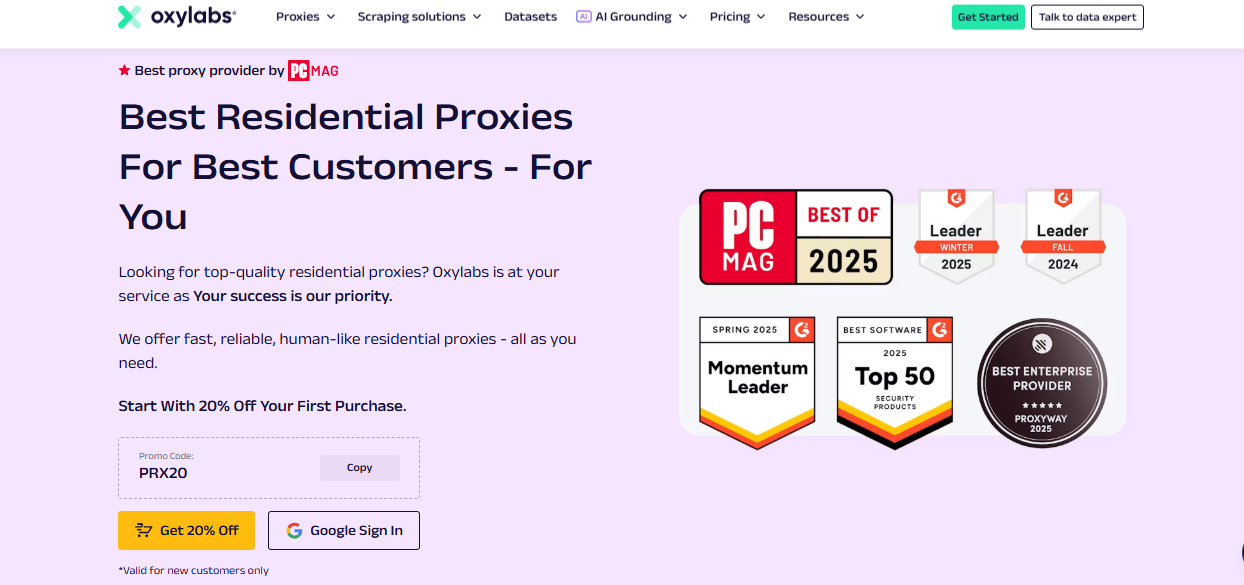
Oxylabs earns the Editor’s Choice position because it combines a massive residential proxy network with enterprise-grade infrastructure designed for demanding workloads.
Its platform supports advanced targeting, reliable IP rotation, and consistently strong performance for web scraping, market intelligence, and large-scale data collection. Businesses handling high-volume automation projects often choose Oxylabs because of its premium reliability and comprehensive developer tools.
Individual users also benefit from detailed documentation, flexible integrations, and dependable support, making it suitable for both experienced professionals and organizations with complex proxy requirements.

🥈 2. Webshare — Best Budget-Friendly Residential Proxy Provider
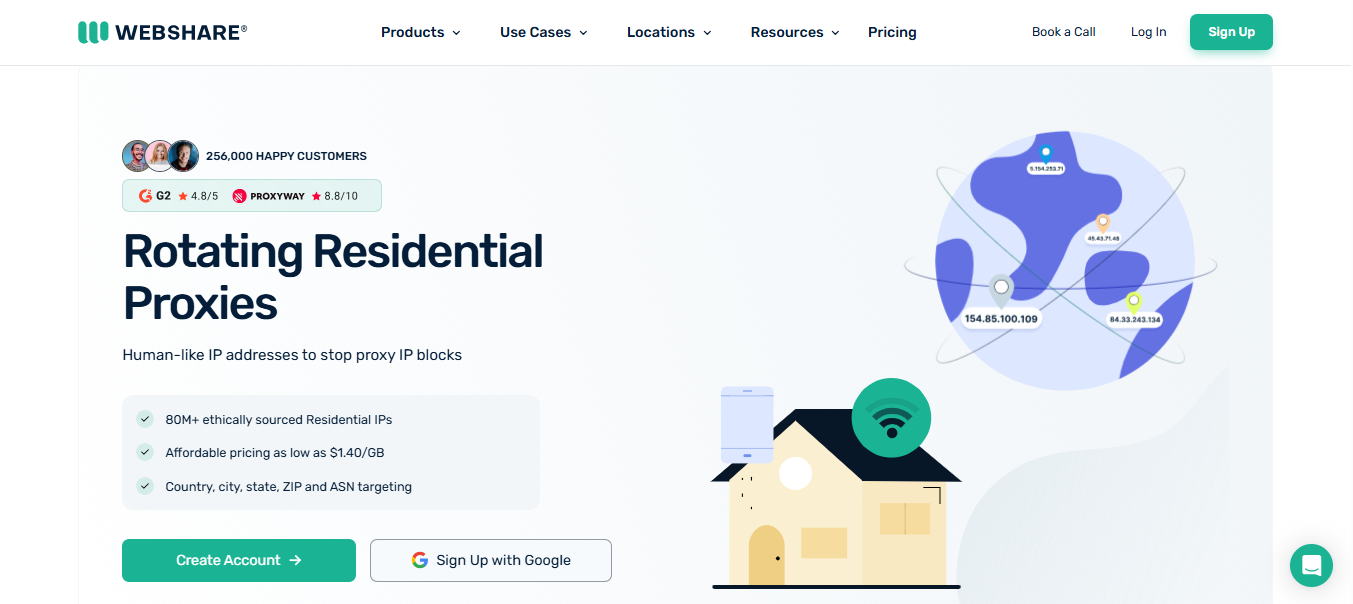
Webshare focuses on affordability without sacrificing usability.
Its straightforward dashboard, reliable residential proxies, and accessible pricing make it appealing for developers, freelancers, students, and small businesses. The availability of a free plan can also help users evaluate the service before upgrading.
For smaller projects or users with limited budgets, Webshare provides strong overall value while remaining easy to configure.

🥉 3. Decodo — Best Overall Residential Proxy Provider
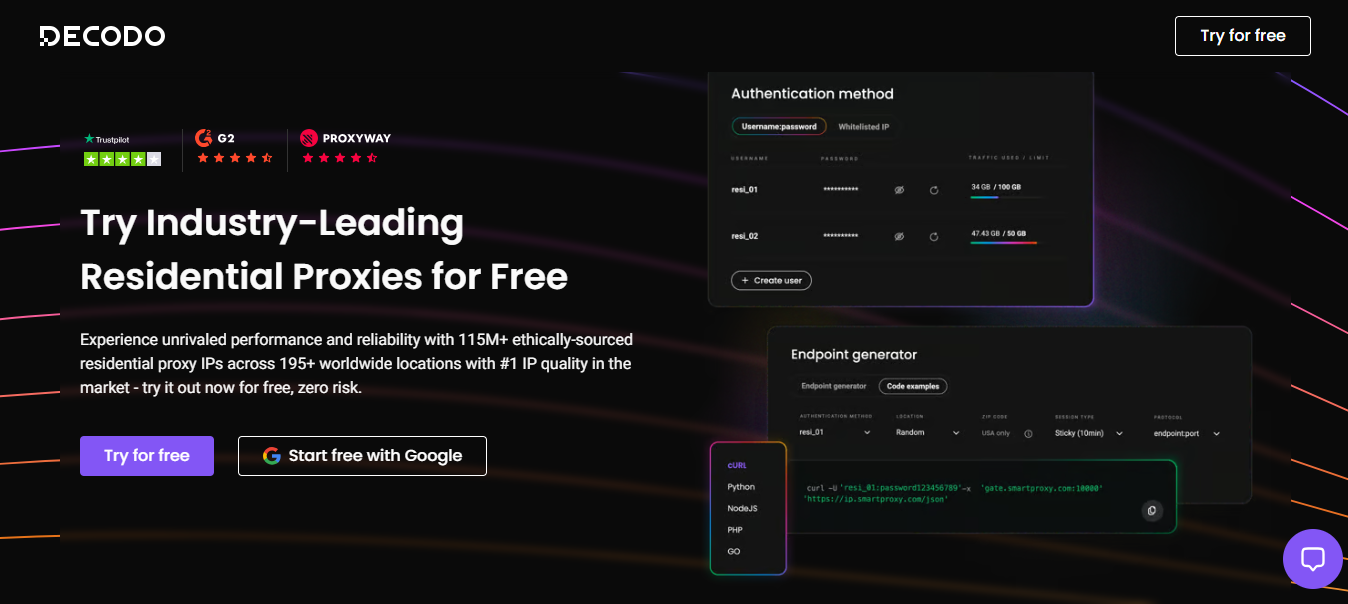
Decodo offers an excellent balance between performance, ease of use, and affordability.
Its beginner-friendly dashboard makes deployment straightforward, while its residential proxies and rotating proxies provide dependable performance across a variety of use cases. Businesses and individual users benefit from API support, clear documentation, and a fast setup process.
For users seeking a capable residential proxy provider without the complexity often associated with enterprise platforms, Decodo is a practical choice.

Provider Comparison
| Provider | Best For | Key Strength |
| Oxylabs | Overall | Balance of performance & value |
| Decodo | Enterprise | Large-scale proxy infrastructure |
| Webshare | Budget | Affordable and easy to use |
Other Residential Proxy Providers Worth Considering
Several other reputable providers also offer quality residential proxy services:
- Mars Proxies – Suitable for users seeking flexible proxy plans and residential IP options.
- IPRoyal – Popular among individuals and small businesses looking for residential proxy services.
- Bright Data – Offers extensive proxy infrastructure and advanced enterprise capabilities.
- SOAX – Known for flexible targeting and broad geographic coverage.
- NetNut – Focuses on stable residential connectivity for business applications.
- ProxyEmpire – Provides residential and mobile proxy solutions with multiple targeting options.
- Rayobyte – Offers various proxy types for developers and businesses.
- Infatica – Supports data collection, brand monitoring, and automation projects.
- Live Proxies – Provides residential proxy services for a variety of online tasks.
Each provider has different strengths, so the best choice depends on your technical requirements, budget, and intended use case.
How to Choose the Right Residential Proxy Provider
When comparing providers, evaluate the following factors:
| Factor | Why It Matters |
| Price | Should match your usage requirements and budget. |
| Performance | Faster connections improve productivity. |
| Reliability | Stable uptime minimizes interruptions. |
| IP Pool Size | Larger pools reduce repeated IP usage. |
| Geographic Coverage | Important for location-specific testing and research. |
| Rotation Options | Flexible IP rotation supports different workloads. |
| Dashboard | Easy management saves time. |
| Customer Support | Helpful support reduces downtime. |
| API Availability | Essential for automation and developer workflows. |
| Ease of Use | Simplifies deployment for beginners. |
| Security | Strong authentication and encryption protect your data. |
| Scalability | Supports future business growth. |
Frequently Asked Questions
Are residential proxies more secure than public proxies?
Residential proxies are generally considered more trustworthy than free public proxies because they are provided through managed infrastructure. However, security ultimately depends on the provider and your own security practices.
What is IP rotation?
IP rotation automatically changes the IP address used for requests. This helps distribute traffic across multiple residential IP addresses and can reduce the likelihood of rate limiting.
Can proxy servers replace a VPN?
No. Proxy servers and VPNs serve different purposes. While both can mask your IP address, VPNs typically encrypt all device traffic, whereas proxies usually handle traffic from specific applications or protocols.
Is it safe to use proxies for web scraping?
Yes, provided the activity complies with applicable laws, contractual obligations, and website policies. Using reputable providers and responsible request rates also improves reliability.
Should businesses monitor proxy activity?
Yes. Monitoring authentication attempts, bandwidth usage, and unusual traffic patterns helps identify potential security issues early.
How often should proxy credentials be rotated?
Credential rotation policies vary by organization. Regular updates and immediate changes following suspected compromise are widely recommended.
Conclusion
Using proxy servers securely requires more than simply purchasing access to a residential proxy network. Choosing a reputable provider, protecting credentials, using encrypted connections, monitoring activity, and keeping software updated all contribute to a safer experience.
For users seeking the strongest overall platform, Oxylabs stands out thanks to its enterprise-grade infrastructure, extensive residential proxy network, and reliable performance for large-scale data collection.
Decodo is an excellent choice for users who want a well-rounded platform that balances performance, usability, and features.
For developers, freelancers, students, and small businesses working within a tighter budget, Webshare offers an accessible entry point with dependable residential proxies and straightforward management.
To further strengthen your online security, consider exploring SecureBlitz guides covering VPNs, cybersecurity, password managers, antivirus software, privacy tools, secure browsers, web scraping best practices, and AI tools for security professionals.
INTERESTING POSTS
About the Author:

Daniel Segun is the Founder and CEO of SecureBlitz Cybersecurity Media, with a background in Computer Science and Digital Marketing. When not writing, he's probably busy designing graphics or developing websites.



